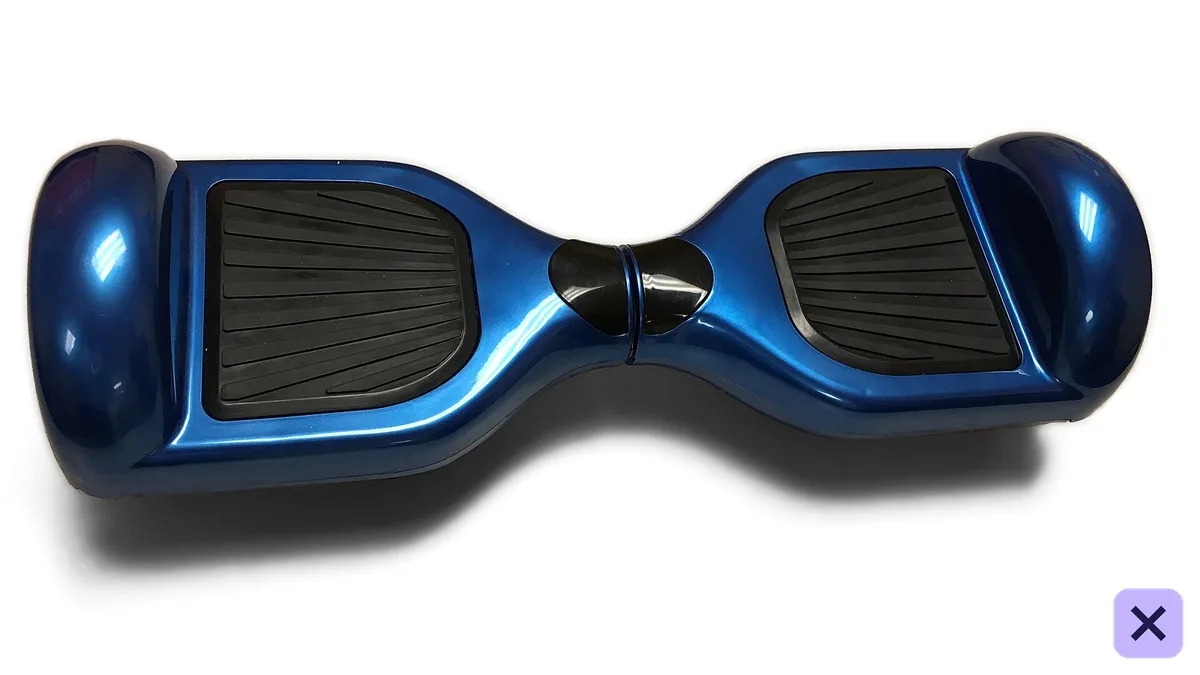
Steer Clear of the Worst Hoverboards of 2026: Boards That Tip, Stall and Swell
The worst hoverboards of 2026 look like a bargain and ride like a warning. They arrive with a glossy photo, an unverifiable range figure, and a price half that of every reputable board. The board tilts when it should stay level, one footpad stops responding, the battery gauge collapses halfway home, and the charger gets hot. A hoverboard has no handlebar and no brake, so a balance failure leaves no backup. This guide ranks the worst types by the patterns that ruin ownership, not by naming any brand or model.
Key takeaways
- The worst hoverboards of 2026 fail on balance, battery or support, and the worst ones fail on all three at once.
- A board with no certification mark on its battery, no spare parts list and no named warranty is a safety risk, not a bargain.
- Cut any claimed range figure by a third, and walk away from boards that quote range with no battery size.
- Footpad sensors, gyro calibration and tyre grip are the three things to test in the first ten minutes: they are what throw riders off.
- If you cannot stop the board predictably, step off it and send it back: a hoverboard has no brake, so balance is its only safety system.
How the worst hoverboards of 2026 were chosen
Every type below was scored on five measures. Balance comes first: does the board hold level and stop when the rider leans back? Battery safety is second, judged on certification marks and honest figures. Build quality is third, from the footpad sensors to the shell. Ride comfort is fourth, and support is fifth: spare parts, a reachable seller and a warranty.
Two notes before the list. First, no brand or model is named, because the point is the pattern. Second, a hoverboard is not a scooter and not a bike. It has no handlebar, no throttle and no brake: the rider steers by shifting weight on two footpads. That is what makes it different from the machines in our guides to the worst electric scooters of 2026 and the worst electric bikes of 2026, where a handlebar and a brake help the rider stop. The same orphaned-brand trap appears in our guide to the worst mopeds of 2026, where sellers vanish after the sale.

Comparison table: the worst hoverboards of 2026
| Rank | Hoverboard type | Main fault | First warning sign |
|---|---|---|---|
| 1 | The battery sweller | Uncertified pack that overheats | Charger runs hot, shell swells |
| 2 | The gyro drifter | Balance system drifts and tilts | Board creeps forward on level ground |
| 3 | The footpad dead-zone board | One sensor stops responding | One side ignores your foot |
| 4 | The range liar | Fantasy range claims | Battery dies halfway home |
| 5 | The solid-tyre bone-shaker | Hard tyres, no grip in the wet | Skids on damp pavement |
| 6 | The overweight pretender | Too heavy to carry anywhere | Cannot lift it up the stairs |
| 7 | The orphaned brand | No parts, no support, no warranty | Seller stops replying |
The worst hoverboards of 2026, ranked
1. The battery sweller: an uncertified pack that overheats
The battery sweller is the worst hoverboard type of 2026, and the only one on this list that is a safety problem rather than a disappointment. It arrives with a battery pack that has no certification mark, in a shell that looks the part. Then the charger runs hot and the shell begins to swell at the seam. A swollen pack is a fire risk in the house. Before you buy, look for the certification mark on the battery itself, and walk away from any seller who cannot name the cell maker.
2. The gyro drifter: a balance system that cannot hold level
The gyro drifter fails at the one job a hoverboard exists to do. Its gyroscopes and tilt sensors are cheap or badly calibrated, so the platform never sits level. On flat ground the board creeps forward on its own. When the rider shifts weight to stop, the board hesitates, then overcorrects. Beginners blame themselves for the first few wobbles, which is why this fault survives: it feels like a learning curve. Test it in the first ten minutes: step on with both feet level on flat ground, and see whether it stays put. If it drifts, its balance system is faulty.
3. The footpad dead-zone board: one sensor stops responding
A hoverboard reads its rider through pressure sensors under each footpad, and the dead-zone board is the one where those sensors fail. One side responds late, or not at all, so the board turns when the rider wanted straight, or it keeps rolling when the rider wanted to stop. The fault often starts intermittently: a sensor that works on a warm day and ignores a light rider on a cold one. Wear makes it worse, as the sensor mat cracks. If one foot feels connected and the other ignored, or the board only turns one way, the sensors are failing. This fault causes the most falls, because the rider’s stop signal is the same signal the board is ignoring.
4. The range liar: fantasy figures with a tiny battery
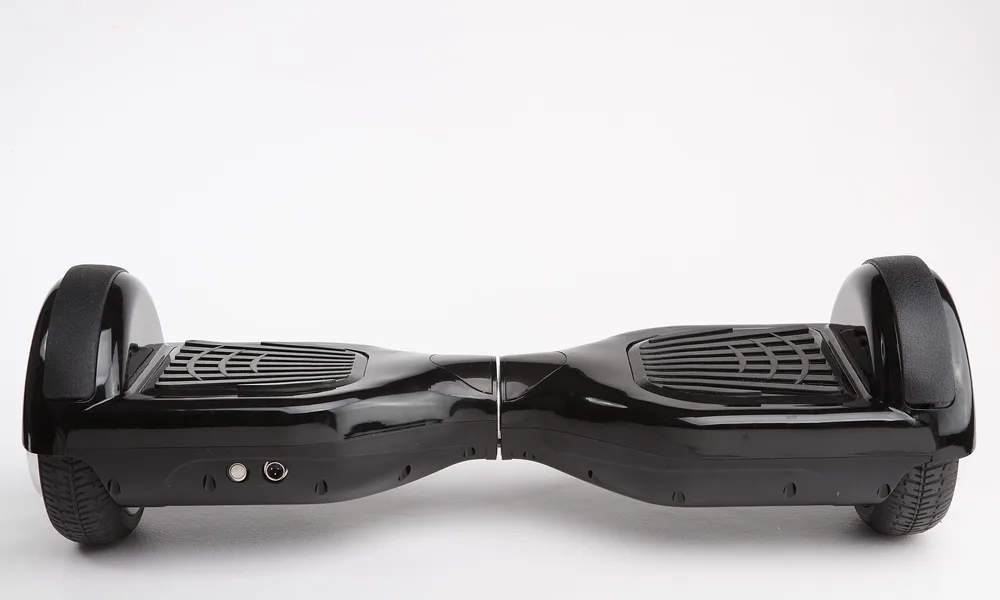
The range liar is built around a number that was never true. The listing promises twenty or twenty-five miles, but the battery honestly delivers eight to twelve miles for an average rider. The trick is to quote the range at the lowest speed, on flat ground, with a light rider, and never mention any of those conditions. The rider discovers the truth on the first real trip, when the gauge drops from half to empty and the board slows to a crawl a mile from home. As the voltage falls the board can cut out under the rider. Cut any claimed range figure by a third, and demand the battery size in watt-hours. A board that quotes range with no battery size is hiding the only number that matters.
5. The solid-tyre bone-shaker: hard tyres with no grip
Small solid tyres are the hallmark of a hoverboard designed for a smooth showroom floor rather than a real street. They never puncture, which sounds like a benefit, until the board meets cracked pavement, a speed bump or a wet patch. Every jolt travels through the platform into the rider’s feet, and on a damp surface the hard rubber skids instead of gripping. On a hoverboard that matters most, because the rider has no handlebar: a skid becomes a fall. Cheap solid tyres go smooth within a few months, and once the tread is gone the board slides on anything that is not perfectly dry. Look at the tyres before you buy: a tyre with real tread and some give when you press it will ride better and stop better.
6. The overweight pretender: too heavy to carry anywhere
Some hoverboards try to look like serious machines by adding a bigger battery and a heavier shell, then ruin the result by weighing fifteen kilograms or more. They may ride longer on a flat road, but they are a misery everywhere else. Carrying one up a flight of stairs is a two-handed struggle, and stowing it under a desk takes up the whole space. Many owners simply stop taking them anywhere, which defeats the point of owning a portable board. A heavy board also hits the ground harder when it tips. Before you buy, pick the board up with one hand. If you cannot carry it comfortably for a minute, a hoverboard you leave at home is an expensive ornament.
7. The orphaned brand: no parts, no support, no warranty
The orphaned brand is the most common worst hoverboard of all, and the one that turns every other fault into a dead end. The board is sold under a name you have never seen before, at a price that seems too good to be true, by a seller with no address, no service centre and no spare parts. The board may look smart, but the shell is thin plastic and the battery is unbranded. When the charger fails or a sensor dies, there is nobody to call and nothing to order. Owners end up riding a broken machine or throwing away a board that is barely a year old. The warning signs are easy to check: no physical address, a support email that bounces, and a phone number that never answers. Search for the brand name with the words parts, warranty and repair. A hoverboard with no support is a purchase with no future.
What to avoid when buying a hoverboard
The most common mistake is buying on price and pictures alone. A glossy listing tells you nothing about the battery, the sensors or the seller, the three things that decide whether the board is safe, rideable and repairable. Avoid any board with no certification mark, any board that quotes range without a battery size, and any seller with no parts supplier or warranty in writing. Avoid boards with hard tyres, boards that drift on level ground, and boards whose footpads respond differently on each side.
Checklist: testing a hoverboard before you commit
- Check the battery for a certification mark and a named cell maker, and walk away if the listing shows neither.
- Stand on the board with both feet level: it should stay put.
- Test both footpads separately: each side should respond the same way, with no dead zone.
- Ask for the battery size in watt-hours and cut the claimed range by a third before you believe it.
- Press the tyres and look at the tread: hard plastic with no grip will skid on damp ground.
- Search the brand name with the words parts, warranty and repair before you pay, and buy only if real support exists.
Frequently asked questions
Are hoverboards safe to ride?
A well-made hoverboard with a certified battery and working sensors is safe with a helmet and sensible speed. The danger comes from uncertified batteries, drifting gyros and dead sensors, which is why the battery mark and the balance test matter more than the price.
Why does my hoverboard keep tilting to one side?
Usually the gyro calibration has drifted or one footpad sensor is failing. Try recalibration on a perfectly level surface first. If the board still tilts, the sensor or gyro is faulty and the board should be repaired or returned, not ridden.
How far does a hoverboard really go on one charge?
Most honest boards with a mid-size battery deliver eight to twelve miles for an average rider on flat ground. Claims of twenty miles or more assume a light rider, the lowest speed and perfect conditions. A small pack cannot deliver a big range.
What should I do if my hoverboard battery swells or gets hot while charging?
Stop charging it immediately, move it away from anything flammable, do not puncture the swollen pack, and do not ride it again. Contact the seller for a replacement, and take the board to a battery recycling point if the seller will not help.
Can children ride hoverboards?
Children can ride with a helmet and adult supervision, on flat ground away from traffic, but only on a board that fits their weight. Very light riders can struggle with footpad sensors that need more pressure than a child can apply.
Is a hoverboard better than an electric scooter?
It depends on the trip. A hoverboard is lighter and more portable, and fun on short, smooth rides. An electric scooter has a handlebar and a brake, so it is safer in traffic, easier to stop and better on rough ground.
Bottom line
The worst hoverboards of 2026 fail in the same few ways: an uncertified battery, a drifting balance system, footpad sensors that ignore one foot, a false range figure, hard tyres, a weight nobody wants to carry, and a seller who vanishes when it breaks. Check the battery mark, test the balance and footpads, demand the battery size and check the support.