
Skip the Worst Lifeboats of 2026: Seven Rescue Boats That Fail When It Matters Most
The worst lifeboats of 2026 are not the ones that look rough in the marina. They are the ones that look perfectly fine hanging in their davits, orange paint bright and covers neatly fitted, until the day they are needed and something quietly fails. A lifeboat has exactly one job, and it only gets one chance to do it. When the winch seizes, the release gear jams, the tubes lose air or the engine will not start, there is no second attempt This guide ranks the seven worst lifeboats of 2026 by type and pattern rather than by maker, so you can spot the warning signs in a survey, a drill or a purchase.
Key takeaways
- The ageing davit-launched lifeboat with seized winches is the one to avoid first: if it cannot get into the water, nothing else matters.
- A lifeboat lives or dies on its launching gear and its servicing record, not on how bright its paint looks.
- Free-fall lifeboats need a clear rail, a working release and regular drops; a rusted rail turns a fast escape into a stuck boat.
- Inflatable rescue boats fail slowly and silently, losing air through old seams and valves long before anyone notices.
- Always check the capacity plate, the engine, the release gear and the service history, and walk away from any boat that hides them.
How the worst lifeboats of 2026 were chosen
Every lifeboat below was scored on five measures. Launching comes first: can the boat get into the water quickly, with its crew, in bad weather and in the dark? Capacity is second, because a boat that seats fewer people than it must carry is not a rescue boat at all. The engine and steering are third: a lifeboat that cannot move away from a sinking ship is only a floating box. Condition and servicing are fourth, judged on the hull, the tubes, the release gear and the inspection record. Ease of boarding is fifth, because a boat that is hard to climb into from a listing deck will cost minutes nobody has.
Two notes before the list. First, no single boat is named as the worst, because the same bad patterns appear across many makers. Second, a lifeboat is rescue equipment, not a leisure boat, so this guide judges it the way a surveyor would: on whether it launches, floats, moves and carries its people. Readers who travel by sea will find the same thinking in our guide to the worst ferries of 2026, where timetables and capacity decide whether a crossing works, and in our guide to the worst cruise ships of 2026, where space per passenger decides whether a voyage holds together.

Comparison table: the worst lifeboats of 2026
| Rank | Lifeboat type | Main failure | Watch out for |
|---|---|---|---|
| 1 | Ageing davit-launched enclosed lifeboat | Seized winches and jammed release gear | No recent launch test, rusted falls |
| 2 | Free-fall lifeboat with a rusted rail | Sticks on the ramp, release will not trip | Corroded rails, never drop-tested |
| 3 | Rigid inflatable rescue boat, ageing tubes | Slow air loss through old seams | Soft tubes, patched valves, weak outboard |
| 4 | Open lifeboat with no canopy | No shelter from cold, wind and spray | Rotten thwarts, open hull, no engine |
| 5 | Under-capacity lifeboat | Too few seats for the people aboard | Capacity plate lower than the muster list |
| 6 | Unserviced lifeboat, expired stores | Dead flares, stale rations, flat battery | Gaps in the service log, out-of-date kit |
| 7 | Pleasure tender sold as a lifeboat | Built for calm water, not for rescue | No capacity plate, thin hull, no canopy |
The worst lifeboats of 2026
1. Ageing davit-launched enclosed lifeboat: the lifeboat to avoid first
The davit-launched enclosed lifeboat is the classic rescue boat of the large ship, and the ageing one is the most dangerous boat on this list because it looks ready. The hull is sound, but the winch has not been properly exercised in years, the wire falls are rusted into their grooves and the release gear is stiff with old grease and salt. On the day it matters, the boat lowers in jerks and the crew spends precious minutes fighting the gear instead of getting clear of the ship. Ask for the launch records, check the winch brake, the falls and the release hooks by hand, and insist on seeing the boat launched before you trust it.
2. Free-fall lifeboat with a rusted launch rail: fast in theory, stuck in practice
A free-fall lifeboat is designed to slide down a steep stern ramp and hit the water clear of the ship. That speed depends entirely on the rail and the release, and both live in the worst place on the ship: the open stern, washed by spray and exhaust. When the rail corrodes, the rollers bind and the release seizes, so the boat that should drop in seconds sits stuck at the top while the crew pulls at a handle that will not move. Owners often skip the drop test, so the first real drop is the emergency itself. Ask when the last controlled drop was done and check that one person in gloves can trip the release.
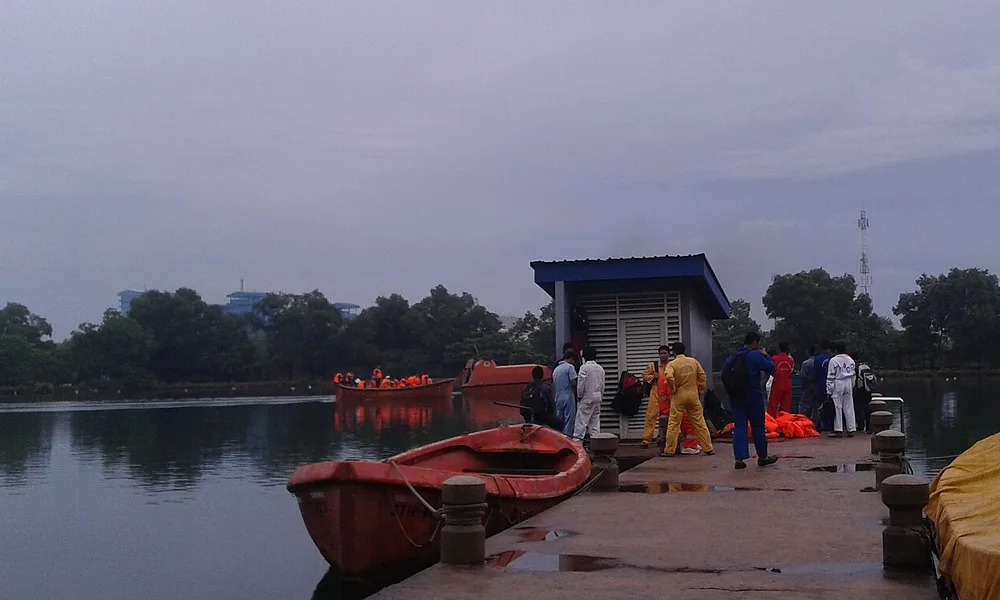
3. Rigid inflatable rescue boat with ageing tubes: the slow leak nobody notices
The rigid inflatable rescue boat is the workhorse of harbours, coasts and offshore standby. Its weakness is time. The tubes are glued fabric, and after years of sun, fuel and hard use the seams start to weep air. The boat looks firm in the morning, but by the afternoon it is soft on one side and sits low. Press the tubes hard, look for patches on patches, and ask how often the boat needs topping up: a boat that needs air every day has a leak, not a quirk. Check the outboard cold too.
4. Open lifeboat with no canopy: a boat that leaves you to the weather
The open lifeboat belongs to an older era, and it still turns up on heritage vessels and small coastal ships. It is a simple wooden or fibreglass hull with thwarts for rowing and no canopy at all, which means that once you are in it, you are in the open sea in every sense. Cold, wind and spray do the damage the sinking ship started. People die in open boats because the boat cannot keep them warm, dry and together until rescue arrives. The wooden ones add rot: thwarts and planking gone soft under paint. Press the thwarts, look for soft wood at the gunwale, and ask whether the boat has an engine at all.
5. Under-capacity lifeboat: the boat that leaves people behind
Capacity is the number nobody checks until the muster list is read out. An under-capacity lifeboat is a boat whose seats are fewer than the people it is meant to save: a ship takes on extra crew, a boat is swapped for a smaller one during a refit, or the capacity plate is read as a suggestion, not a limit. The boat itself may be in perfect order, and that is exactly the trap. It launches cleanly, runs well and still leaves people standing on the deck. The fix is arithmetic, not maintenance. Count the seats, read the capacity plate, and compare both with the muster list and the people actually aboard.

6. Unserviced lifeboat with expired stores: the boat that runs out of everything
A lifeboat is not just a hull and an engine. It carries flares, rations, water, a first-aid kit, a radio and a battery, and every one of those has a date on it. The unserviced lifeboat is the boat whose logbook has gaps, whose flares expired two seasons ago and whose battery has gone flat so many times that it no longer holds a charge. The boat may still launch and still run, but once it is away from the ship it is on its own. Open the stores locker, read the dates, check the battery under load, and ask who serviced the boat last.
7. Pleasure tender sold as a lifeboat: a dinghy in rescue clothing
The last type on this list is not really a lifeboat at all, which is why it is here. A pleasure tender, the small open dinghy that ferries people between a yacht and the shore, is sometimes sold as a lifeboat. It has no capacity plate, no canopy, no self-righting shape and a hull built for calm water on a summer afternoon. In wind and waves it swamps, capsizes, and cannot carry more than two or three people. The giveaway is the paperwork: a real lifeboat carries a capacity plate, a servicing record and a certificate, while a tender carries a sales brochure.
What to check before you trust a lifeboat
The most common lifeboat mistake is judging the boat by its paint: a bright hull tells you nothing about the winch, the release gear, the engine or the stores, and those are the parts that fail. Check five things: the launch records and the date of the last real launch, the capacity plate against the muster list, the engine started cold and run under load, the release gear worked by hand, and the dates on the flares, rations and battery. The same applies to the ships the boats hang from, and our guide to the worst sailboats of 2026 makes the same point about rigs and hulls: the parts you cannot see from the quayside decide whether the boat works.
Checklist: inspecting a lifeboat in 2026
- Ask for the launch records and insist on seeing the boat lowered and run under power.
- Read the capacity plate and compare the seat count with the muster list and the people actually aboard.
- Work the release gear by hand, wearing gloves, and check the falls and winch brake for rust and stiffness.
- Start the engine cold, run it hard for ten minutes, and check the fuel, the cooling water and the steering.
- Press the inflatable tubes hard, look for patches on patches, and ask how often the boat needs topping up.
- Open the stores locker, read the dates on the flares, rations and battery, and check the service log for gaps.
Frequently asked questions
Are the worst lifeboats of 2026 unsafe?
A bad lifeboat is not just uncomfortable, it is unsafe, because it is the last line of safety on a ship. A boat that will not launch, carry everyone or run leaves people with no escape at all.
How often should a lifeboat be launched for a test?
Lifeboats should be lowered to the water and run under power regularly. A boat not launched in a year is unproven.
What is the difference between a lifeboat and a rescue boat?
A lifeboat is the enclosed boat carried for abandoning ship, sized to the people aboard. A rescue boat is the smaller, faster boat used to pick people from the water.
Can an old lifeboat still be a good buy?
Yes, if its launching gear, engine and stores are in order and its service record is complete. Age alone is not the problem.
Should a lifeboat have an engine?
Modern enclosed lifeboats and rescue boats should, because a boat that cannot move away from a sinking ship is in danger itself. Open boats without engines depend on oars and currents.
How do I know if a lifeboat has enough capacity?
Read the capacity plate on the boat, count the seats, and compare the number with the muster list and the people actually aboard. Fewer seats than people means under capacity.
Bottom line
The worst lifeboats of 2026 fail in the same quiet way: a winch not worked, a rail rusted, tubes leaking, stores expired and a capacity never counted. None of those failures shows in the paint. Check the launch, the gear, the engine, the stores and the numbers, and walk away from any boat whose owner cannot show you all five.


