Don’t Buy the Worst Motorboats of 2026: Seven Cruising Boats That Cost More Than They Deliver
The worst motorboats of 2026 are not the fast boats that pound across the bay. Those have their own problems, and they belong in a different guide. The worst motorboats of 2026 are the everyday cruising boats: the cabin cruiser that will not start on a Saturday morning, the pontoon that wallows with eight people aboard, the canal boat that smells of damp and diesel, and the ex-rental boat that has been driven hard by a hundred strangers. They fail slowly, in ordinary use, at cruising speed. This guide ranks the seven worst motorboats of 2026 by type and pattern rather than by maker, so you can spot the trap before you sign.
Key takeaways
- The ageing diesel cabin cruiser with a tired inboard is the motorboat to avoid first: the engine bill arrives before the first summer ends.
- A motorboat lives or dies on its engine, its hull and its running costs, not on how it looks at the marina.
- Underpowered boats are the quiet trap: a boat that cannot carry its rated load at cruising speed never gets used.
- Damp kills canal boats and cabin cruisers alike: a boat that smells musty on a dry day has water in places you cannot see.
- Always check the engine, the hull, the service history and the real running costs on the water, and walk away from any boat that hides them.
How the worst motorboats of 2026 were chosen
Every motorboat below was scored on five measures. The engine comes first: does it start cold, run cleanly at cruising speed and hold its temperature for an hour? The hull is second, judged on whether it is sound, dry and honest, or hiding rot and patched damage under fresh paint. Running costs are third, because a cheap boat with a thirsty engine, dear berthing and constant repairs is the dearest boat on the water. Usable space is fourth: a cockpit and cabin that fit the crew and their gear. Ease of handling is fifth, because a boat that is hard to moor or steer in a crosswind will spend its life tied up.
Two notes before the list. First, no single boat is named as the worst, because the same bad patterns appear across many makers. Second, this guide is about cruising-speed motorboats, the boats bought for weekends on the lake, the river and the canal, not about fast planing boats built for speed. If speed is what you want, read our guide to the worst speedboats of 2026 first, where hulls that pound and porpoise are the problem. The same money traps appear in our guide to the worst yachts of 2026, where running costs dwarf the purchase price.

Comparison table: the worst motorboats of 2026
| Rank | Motorboat type | Main failure | Watch out for |
|---|---|---|---|
| 1 | Ageing diesel cabin cruiser | Tired inboard, smoke and overheating | No service history, damp cabin, soft deck |
| 2 | Underpowered pontoon boat | Wallows with a full load, will not hold speed | Small outboard, flexing deck, torn seats |
| 3 | Damp canal narrowboat | Single smoky diesel, damp and cold cabin | Musty smell, rusted hull, no insulation |
| 4 | Ex-rental motorboat | Worn out by a hundred careless hirers | Scuffed hull, tired engine, stained upholstery |
| 5 | Small electric motorboat | Short range, slow charging, weak battery | Old battery pack, no shore-power plan |
| 6 | Fishing motorboat, low freeboard | Ships water in any chop, cramped wet cockpit | Low sides, no self-draining deck, tired livewell |
| 7 | Houseboat motorboat | A floating flat with a weak engine | Leaking roof, dear mooring, cannot move in wind |
The worst motorboats of 2026
1. Ageing diesel cabin cruiser: the motorboat to avoid first
The diesel cabin cruiser is the classic weekend motorboat of the river and the lake, with a cabin, a galley and room to sleep two. The ageing one is the boat to avoid first, because its inboard diesel is the most expensive part of the boat, and it is the part that fails. It starts on the third try, smokes on start-up, overheats after half an hour and leaves a sheen on the water that says the seals are gone. The cabin adds to the bill: a soft deck, a damp smell and windows that leak. A diesel rebuild can cost more than the boat is worth, so start the engine cold, run it for an hour, and check the temperature and the smoke.
2. Underpowered pontoon boat: the party platform that goes nowhere
A pontoon boat is bought for slow, sociable days on the lake, with room for eight people and a cool box. That only works if the outboard can move the load. The underpowered pontoon pairs a big deck with the smallest engine the dealer could fit, and with four people aboard it is already struggling. Add the full crew and a headwind, and the boat wallows at walking pace, the engine screams at full throttle and the fuel gauge drops faster than the speed rises. The deck flexes too, so seats work loose and flooring softens. Check the engine size against the rated load, and take the boat out with a full crew aboard.
3. Damp canal narrowboat: four miles an hour, cold and wet
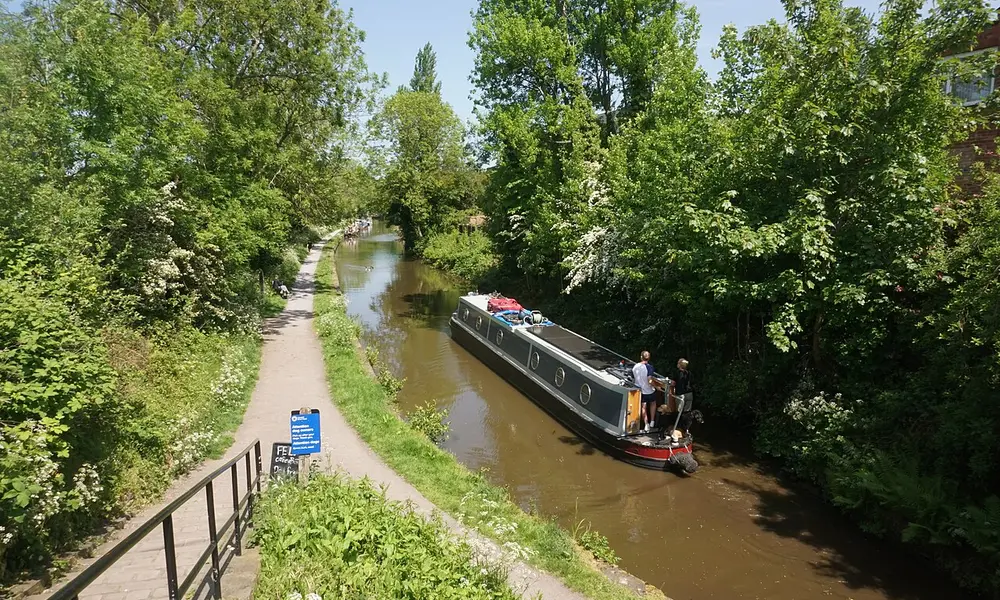
A narrowboat moves at walking pace along the canal, a floating home that drifts through the countryside. The damp one ruins the dream from the inside. The steel hull sweats, the insulation is thin or missing, and the single old diesel fills the cabin with fumes and noise. Clothes go musty, bedding feels damp, and the stove cannot keep up with the condensation on the windows. Check a narrowboat with your nose and your hands first: a musty smell on a dry day means water is in the cabin lining, the floor or the hull. Look at the hull for rust, ask when it was last blacked, and run the engine.
4. Ex-rental motorboat: driven hard by everyone, loved by no one
Ex-rental motorboats look like the smartest buy on the forecourt: a recent boat, a known model and a price well below a private sale. The discount is the wear. A rental boat has been driven by a hundred hirers, most of them on their first day in a boat, and every one of them has bumped the dock, grounded the prop and run the engine at full throttle from cold. The hull is scuffed, the prop is dinged, the engine hours are high and the upholstery is stained. Ask for the full history, not just the last service stamp, and look for scrapes on the rubbing strake and a steering cable that is stiff on one side.
5. Small electric motorboat: quiet, clean and out of charge by lunch
The small electric motorboat promises the future: silent running, no fuel, no fumes and almost no maintenance. On a short trip across a calm lake it delivers. The problem is range. A small battery pack gives an hour or two at cruising speed, and then the boat crawls home. Charging is the second problem: a full charge takes hours from a standard shore supply, and many lakes and rivers have no charging point at all. Check the battery as you would a diesel engine: ask its age, its real range at cruising speed and how long a full charge takes. A three-year-old battery has already lost much of its capacity.
6. Fishing motorboat with low freeboard: wet feet and a wet catch
A fishing motorboat is a working boat. The bad one has sides so low that any chop ships water over the gunwale, a cockpit that never drains properly and a livewell that has not worked in years. The crew fishes standing in water, the gear gets soaked, and every wave is a reminder that the boat was designed for a calm morning on a sheltered lake, not for open water. Look at the freeboard before you look at the rod holders: a boat that sits low with two people aboard will sit lower with four. Check the pumps and the transom for rot, and take the boat out in a real chop.

7. Houseboat motorboat: a floating flat that cannot move
A houseboat motorboat sells a tempting idea: a home on the water that can move whenever you like. In practice the worst of them are floating flats with an engine fitted as an afterthought, one that can barely push the hull against a breeze. The roof leaks, the mooring costs more than a flat on land, and moving the boat means a day of planning and a prayer that the engine starts. Most owners stop moving it at all. Check a houseboat as a boat first and a home second: run the engine under load, look at the roof and hull for leaks, and check the mooring fees and terms.
What to check before you buy a motorboat
The most common motorboat mistake is buying the boat for the day you saw it, a calm morning on a flat lake, instead of the days you will actually use it. Check five things before you pay: the engine started cold and run for an hour, the hull sounded for rot, the service history read in full, the real running costs added up, and a sea trial with the crew and gear you will carry. The same checks apply across the water, and our guide to the worst sailboats of 2026 makes the same point about rigs and decks: the parts you cannot see from the marina decide whether the boat works.
Checklist: buying a motorboat in 2026
- Start the engine cold, run it for an hour, and check the temperature and the smoke.
- Sound the hull and deck for soft spots, check the transom for rot, and look below the waterline.
- Read the full service history, and ask for the engine hours and the last major work.
- Take a sea trial with a full crew and your usual gear aboard, into a headwind and a chop.
- Add berthing, fuel, insurance and servicing to the price and compare the real yearly total.
- Check the trailer, the steering and the electrics, and walk away from any boat whose owner will not let you test it.
Frequently asked questions
Are the worst motorboats of 2026 unsafe?
A bad motorboat is not always unsafe, but it can be: an engine that quits in a shipping lane, a low-sided boat that ships water and a rotten transom are all safety problems, not just money problems.
How much does it really cost to run a motorboat for a year?
Berthing, fuel, insurance and servicing cost more in a year than buyers expect. Add up the yearly total before you buy.
Should I buy a motorboat with an inboard or an outboard engine?
Outboards are easier to service and suit smaller boats. Inboards suit larger cruisers but cost far more to repair.
Is an ex-rental motorboat ever worth it?
Yes, if the price reflects the wear, the engine is sound and the history is complete. The trap is an ex-rental boat priced like a private boat, with the hire years hidden.
What is the difference between a motorboat and a speedboat?
A motorboat is the general class of powered boat, bought for cruising and fishing. A speedboat is the fast, planing end of that class.
Can an old motorboat still be a good buy?
Yes, if its engine, hull and service record are in order. The problem is an old boat whose engine was not maintained.
Bottom line
The worst motorboats of 2026 fail in the same quiet way: an engine that smokes, a hull that is soft and a yearly bill nobody added up. Check the engine cold, the hull by hand, the history in full and the costs honestly, and walk away from any boat whose owner will not let you do all four.