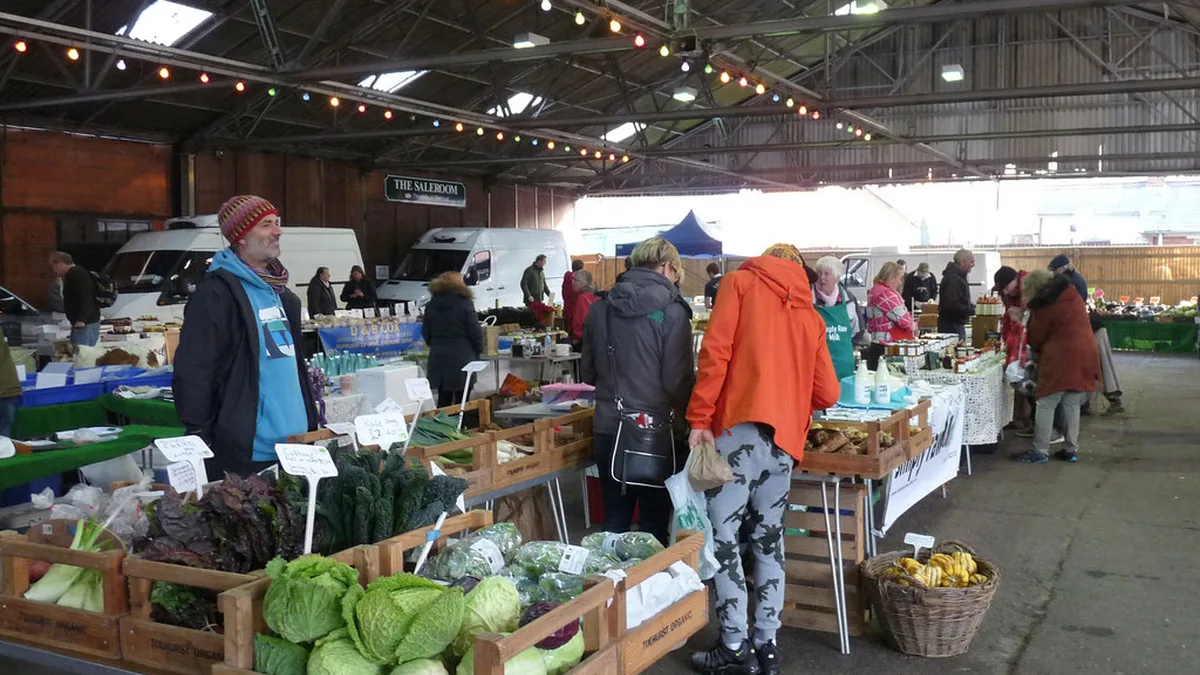
Give the Worst Markets of 2026 a Wide Berth
The worst markets of 2026 are not the quiet ones with a handful of honest stalls. A small market with fair prices can be the best part of a morning, and a famous one can still waste an afternoon. The worst markets fail in a simpler way: they charge a premium for a shopping trip that never lets you buy anything worth carrying home. This guide ranks the worst types of everyday market, food, farmers’, flea, craft and night markets, so you can spot a bad one before you hand over your money.
Key takeaways
- A market lives on its traders: if every stall sells the same goods at the same price, you are in a trap, not a market.
- Fresh produce, honest weights and prices you can see are the three signs of a good market, and all three are visible before you buy.
- A stall that will not let you taste or ask a question is selling you a surprise, and the surprise is rarely good.
- Second-hand should mean second-hand: new wholesale goods dressed as vintage are the flea market’s oldest trick.
- Walk the whole market before you buy, check prices on three stalls, and keep your money for a seller who answers questions.
How the worst markets were chosen
Every type below was scored on five measures. Choice comes first: how many genuinely different stalls are there, and how much of the stock is the same item with a different label? Honest pricing is second, judged on whether prices are shown and whether they change when you ask. Quality is third: does what you buy survive the journey home, and is the food fresh? The sellers are fourth, because a market lives or dies on whether the people behind the stalls know their stock. Comfort is fifth: room to walk, light to see, and somewhere to sit.
Two notes before the list. First, no individual market is named here, because the problem is the pattern, not the place: the same seven types turn up in every town and every country. Second, this is about the everyday market, not the stalls outside a stadium: our guide to the worst sports markets ranks the matchday rows that waste an afternoon of their own, and our guide to the worst sports souvenirs covers the things that waste your money after you have bought them.

Comparison table: the worst markets of 2026
| Rank | Market type | Main fault | What it costs you |
|---|---|---|---|
| 1 | The Stale-Produce Row | Tired produce sold at fresh prices | Food that spoils by dinner |
| 2 | The Short-Weight Scale | Scales that cheat on every weighing | Paying for food you never get |
| 3 | The Reseller Flea Row | New wholesale junk sold as vintage | Vintage prices for new goods |
| 4 | The No-Tasting Food Hall | Nothing to taste, nothing to tell by | A blind buy you regret at home |
| 5 | The Copycat Craft Row | Mass-made goods sold as handmade | Craft prices for factory goods |
| 6 | The Cramped Night Aisle | Too dark, too crowded, nowhere to stand | An evening spent being pushed along |
| 7 | The Overpriced Street-Food Row | Restaurant prices, nowhere to sit | A meal eaten standing in a crowd |
The worst markets of 2026
1. The Stale-Produce Row: the worst market of all
The Stale-Produce Row is the worst market you will ever walk through, and it is not close. Every stall sells the same tired stock: soft tomatoes, limp greens, fruit ripe three days ago, all at fresh prices. The signs are plain: the produce nearest the front is the only fresh piece, the stallholder will not let you choose your own, and the bag is filled from a crate under the counter. Walk the row first, pick up the produce, and if it is soft, spotted or warm, keep your money for a stall that sells food, not photographs of food.
2. The Short-Weight Scale: paying for food you never get
The Short-Weight Scale is the market where every weighing works in the seller’s favour. You ask for a kilo, the scale reads a kilo, and the bag you carry home weighs less, because the scale was rigged. A few grams here and there sounds small, but across a weekly shop it adds up to a whole bag of food you paid for and never received. The scale faces the seller, the display is turned away, and any question about the weight is answered with a shrug. Watch the scale, not the seller.
3. The Reseller Flea Row: vintage prices for new goods
The Reseller Flea Row is the flea market where nothing is second-hand except the story. The stalls are full of the same new goods you can buy online for a fraction of the price: mass-made lamps, new tools with the shine buffed off, reproduction signs aged with sandpaper, all laid out on old blankets. A real flea market is a jumble: one stall of old books, one of chipped crockery, one of tools with honest wear, each one different from the next. The Reseller Flea Row is the opposite: every stall is a copy of the first, the stock is identical, and the prices are vintage prices for goods made last month. If the flea market looks like a shop, it is a shop, and a bad one.
4. The No-Tasting Food Hall: a blind buy you regret at home
The No-Tasting Food Hall is the market where you buy food you are not allowed to judge. The cheeses are wrapped, the bread is bagged, the olives sit in sealed tubs, and the stallholder waves away any request for a taste. You pay, take it home, and discover it is not what you thought you bought. A good food market knows tasting is the whole point: a sliver of cheese, a cube of bread, a single olive, offered freely, because a trader proud of the food wants you to try it. The No-Tasting Food Hall does the opposite, because the food would not survive a tasting. Buy where you can taste.

5. The Copycat Craft Row: craft prices for factory goods
The Copycat Craft Row is the craft fair where nothing was made by the person selling it. Every stall sells the same imported candles, printed scarves and moulded soap, all at handmade prices. A real craft fair is uneven in the best way: one stall of thrown pottery, one of hand-stitched bags, one of jewellery made at the kitchen table, each one showing the maker’s hand. The Copycat Craft Row is smooth and identical: the same goods on every stall, the same packaging, the same prices, and a seller who cannot answer a single question about how a piece was made. The Copycat Craft Row charges the handmade price for a factory run, and the only craft involved is the story.
6. The Cramped Night Aisle: an evening spent being pushed along
The Cramped Night Aisle is the night market where the crowd is the whole experience. The aisles are too narrow for the people invited, the lighting is too dim to see what the stalls sell, and the only way to move is to be carried along by the crowd, past stalls you never get to stop at. A moving crowd buys on impulse, and an impulse buy is the easiest sale. If you cannot stop, you cannot choose, and a market where you cannot choose is not a market. Go early, before the crowd arrives, or choose a night market with room to breathe.

7. The Overpriced Street-Food Row: a meal eaten standing in a crowd
The Overpriced Street-Food Row is the market where a quick bite costs more than a restaurant meal, and you eat it standing up in a crowd. The stalls are few, the portions small, the prices high, and there is nowhere to sit: no benches, no tables, no shade, just a strip of pavement between the queue and the crowd. Street food should be the cheapest good meal in town, cooked in front of you, eaten on the spot, priced for everyone. The Overpriced Street-Food Row does the opposite, because a hungry crowd with nowhere else to go will pay whatever the stall charges. The Overpriced Street-Food Row charges the crowd for the privilege of standing, and the meal is the smallest part of what you paid for.
What to avoid when choosing a market
The most common market regret is not a bad buy but a wrong habit: buying from the first stall instead of walking the row, trusting the display instead of picking up the goods, and paying before checking the weight or the price elsewhere. Avoid the trap by checking three things before you pay: the quality of the goods in your own hands, the price on two other stalls, and whether the seller can answer a question. Our guide to the worst sports fairs makes the same point about walking the whole ground first.
Checklist: shopping a market without wasting your money
- Walk the whole market before you buy, and note which stalls are copies of each other.
- Pick up the produce yourself: soft, spotted or warm means not fresh, whatever the display says.
- Watch the scale while your goods are weighed, and check the price on two other stalls before you pay.
- Ask the seller where a piece came from and how it was made: a shrug is the answer.
- Buy food where you can taste it first, and leave the sealed tubs and wrapped cheeses to someone else.
- At a night market, arrive early, before the aisles fill.
Frequently asked questions
How can I tell if market produce is really fresh?
Pick it up yourself. Fresh produce is firm, cool and bright, and the stallholder lets you choose. Soft, spotted or warm produce, and a seller who fills your bag from under the counter, means the fresh piece is only on display.
What should I do if I think a scale is cheating?
Ask to see the scale face you, and ask for the weight to be checked on a second scale. A good trader agrees at once; a trader who argues or turns the scale away has told you everything.
How do I spot fake vintage at a flea market?
Look for the jumble: a real flea market is uneven, with every stall different. Identical stock across ten stalls and a seller who cannot say where a piece came from mean new goods in old clothes.
Should a food market always offer tastings?
Not always, but a good one usually does, because tasting is how a proud trader sells. Sealed goods only and a seller who talks price before flavour are the signs of stock that would not survive a taste.
Is handmade always worth the higher price?
Yes, when a person really made it, slowly, one piece at a time. Not when the same goods appear on every stall with printed price tags. Ask how it was made: the answer tells you whether the price is real.
When is the best time to visit a night market?
Early, before the crowd arrives and the aisles fill. You get the light, the room to stop, and the seller’s attention. Late in the evening the crowd does the choosing for you.
Bottom line
The worst markets of 2026 sell the idea of a market and deliver a trap: tired produce at fresh prices, scales that cheat, new goods dressed as vintage, food you cannot taste, factory goods at handmade prices, aisles too crowded to stop in, and street food dearer than a restaurant meal. Walk the row first, check the goods in your hands, compare prices on three stalls, and keep your money for the seller who can answer a question.


