Pavement Traps: The Worst Street Markets of 2026
The worst street markets of 2026 are not the quiet ones with a handful of honest stalls. A small street market where sellers know their stock and prices are written down can be the best part of a morning. The worst street markets fail in a simpler way: they sell from the kerb, in the traffic, in the rain and in the sun, with no cover, no room to walk and no one to take a faulty buy back to. This guide ranks the worst types of street market you will meet in 2026, so you can spot a bad one before you pay.
Key takeaways
- A street market is judged by its street: if the pavement is the shop floor and the traffic is the next-door neighbour, the goods had better be worth the setting.
- Walk the whole street before you buy, because the best stall is often the quiet one at the far end, away from the entrance crowd.
- Food cooked beside idling traffic is seasoned with exhaust, not spice, so eat where the cooking happens away from the road.
- Goods sold off cardboard on the ground come with no shop, no till and no returns, and the seller is gone before the fault shows up.
- Check the price on three stalls, and keep your money for a seller who writes prices down.
How the worst street markets were chosen
Every type below was scored on five measures. The street itself comes first: is there room to walk and a way through, or does the market eat the whole pavement? Shelter is second, judged on whether stalls have cover from rain and sun, or fold at the first shower. Honest pricing is third: are prices written down and the same for every buyer, or invented on the spot? Quality is fourth: food left in the sun and goods left in the dust are not the products on the sign. Returns are fifth: a stall with no fixed spot has nothing to lose.
Two notes before the list. First, this guide is about street markets themselves, not markets in general: our guide to the worst markets ranks the everyday, food, farmers’, craft and night markets that waste your money in other ways. Second, no single market is named as the worst, because the same seven traps turn up in every town and every country. The secondhand stalls get their own treatment in our guide to the worst flea markets, where new goods are dressed up as vintage.
Comparison table: the worst street markets of 2026
| Rank | Street market type | Main fault | Warning sign |
|---|---|---|---|
| 1 | The Kerbside Tourist Strip | Souvenirs at triple the price | No locals shopping, no prices shown |
| 2 | The Pavement Bottleneck | Stalls swallow the walkway | No room to stop, bags pressed against you |
| 3 | The Cardboard-Box Stall | Goods on cardboard on the ground | No till, no bag, seller gone by noon |
| 4 | The No-Cover Rain Row | No canopy, goods soaked in the first shower | Stalls folding, wet stock, muddy ground |
| 5 | The Exhaust-Fume Food Cart | Food cooked beside idling traffic and road dust | Grill by the kerb, dust on every plate |
| 6 | The Dead-End Lane | One way in, one way out | Backtracking crowds, empty stalls at the far end |
| 7 | The Sun-Baked Pavement Pile | Produce heaped on hot pavement in the sun | Limp leaves, dusty skins, no shade at all |
The worst street markets of 2026
1. The Kerbside Tourist Strip: the worst street market of all
The Kerbside Tourist Strip is the worst street market you will ever walk through, and it is not close. It sits where the footfall is thickest, outside a busy station or at the end of a famous street, and every stall sells the same printed shirts, magnets, flags and key rings, all at three times the price they cost two streets away. The prices are rarely written down, because a written price can be compared. Walk past the first ten stalls and buy the same thing for a third of the price two streets away.
2. The Pavement Bottleneck: a market you cannot move through
The Pavement Bottleneck is where the stalls have eaten the pavement and left a single-file crush. Crates spill past the kerb, rails lean into the walkway, and shoppers are funnelled shoulder to shoulder between the goods and the traffic. It is not caused by popularity but by greed: every stallholder takes a little more pavement than they were given, and by midday there is nowhere left to stand. Pickpockets love a bottleneck, so keep your bag in front of you. If you cannot stop at a stall without blocking everyone behind you, the market has failed at its first job.

3. The Cardboard-Box Stall: goods on the ground, seller gone by noon
The Cardboard-Box Stall is not really a stall at all. It is a sheet of cardboard on the pavement, with watches, phone cases and toys laid out in rows, beside a seller on an upturned crate. There is no till, no bag, no receipt and no name, and by noon the cardboard is folded up and the seller is gone, taking your only chance of a return with them. The goods are the same imported stock that fills every tourist strip, sold without a shop to stand behind them. Never buy anything from the ground that you cannot test on the spot.
4. The No-Cover Rain Row: open sky, wet stock, muddy ground
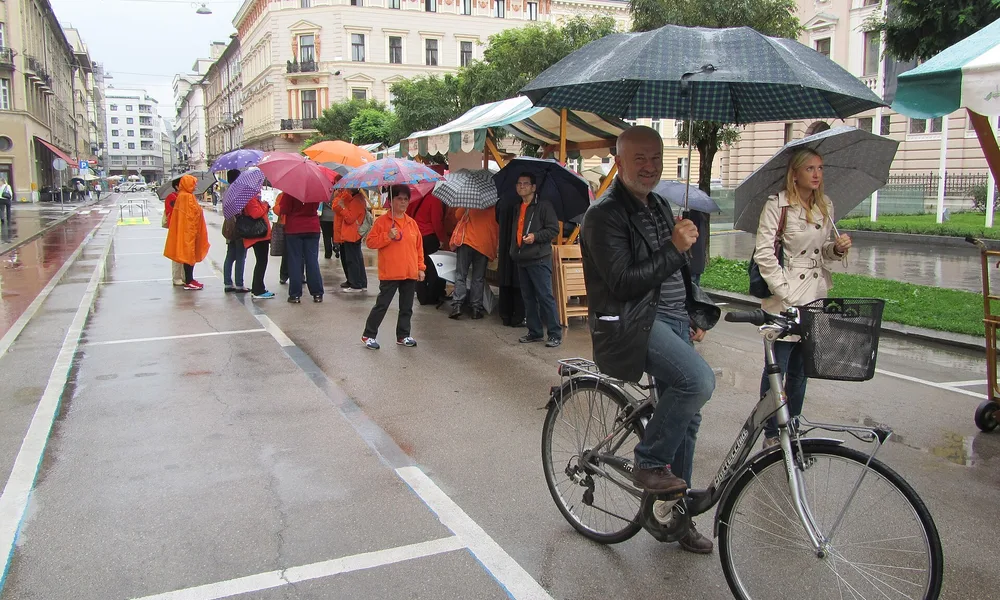
The No-Cover Rain Row has no roof, no canopy and no plan for rain, which is a brave choice where rain is a matter of when, not if. The first shower sends sellers scrambling for plastic sheets, the second sends them packing, and by the third the market is half-empty and the goods that stayed are soaked through. Clothes go home damp, paper goods go home ruined, and food stalls serve from trays that rain has been falling into all morning. Check the sky before you go: if the stalls have no canopies at all, shop early and buy nothing that rain can spoil.
5. The Exhaust-Fume Food Cart: dinner beside the traffic
The Exhaust-Fume Food Cart cooks where the traffic is, because that is where the hungry people are, and the result is a meal seasoned with exhaust. The cart sits on the kerb with buses and lorries idling a metre away, the grill is open to the road, and every passing vehicle throws up dust that settles on the trays and the food. A good street food stall cooks away from the road, under cover, with the food shielded from the street; the worst cart does the opposite. The night markets have their own version of this trap, as our guide to the worst night markets shows, where reheated food and dark aisles spoil an evening of their own. Eat where the cooking happens away from the kerb.
6. The Dead-End Lane: one way in, one way out
The Dead-End Lane is a side street with a single entrance, so every shopper must walk in, turn around at the far end and push back through the same crowd to leave. The stalls nearest the entrance do all the trade, the stalls at the far end starve, and the middle becomes a slow crush of people moving in opposite directions. It punishes everyone: buyers cannot browse, sellers at the far end cannot sell, and anyone in a wheelchair or with a pushchair cannot get through. A good street market is a loop, with more than one way in and out. Shop the far stalls first while the crowd is still at the entrance, then leave before the crush builds.
7. The Sun-Baked Pavement Pile: produce wilting in the open
The Sun-Baked Pavement Pile is where fruit and vegetables are heaped on the hot pavement in direct sun, with no shade and no water to keep them fresh. By midday the leaves are limp, the skins are dusty, and only the pile at the front was ever fresh, because the sun has been cooking the rest since morning. Road dust settles on everything, and the seller’s answer is to spray the pile with water, which only makes the dust stick harder. Pick up the produce before you buy, and if it is warm, limp or gritty, keep your money for a stall that shades its stock.
What to avoid when choosing a street market
The most common street market regret is not a bad market but a blind buy: an item picked up in a hurry, at the first stall, with no test, no comparison and no check of the price two stalls along. Before you pay, check four things: whether you can walk the whole street first, whether the prices are written down, whether the food is cooked away from the traffic, and whether the seller will still be there tomorrow. A good street market rewards patience, because the best stall is often the quiet one at the far end. A bad one punishes haste, which is exactly what a crowded pavement encourages.
Checklist: choosing a street market
- Walk the whole street before you buy anything, and compare the same kind of item on three stalls.
- Buy from stalls with written prices, and walk away from any seller who quotes a price only after looking you over.
- Keep your bag in front of you in a crowded bottleneck.
- Eat only where the food is cooked away from the kerb, under cover, and shielded from road dust.
- Never buy from goods laid on cardboard on the ground, and never pay full price for anything you cannot test on the spot.
- Check the sky: shop early in the rain, and buy produce only from shaded stalls.
Frequently asked questions
What makes a street market bad?
The street itself, above all: no room to walk, no cover from rain or sun, food cooked beside traffic, and stalls that vanish before you can return a faulty buy. Add invented prices and identical stock, and the market is a trap.
How do I spot a tourist trap street market?
Look for identical souvenirs on every stall, no prices written down, and no local shoppers. If every stall sells the same magnets and shirts, walk two streets away and compare the price.
Is street food safe to eat?
Yes, when the stall cooks in front of you, away from the road, under cover, with the food shielded from dust. If the grill sits by the kerb with traffic idling beside it, eat somewhere else.
Should I buy from a stall with goods on the ground?
Only if you can test the item on the spot and you accept that there will be no return. A seller with no stall, no till and no fixed spot is gone before the fault shows up.
What should I do if a street market is too crowded to walk through?
Go early, shop the far stalls first, and keep your bag in front of you. If you cannot stop without blocking everyone behind you, come back another day.
How do I keep produce fresh from a street market?
Buy from shaded stalls, pick up the produce before you pay, and avoid anything warm, limp or gritty with road dust. Get it home quickly, and wash everything before you eat it.
Bottom line
The worst street markets of 2026 are the ones where the street does the damage: tourist strips at triple the price, pavements too crowded to walk, goods sold off cardboard on the ground, rain with no cover, food cooked beside the traffic, dead-end lanes and produce wilting in the sun. Walk the whole street first, compare three stalls, and keep your money for the seller who shades their stock, cooks away from the kerb and will still be there tomorrow. A good street market is a slow wander with sharp eyes, not a race through a crush.