
Why the Worst Night Markets of 2026 Swallow Your Evening Whole
The worst night markets of 2026 are not the quiet ones with a handful of honest stalls. A small evening market where the food is cooked in front of you, the prices are written down and a craft stall is run by the person who made the goods can be the best part of a night out. The worst night markets fail in a simpler way: they charge restaurant prices for reheated food, sell factory goods as handmade, and leave you standing in a dark, noisy aisle with nowhere to sit. This guide ranks the worst types of night market you will meet in 2026, so you can spot a bad one before your evening disappears.
Key takeaways
- Eat where the cooking happens: a stall with no fire, no grill and no steam is selling leftovers.
- Prices should be written down, because a price that changes with your accent is not a price.
- Handmade means made by hand: identical stock on every stall is factory stock, whatever the sign says.
- Dark, cramped aisles hide bad food and bad goods, so keep your bag in front of you.
- Walk the whole market first, eat at the busiest stall, and keep your money for a seller who answers questions.
How the worst night markets were chosen
Every type below was scored on five measures. Freshness comes first: is the food cooked now, or was it cooked hours ago and kept warm? Honest pricing is second, judged on whether prices are shown and whether they stay the same for every buyer. Craft is third: were the goods made by the person selling them, or bought in bulk and relabelled? Comfort is fourth, because a market needs light to see by, room to walk and somewhere to sit. Atmosphere is fifth: a market should feel lively, not loud, pushy and exhausting.
Two notes before the list. First, this guide is about night markets themselves, not markets in general: our guide to the worst markets ranks the everyday, food, farmers’, flea and craft markets that waste your money in daylight, and the night market is only one row in it. Second, no single market is named as the worst, because the same seven traps turn up in every town and every country. The same logic applies after dark at any gathering, as our guide to the worst festivals shows, where crowds, noise and overpricing spoil an evening of their own.

Comparison table: the worst night markets of 2026
| Rank | Night market type | Main fault | Warning sign |
|---|---|---|---|
| 1 | The Reheated Food Stall | Food cooked hours earlier, served warm | Cold centres, dry edges, no cooking in sight |
| 2 | The Tourist-Price Food Row | Same dish at triple the price | No prices shown, price changes by accent |
| 3 | The Fake Handmade Craft Stall | Factory goods sold as handmade | Identical stock on every stall |
| 4 | The Copycat Snack Row | Every stall sells the same fried snack | One smell, one menu, one price |
| 5 | The Shout-and-Blare Row | Hawkers and loudspeakers drown the market | Shouting at every passer-by, music at full volume |
| 6 | The Vanishing-Change Till | Cash-only tills with never any change | Rounded-up prices, no card, no receipt |
| 7 | The Closing-Time Clearance Trap | Leftovers sold as bargains at full price | Day-old stock, same price, louder promises |
The worst night markets of 2026
1. The Reheated Food Stall: the worst night market of all
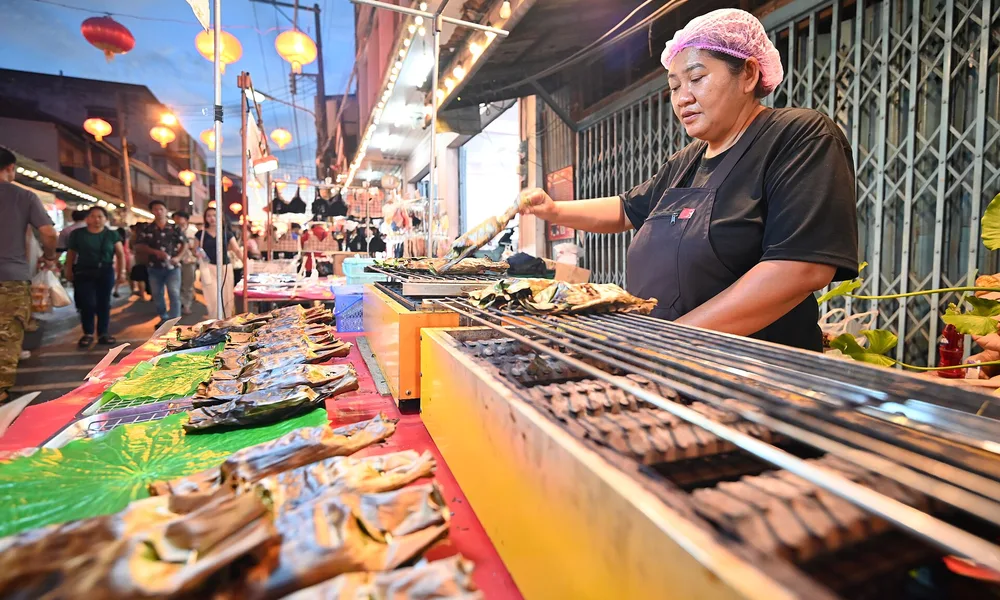
The Reheated Food Stall is the worst night market you will ever eat at, and it is not close. The food was cooked hours earlier, stacked in trays under a heat lamp, and warmed through again when you order, so the outside is hot and the middle is cold. A good stall cooks in front of you: the grill hisses, the wok steams, and you can see your food go from raw to ready. The Reheated Stall has none of that, just quiet trays. The warning signs are plain: dry edges, limp vegetables, meat that has been sitting so long it has gone grey, and a queue of nobody. Eat where the cooking happens, and if nothing is cooking, do not eat there.
2. The Tourist-Price Food Row: the same dish at triple the price
The Tourist-Price Food Row sells the same skewers, noodles and fried snacks as the stall two rows over, but at three times the price, because it sits nearest the entrance and its customers will not walk far enough to compare. Nothing is priced on the board, the seller quotes a number after looking you over, and the price drops the moment you turn away. A fair stall writes its prices where everyone can see them and charges the same to every buyer. The worst row treats the menu as a starting bid. Walk the whole market before you buy a single skewer, check the price on three stalls, and eat where the locals queue.
3. The Fake Handmade Craft Stall: factory goods with a handmade sign
The Fake Handmade Craft Stall sells candles, scarves, soap and jewellery that were made in a factory, shipped in bulk and laid out under a hand-painted sign. Every stall in the row sells the same stock in the same colours, and none of the sellers can tell you how anything was made, because none of them made it. A real craft stall is uneven: one of thrown pottery, one of hand-stitched bags, one of jewellery made at the table. The fake row is smooth and identical, with perfect copies and handmade prices. Ask who made it and how long it took. If the answer is a shrug, the craft is a copy, and a copy should cost a copy’s price. The same caution applies to the stalls outside a stadium, as our guide to the worst sports fairs shows, where mass-made goods wear handmade prices of their own.
4. The Copycat Snack Row: one snack, twenty stalls
The Copycat Snack Row is the stretch of market where every stall sells the same fried snack in the same paper tray at the same price, and none of them sells it well. The smell hits you from three stalls away, the oil has been used since the market opened, and the snack itself is pale, greasy and lukewarm. A good night market is a jumble: one stall grilling fish, one steaming dumplings, one slicing fruit. The Copycat Row is one idea copied twenty times, with no difference to compete on. Walk past the row entirely. The best food in a night market is almost always the stall doing something nobody else is doing.
5. The Shout-and-Blare Row: too loud to think
The Shout-and-Blare Row is the aisle where every seller shouts at every passer-by and every stall has a speaker turned up past the point of music. You cannot ask a question without raising your voice, you cannot taste anything in peace, and by the end of the row your head aches and your patience is gone. A lively market sounds like cooking, talking and laughing, not a contest to be the loudest stall. The worst rows use noise as a sales tactic, because a buyer who cannot think buys quickly. The fix is to keep walking: the quieter rows are usually the ones with the better food, the fairer prices and the sellers who let their goods do the talking.

6. The Vanishing-Change Till: cash only, change never
The Vanishing-Change Till is the stall that takes cash only, never has change, and rounds every price up to the nearest note. Your meal costs a little less than the note you hand over, but the change never comes, because the till is empty, the seller is busy, or the price has quietly risen to match your money. A fair stall shows its prices, takes cards and hands back the right change. The worst till does none of those things, and the missing change adds up across an evening. Carry small notes, ask the price before you order, and count your change in front of the seller. If a stall cannot make change for its own prices, its prices are not real.
7. The Closing-Time Clearance Trap: leftovers at full price
The Closing-Time Clearance Trap is the stall that waits until the last hour, then shouts about bargains while selling the day’s leftovers at the same price it charged at sunset. The food is colder, the crafts are the ones nobody wanted, and the discount is a louder voice rather than a lower number. A genuine closing bargain has a written price and a real cut. The trap has neither, and its stock was never worth its price in the first place. If the bargain only appears when the market is about to close, it is not a bargain, it is a clearance of things nobody bought, and there is usually a reason nobody bought them.
What to avoid when choosing a night market
The most common night market regret is not a bad market but a blind evening: food bought at the first stall, at the first price, with no walk around, no comparison and no check of what is actually cooking. Avoid the trap by checking four things before you spend: whether the food is cooked fresh in front of you, whether the prices are written down, whether the craft stalls are run by their makers, and whether there is light, room and somewhere to sit. A good night market rewards a slow first lap. A bad one punishes haste, because the first stall is usually the one that paid most for its pitch.
Checklist: choosing a night market
- Walk the whole market before you buy anything, and compare the same dish on three stalls.
- Eat where the food is cooked in front of you, and skip any stall with only quiet trays.
- Check that prices are written down, and pay the written price, not the quoted one.
- Ask craft sellers who made the goods and how, and distrust identical stock on every stall.
- Carry small notes, count your change, and avoid cash-only stalls with no prices.
- Keep your bag in front of you in dark, crowded aisles, and leave before the closing-time rush.
Frequently asked questions
What makes a night market bad?
Reheated food above all, then prices that change by buyer, factory goods sold as handmade, and dark, noisy aisles with nowhere to sit.
How do I know if night market food is fresh?
Look for cooking in front of you: a grill, a wok or a steamer in use. Quiet trays, dry edges and cold centres mean the food was cooked hours ago.
Should I haggle at a night market?
For crafts, a polite haggle is normal, but food prices should be written down and the same for everyone. If the price changes when you ask, the stall is guessing what you will pay.
Are crowded night markets always bad?
Not always: a busy stall is usually a good sign, because locals queue where the food is fresh. The problem is a market so crowded and dark that you cannot see the food or your bag.
How do I spot fake handmade crafts?
Ask who made it and how long it took, and compare the stall with its neighbours. Identical stock on every stall is factory stock, whatever the sign says.
Is it safe to eat at a night market?
Yes, at a stall that cooks fresh in front of you and serves a queue of locals. Skip stalls with reheated trays, uncovered food and no customers.
Bottom line
The worst night markets of 2026 are the ones that serve reheated food at tourist prices, sell factory goods as handmade, and leave you standing in a dark, noisy aisle with nowhere to sit. Walk the whole market first, eat where the cooking happens, pay the written price, and keep your money for the busy stall at the far end.


