Don’t Hire the Worst Painters and Decorators of 2026
The worst painters and decorators of 2026 do not ruin a room in one dramatic moment. They ruin it slowly: a coat so thin the old colour shows through, preparation skipped so the paint peels by spring, a splash on the carpet that nobody owns up to, and a bill that bears no relation to the quote you agreed. This guide ranks the worst types by the patterns that cost householders most, so you can spot them before you hand over a key.
Key takeaways
- Preparation is the real job: a painter who will not sand, fill and prime is telling you the finish will not last.
- Two coats are the minimum on a bare or repainted wall, and a quote for one coat is a quote for a job half done.
- Test the colour on the wall before the whole room is painted, because a shade that looked right on a card can look wrong in your light.
- Get the price in writing before work starts, with paint, preparation and clean-up included, and agree what happens if the finish fails.
- Walk away from any painter and decorator who will not put the price, the paint and a guarantee in writing.
How the worst painters and decorators of 2026 were chosen
Every type below was scored on four measures. Quality of finish comes first: are the lines clean, the colour even and the surface smooth, or does the old colour show through within weeks? Preparation is second, judged on sanding, filling, priming and masking, because paint only lasts as long as the surface under it. Honest pricing is third: does the quoted price survive to the bill, or grow with extras for paint, preparation and clean-up? Respect for your home is fourth: dust sheets, tidy edges and a room left clean, not splashed and scattered.
Two notes before the list. First, no single painter or decorator is named as the worst, because the same bad patterns appear in many places, and what matters is learning to recognise them wherever you book. Householders who know what good work looks like will find the same logic in our guides to the best roller frames and the worst paint brushes for acrylic, where knowing the tool matters as much as knowing who holds it.
Comparison table: the worst painters and decorators of 2026
| Rank | Painter type | Main fault | What it costs you |
|---|---|---|---|
| 1 | The one-coat wonder | One thin coat where two are needed | Old colour showing through, repaint within months |
| 2 | The prep-skipper | No sanding, filling or priming | Paint that peels, flakes and bubbles by spring |
| 3 | The splatter merchant | No dust sheets, no masking tape | Paint on carpets, floors and fittings |
| 4 | The shade mis-matcher | Wrong colour, no test patch | A whole room in a colour you never chose |
| 5 | The wallpaper wrecker | Bubbles, seams and patterns that do not meet | Expensive paper wasted, walls stripped and redone |
| 6 | The ghost decorator | Takes a deposit, then stops answering | A deposit gone and a half-finished room |
| 7 | The price that grows | Extras added for paint, prep and clean-up | A bill far above the agreed quote |
The worst painters and decorators of 2026
1. The one-coat wonder: a finish that fades before the paint dries
The one-coat wonder promises a full transformation in a single day, and the room does look transformed when he leaves. The trouble starts a week later, when the old colour begins to show through in the light, first along the edges and then across the whole wall. One thin coat cannot cover a dark colour, a stain or a patched wall, and the paint itself is stretched so thin that it marks at the lightest touch. The one-coat wonder prices the job for one coat and hopes you will not notice until he is gone. Ask how many coats are included before you agree anything, and be suspicious of any quote that is far cheaper than the others for the same room.
2. The prep-skipper: paint over problems, and the problems come back
Preparation is the dull half of decorating, and the prep-skipper treats it as optional. He paints straight over cracked filler, flaking old paint and bare plaster, without sanding, filling or priming, and the finish looks fine for a fortnight. Then the paint starts to peel where the old surface was loose, bubble where damp was trapped underneath, and crack along every filled joint that was never sanded flat. The prep-skipper wins the job by quoting for the painting only, then blames the walls when the finish fails. Before work starts, ask what preparation is included: sanding, filling, priming bare plaster and caulking the gaps around woodwork. If the answer is vague, or if the painter arrives with a brush and no sander, filler or primer, send him away.
3. The splatter merchant: no sheets, no tape, no care
You can tell a splatter merchant within ten minutes of him starting, because nothing in the room is covered. There are no dust sheets on the floor, no masking tape on the skirting, no protection on the light switches or the door handles, and the paint goes on fast and wide. The walls may end up looking decent, but the carpet has white flecks and the skirting has drips. The splatter merchant calls that hour wasted time, and charges you for the cleaning instead, or leaves it for you to find. Walk through the room before the first brush is loaded: floors covered, furniture moved or sheeted, woodwork taped, fittings protected. If the painter reaches for the paint before the protection is down, stop him.
4. The shade mis-matcher: the wrong colour, wall to wall
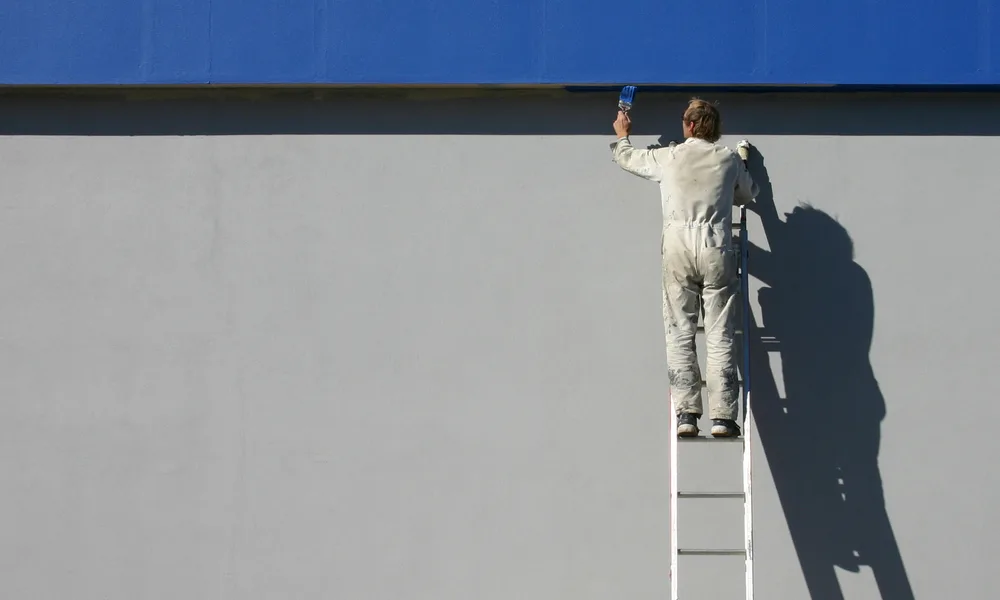
Colour is where a decorating job goes wrong most expensively, because a mistake is not discovered until the whole room is done. The shade mis-matcher buys the paint without a test patch, paints the full room in a colour that looked right on a tiny card in the shop, and only then discovers that it looks green in your north-facing light, or three shades darker than the sample. The mis-matcher skips that step, and when you point out the difference, the answer is that the colour will dry lighter, or that you will get used to it. Insist on a test patch, painted on the wall itself rather than on a scrap of card, and agree in writing which exact shade and brand is being used. A decorator who will not test a colour is gambling with your walls, and you are paying for the gamble.
5. The wallpaper wrecker: bubbles, seams and patterns that never meet
Wallpapering is the most skilled part of decorating, and the wallpaper wrecker is the fastest way to learn that. The signs appear as the paper dries: bubbles where the paste was uneven, seams that gap open, and a pattern that meets perfectly on one wall and drifts half a flower out on the next. The wrecker rushes it, cuts corners around sockets and doors, and leaves edges that lift within days. Before you let anyone hang paper, ask how they match the pattern and how they handle corners, sockets and awkward drops, and ask to see a room they have papered before. If the answers are vague, hire a specialist for the paper and a painter for the paint.
6. The ghost decorator: deposit taken, decorator gone
The ghost decorator is friendly, keen and cheap, and asks for a deposit to buy the paint and hold the date. Then the date arrives and nobody comes. The phone rings out, the messages go unanswered, and the room sits half-prepared with a tin of paint that never arrived. The pattern is always the same: a large deposit paid up front, no written agreement, and no way to get the money back. A proper decorator asks for a small deposit or for the cost of materials only, and puts the dates, the price and the scope in writing before a penny changes hands.
7. The price that grows: the quote was only the beginning
The price that grows starts with the cheapest quote you received, and ends with the most expensive bill. Each extra sounds small, and each is presented as something you should have known about, until the final bill is half as much again as the quote. A good quote lists everything: preparation, paint, number of coats, woodwork, ceilings and clean-up, with the paint brand and shade named. The growing quote lists a single number and a smile. Get the quote in writing, itemised, and agree before work starts that nothing is added without your say-so in writing. Walk away, and pay a fair price to someone who can.
What to avoid when hiring a painter and decorator
The most common hiring regret is not a bad painter but a rushed decision: a quote accepted on the doorstep, a deposit paid without a written agreement, or a colour chosen from a card in a shop. Avoid the trap by checking three things before you pay anything: the quote in writing and itemised, the preparation included and the number of coats, and the paint brand and shade named. Ask for photos of recent work, and ask for a reference you can actually call. The same checks work for other trades too, and our guide to the worst plumbers of 2026 makes the same point about written quotes and deposits, because the traps are the same everywhere.
Checklist: hiring a painter and decorator
- Get an itemised written quote naming the paint brand, shade, number of coats and all preparation before you agree anything.
- Ask for a test patch on the wall itself, checked in daylight and in the evening, before the whole room is painted.
- Check that floors, furniture, woodwork and fittings are protected with sheets and tape before painting starts.
- Pay no more than a third up front, get a receipt for every payment, and hold the final balance until you have inspected the finished room.
- Agree in writing what happens if the finish fails, and how long the guarantee lasts.
- Keep the paint tin and the written quote, so touch-ups match and disputes have a paper trail.
Frequently asked questions
How many coats of paint should a decorator apply?
Two coats are the minimum on most walls, and three on a strong colour change or bare plaster. A quote for one coat is a quote for a job half done.
How do I know if a painter has prepared the walls properly?
Look for sanded filler, primed bare plaster, caulked gaps and clean edges before any paint goes on.
Should I buy the paint myself or let the decorator supply it?
Either works, as long as the brand, shade and finish are agreed in writing first. Buy enough for two coats plus a spare tin.
What should a decorating quote include?
Preparation, paint, number of coats, woodwork, ceilings and clean-up, all itemised with a total price.
How much deposit should I pay a painter and decorator?
No more than a third of the total before work starts Never pay the full balance until you have inspected the finished room in daylight.
Can a bad paint job be fixed without repainting the whole room?
Small flaws can be touched up, but thin coats, skipped preparation and wrong colours cannot.
Bottom line
The worst painters and decorators of 2026 fail in the same few ways: one thin coat, no preparation, no protection, a colour never tested, and a price that grows after the work starts. Hire the opposite: a decorator who prepares the wall, paints two coats, protects the room, tests the colour and puts the price in writing.