
A roller frame is the part of a paint roller you actually hold, and it is the part most people never think about until it lets them down. The sleeve gets all the attention, because it touches the wall, but the frame decides whether that sleeve rolls smoothly or drags, wobbles and leaves stripes. A good frame holds the sleeve steady, spins freely and lets you paint a whole wall without your wrist aching. A cheap one flexes, squeaks and turns an easy job into a frustrating one.
This guide explains how to choose a roller frame for the job in front of you, from a small bathroom to a whole house: the two designs, the sizes that matter, the handles and bearings worth paying for, and the mistakes that ruin a good paint job.
Key Takeaways
- The frame matters as much as the sleeve: a flexing frame leaves stripes.
- Cage frames suit most jobs; wire frames suit light, occasional use and tight budgets.
- Match the frame width to the sleeve: a 9-inch frame is the standard, a 4-inch frame is for trim and tight corners.
- Check the bearings before you buy: the cage should spin freely and silently with a flick of the finger.
- A threaded handle takes an extension pole for ceilings and tall walls.
What a Roller Frame Actually Is
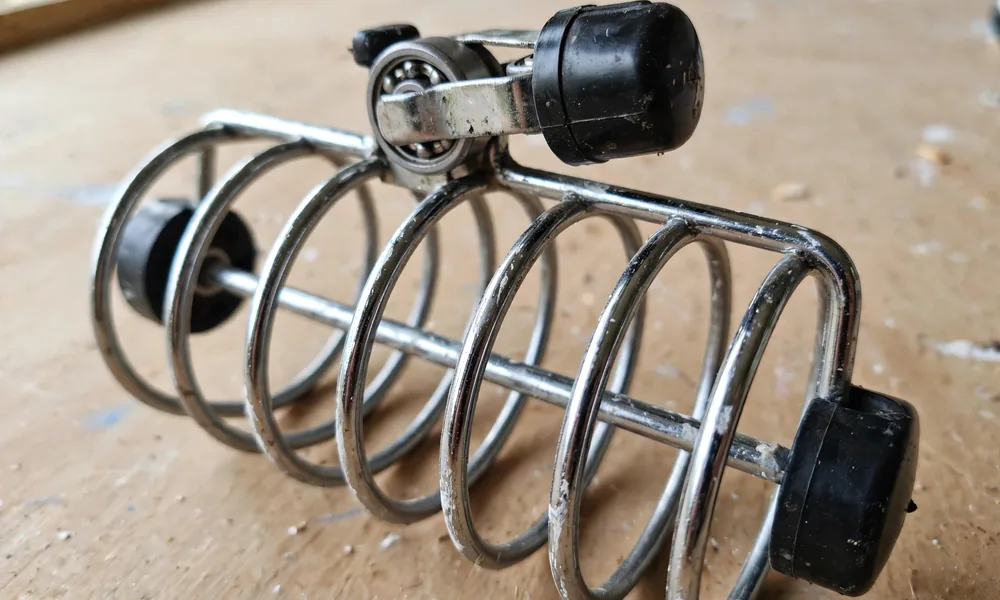
A roller frame is the metal arm, handle and cage that a roller sleeve slides onto. The sleeve is the soft cover that holds the paint; the frame is the skeleton underneath it. The cage is the structure the sleeve sits on, the arm is the bent bar connecting cage to handle, and the handle usually has a hole at the end that screws onto an extension pole.
When you roll paint onto a wall, the frame does three jobs at once: it keeps the sleeve turning evenly, holds it square to the wall, and transfers the pressure from your hand without bending. If any of those jobs fails, the finish shows it: stripes where the frame flexed, or a patchy coat where the sleeve dragged instead of rolling.
Frames are sold on their own, which is worth knowing: the sleeve wears out long before the frame does, so a good frame can outlast a dozen sleeves. Our guide to the best paint rollers of 2026 covers sleeves in detail, including nap length and which sleeve suits which wall; this guide is about the frame underneath.
Cage Frames vs Wire Frames: Which Design Wins
Almost every roller frame is one of two designs. A cage frame has metal rings or a tube supporting the sleeve along its whole length, so it keeps its shape under pressure. A wire frame has a single bent wire through the middle, with the sleeve supported only at its ends.
Cage frames are the better choice for most people. Because the sleeve is supported along its length, it cannot sag or buckle in the middle, so the paint goes on evenly from end to end. They also spin more smoothly, because the bearings sit inside the cage and carry the load evenly. They cost a little more and weigh a little more, but the difference in the finish is easy to see on a large wall.
Wire frames have their place. They are light, cheap and fine for a small job: a single door, a patch of wall, a radiator cover. On a long pass the middle can sag slightly and leave a faint line, but on a small surface you will never notice. They are also easier to clean, and they are the frames most often bundled free with a cheap roller set. If you paint once a year, a wire frame will do. If you paint a whole room, buy a cage frame.
How to Match the Frame to the Job
Frame width is the first decision. A 9-inch frame is the standard for walls and ceilings. A 4-inch frame, often called a mini frame, is for doors, radiators and narrow strips beside windows. A 12-inch frame covers big walls faster, but it is heavy when loaded and harder to control, so it suits experienced painters.
The second decision is the handle. A short handle gives the most control for doors and trim. For ceilings, look for a threaded end that screws onto an extension pole: painting a ceiling without one means working overhead with raised arms, which is exhausting and leaves an uneven coat.
The Best Roller Frames of 2026
We judged every frame the way it is used: fitted with a sleeve, loaded with paint, rolled across smooth plaster and textured walls, and cleaned at the end of the day.
Best Roller Frame Overall: Hamilton Perfection Cage Frame
The Hamilton Perfection is the best roller frame for most people in 2026. Its cage is rigid, its bearings spin freely and silently, and the handle stays comfortable through a full room. It takes standard 9-inch sleeves, screws onto any extension pole, and survives being dropped without bending.
Best Budget Roller Frame: Dulux Trade Wire Frame
The Dulux Trade wire frame is the strongest budget choice we tested. It is light, it spins well for a wire design, and the grip does not slip when your hands get damp. It will not match a cage frame on a large wall, but for small jobs it is excellent value.
Best Roller Frame for Ceilings: Wooster Sherlock Extension Frame
Ceilings need a frame built for pole work, and the Wooster Sherlock is the best we found. Its handle locks onto a pole without wobbling, the cage stays rigid even when the pole is fully extended, and the roller does not tip sideways at the end of it.
Best Mini Roller Frame: Anza Platinum 4-Inch Frame
The Anza Platinum mini frame is the best choice for doors, radiators and tight corners. Its small cage spins as smoothly as a full-size frame, the handle is short enough for precise control, and it fits the narrow sleeves a 9-inch frame cannot use.
Best Heavy-Duty Roller Frame: Purdy Revolution Cage Frame
The Purdy Revolution is built for whole-house jobs and professional use. Its cage is thicker steel than most, the bearings are sealed against paint, and the handle is longer and more heavily padded. It is heavier than the Hamilton, but for a week of painting it is the frame that still feels solid on the last day.

Handles, Bearings and Pole Sockets: What to Check
The bearings are the most important part of a frame and the easiest to test. Hold the frame by the handle and flick the cage: it should spin freely and stop silently. If it grinds or squeaks, the bearings are poor and the sleeve will drag on the wall, leaving a patchy finish that no technique fixes.
The handle deserves the same attention. It should feel comfortable for an hour at a time, with a grip that does not slip when your hands get damp. Rubberised grips beat bare plastic, and a slight curve fits the hand better than a straight handle. Check the end too: a threaded socket takes a standard extension pole, while a plain hole does not. Some cheap frames have a socket that only looks threaded, so try screwing a pole in before you buy if you can.
The arm, the bent metal bar between handle and cage, is where cheap frames fail. Hold the frame by the handle, press the cage against your other palm, and push: if the arm bends visibly, the frame will leave stripes on a real wall. A good arm feels rigid, and the bend where it meets the handle should be welded or forged, not simply bent from thin wire.
The Best Roller Frames Compared
| Frame | Design | Width | Pole socket | Best for |
|---|---|---|---|---|
| Hamilton Perfection Cage Frame | Cage | 9-inch | Threaded | Most walls |
| Dulux Trade Wire Frame | Wire | 9-inch | Threaded | Small jobs, tight budgets |
| Wooster Sherlock Extension Frame | Cage | 9-inch | Locking | Ceilings |
| Anza Platinum 4-Inch Frame | Cage | 4-inch | Threaded | Doors and trim |
| Purdy Revolution Cage Frame | Cage | 9-inch | Threaded | Whole-house jobs |
Common Mistakes When Buying a Roller Frame
The most common mistake is buying the frame and sleeve as a matched set and never questioning the frame. Cheap sets pair a decent sleeve with a flimsy wire frame, and the frame is what ruins the finish. Buy the frame on its own merits: spin the cage, press the arm, check the socket, and only then choose a sleeve.
The second mistake is using a 9-inch frame everywhere. It is right for walls, but wrong for the edges of a room, where a mini frame and a brush do a cleaner job. Cutting in with a brush first, then rolling the main wall, gives a far tidier result than pushing a wide roller into a corner. Our guide to how to pick painters tape for crisp lines covers the other half of that job: masking the edges so the roller can work freely.
The third mistake is forgetting the tray. A tray that is too narrow, too shallow or too flimsy will waste paint and time, however good the frame is. Our guide to the best paint trays of 2026 explains how to match the tray to the roller, because the tray, the frame and the sleeve work as a set.

Roller Frame Checklist
- Spin the cage in the shop: it should turn freely and silently.
- Press the arm against your palm: a good frame feels rigid and does not flex.
- Match the frame width to the job: 9-inch for walls, 4-inch for trim and tight corners.
- Check the handle end: a threaded socket takes an extension pole.
- Choose a cage frame for large walls, a wire frame only for small jobs.
- Clean the frame after every use: dried paint in the bearings ruins the spin.
Frequently Asked Questions
Can I use any sleeve on any frame?
Mostly, yes, as long as the width matches: a 9-inch sleeve needs a 9-inch frame. Sleeves also come in different core diameters, so check the packaging on an unusual brand.
How long does a roller frame last?
A good cage frame lasts for years and outlives many sleeves if you clean it after each use. A wire frame lasts less long, because the wire bends and the bearings wear, but even a cheap frame should survive several rooms.
Do I need a different frame for ceilings?
You need a frame with a threaded handle that takes an extension pole. The frame can be the same 9-inch cage frame you use on walls; the pole is what changes the job, by letting you roll a ceiling from the floor.
Why does my roller leave stripes?
Stripes usually mean the frame is flexing or the bearings are dragging. Check the frame first: spin the cage, press the arm, and try a different frame before blaming the paint.
Should I buy a cage frame or a wire frame?
Buy a cage frame for a whole room or house, because the sleeve stays supported and the finish is more even. Buy a wire frame only for small jobs where price and weight matter more.
How do I clean a roller frame?
Slide the sleeve off, rinse the frame under warm water, and work the cage until the paint is gone. Dry it before storing, because water in the bearings causes rust, and rust makes a good frame drag.
The Bottom Line
The best roller frame is not the most expensive one on the shelf. It is the one with a rigid cage, bearings that spin freely, a comfortable handle and a threaded socket for a pole. Buy a 9-inch cage frame for walls, add a 4-inch mini frame for trim, test the spin and the flex before you pay, and clean it after every job. Get the frame right and the wall ends up smooth instead of striped.


