
Pet Vitamins vs Calming Aids: Which Does Your Pet Actually Need in 2026?
Pet vitamins and calming aids sit side by side on the same shelf, they often come in the same soft-chew shape, and they are easy to confuse, but they solve different problems. Pet vitamins fill gaps in nutrition: joints, skin, coat, digestion and immunity. Calming aids settle nerves: fireworks, travel, separation and vet visits. Buying the wrong one wastes money and leaves the real problem untouched. This guide explains what each one does, when each one helps, and how to choose between them.
Key Takeaways
- Pet vitamins support long-term health such as joints, skin, coat and digestion, while calming aids target short-term stress such as fireworks, travel and separation.
- Most healthy pets on a complete diet do not need a daily vitamin, but seniors, picky eaters and pets with joint or skin problems often benefit.
- Calming aids work best when given before the stressful event starts, not after your pet is already panicking.
- Check the active ingredients and the dose by weight: a vitamin or calming aid sized for a large dog is wrong for a small dog or a cat.
- Neither product replaces a vet visit: sudden behaviour changes, pain, hair loss or appetite loss need a vet, not a supplement.
What Pet Vitamins Actually Do
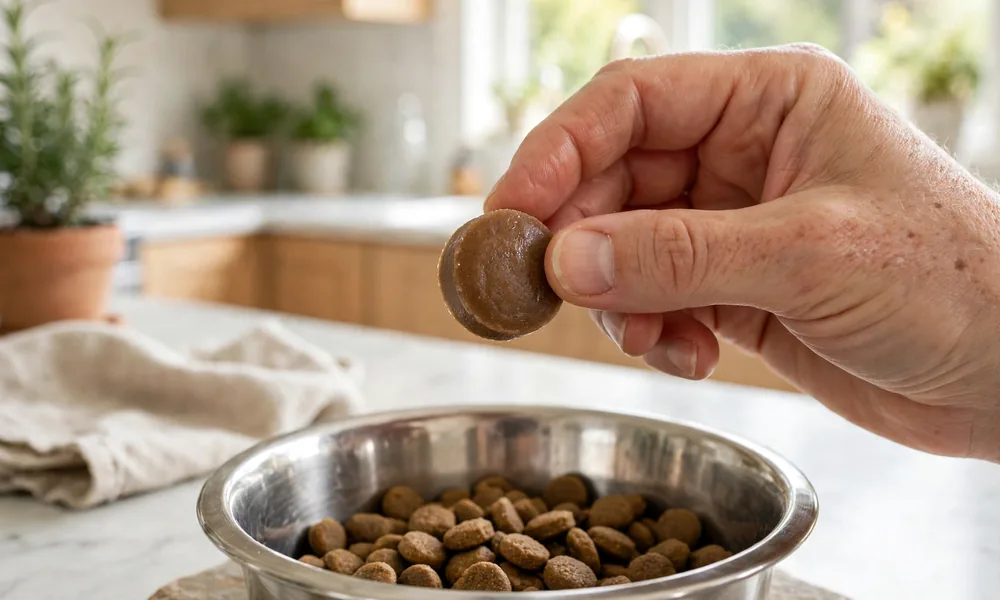
A pet vitamin is a concentrated dose of nutrients your pet may not get enough of from food alone. The most common types are joint vitamins with glucosamine and omega-3, skin and coat vitamins with fish oil and biotin, digestive vitamins with probiotics, and multivitamins that cover several gaps at once. They work slowly: a joint vitamin may take four to six weeks before you notice easier movement, and a skin vitamin needs a similar time before the coat looks better. They are a long game, not a quick fix.
The honest question is whether your pet needs one at all. A healthy adult pet eating a complete, balanced food already gets the vitamins and minerals it needs, and adding more on top rarely helps. The pets who genuinely benefit are seniors with stiff joints, pets with dull coats or itchy skin, picky eaters who leave half their food, pets recovering from illness, and breeds prone to joint trouble. If your pet is healthy, active and eating well, a vitamin is usually money spent on peace of mind rather than on a real gap. Our guide to the best vs worst pet food of 2026 explains what a complete diet already covers, which makes it easier to see whether a supplement adds anything.
Quality varies widely. Look for a product that lists its active ingredients with amounts, not a vague blend, and that states the dose by your pet’s weight. Human vitamins are not a substitute: the doses are wrong, and some human formulas contain xylitol or other ingredients that are toxic to dogs and cats. A vitamin made for pets, with a clear label and a batch-tested brand, is the only safe choice.
What Calming Aids Actually Do
A calming aid helps a pet cope with stress. The common actives are L-theanine, tryptophan, chamomile, valerian root and, in some products, a small dose of melatonin. They work by gently raising the brain chemicals linked to calm, and they take thirty to sixty minutes to start working. They do not sedate your pet: a good calming aid leaves your pet awake and aware, just less reactive to the noise or change that usually sets it off.
Calming aids suit specific, predictable triggers. Fireworks and thunderstorms are the classic ones, followed by car travel, vet visits, moving house, new guests, and separation when you leave for work. They are far less useful for constant, all-day anxiety, which is usually a behaviour or medical problem that needs a vet or a trainer, not a chew. Timing matters most: give the calming aid thirty to sixty minutes before the stressful event, because giving it after your pet is already shaking and panting is usually too late.
Form matters too. Soft chews are the most popular, because most dogs eat them willingly, but they are slower to absorb than a liquid or a fast-dissolving tablet. Calming collars and diffusers work differently again: they release a calming scent or pheromone into the air around your pet, which suits a nervous cat that will not eat a chew. Pick the form your pet will actually accept, because a calming aid your pet refuses does nothing.
Pet Vitamins vs Calming Aids Compared
| Feature | Pet Vitamins | Calming Aids |
|---|---|---|
| Main job | Fill nutrition gaps | Settle nerves and stress |
| Works in | Weeks of daily use | 30 to 60 minutes |
| Best for | Joints, skin, coat, digestion | Fireworks, travel, separation |
| Given | Every day, long term | Before a stressful event |
| Watch out for | Overdosing fat-soluble vitamins | Giving it too late to help |
How to Decide Which Your Pet Needs
Start With the Symptom
The fastest way to decide is to name the problem in one sentence. If the sentence is about the body, stiff joints, a dull coat, an upset stomach, picky eating, then a vitamin is the right shelf. If the sentence is about behaviour, shaking during fireworks, pacing when you leave, drooling in the car, hiding from guests, then a calming aid is the right shelf. If you cannot name the problem that clearly, watch your pet for a week and write down when the trouble happens, because a pattern usually appears fast.
Check the Diet First
Before buying a vitamin, check what your pet already eats. A complete food labelled for your pet’s age and size already contains the vitamins and minerals a healthy pet needs, and a supplement on top adds little. A vitamin makes sense when the diet is incomplete, when your pet eats very little, or when a vet has found a specific gap, such as low omega-3 for skin or glucosamine for joints. If the food is complete and your pet is healthy, spend the money on better food instead.
Check the Trigger First
Before buying a calming aid, check whether the stress has a clear trigger. A pet that panics only during fireworks or car rides has a trigger a calming aid can help with. A pet that is anxious all day, every day, with no clear trigger, usually has a deeper problem: pain, boredom, a medical issue or a learned fear. In that case a calming aid is a bandage, and a vet or a behaviourist is the real answer. The best dog chews of 2026 can also help here, because a long-lasting chew gives an anxious dog a calm, focused job to do while the stressful event passes.
Do Not Double Up Blindly
Many owners give both a vitamin and a calming aid, and that can be fine, but check the labels first. Some calming chews also contain vitamins, and some multivitamins contain calming herbs, so doubling up can mean double doses of the same ingredient. Read both labels, add up the shared actives, and ask your vet if you are unsure. More is not better with supplements: fat-soluble vitamins such as A and D build up in the body, and too much can cause real harm.

Mistakes to Avoid
The biggest mistake is buying a vitamin for a behaviour problem, or a calming aid for a health problem. A joint vitamin will not calm a dog that panics at fireworks, and a calming chew will not fix a dull coat or stiff joints. Matching the product to the problem is the whole decision, and it is the step most owners skip.
The second mistake is expecting instant results from a vitamin, or lasting results from a calming aid. Vitamins need weeks, and judging one after three days tells you nothing. Calming aids last a few hours, and expecting one chew to fix a week of fireworks is unrealistic. Set the right expectation for the product you bought, and judge it on its own timescale.
The third mistake is guessing the dose. Supplements are dosed by weight, and a chew made for a large dog can be far too much for a small dog or a cat. Always check the weight range on the packet, never split a dose by eye, and never give a pet a human supplement. The pet toys that survive aggressive chewers follow the same sizing rule: the right size for the pet in front of you matters more than the brand on the packet.

Your Vitamins vs Calming Aids Checklist
- Name the problem in one sentence first: body problem points to vitamins, behaviour problem points to calming aids.
- Check the diet before buying a vitamin, and check the trigger before buying a calming aid.
- Read the active ingredients and the dose by weight, and never give a pet a human supplement.
- Give calming aids 30 to 60 minutes before the stressful event, not after panic has started.
- Allow four to six weeks before judging a vitamin, and judge a calming aid on the single event it was given for.
- See a vet first if the problem is sudden, constant, or paired with pain, appetite loss or hair loss.
Frequently Asked Questions
Can I give my pet both a vitamin and a calming aid?
Yes, usually, but check both labels for shared ingredients first, because many products overlap. Add up any shared actives and keep the total within the labelled dose. If you are unsure, ask your vet, especially if your pet already takes medication.
Do pet vitamins actually work?
They work when they fill a real gap: joint vitamins help stiff seniors, omega-3 helps dull coats and itchy skin, and probiotics help unsettled stomachs. They do little for a healthy pet on a complete diet, because there is no gap to fill. Give a vitamin four to six weeks before deciding whether it helped.
How long do calming aids take to work?
Most calming chews and tablets take 30 to 60 minutes to start working, so give them before the stressful event. Collars and diffusers work more gradually over hours or days. If your pet is already panicking, a calming aid is usually too late to help that time.
Are calming aids safe for cats?
Calming products made for cats are safe when dosed by weight, but never give a cat a dog calming aid: the dose and the ingredients can be wrong for cats. Cats often refuse chews, so a diffuser or a calming collar may work better for a nervous cat.
Can pet vitamins be harmful?
Yes, in the wrong dose. Fat-soluble vitamins such as A and D build up in the body, and too much can damage the liver and bones. Always follow the weight-based dose on the packet, never give human vitamins, and tell your vet about every supplement your pet takes.
When should I see a vet instead of buying a supplement?
See a vet if the problem started suddenly, if it is constant rather than tied to a clear trigger, or if it comes with pain, appetite loss, hair loss or a change in drinking and toileting. Those signs point to a medical problem that no supplement will fix, and early treatment matters.
Bottom Line
Pet vitamins and calming aids are not rivals: they are tools for different jobs. Choose a vitamin when the problem is in the body, joints, skin, coat or digestion, and give it weeks to work. Choose a calming aid when the problem is in the nerves, fireworks, travel or separation, and give it before the stressful event starts. Check the diet, check the trigger, dose by weight, and see a vet when the problem is sudden or constant. The right product is the one that matches the problem your pet actually has.


