
Beware the Worst Physiotherapists of 2026: Seven Rehab Types That Stall Recovery
The worst physiotherapists of 2026 rarely look incompetent. Their clinics are bright, their equipment is new, and their sessions feel busy and caring. The failure shows up weeks later, when the injury has barely improved: the same five exercises you were given on day one, the massage that feels wonderful and changes nothing, the taping that holds you together for a match and then comes off, the plan that never gets harder and never gets measured. This guide ranks the worst types of physiotherapist by the patterns that stall recovery most, so you can tell a good rehab programme from a comfortable routine that goes nowhere.
Key takeaways
- Good rehab progresses: the exercises should get harder as you get stronger.
- Massage and taping can support recovery, but neither of them is recovery on its own, and a physio who sells them as the treatment is selling comfort.
- Every session should be measured, because without numbers nobody can tell whether you are improving or just attending.
- A physio who never asks about your sport or goals cannot build a programme that gets you back to them.
- If you cannot explain what your rehab is meant to achieve and how you will know it worked, the plan is not a plan.
How the worst physiotherapists were judged
Every type below was scored on five measures. Progression comes first: does the programme get harder, in load, range or complexity, as the athlete improves, or does it repeat the same routine for months? Assessment is second: does the physio test strength, movement and balance at the start and retest them regularly, rather than guessing? Honesty is third: are the limits of massage, taping and gadgets explained plainly, or sold as cures? Specificity is fourth, because rehab for a runner is not rehab for a goalkeeper. Communication is fifth: a good physio explains the goal of each exercise and when to push and when to stop.
Two notes: this article ranks types and patterns only, and names no real person as worst, because the same bad habits appear in many clinics. Physiotherapists and sports doctors also do different jobs, and a balance board is only useful inside a measured programme, so read our guide to the best balance boards in 2026 alongside this one.

Comparison table: the worst physiotherapists of 2026
| Rank | Physio type | Main failure | Cost to the athlete |
|---|---|---|---|
| 1 | The same-routine physio | Identical exercises every visit | Recovery stalls for months |
| 2 | The massage-only physio | Rubbing sold as treatment | Feels better, heals no faster |
| 3 | The tape-and-go physio | Taping instead of rehab | Joint held together, never rebuilt |
| 4 | The gadget physio | Machines instead of a plan | Money spent, strength unchanged |
| 5 | The no-numbers physio | Nothing tested or measured | No way to tell if it is working |
| 6 | The generic-plan physio | Same sheet for every patient | Rehab never matches the sport |
| 7 | The endless-appointment physio | No end date, no discharge plan | Months of sessions, no finish line |
The worst physiotherapists of 2026
1. The same-routine physio: the worst rehab programme
The same-routine physio gives you five exercises on the first visit, and you are still doing the same five exercises, at the same effort, three months later. The routine may have been a sensible starting point, but rehabilitation only works when the body is asked to do a little more as it adapts: a little more load, a little more range, a little more speed. Without progression, the exercises stop being training and become a habit, and the injury stops improving because nothing is challenging it any more. A good physio has stages in mind from the start and moves you through them when you are ready, even if the work gets harder.
2. The massage-only physio: comfort sold as a cure
The massage-only physio runs a clinic that feels wonderful and achieves very little. You arrive stiff and sore, you lie on the bed for forty minutes, and you leave feeling looser and happier, and then the same pain returns by the next morning, because nothing about the injury has actually changed. Massage can ease soreness, but on its own it cannot rebuild a weak muscle, restore control to an unstable joint, or prepare a body for the loads of sport. The test is simple: after a month of sessions, are you measurably stronger, more mobile or more stable than you were? If the answer is no, you are paying for comfort, not recovery.
3. The tape-and-go physio: held together, never rebuilt
The tape-and-go physio treats taping as the answer instead of the bridge. You arrive with a wobbly ankle or a sore knee, the joint is taped with impressive speed and skill, and you are sent back to training with a warning to come back when the tape comes off. Taping is a useful tool: it can support a joint while it heals, give confidence during the return to sport, and protect a weak structure on a big day. But tape does not strengthen anything, does not retrain balance, and does not fix the reason the joint gave way in the first place. A good physio uses tape sparingly and pairs it with exercises that rebuild the joint, so the tape becomes a temporary aid rather than a permanent crutch.
4. The gadget physio: machines instead of a plan
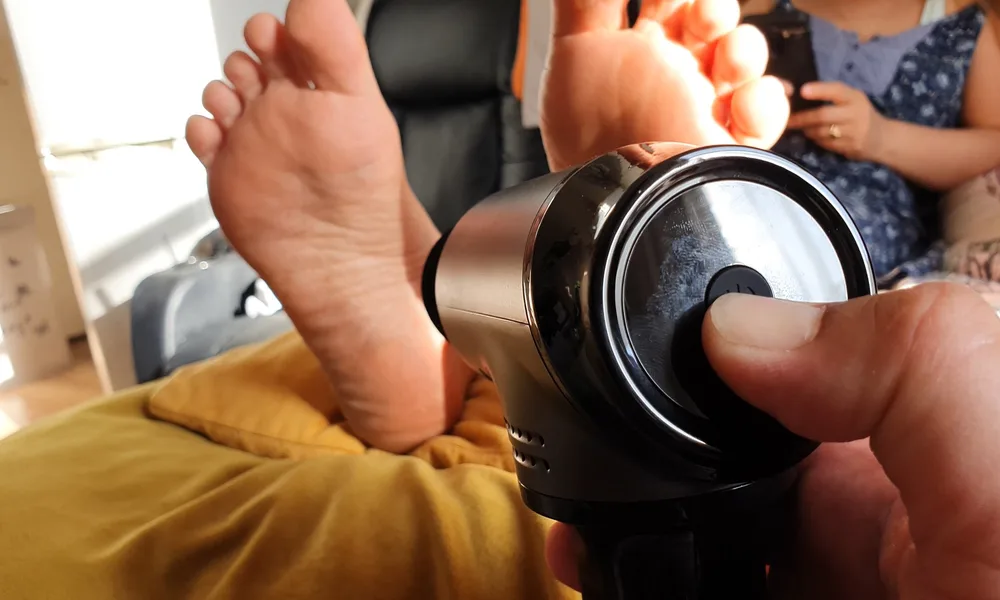
The gadget physio’s clinic looks like a showroom, and every problem you bring in is met with a machine. There is a device for the shoulder, a device for the knee, a device that buzzes, a device that pulses, and a device that costs extra per session. The problem is that the gadget becomes the programme, and the hard, boring work of progressive exercise disappears behind a row of blinking lights. The session is spent lying still while the machine does something to you, rather than you doing something that makes you stronger. If the clinic’s answer to every injury is a new machine, you are being sold equipment time, not rehabilitation.
5. The no-numbers physio: progress that cannot be seen
The no-numbers physio never tests anything. There is no strength score for the injured leg compared with the healthy one, no measurement of how far the joint bends, no balance test, no timed hop, no record of what you could do last month. The physio watches you do your exercises, says they look better, and books the next session. Without numbers, better is just a feeling, and feelings are a poor guide to recovery, because an injury can feel easier while the underlying weakness is unchanged. Good physiotherapy is built on testing: a baseline at the start, regular retests, and clear targets for return. Ask for your numbers and when you will be retested.
6. The generic-plan physio: the same sheet for everyone
The generic-plan physio hands every patient the same printed sheet. The runner with a sore Achilles gets the same exercises as the office worker with a stiff neck, and the goalkeeper with a shoulder problem gets the same routine as the cyclist with a bad knee. The sheet may be sensible in general, but rehabilitation is specific: it has to match the injury, the sport, the position and the athlete’s goals, or it misses the point. The warning signs are the absence of questions: the physio never asks what sport you play, how often you train, or what you most want to get back to. The same logic applies to equipment: a cardio machine is only useful when it fits the plan, which is why our guide to the best ellipticals in 2026 is worth a look before you spend money on home rehab kit.
7. The endless-appointment physio: rehab without a finish line
The endless-appointment physio never talks about discharge. There is always one more session, one more block, one more top-up, and the end of treatment is a date that keeps moving away. Some injuries do take a long time, but a good physio still has a plan with stages, targets and a point at which you graduate to managing the work yourself. The endless physio has none of that: the sessions continue because they are booked, not because they are needed, and the athlete slowly becomes dependent on the clinic, unsure how to train without supervision and nervous about stopping. Ask early what finished looks like, and roughly when you should get there.
What to avoid when choosing a physiotherapist
The most common mistake is choosing a physiotherapist by the clinic’s looks: the newest machines, the smartest reception, the longest list of treatments on the wall. None of those things predicts a good programme. Avoid the clinic that promises a fixed number of sessions before assessing you, the physio who cannot explain what each exercise is for, and any physio who discourages a second opinion or will not write down your numbers and targets. The worst running shoes can undo good rehab by loading the body badly, so the shoes, the training load and the rehab plan all need to work together.
Checklist: spotting a bad physiotherapist early
- Check the first session includes real tests of strength, movement and balance, with the numbers written down.
- Ask what the next stage looks like and when you should reach it, and walk away if there is no answer.
- Refuse a plan that is mostly massage or taping, and ask what exercise work is doing the rebuilding.
- Ask what each gadget is meant to achieve, how you will know it worked, and what it costs.
- Insist on a programme built around your sport, position and goals, not a printed sheet for everyone.
- Ask what finished looks like and when discharge should happen, and get a second opinion if the answer keeps moving.
Frequently asked questions
How many physiotherapy sessions should rehab take?
It depends on the injury, but a good physio gives you stages and targets from the start, with regular retests and a rough idea of when you should manage the work yourself. A clinic that keeps adding blocks without explanation is selling appointments, not recovery.
Is massage useless for sports injuries?
No, but it is a support, not a programme. Massage can ease soreness and help you move more freely, which makes the strengthening work easier. On its own it does not rebuild strength or prepare a joint for sport.
Should I be taped every time I play?
Taping can help while a joint is healing and during the return to sport, but it should be a temporary bridge, not a permanent habit. If you cannot play without tape months after the injury, the strengthening work has not been done.
Do I need the newest rehab machines?
Almost never. The core of good rehab is progressive exercise, measured regularly and matched to your sport. Machines can support that work, but they cannot replace it, and a clinic that leads with gadgets rather than a plan is usually selling equipment time.
What should a good first physio session include?
A proper assessment: questions about your sport, training and goals, tests of strength, movement and balance, and a plan that explains what each exercise is for. If the first session is mostly treatment with no testing and no plan, the clinic has skipped the part that matters most.
When should I get a second opinion on my rehab?
Whenever the programme never changes, the numbers are never measured, the plan looks identical to everyone else’s, or you have been attending for months without a finish line in sight.
Bottom line
The worst physiotherapists of 2026 fail in the same quiet ways: they repeat one routine, sell comfort as treatment, tape instead of rebuilding, hide behind gadgets, never measure anything, and never talk about finishing. Expect real tests with numbers, a programme that progresses, exercises matched to your sport, and a clear picture of what finished looks like.


