
Worst Pickup Trucks for Spring Driving 2026
The worst pickup trucks for spring driving 2026 are the ones that look tough in a showroom and then fall apart the moment the season turns damp. Spring is the season that exposes a bad pickup truck. Winter salt has eaten the underside, the demister cannot clear a misted windscreen, the cabin filter is clogged, the bed leaks, and the first muddy lane leaves the truck spinning its wheels with an empty bed. The worst pickup trucks for spring driving are the ones that fail exactly where spring tests them: cold damp mornings, pollen in the air, wet roads, potholes, mud, and the first trailer of the season. This guide names the types to avoid, and the warning signs that tell you to walk away.
We judged them on the failures that ruin spring: rust and salt damage from winter, demisting that takes an age, cabin filters that cannot cope with pollen, two-wheel drive on wet grass and mud, thirsty engines with no efficiency tech, and oversized trucks that do not fit narrow spring lanes. None is necessarily bad in every situation; they are bad for spring. The worst pickup trucks for summer driving fail on heat and cooling, but the spring failures are different: damp, rust, mud, and the slow decay that winter leaves behind.
Key Takeaways
- Old pickups with winter salt damage are the biggest risk: rust under the bed and chassis turns a cheap truck into a repair bill.
- Slow demisting is a deal-breaker in spring, especially with a weak heater or a tired blower.
- Two-wheel drive is the single biggest spring weakness in a pickup: an empty bed over light rear wheels spins on wet grass and mud.
- Oversized trucks are miserable on narrow spring lanes and in town car parks, where width and turning circle become a daily problem.
- Always check a used pickup for rust, demisting, and four-wheel drive on a damp morning before buying.
How We Judged the Worst Spring Pickups
Our judgement starts with winter damage, because spring is when it shows. A truck that looked solid in a showroom in January can reveal rusted sills, a rotten bed floor, and corroded brake lines by March, once the salt has done its work and the first wet weeks wash the dirt away. We marked down trucks with a history of corrosion, thin paint, and no underseal, because a rusty chassis is not a cosmetic problem: it is a safety problem, and it is expensive to fix.
Next came damp mornings and pollen. Spring mornings bring dew, fog and mist, and a truck with a weak heater or a tired blower leaves you waiting with the engine running. Pollen counts rise sharply from March, so a truck with a clogged or missing cabin filter fills the cabin with dust and leaves the driver sneezing. We also considered traction: a light rear end, two-wheel drive and worn tyres make wet grass and muddy lanes a trap, and we considered size and cost, because an oversized, thirsty truck punishes you on every mile of a spring of short trips.
The 6 Worst Pickup Trucks for Spring Driving 2026
| Truck Type | Main Spring Problem | Typical Weakness | Why It Fails in Spring | Who Should Avoid It |
|---|---|---|---|---|
| Old rusty pickups | Winter salt damage | Rusted chassis and bed | Rust turns into repair bills | Anyone wanting a daily driver |
| Base 2WD pickups | No grip on mud | Rear-wheel drive only | Empty bed spins on wet grass | Anyone leaving tarmac |
| Oversized heavy-duty trucks | Too big for spring lanes | Width and turning circle | Cannot fit lanes or car parks | Town and country lane drivers |
| Thirsty old V8 trucks | Fuel bills | No efficiency tech | Short spring trips cost a fortune | Budget buyers and commuters |
| Car-based pickups | No low range | Unibody, low clearance | Stuck on rutted muddy tracks | Farm and campsite drivers |
| Trucks with weak demisting | Misted glass, pollen | Weak heater, clogged filter | Slow starts and sneezing cabins | Allergy sufferers and early risers |
1. Old Pickups With Winter Salt Damage: Worst Pickup Truck for Spring Driving Overall
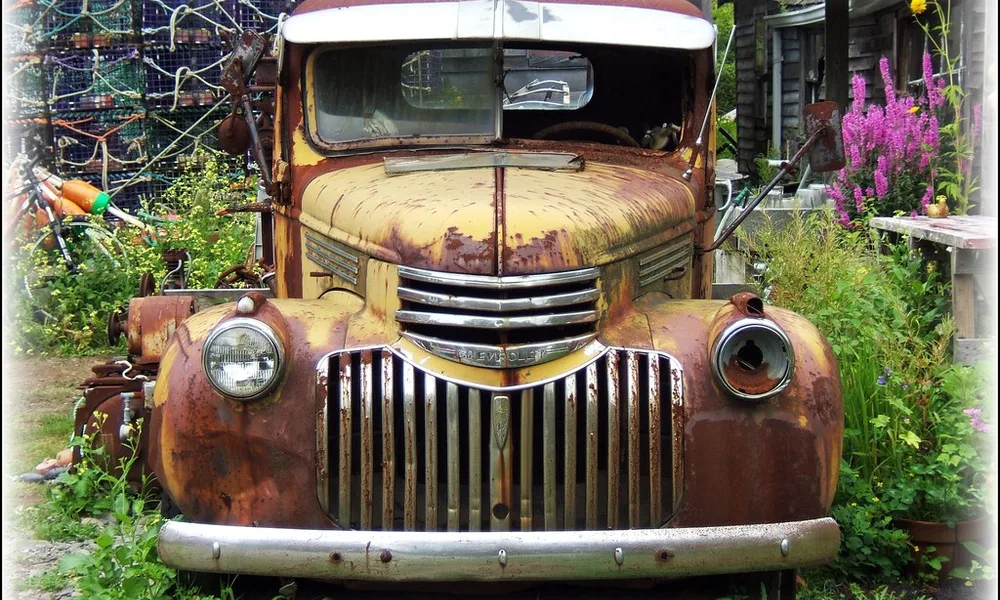
Old pickups with winter salt damage are the worst pickup trucks for spring driving overall in 2026, because spring is when the damage shows. All winter, salt has attacked the chassis, the sills, the bed floor and the brake lines, hidden under a layer of dirt. Come March, the first wet weeks wash the dirt away and reveal rust that has eaten through metal, and a truck that looked solid in January suddenly needs welding, new brake lines, and a bed floor.
2. Base Two-Wheel-Drive Pickups: Worst Pickup Truck for Muddy Spring Lanes
Two-wheel drive is the single biggest spring weakness in a pickup: with an empty bed, almost no weight sits over the rear wheels, and on wet grass, mud, or a soggy field entrance, the driven wheels simply spin. Four-wheel drive costs extra, and base models are often sold with rear-wheel drive only, which is fine on dry tarmac and hopeless the moment the truck leaves it.
Spring is full of moments that need grip: a muddy campsite, a wet building site, a grass verge after rain. A two-wheel-drive truck gets stuck in all of them, and getting towed out of a field is an expensive lesson. If your spring involves anything softer than tarmac, buy four-wheel drive, and check that it engages smoothly before you pay.
3. Oversized Heavy-Duty Trucks: Worst Pickup Truck for Narrow Spring Lanes
Oversized heavy-duty trucks are the worst pickup trucks for narrow spring lanes, because spring driving is full of tight spaces. Country lanes narrow with fresh growth, hedges close in, town car parks fill with spring visitors, and a truck that is over two metres wide with a turning circle like a bus becomes a daily problem. Parking is a chore, three-point turns become five-point turns, and every narrow bridge is a gamble.
4. Thirsty Old V8 Trucks: Worst Pickup Truck for Spring Fuel Bills
Thirsty old V8 trucks without modern efficiency tech are the worst pickup trucks for spring fuel bills. Spring is a season of short trips: garden centres, tip runs, school runs, DIY stores, and weekend jobs, and a big old V8 drinks fuel on every one of them. A modern turbo or hybrid truck can be twice as efficient around town, and the difference adds up to hundreds of dollars over a season of short journeys.
5. Car-Based Pickups: Worst Pickup Truck for Rutted Spring Tracks
Car-based pickups such as the Hyundai Santa Cruz and the Honda Ridgeline are the worst pickup trucks for rutted spring tracks, because they have no low-range gearing and low ground clearance. They are comfortable and easy to drive on the road, but spring tracks are not roads: they are rutted, muddy, and steep, and a truck without low range cannot crawl through them. The unibody construction also limits towing, and the small beds are little use for real spring work.
On a rutted campsite entrance, they ground out and get stuck, even with all-wheel drive. If your spring stays on tarmac, they are fine, but if it involves farms or campsites, buy a proper body-on-frame truck with low range and real clearance. The worst pickup trucks for city driving include car-based trucks for different reasons, but the lesson is the same: know what the truck cannot do before you buy it.
6. Trucks With Weak Demisting and Clogged Filters: Worst Pickup Truck for Spring Mornings
Trucks with weak demisting and clogged cabin filters are the worst pickup trucks for spring mornings, and spring mornings are when you use the truck most. A weak heater or a tired blower takes an age to clear a misted windscreen, and on a damp morning that means sitting in the driveway with the engine running, late for work, while the glass slowly clears. A clogged cabin filter makes it worse: the fan blows dust and pollen into the cabin, the driver sneezes, and the windows mist up again.
These are cheap problems to fix on a good truck, but on a bad one they are symptoms of neglect: a truck whose owner never changed the filter probably never serviced anything else. Test the demister from cold on a damp morning before you buy, and if the glass takes more than a few minutes to clear, walk away.
Spring Pickup Checklist: 6 Warning Signs Before You Buy
- Check underneath for rust: poke the sills, chassis rails and bed floor, and walk away from soft or flaking metal.
- Test the demister from cold on a damp morning: if the windscreen takes more than a few minutes to clear, the heater or blower is tired.
- Ask when the cabin filter was last changed: a clogged filter means pollen season will be miserable.
- Engage four-wheel drive and low range on a loose surface: both should engage smoothly, with no warning lights or grinding.
- Check the bed for leaks, rot and damage: a leaking bed ruins camping gear and garden supplies.
- Look at the tyres: worn tyres on a light-rear pickup are hopeless on wet grass and mud, and a new set costs hundreds.
Frequently Asked Questions
Which pickup truck is worst for spring driving?
An old pickup with winter salt damage is the worst overall, because rust turns a cheap truck into a repair bill and a safety risk. Close behind are base two-wheel-drive trucks, which cannot grip wet grass or mud, and oversized trucks, which cannot fit the lanes and car parks of spring.
Is two-wheel drive really that bad in spring?
On dry tarmac, no. On wet grass, mud, or a soggy field entrance, yes. A pickup with an empty bed has almost no weight over its driven rear wheels, so it spins where a four-wheel-drive truck grips. Spring is full of soft ground, so four-wheel drive is worth the extra cost.
How do I check a used pickup for rust?
Get underneath it with a torch in daylight, poke the sills, chassis rails and bed floor with a screwdriver, and look for flaking, bubbling paint, or filler. Check the brake lines too. If the seller will not let you look underneath, walk away. Our guide to the worst pickup trucks for winter driving also covers salt damage and cold-weather checks that still matter in early spring.
Can I fix weak demisting in a pickup?
Sometimes: a new cabin filter, a regas, or a faulty fan can restore performance, but a small heater core or a tired blower cannot be fixed cheaply. If the demister is slow on a damp-morning test drive, assume an expensive repair and factor it into the price, or walk away.
Should I avoid buying a used pickup in spring?
No, but spring is the best season to test one, because damp mornings expose weak demisting and mud exposes weak traction. Take a long test drive on a damp day and inspect the underside for rust first.
Are car-based pickups bad trucks?
Not bad trucks, just bad spring work trucks. On tarmac they are comfortable and easy to drive, but without low-range gearing and with low clearance, rutted muddy tracks are beyond them. Buy one for town use, not for farms and campsites.
Bottom Line
The worst pickup truck for spring driving in 2026 is an old truck with winter salt damage, because rust turns a cheap buy into a repair bill and a safety risk, and spring is when the damage shows. Behind it come base two-wheel-drive trucks that cannot grip mud, oversized trucks that cannot fit spring lanes, thirsty old V8s, car-based pickups with no low range, and trucks whose demisters cannot clear a damp windscreen. A pickup should make spring easier, not harder: if a truck is rusty, spins on wet grass, or leaves you waiting for the glass to clear, it is the wrong truck for the season, whatever it cost.


