Every rental apartment looks better in photographs than it does in person, and that gap is where the worst rental apartment red flags hide. A bright listing can conceal damp walls, tired wiring and a landlord who disappears the moment the deposit clears. The rent may look fair and the location perfect, but a bad flat will cost you far more.
The trick is not to fall in love with a flat at first sight. Walk through it slowly, open every cupboard, run every tap and look behind the furniture. Most rental apartment red flags are visible if you know where to look.
This guide covers the warning signs that matter most, from damp and mould to vague contracts and noisy neighbours. Some are deal-breakers on their own. Others are manageable if the landlord agrees to fix them in writing before you move in. None deserve to be ignored because you are tired of searching.
Key takeaways
- Damp, mould and musty smells are the most serious red flags, because they affect health and are expensive to fix properly.
- Run the taps, flush the toilet and test the heating on every viewing, even in summer.
- Fresh paint in one patch or new sealant around a bath often hides a leak rather than fixing it.
- A vague lease, a landlord who avoids written answers and pressure to pay before you have seen the contract are reasons to walk away.
- Visit the building at a different time of day, because noise and parking only show up when the viewing ends.
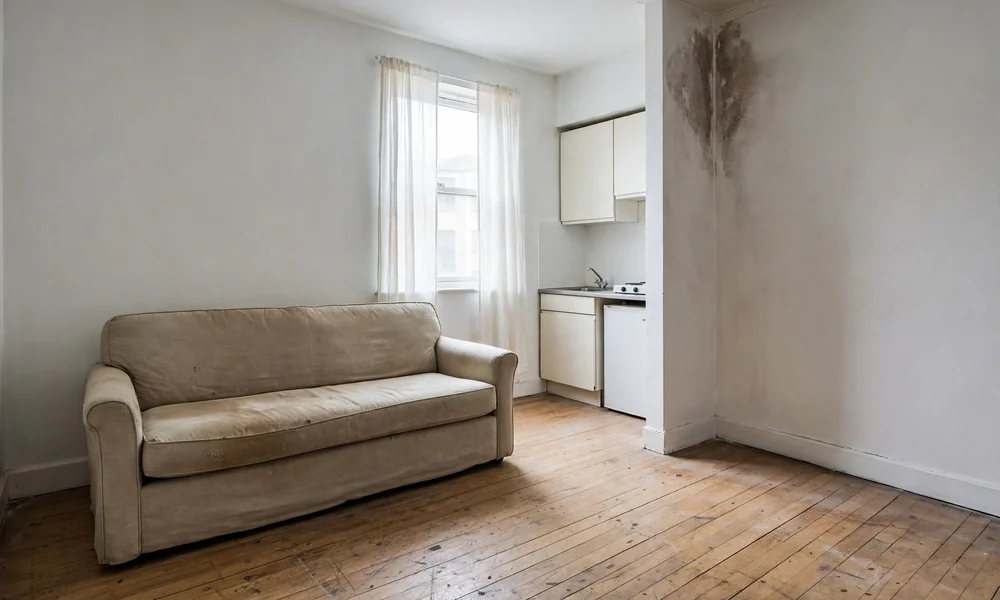
Damp, Mould and Water Damage
Damp is the red flag that causes the most misery for tenants, and the one landlords most often try to paint over. Look for dark patches on ceilings and walls, bubbling paint and black spots around windows and in bathroom corners. Press your hand against outside walls: cold and clammy means moisture is getting in.
Smell matters as much as sight. A musty odour in a closed room usually means mould is growing somewhere you cannot see, often behind wardrobes or under sinks. Ask directly whether the flat has ever had damp or a leak. A clear answer is reassuring. A shrug is not.
Where damp hides on a viewing
Check behind the bed, inside wardrobes and around the base of the bath. Look at the ceiling below a bathroom and the wall shared with a neighbour. A neat circular stain usually points to a leak from above, while staining that creeps up from the floor points to rising damp. Both need a professional fix, not paint.
Cracks, Sloping Floors and Structural Wear
Not every crack is a crisis. Hairline cracks around doors and windows are common in older buildings as they settle. What should worry you are wide cracks that run diagonally, cracks that step through brickwork, doors that will not close, and floors that slope noticeably from one side of a room to the other.
Test the floors as you walk. A slight spring in an old wooden floor is normal. A spongy patch or tiles that lift at the edges suggests water damage or a failing subfloor. Open and close every window and door too. Sticking frames can mean damp swelling, and condensation trapped between double-glazed panes means the seal has failed.
Plumbing, Water Pressure and Hot Water
Plumbing problems announce themselves if you test them. Turn on the bath tap and the kitchen tap at the same time and see whether the flow collapses. Flush the toilet and listen for a slow refill or a constant trickle. Run the shower and check whether the water stays hot. Weak pressure and slow drains rarely improve on their own.
Look under every sink for drips, stains and warped wood. Check the boiler if you can see it, and ask when it was last serviced. A boiler with no service sticker or a flashing error light deserves a direct question. Ask how the hot water works too, because some flats rely on a small tank that runs out after one shower.
Electrical Safety and Heating That Works
Old wiring is easy to overlook and dangerous to ignore. Look at the fuse box and check whether it has modern trip switches rather than old wire fuses. Count the sockets in each room. A flat with one socket per room and extension leads trailing across the floor is a flat whose wiring has not kept up with modern life. Look for scorch marks and switches that buzz or flicker.
Heating deserves the same attention, whatever the season. Ask the agent to turn it on and feel each radiator after a few minutes. Cold spots at the bottom mean sludge in the system, while a radiator that stays cold all over may mean a broken valve. Portable heaters in every room are a warning sign: the main heating does not do its job.
Fresh Paint and Cosmetic Cover-Ups
A freshly decorated flat is not a problem in itself. The problem is decoration used to hide a fault rather than to present a home well. Be suspicious when only one wall is painted, when paint is thick over a stain, or when a room smells strongly of paint on a second viewing. Strong air freshener in every room can serve the same purpose, masking damp or smoke.
Look at the details a quick makeover usually misses: stained ceilings above a fresh wall, new skirting boards over a damp floor, or a rug placed over the same spot in every photograph. None proves a fault, but together they form a pattern worth asking about. Remember that the home design trends that date fast often show up in rentals as cheap fixes that look good for a month and fall apart within a year.
Space, Light and Layout That Fight You
Some flats are simply badly planned, and no amount of clever furniture will fix them. A bedroom that fits a bed but no wardrobe, a kitchen with no worktop space beside the cooker, or a living room with one small window facing a wall are daily frustrations photographs hide well. Measure the rooms, and imagine your own furniture in them rather than the staged pieces.
Natural light matters more than most tenants expect. A dark flat feels smaller, costs more to light and heat, and can affect your mood through a long winter. Visit in daylight and note which rooms get sun. Check the storage honestly too. If there is nowhere for a vacuum cleaner, a drying rack and winter coats, your living space will shrink the moment you move in. That is why furniture buys that fail in small spaces are such a common regret for renters.
The Bedroom Test
Spend extra time in the bedroom, because it is where a bad flat hurts most. Is there a socket beside the bed, does the window open, can you hear the road through the wall, and is the room dark enough to sleep? A bedroom next to a lift shaft, a bin store or a late-night bar will cost you sleep every single night.
The mattress matters too, if one is included. Press it firmly and check for sagging, stains and springs you can feel. A worn mattress is not just uncomfortable, it can make back problems worse and leave you waking up stiff. If the landlord will not replace it, that tells you how maintenance requests will be handled later. The mattresses that make back pain worse are a reminder that a free mattress is no bargain if it damages your health.
The Lease, the Landlord and the Money
A bad flat with a fair lease is a risk. A bad flat with a vague lease is a trap. Read the contract before you pay anything, and be wary of pressure to sign on the spot or to transfer a deposit before you have seen the full terms. Check the tenancy length, the notice period, who pays for repairs, whether the deposit is protected, and what happens if something breaks in the first month.
Watch for fees that do not match the listing, or a landlord who will only communicate by phone and never in writing. Written answers protect both sides, and a landlord who avoids them is usually avoiding accountability. Ask who manages the property and how quickly emergency repairs are handled.
| Red flag | What it can mean | What to do |
|---|---|---|
| Damp patches or mould | Leak, poor ventilation or rising damp | Ask for the cause and a written repair plan |
| Weak water pressure | Old pipes or a failing system | Test taps and shower together on the viewing |
| One freshly painted patch | A stain or crack being hidden | Ask what was repaired, and when |
| Buzzing sockets or old fuse box | Outdated or unsafe wiring | Ask for a recent electrical safety check |
| Vague lease or rushed signing | Hidden fees or weak tenant protection | Read every clause before paying anything |
| Broken shared entrance or bins | Poor building management | Check who manages the building and how |
Viewing Checklist
- Smell each room for damp or smoke, and look behind furniture and inside cupboards.
- Run all taps together, flush the toilet, test the shower and check under every sink.
- Open and close every window and door, and turn the heating on even in summer.
- Check sockets, the fuse box and switches for scorch marks, buzzing or flickering.
- Read the full lease, confirm deposit protection, and get repair promises in writing.
- Visit the street and entrance at a different time of day, and check noise and parking.
Frequently Asked Questions
What is the biggest red flag in a rental apartment?
Damp and mould are the biggest red flags, because they affect your health, damage your belongings and are difficult to fix properly. A flat with persistent damp needs the source of the moisture found and repaired, not just paint. If the landlord cannot explain the cause, walk away.
Should I rent a flat with a small amount of mould?
A small patch around a window in winter can be a ventilation issue that improves with airflow and cleaning. Widespread mould, or mould that returns after cleaning, is a different matter. Ask what caused it and get the answer in writing.
How can I test water pressure during a viewing?
Turn on the kitchen tap, the bathroom tap and the shower at the same time. If the flow drops sharply, the system is struggling. Flush the toilet while the taps run and watch how long it takes to refill.
Is fresh paint in a rental a warning sign?
Fresh paint across a whole flat is usually a good sign. Paint on one patch or one wall is worth questioning, especially if the rest looks tired. Ask what was underneath it.
What should I do if the landlord pressures me to sign quickly?
Slow down. Pressure to sign before you have read the lease, or to pay a deposit before a second viewing, is itself a red flag. A fair landlord will give you time to read the contract. Never pay a large sum for a flat you have not inspected.
Can I ask for repairs before I move in?
Yes. List every fault you found and ask for the repairs to be completed before the tenancy starts, or written into the contract with a date. Take photographs on the day you move in and keep copies of every message.
The Bottom Line
The worst rental apartment red flags are rarely hidden. Damp walls, weak water, tired wiring, a vague lease and a landlord in a hurry are all visible to a tenant who takes the time to look, test and ask. A flat does not need to be perfect, but it does need to be safe, dry, warm and honestly described. If you find several warning signs in one place, trust what you saw. The right flat still looks good after a slow second look, and it is worth waiting for.