Steer Away From the Worst Skid Steers of 2026: Compact Loaders, Costly Breakdowns
The worst skid steers of 2026 look like the cleverest buy on the yard: a compact loader that turns on the spot, lifts a full bucket, runs a dozen attachments and costs less than a wheel loader twice its size. Then the machine tips forward with a full bucket, the hydraulics fade as the oil warms, the tracks wear out in months, and the dealer quotes a repair bill that costs more than a month of hire. A bad skid steer rarely announces itself on the test drive. This guide names the seven worst skid steers of 2026, based on published recall records, owner surveys and repeated owner complaints, so you can spot the pattern before you sign.
Key takeaways
- The Bobcat S650 is the skid steer to avoid first: owners report a machine that tips forward with a full bucket at height and lift arms that sag while the operator waits to tip.
- Stability and lift at height matter more than rated capacity: a skid steer that cannot hold a full bucket steady is dangerous, not just slow, on real site work.
- Tracks and the undercarriage are the hidden cost in skid steers, just as tyres are in wheel loaders: worn tracks and rollers can cost more in a year than the saving at purchase.
- Dealer support matters as much as the machine: a thin network means long waits for parts and warranty work that eats into loading days.
- Always check the recall record, the service history and a pre-purchase inspection before you buy, and test the exact machine lifting a full bucket to full height, not just an empty drive.
How the worst skid steers of 2026 were chosen
Every skid steer below was scored on five measures. Reliability comes first: how often owners report faults, and how serious those faults are. Repair cost is second, because a dealer-only repair turns a nuisance into a disaster. Support is third, judged on the dealer network near the buyer and how long parts take to arrive. Capability is fourth: whether the machine can actually do the work its size and price promise, from lifting a full bucket to full height to running attachments without overheating. Value is fifth: the real five-year cost, including downtime, not the forecourt price.
Two notes before the list. First, no skid steer here is slow or weak on paper, and most of them are genuinely capable when they are running. They earn their place because the ownership experience lets them down, not because the engine lacks power. Second, this guide is strictly about skid steers: compact loaders with a short wheelbase, lift arms that carry a bucket or attachment at the front, and steering by skidding one side against the other, including compact track loaders that swap wheels for tracks. A wheel loader is a much bigger articulated machine built to scoop, carry and dump loose material, as our guide to the worst wheel loaders of 2026 shows, while a backhoe digs with an arm at the back and loads at the front, as our guide to the worst backhoes of 2026 explains. A bulldozer pushes earth with a blade and never lifts a load, as our guide to the worst bulldozers of 2026 shows. A skid steer has to lift, turn and carry in tight spaces, which is exactly why it can fail at all three.
Comparison table: the worst skid steers of 2026
| Rank | Skid steer model | Main fault | First warning sign |
|---|---|---|---|
| 1 | Bobcat S650 | Tips forward with a full bucket | Front wheels lift at full height |
| 2 | Kubota SVL75-2 | Track and undercarriage wear | Tracks stretch within months |
| 3 | Case SV280 | Hydraulics fade as oil warms | Lift slows by the afternoon |
| 4 | JCB 270 | Cramped cab, poor visibility | Operator cannot see the bucket edge |
| 5 | Gehl R220 | Thin parts network | Weeks waiting for a drive motor seal |
| 6 | Takeuchi TL12V2 | Thirsty and expensive to run | Fuel bills dwarf every rival |
| 7 | Wacker Neuson ST31 | Weak resale, thin support | Dealers will not take it in trade |
The worst skid steers of 2026, ranked
1. Bobcat S650: the skid steer to avoid first
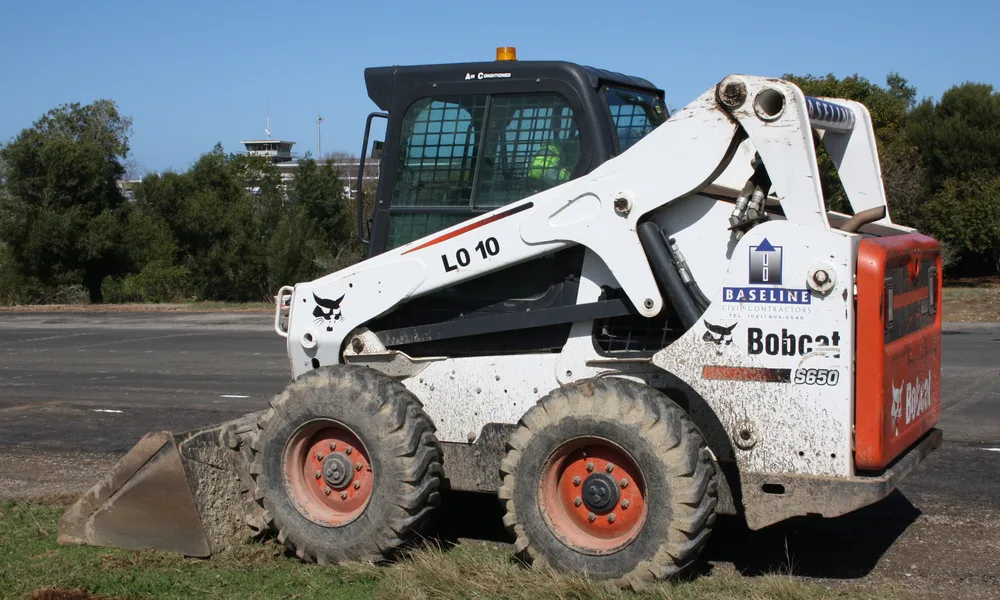
The Bobcat S650 tops this list because it fails at the job a skid steer exists to do, and charges premium money for the privilege. Owners report that the machine tips forward with a full bucket at height, lifting the front wheels off the ground. The lift arms sag while the operator waits to tip, the bucket spills on the way up, and a machine that felt planted on the test drive feels nervous on real work.
2. Kubota SVL75-2: strong tracks, worn out far too soon
The Kubota SVL75-2 is a compact track loader with good lift power and a cab that owners like, but its undercarriage wears out far too soon. Owners report tracks that stretch and rollers that wear within months of hard use, so the machine starts slipping, bouncing and throwing tracks on uneven ground. Replacement tracks and rollers cost thousands, and the bill arrives far earlier than promised. On rubble and broken concrete the wear shows up within weeks.
3. Case SV280: a good loader with hydraulics that fade
The Case SV280 loads steadily and has a comfortable cab, but its hydraulics fade as the oil warms in a way that costs real money. Owners report that the lift slows through the morning, the bucket will not hold a full load at height by the afternoon, and the attachment hydraulics lose pressure when a breaker or auger needs it most. The machine is fine on a cold start, but on a full working day the fade shows up within hours.
4. JCB 270: a capable machine in a cab too small for the job
The JCB 270 is a capable, well-built skid steer that lifts cleanly and cycles steadily, and on paper it should rank far higher than fourth. The problem is the cab. Taller operators report knees against the dash, a seat that runs out of travel, and a boom that blocks the view of the bucket edge, so grading becomes guesswork and a full day leaves the operator exhausted. A machine that cannot be seen out of properly damages things.
5. Gehl R220: capable, but support is the gamble
The Gehl R220 is a capable, well-built skid steer that lifts cleanly and runs attachments well, and on paper it should rank far higher than fifth. The problem is what happens when it needs a part. Gehl’s dealer network is far thinner than its rivals in many regions, so a drive motor seal, a hydraulic valve or a wiring loom can mean weeks off the job while the part ships. Owners report that local mechanics will not touch the electronics and resale drops sharply outside the few areas with a strong dealer.
6. Takeuchi TL12V2: powerful, and brutally expensive to keep
The Takeuchi TL12V2 is a powerful track loader to drive, with strong lift, a quiet cab and tracks that grip well, and on a short test it feels like the best machine on this list. The problem is the running cost. Owners report fuel bills that dwarf every rival, early track wear, and service parts priced like a luxury car. The lift power is real, but it cannot offset the cost of keeping the machine in fuel, tracks and dealer servicing.
7. Wacker Neuson ST31: the smallest network of all
The Wacker Neuson ST31 closes this list because it combines the two faults that sink a skid steer fastest: thin support and weak resale. Owners report a machine that lifts and carries adequately, with no single dramatic fault, but a dealer network so thin that parts and warranty work are a constant negotiation. A hydraulic leak that takes a day to fix on a rival takes a week on an ST31, and the downtime eats the saving made at purchase.
What to avoid when buying a skid steer
The most common mistake is buying a skid steer on its rated operating capacity alone and forgetting that it has to lift, turn and carry in tight spaces. A machine with a big capacity and a nervous balance is a dangerous machine, and a dangerous loader costs money on every cycle. Avoid any skid steer with no recall record available, any machine whose dealer is far away or thinly stocked, and any seller who will not let you lift a full bucket to full height before you pay. Avoid first-year models, machines with warning lights already showing, and any loader whose service history has gaps.
Checklist: testing a skid steer before you commit
- Lift a full bucket to full height and hold it there for two minutes: it should not sag, creep down or tip the machine forward.
- Run the machine for a full hour with an attachment fitted and watch the hydraulics as the oil warms up.
- Check the recall record and the service history, and walk away from any machine with gaps in either.
- Inspect the tracks or tyres for wear, and price a full replacement set before you agree a price.
- Phone the nearest dealer before you buy and ask how long a drive motor seal and a hydraulic valve would take to arrive.
- Work the machine for a full hour in the cab: if you are tired, cramped or cannot see the bucket edge, the cab is too small for the job.
Frequently asked questions
What is the worst skid steer to buy in 2026?
The Bobcat S650 is the skid steer to avoid first. Owners report a machine that tips forward with a full bucket at height and lift arms that sag while the operator waits to tip, and the faults show up on real work rather than on a short test drive.
Are cheap skid steers a false economy?
Usually, yes. A cheap skid steer with a thin dealer network and expensive tracks costs more in downtime and repairs than the saving at purchase. The real five-year cost, including parts, labour and lost loading days, is the number that matters.
How important is the dealer network when buying a skid steer?
It matters as much as the machine itself. A skid steer has hard-working hydraulics and a drive system that wears fast, so it will need parts and service. A thin network means long waits, and long waits mean lost work and lost income.
Should I buy a skid steer or a wheel loader?
Buy a skid steer if the work is tight, small-scale loading, grading and attachment work on a confined site. Buy a wheel loader if you need to scoop, carry and dump large volumes of loose material and load trucks all day, because a loader moves far more per cycle than a skid steer ever will.
What should I check on a used skid steer?
Check the recall record, the service history, the lift arms for sag at full height, the tracks or tyres for wear, and the hydraulics for fade as the oil warms. Then lift a full bucket to full height, and watch the machine for any sign of tipping forward.
Is a first-year skid steer model a bad buy?
Often, yes. First-year models carry the faults that later production runs fix, from software glitches to seal failures, and early owners pay for the learning curve in downtime. A model with two or three years of production behind it is a safer buy.
Bottom line
The worst skid steers of 2026 fail in the same few ways: a machine that tips forward with a full bucket, tracks that wear out in months, hydraulics that fade as the oil warms, running costs that dwarf the purchase saving, and a dealer network too thin to keep the machine working. Test the full lift loaded, check the recall record, and phone the dealer before you pay.