Pass Over the Worst Compactors of 2026: Soil Machines That Never Reach Density
The worst compactors of 2026 look unstoppable on the dealer forecourt: a huge steel drum, a tall cab and a price that seems fair for a machine that can flatten a whole site before lunch. Then the drum vibration fades halfway through a pass, the machine never reaches the density the specification demands, the tyres and drums wear out in months, and the dealer quotes a repair bill that costs more than a month of compaction. A bad compactor rarely announces itself on the test drive. This guide names the seven worst compactors of 2026, based on published recall records, owner surveys and repeated owner complaints, so you can spot the pattern before you sign.
Key takeaways
- The Caterpillar CS56B is the compactor to avoid first: owners report drum vibration that fades mid-pass and dealer-only repairs that cost far more than a soil machine should.
- Compaction depth and density matter more than engine power: a compactor that cannot reach the specified density in a sensible number of passes is useless for real site work.
- Drums and vibration systems are the new weak points in compactors, just as transmissions are in loaders: a failed exciter or bearing strands a machine that is mechanically sound.
- Dealer support matters as much as the machine: a thin network means long waits for parts and warranty work that eats into compaction days.
- Always check the recall record, the service history and a pre-purchase inspection before you buy, and test the exact machine compacting a real lift of soil, not just an empty drive.
How the worst compactors of 2026 were chosen
Every compactor below was scored on five measures. Reliability comes first: how often owners report faults, and how serious those faults are. Repair cost is second, because a dealer-only repair turns a nuisance into a disaster. Support is third, judged on the dealer network near the buyer and how long parts take to arrive. Capability is fourth: whether the machine can actually do the work its size and price promise, from reaching specified density in a sensible number of passes to compacting a full lift without overheating. Value is fifth: the real five-year cost, including downtime, not the forecourt price.
Two notes before the list. First, no compactor here is slow or weak on paper, and most of them are genuinely capable when they are running. They earn their place because the ownership experience lets them down, not because the engine lacks power. Second, this guide is strictly about soil compactors: single-drum vibratory machines that compact soil and fill, and landfill compactors with steel wheels that crush and compact waste. Smooth-drum asphalt road rollers are a different job and are not ranked here. A bulldozer pushes earth with a blade and never compacts a lift, as our guide to the worst bulldozers of 2026 shows, while an excavator digs with a boom, a stick and a bucket on tracks, as our guide to the worst excavators of 2026 explains. A forklift lifts pallets in a warehouse and never touches soil, as our guide to the worst forklifts of 2026 shows. A compactor has to reach density pass after pass, which is exactly why it can fail at the one job it exists to do.

Comparison table: the worst compactors of 2026
| Rank | Compactor model | Main fault | First warning sign |
|---|---|---|---|
| 1 | Caterpillar CS56B | Drum vibration fades mid-pass | Density test fails on the second pass |
| 2 | Dynapac CA3500D | Weak compaction depth | Deep lifts never reach density |
| 3 | Bomag BW213D-5 | Aftertreatment faults strand the machine | Warning lights with no dealer nearby |
| 4 | Hamm H12i | Cramped cab, poor visibility | Operator cannot see the drum edge |
| 5 | Volvo SD110 | Brilliant, and brutally expensive to keep | Drum and tyre bills every season |
| 6 | Sakai SV521D | Thin parts network | Weeks waiting for an exciter bearing |
| 7 | Ammann ASC110D | Weak resale, thin support | Dealers will not take it in trade |
The worst compactors of 2026, ranked
1. Caterpillar CS56B: the compactor to avoid first
The Caterpillar CS56B tops this list because it fails at the job a compactor exists to do, and charges premium money for the privilege. Owners report drum vibration that fades halfway through a pass, so a lift that should reach density in four passes still fails the test after eight. The exciter bearings wear early, the vibration fades as the oil warms, and by the afternoon the machine works at half its morning pace.
2. Dynapac CA3500D: strong on paper, shallow in the ground
The Dynapac CA3500D is strong on paper, with good drum weight and a cab that owners like, but it cannot compact deep lifts. Owners report that the machine reaches density on thin lifts and fails on anything deeper, so the crew has to lay soil in thin layers that take twice as long. The vibration system is the weak point: amplitude drops under load, the drum bounces on hard ground, and the density test becomes a daily argument.
3. Bomag BW213D-5: clever, and dealer-only when it breaks
The Bomag BW213D-5 is a clever machine with a smooth ride and a cab that feels a class above its rivals, which is why it hurts when it breaks. Owners praise the compaction performance and the drum control, then report the same pattern: a warning light, a derate, and a fault code only a dealer laptop can read. The aftertreatment system is the weak point, not the steel. Sensors fail, regenerations interrupt work, and a mechanically sound machine can sit dead in the yard while the owner waits for a service slot.
4. Hamm H12i: a capable machine in a cab too small for the job
The Hamm H12i is a capable, well-built soil compactor that rolls cleanly and compacts steadily, and on paper it should rank far higher than fourth. The problem is the cab. Taller operators report knees against the dash, a seat that runs out of travel, and a drum frame that blocks the view of the drum edge, so keeping a straight line and overlapping passes properly becomes guesswork and a full day in the seat leaves the operator exhausted. A compactor that cannot be seen out of properly leaves soft spots in the ground.
5. Volvo SD110: brilliant, and brutally expensive to keep
The Volvo SD110 is a brilliant compactor to drive, with smooth vibration, a quiet cab and a drum that feels effortless, and on a short test it feels like the best machine on this list. The problem is the running cost. Owners report drum wear that arrives early, tyre bills that dwarf every rival, and service parts priced as if the machine were a luxury car rather than a working compactor. The fuel economy is good, but it cannot offset the cost of keeping the machine in drums, tyres and dealer servicing.
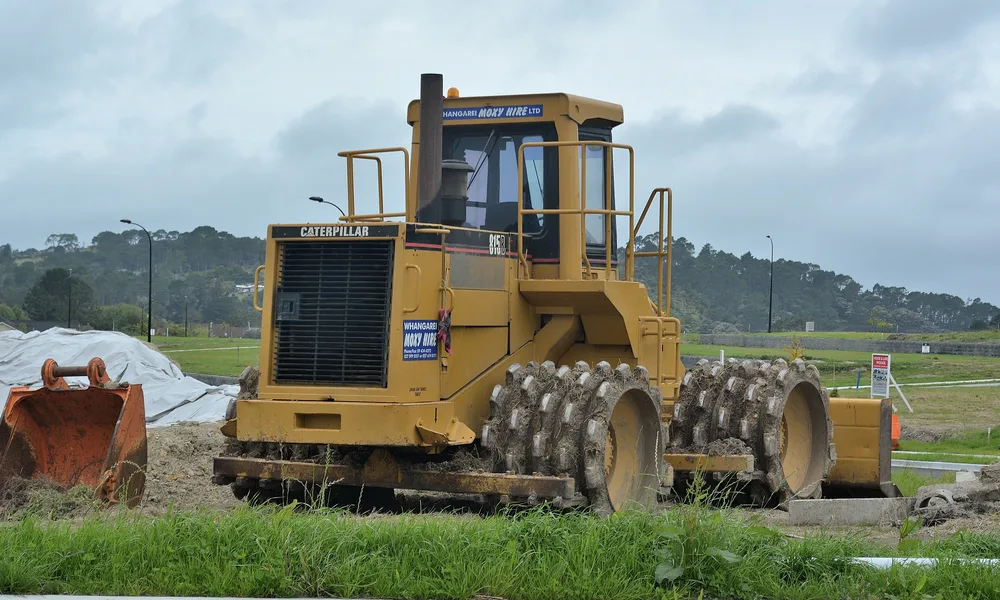
6. Sakai SV521D: capable, but support is the gamble
The Sakai SV521D is a capable, well-built soil compactor that compacts cleanly and rolls steadily, and on paper it should rank far higher than sixth. The problem is what happens when it needs a part. Sakai’s dealer network is far thinner than its rivals in many regions, so an exciter bearing or a vibration valve can mean weeks off the job while the part ships. Owners report that local mechanics will not touch the electronics and resale drops sharply outside the few areas with a strong dealer.
7. Ammann ASC110D: the smallest network of all
The Ammann ASC110D closes this list because it combines the two faults that sink a compactor fastest: thin support and weak resale. Owners report a machine that compacts and rolls adequately, with no single dramatic fault, but a dealer network so thin that parts and warranty work are a constant negotiation. A vibration fault that takes a day to fix on a rival takes a week on an ASC110D, and the downtime eats the saving made at purchase.
What to avoid when buying a compactor
The most common mistake is buying a compactor on its drum weight alone and forgetting that it has to reach a specified density in a sensible number of passes. A machine with a heavy drum and fading vibration is a slow machine, and a slow compactor costs money on every pass. Avoid any compactor with no recall record available, any machine whose dealer is far away or thinly stocked, and any seller who will not let you compact a real lift of soil and test the density before you pay. Avoid first-year models, machines with warning lights already showing, and any compactor whose service history has gaps.
Checklist: testing a compactor before you commit
- Compact a real lift of soil and test the density: it should reach the specification in a sensible number of passes, not eight or ten.
- Run the machine for a full hour and watch the drum vibration as the oil warms up: it should not fade by the afternoon.
- Check the recall record and the service history, and walk away from any machine with gaps in either.
- Inspect the drum for wear, cracks and flat spots, and price a full drum rebuild before you agree a price.
- Phone the nearest dealer before you buy and ask how long an exciter bearing and a vibration valve would take to arrive.
- Work the machine for a full hour in the cab: if you are tired, cramped or cannot see the drum edge, the cab is too small for the job.
Frequently asked questions
What is the worst compactor to buy in 2026?
The Caterpillar CS56B is the compactor to avoid first. Owners report drum vibration that fades halfway through a pass and dealer-only repairs that cost far more than a soil machine should, and the faults show up on real work rather than on a short test drive.
Are cheap compactors a false economy?
Usually, yes. A cheap compactor with a thin dealer network and an expensive drum costs more in downtime and repairs than the saving at purchase. The real five-year cost, including parts, labour and lost compaction days, is the number that matters.
How important is the dealer network when buying a compactor?
It matters as much as the machine itself. A compactor has a hard-working vibration system and a drum that wears fast, so it will need parts and service. A thin network means long waits, and long waits mean lost work and lost income.
Should I buy a soil compactor or a road roller?
Buy a soil compactor if the work is compacting soil, fill and sub-base, where a padfoot or vibratory drum kneads the ground to density. Buy a road roller if the work is finishing asphalt, because a smooth-drum roller lays a flat surface a soil compactor cannot, and a soil compactor cannot finish asphalt.
What should I check on a used compactor?
Check the recall record, the service history, the drum for wear and cracks, the vibration system for fade as the oil warms, and the tyres for wear. Then compact a real lift of soil, test the density, and watch the vibration as the machine works.
Is a first-year compactor model a bad buy?
Often, yes. First-year models carry the faults that later production runs fix, from software glitches to bearing failures, and early owners pay for the learning curve in downtime. A model with two or three years of production behind it is a safer buy.
Bottom line
The worst compactors of 2026 fail in the same few ways: drum vibration that fades mid-pass, a machine that never reaches the specified density, electronics only a dealer can fix, running costs that dwarf the purchase saving, and a dealer network too thin to keep the machine working. Test the density on a real lift, check the recall record, and phone the dealer before you pay.