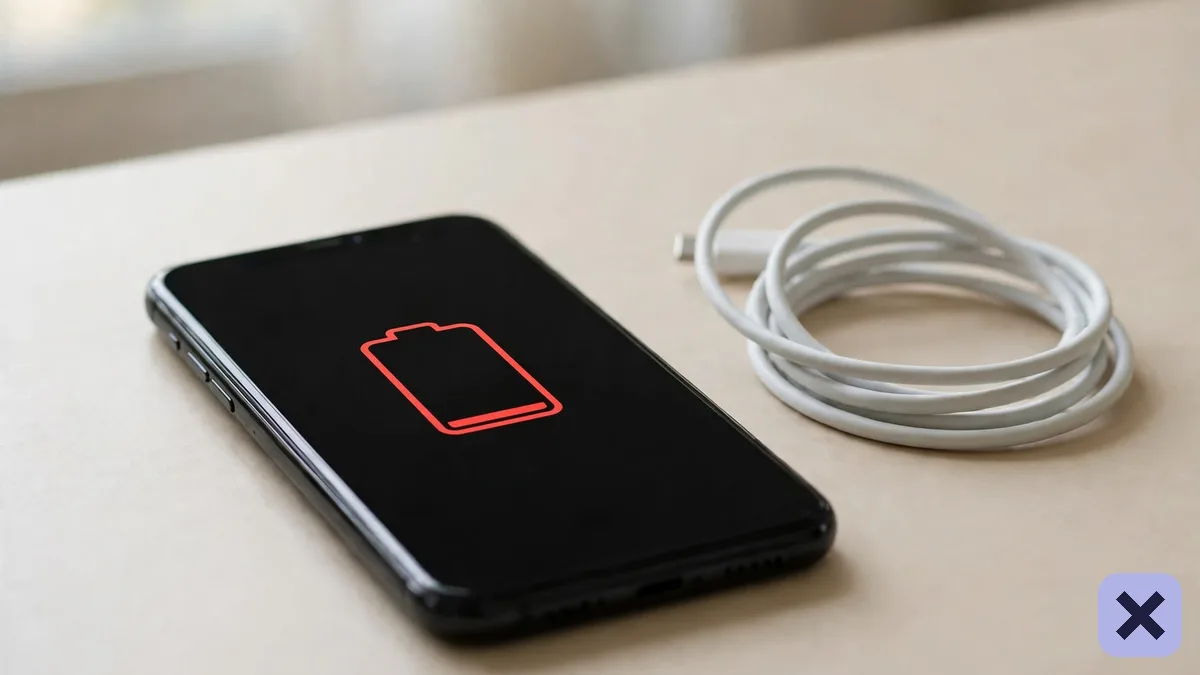
The worst smartphones for battery life in 2026 all share the same cruel trick: they look extraordinary on the shelf and feel extraordinary in your hand, until the moment they die. A phone that cannot survive a normal day is not a flagship, no matter how bright its screen or how clever its camera.
Battery life is the quiet dividing line in the smartphone market. Processors get faster, screens get brighter and cameras gain new lenses, yet the battery rarely keeps pace. Manufacturers chase thinness because it photographs well, but every millimetre shaved off the body is capacity taken from the cell inside. The result is a generation of phones that can do almost anything except last until bedtime.
This guide names the patterns to avoid, explains why certain designs drain fast, and shows you how to spot a battery dud before you spend your money.
Key takeaways
- Ultra-thin flagships and first-generation foldables are the worst offenders for battery life in 2026, because style and hinges leave little room for a large cell.
- A battery under 4,000 mAh with a bright, high-refresh screen is the clearest warning sign of a phone that will not last a full day.
- Always-on 5G, maximum brightness and background apps drain a weak battery far faster than the processor ever will.
- Fast charging is not a cure for poor battery life; it only makes living with a bad battery slightly less painful.
- Before buying, check real-world screen-on time from independent tests, not the manufacturer’s standby claims.

Why Some Phones Die Before Dinner
Battery life is decided long before you switch a phone on, on a designer’s desk where every gram is fought over and the battery almost always loses. The cell is the largest component inside a modern phone, so when a manufacturer wants a thinner body or a bigger camera module, the battery is the first thing to shrink. Software makes it worse: dozens of background processes run all day, and on a small cell that is the difference between reaching bedtime and watching the warning icon appear mid-afternoon.
Big Screens, Small Batteries
The screen is the hungriest part of any phone, and screens have only grown larger. A 6.8-inch display running at 120Hz and full brightness can drain a battery in a few hours, even before you open a game or stream video. Paired with a battery under 4,000 mAh, the maths simply does not work, and no software update can fix it. Outdoors, a phone pushes its display to peak brightness to stay readable, which can double power consumption exactly when you are away from a charger.
Power-Hungry Chips and Always-On 5G
Flagship processors are enormously powerful, and power has a price. A top-tier chip running a game or editing video draws far more current than a mid-range chip doing everyday tasks. Connectivity is the other silent drain: a phone hunting for a weak 5G signal burns charge far faster than one settled on a stable connection, because the radio keeps boosting its power to hold on. This is one reason why phones packed with features you never use often disappoint in daily life: every extra radio, sensor and always-on feature is another small drain on a cell that was already too small.
The Worst Smartphones for Battery Life in 2026
The phones below are grouped by design, because the design is what decides the battery. Models change every year, but the flaw stays the same. Learn to recognise the pattern and you will never buy a battery dud again.
1. The Ultra-Thin Flagship
The ultra-thin flagship is the most seductive battery trap in the shops. It feels like the future in your hand, impossibly light and slim, but a phone seven millimetres thick cannot hold a large battery, and its flagship processor and bright display demand more power than a mid-range phone ever would. These phones last a working day only if you are careful; push them with navigation and photography on a day out and they fade fast.
2. The First-Generation Foldable
Foldable phones are engineering marvels and battery disasters in equal measure. The hinge takes up space that would otherwise hold battery, and the large inner display is one of the most power-hungry screens there is. Later foldables have improved, but the first generation of each new design still struggles. Check real-world endurance carefully, and be wary of any model whose battery is smaller than a conventional phone with a screen half the size.
3. The Tiny Phone
Small phones have loyal fans: they fit in a pocket and can be used one-handed. But physics is unforgiving: a compact body holds a compact battery. A small phone with a modern processor and a bright display asks a tiny cell to do a flagship’s job, so owners become experts at battery saving out of necessity. If you love small phones, choose a compact model that sips power.
4. The Budget Phone With a Big Screen
Budget phones with large, bright displays are a common trap: the screen looks impressive and the price looks unbeatable, but the battery is often the cheapest component in the device. Manufacturers save money on the cell and the power management, and the buyer discovers the compromise slowly, over weeks of mid-afternoon warnings. They often quote impressive standby times, which mean almost nothing: standby measures a phone doing nothing. What matters is screen-on time, and a budget phone with a big screen and a cheap battery often manages only four or five hours.
5. The Gaming Phone Run at Full Power
Gaming phones are built for performance, not endurance. Their screens refresh at 120Hz or 144Hz, their processors run at full speed, and their cooling systems exist because the chips generate so much heat. Wonderful during a game, terrible for battery life the rest of the time. Many ship with their most aggressive settings switched on by default, so even ordinary use drains the battery at gaming speed. Fine if you actually game on it; as an everyday phone it is often one of the worst for battery life.
6. The Camera-First Phone
Camera-first phones dedicate enormous internal space to lenses, sensors and stabilisation hardware, and that space comes from somewhere. The battery is the usual victim. Add the power demands of computational photography, which fires the processor hard every time you take a picture, and you have a phone that drains noticeably on a day of sightseeing. They take wonderful photographs, but if you take hundreds of photos on holiday and record high-resolution video, a camera-first phone with a modest battery will not keep up.
How the Worst Offenders Compare
The table below summarises the patterns, using typical everyday ranges rather than the optimistic numbers on the box.
| Phone type | Typical battery | Main drain | Screen-on time | Verdict |
|---|---|---|---|---|
| Ultra-thin flagship | 3,800–4,200 mAh | Bright 120Hz display | 4–5 hours | Dies before dinner |
| First-generation foldable | 4,000–4,400 mAh | Large inner display | 4–5 hours | Needs a midday charge |
| Tiny phone | 2,800–3,200 mAh | Small cell, full-power chip | 3–4 hours | Carry a charger always |
| Budget phone, big screen | 4,000–4,500 mAh | Cheap cell, poor management | 4–5 hours | Standby lies, use disappoints |
| Gaming phone at full power | 5,000–6,000 mAh | 144Hz display, hot chip | 5–6 hours | Big cell, bigger appetite |
| Camera-first phone | 4,200–4,700 mAh | Computational photography | 4–6 hours | Great photos, short days |
Warning Signs Before You Buy
You can spot most battery duds before you pay. Marketing always emphasises the best-case numbers, so ignore the headline claims and check the details instead. A few minutes of research saves months of carrying a charger.
Checklist: Spot a Battery Dud in Five Minutes
- Check the battery capacity in mAh, and be suspicious of any phone under 4,000 mAh with a screen larger than 6.5 inches.
- Look up independent screen-on time tests, not the manufacturer’s standby or video-playback figures.
- Search reviews for the words “battery” and “drains” together, and read the complaints, not the praise.
- Check whether the phone supports 5G everywhere you travel, since weak-signal hunting drains small batteries fastest.
- Confirm the screen’s refresh rate and brightness, and whether the phone lets you lower both easily.
- Ask yourself whether you will actually use the flagship features, or whether a simpler, more efficient phone would last longer.
The checklist tests the phone against your real life, not a laboratory: manufacturers test with the screen dimmed, the radios off and the apps closed. One more warning sign is the charger in the box, or rather the lack of one. Fast charging is marketed as the answer to poor battery life, but it only makes living with a bad battery slightly less painful, and it does nothing for the afternoons when there is no socket at all.
What to Buy Instead
The good news is that excellent battery life is not expensive. Some of the longest-lasting phones are mid-range models, combining efficient processors, sensible screens and large batteries. They are not the most exciting phones in the shop, but they are the ones still alive at midnight. Look for a battery of at least 5,000 mAh, a screen no larger than you genuinely need, and a processor known for efficiency rather than raw speed. Travel light too: the travel gadgets that waste space in your bag often include cheap cables that charge slowly, so one good cable beats a pocketful of accessories.
The Sensible Upgrade Path
If you are replacing a phone that dies early, resist the urge to buy the thinnest or most powerful replacement. Buy the phone with the best balance of battery, screen and efficiency instead. Good headphones that actually matter will improve your daily experience far more than a processor you will never fully use, and a phone that lasts all day makes every other feature better.
Frequently Asked Questions
What is the worst smartphone for battery life in 2026?
There is no single worst phone: the worst battery life comes from a design pattern, not one model. Ultra-thin flagships, first-generation foldables and tiny phones are consistently the worst, since their batteries are too small for their screens and processors.
Does 5G really drain the battery faster?
Yes, especially where coverage is weak. A phone searching for a patchy 5G signal uses far more power than one on stable Wi-Fi or 4G. Switching to 4G or Wi-Fi while travelling can make a noticeable difference.
Is fast charging bad for battery life?
Fast charging generates heat, which gradually reduces capacity, but modern phones manage this well. The bigger issue is that fast charging is used to excuse a small battery: a phone that charges quickly but dies by dinner still has poor battery life.
How many hours of screen-on time should a good phone manage?
A good phone in 2026 should manage at least seven to eight hours of screen-on time in mixed everyday use, and the best manage ten or more. Under five hours, the phone will struggle to last a full day; under four, you will be charging before dinner.
Do battery-saving modes actually work?
Yes, but they work by limiting the phone: dimming the screen, slowing the processor and restricting background activity. Useful in an emergency, but a phone that needs battery saver every day has a battery problem.
Should I replace the battery or the phone?
If your phone is under two years old and the battery has degraded, a replacement is usually sensible, since a fresh cell restores most of the original endurance. If the phone was always poor, a new battery only restores its original mediocrity, and replacing the phone with a better-balanced model is the wiser spend.
The Bottom Line
The worst smartphones for battery life in 2026 put thinness, novelty and headline specifications ahead of the simple job of lasting a day. A phone that dies before dinner fails at the one thing every phone must do, no matter how beautiful it is or how clever its camera. Buy the phone with the battery to match your life, check real-world endurance before you pay, and choose balance over spectacle.