
The Worst Snooker Players in 2026: The Types Who Lose Frames Before They Start
The worst snooker players in 2026 are not beaten by the table, the balls or the occasion. They are beaten by their own habits, repeated frame after frame on a table that is twelve feet long, with twenty-two balls and pockets that forgive almost nothing. Snooker rewards patience, straight cueing and a plan that runs three balls ahead, and the players below fail at those things so reliably that you can spot the loss coming early. This guide ranks the worst types by the damage they do to their own game, so you can recognise the patterns and stop feeding them.
Key takeaways
- The worst snooker players lose frames through habits, not bad luck: poor safety, wild long pots and no plan.
- Safety-first grinders hand the table away by never attacking when a pot is on.
- Long-pot missers turn every frame into a lottery, leaving reds open for the opponent.
- Break-builders who stall in the twenties waste the hardest part of the game by never finishing what they start.
- Watch the cue ball, not the pot: players who never think about where the white will stop lose the most frames.
How the worst snooker players were ranked
Every type below was scored on five measures. Potting comes first, because a player who cannot make the balls has nothing else to build on. Positional play is second, judged on whether the cue ball finishes where the next shot needs it, not merely somewhere on the table. Safety play is third, because snooker is a game of frames, and a good safety can win a frame that a bad pot would have lost. Break-building is fourth, measured by how often a player turns one opening into a frame-winning visit instead of a cameo of twenty points. Temperament is fifth: the ability to stay calm after a miss, a bad bounce or a snooker, rather than letting one mistake become five. The same logic applies elsewhere, and readers who enjoy ranking bad habits will find the same pattern in our guides to the worst golfers and the worst tennis players, where the losing types are just as easy to spot.

Comparison table: the worst snooker players in 2026
| Rank | Player type | Main weakness | What it costs |
|---|---|---|---|
| 1 | The safety-first grinder | Never attacks a makeable pot | Hands the frame away |
| 2 | The long-pot misser | Wild pots from distance | Leaves reds open |
| 3 | The break-builder who stalls | Stops at twenty points | Wastes every opening |
| 4 | The cue-ball wanderer | No plan for the white | No second shot |
| 5 | The rest-and-stretch fumbler | Hopeless with the rest | Misses easy long balls |
| 6 | The frame-thrower | Collapses when ahead | Loses won frames |
| 7 | The slow-play time-waster | Takes minutes per shot | Kills rhythm and focus |
The worst snooker players in 2026
1. The safety-first grinder: the worst habit in snooker
The safety-first grinder treats every visit as a chance to hide the cue ball, even when a red is sitting over a pocket and a colour is waiting on its spot. They roll up behind the baulk colours, nudge a red to a cushion, and sit down satisfied, having done nothing to win the frame. Safety is a tool, not a plan, and a player who never attacks never builds a lead. Their opponent only needs one loose safety to make a break of forty and take the frame.
The grinder believes they are playing clever snooker, when in fact they are playing frightened snooker. They practise safety for hours and never practise potting under pressure, so when a chance comes they miss it anyway. Set a rule for your next frame: if a red is makeable and a colour is available, take it on.
2. The long-pot misser
The long-pot misser loves the applause shot: a red from the baulk end, the cue ball travelling the full length of the table. The problem is that they love it on every visit. Long pots on a twelve-foot table are hard even for fine players, and this type misses them by a foot, leaving the red in the open for the opponent.
Every missed long pot is a gift, and good opponents accept gifts. A single wild attempt can hand over a frame-winning break. The fix is boring but effective: pot the balls you can reach, play safe on the ones you cannot, and save the long pot for the moment the frame genuinely demands it.
3. The break-builder who stalls at twenty
Getting in is the hardest part of snooker, which is why the break-builder who stalls at twenty is so frustrating to watch. They pot a red, take a colour, pot another red, and then, with the table open, they lose position by a few inches and sit down on twenty-three. The frame is still theirs to win, but they have spent their one good chance and handed the table back.
The stall comes from one fault: they play the red without knowing which colour comes next. Break-building is a sequence, not a series of single shots. Before you strike the red, know your colour, your next red, and where the cue ball must stop. A break of forty built on three planned shots beats a break of twenty built on hope.
4. The cue-ball wanderer
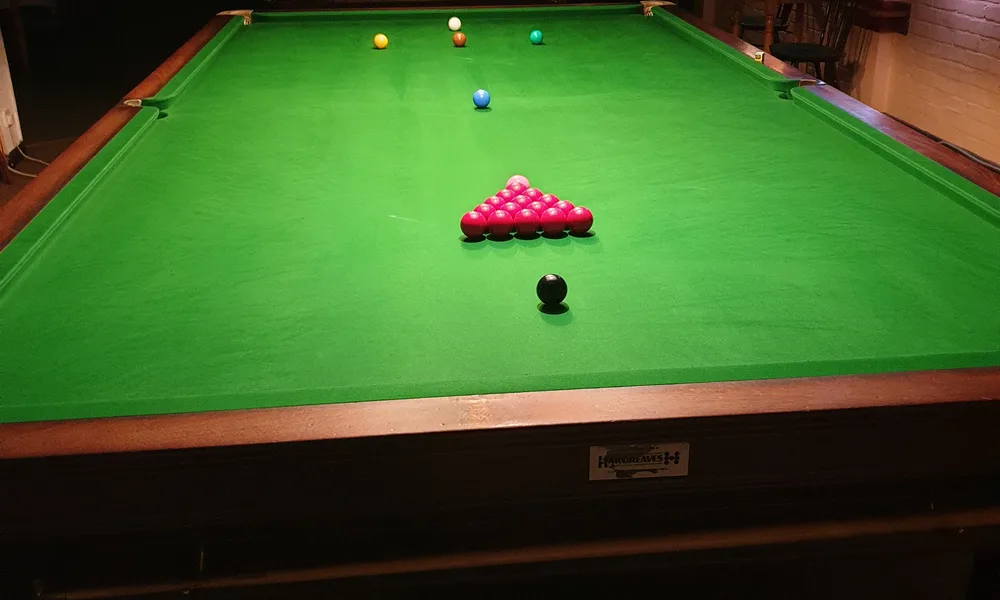
The cue-ball wanderer pots the ball and watches the white with genuine surprise, as if it had a mind of its own. It finishes behind a colour or tight on a cushion, and the next shot becomes a stretch or a prayer. They may be a good potter, but potting is only half the game. On a table this big, the distance between the cue ball and the next red decides the frame.
Positional play is pace, and thinking one shot ahead. The wanderer hits every ball too hard, because hard feels safe, and the white runs on long after the object ball has dropped. Slow the cue ball down and play for the near side of the next ball. The players who win frames are the ones whose cue ball is always somewhere useful, and that is a habit anyone can learn.
5. The rest-and-stretch fumbler
Every snooker player meets the long shot that needs the rest, and the rest-and-stretch fumbler meets it like a stranger. They fumble the rest into place, bridge over it awkwardly, wobble the cue, and jab at the ball. The shot misses, the cue ball wanders, and the frame turns. Worse, they avoid the rest altogether, stretching across the table in a twisted stance that ruins their cue action.
The rest is part of the game, not an apology for it. Spend fifteen minutes a week with the rest alone, potting straight balls from distance, and the fear goes away. A player who can use the rest calmly gains a dozen shots a match that the fumbler gives away.
6. The frame-thrower
The frame-thrower is the most painful type to watch, because they can genuinely play. They build a lead of thirty or forty, and then a missed black, a loose safety or a bad bounce unravels them. They rush the next shot, then the next, and by the time they sit down their opponent has cleared the colours and stolen the frame. The collapse is mental, not technical, and it repeats because nothing changes between frames.
Losing a lead hurts, but the frame-thrower makes it worse by trying to win the frame back in one shot, taking on the hardest red instead of the safest and hurrying because sitting still feels like losing. The cure is a routine: after a mistake, step back, chalk the cue, take a breath, and play the simplest shot available. Frames are won one ball at a time.

7. The slow-play time-waster
The slow-play time-waster takes three minutes to play a safety, walks around the table twice, chalks the cue five times, and then plays the shot they were always going to play. They are not thinking more deeply than anyone else. They are stalling, and the stall costs them their own rhythm as surely as it costs their opponent’s patience. Snooker is a slow game, but a player who cannot decide cannot win.
Slow play hides a deeper problem: the time-waster does not trust their own judgment, so they keep looking for a better shot that does not exist. Meanwhile the frame drifts and the opponent comes back cold and irritated. Play at a steady pace, decide quickly, and live with the decision. The table rewards the player who keeps moving.
What to avoid when judging snooker players
The most common mistake is judging a player by one frame, or by one famous miss. A good player can have a terrible frame, and a poor player can fluke a break of fifty. Judge the pattern across a match: do they attack when they should, do they leave the cue ball somewhere useful, do they hold their nerve when ahead? The same care applies elsewhere, and our guide to the worst bowlers makes the same point about patterns over single performances. Avoid naming a real person as the worst on the basis of a clip or a single tournament, because form changes.
Checklist: spotting the worst snooker habits
- Watch the cue ball after every pot: if it never finishes near the next ball, the player has no positional plan.
- Count the safety shots that achieve nothing: a safety that leaves a pot on is worse than no safety at all.
- Note the long pots: one wild attempt per frame is a habit, not a highlight.
- Check the break length: repeated breaks that stall in the twenties mean the player cannot plan a sequence.
- Watch the rest: a player who cannot use it calmly is giving away shots every match.
- Watch the body language after a miss: rushing the next shot is the clearest sign of a frame about to be thrown away.
Frequently asked questions
What makes a snooker player the worst?
A repeating pattern of losing habits: poor safety, wild long pots, no positional plan and a weak temperament. One bad frame does not make a player the worst, but the same mistakes in every frame do.
Is slow play really a weakness in snooker?
Yes, when it comes from indecision rather than thought. A player who stalls on every shot loses rhythm and gives the opponent time to settle, which hurts both players.
Why do break-builders stall at twenty points?
They play one shot at a time instead of planning a sequence. Without knowing the next colour and the next red before striking, position drifts and the break ends on a ball that should have been routine.
Can a safety-first player ever win frames?
They can, against opponents who miss even more, but safety alone never builds a lead. The best safety players attack when a pot is on, and the grinder who never attacks hands the frame away.
How important is the cue ball in snooker?
It is at least half the game. On a twelve-foot table, the distance between the white and the next ball decides whether the next shot is easy or impossible.
Should beginners copy professional snooker players?
Copy their routines, not their shots. Learn a steady cue action, a calm safety game and a simple positional plan first, and leave the long pots until the basics hold up under pressure.
Bottom line
The worst snooker players in 2026 are the safety-first grinder, the long-pot misser and the break-builder who stalls, with the cue-ball wanderer, the rest-and-stretch fumbler, the frame-thrower and the slow-play time-waster close behind. None of them lose because snooker is too hard. They lose because the same habits repeat in every frame, and habits can be changed. Fix the cue ball, take the pot when it is on, plan the next three balls, and the frames will start going the other way.


