
Avoid the Worst Rugby Players of 2026: Habits That Lose Matches
The worst rugby players of 2026 are not the beginners still learning which way to pass. They are the familiar types every club side dreads: the prop who never binds properly, the fly-half who kicks away good ball, the winger who never chases a kick, and the tackler who goes high and gives away the penalty that loses the game. This guide ranks them by the damage they do, so you can spot each one early.
Key takeaways
- The worst rugby players are types and patterns, not people: the same bad habits appear at every club, in every grade.
- A high tackle costs more than a missed try: free territory and free points.
- Kicking away possession is the quietest way to lose: every aimless kick gives the other side the ball with room to run.
- A forward pack that never binds turns every scrum and maul into a penalty against your own side.
- You cannot fix a team-mate mid-match, so plan for each type before the first whistle.
How the worst rugby players were judged
Every type below was scored on five measures. Damage to the team comes first: how many points does this type give away, or how much territory does it waste? Predictability is third: the worst types repeat the same weakness every match. Frequency is fourth, because a rare bad day is forgivable and a weekly habit is not. Honesty is fifth: blamers score far worse than strugglers. No real rugby player is named here, because the point is the pattern, not the person. Being weak at rugby is not the same as being one of the worst rugby players: an honest, keen beginner who tackles low and chases hard is welcome on any side. For the wider view, see our guide to the worst running shoes of 2026.
Comparison table: the worst rugby players of 2026
| Rank | Player type | Main fault | Cost to your team |
|---|---|---|---|
| 1 | The Tackler Who Goes High | High tackles, no wrap | Penalties, cards, tries |
| 2 | The Fly-Half Who Kicks Away Possession | Aimless kicks, no chase | Lost ball, lost territory |
| 3 | The Prop Who Never Binds | Loose bind, collapsing scrum | Scrum penalties |
| 4 | The Scrum-Half Who Slows Everything Down | Slow service, box kicks | Attack dies at the ruck |
| 5 | The Winger Who Never Chases | Walks back, no chase | Kicks go uncontested |
| 6 | The Centre Who Never Passes | Runs into contact, ignores support | Overlaps wasted |
| 7 | The Full-Back Who Never Comes Up | Stays deep, never joins the line | Back line always outnumbered |
The worst rugby players of 2026
1. The tackler who goes high: the worst type of all
The tackler who goes high is the most expensive player in rugby, because every high tackle is a penalty, and in the modern game it is often a card as well. The pattern never changes: the tackler stays upright, the arm goes around the neck, and the whistle blows. The other team kicks for the corner, scores, and the game swings on one lazy tackle. The damage is doubled: points given away, then ten minutes with fourteen players. Gaps open everywhere else, and the tries follow. The fix is drilled weekly: tackle low, wrap the arms, drive through the legs.
2. The fly-half who kicks away possession
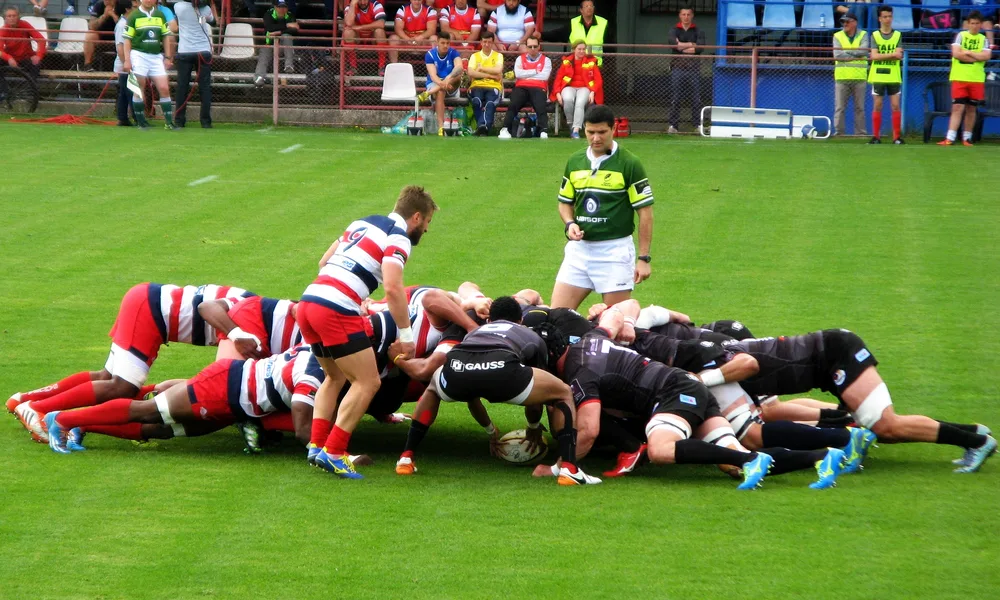
The fly-half touches the ball more than anyone in the back line, so a fly-half who kicks away possession is a slow leak the whole team drowns in. The pattern is familiar: the team wins good ball, the forwards have done the hard work at the ruck, and the fly-half kicks it straight to the full-back, who runs it back with interest. No chase, no contest, no plan. The other side starts forty metres up the pitch, and the forwards defend all over again. The worst fly-halves kick from fear of contact, not because the kick is right. A good kick has a purpose: territory with a chase, or one in behind for the winger. An aimless kick tells the opposition the team has no plan. Kick only with a chase, where the team can compete.

3. The prop who never binds
The scrum is the foundation of rugby, and the prop who never binds knocks the foundation down. The bind is short, the shoulder is high, the scrum goes down, and the referee awards the penalty against your own side. It happens at the first scrum, and again at the second, because the prop has never learned to bind and never practises it. The worst props also bore in, pop up, and blame the opposition for their own collapse. A weak scrum loses its own ball, gives away penalties, and spends the match defending. The fix is unglamorous: scrum machine sessions, binding drills, and staying square and low. Until the bind improves, this prop costs more points than any back can score back.
4. The scrum-half who slows everything down
Quick ball wins rugby matches, and the scrum-half who slows everything down makes quick ball impossible. The ball is there at the ruck, the forwards are ready, the backs are set, and the scrum-half takes three steps, looks around, takes another step, then passes a slow ball to a fly-half already standing still. The defence has set, the gap has closed, and the attack dies before it starts. The worst also box kick on every possession, because kicking beats deciding. Service is a habit: the ball is out in two seconds, every time. Quick passing turns ordinary forwards dangerous; dawdling turns a good pack slow.
5. The winger who never chases
The winger’s job looks simple from the stands: stay wide, wait for the ball, and finish the try. The winger who never chases makes it look simpler, because they do nothing when the ball is kicked. The kick goes up, the chasers should sprint after it, and the winger walks back and watches the other full-back catch it unopposed. The kick that should have been a contest becomes a free exit, and the team has given away the one advantage the kick was meant to win. Chasing needs no talent, only effort, and the winger who never chases says the effort is not worth making. They never leave the wing to support the carrier, so the team is always a player short. The fix: every kick chased, every break supported, and the walking winger replaced.
6. The centre who never passes
The centre links forwards and wings, and the centre who never passes breaks the link. They take the ball, tuck it under one arm, run straight into the nearest defender, and go to ground, while the winger outside stands unmarked with ten metres of space. The overlap is wasted, the support runners are ignored, and the attack ends in a ruck the forwards must win all over again. They also take the ball standing still, giving the defender all the time in the world. A centre who never passes makes the back line easy to defend: the opposition rushes up and leaves the wings alone. The fix: two-on-one and three-on-two drills, the ball wide before contact, every time. Our guide to the worst boxers of 2026 shows how one repeated weakness decides fight after fight in any sport.

7. The full-back who never comes up
Every team needs its full-back to join the line and turn a three-on-two into a try. The full-back who never comes up stays thirty metres behind the play, watching the game happen, and the back line is always one player short. The attack runs out of numbers, the defence drifts across easily, and the move that should have scored dies for lack of one more runner. They never counter-attack either, so the caught ball is kicked straight back. Staying deep is playing a game that no longer exists: modern rugby needs the full-back in the line at pace. The fix is a clear instruction: join the line on every second phase, and run the ball back with intent when the kick comes to you.
What to avoid when your side has one of these types
The most common mistake is to move the problem around instead of fixing it. Moving the high tackler to the wing puts the high tackle where it costs a try instead of a penalty. Swapping one slow scrum-half for another changes the name on the shirt and nothing else. The honest move is to name the weakness in training, give the player one clear thing to work on, and measure it week by week. A tackler who drills low tackles will stop going high; a prop on the machine will learn to bind. The second mistake is letting one bad type set the mood: a high tackle is no reason to stop attacking. Treat each type as a fixable habit, not a fixed identity.
Checklist: spotting the worst rugby players before they cost you a match
- Watch the tackling in the warm-up: upright tackles before the match mean upright tackles during it.
- Count the penalties after twenty minutes: more than four means the discipline plan needs changing now, not at half time.
- Check the fly-half’s intent: no kick with a chase in the first quarter means possession is being given away for free.
- Look at the scrum after the first collapse: no change to the bind or the engagement means no plan at all.
- Put your best tackler in the targeted channel and your weakest defender where the ball rarely goes.
- Tell the full-back their job before kick-off: join the line on second phase and run the ball back with intent.
Frequently asked questions
Who are the worst rugby players of 2026?
The worst rugby players of 2026 are types, not named players: the tackler who goes high, the fly-half who kicks away possession, the prop who never binds, the scrum-half who slows everything down, and the winger who never chases.
What makes a high tackler the worst type of rugby player?
Every high tackle is a penalty, often a card as well. The team gives away points, then plays short-handed for ten minutes, which costs far more than the penalty.
How do you fix a fly-half who kicks away possession?
Kick only with a chase, and only where the team can compete for the ball. Practise kicking with the chasers sprinting, and run the ball when the kick has no purpose.
Is a slow scrum-half really one of the worst rugby players?
Yes, when the service is slow on every ruck. Slow ball lets the defence set, closes the gaps, and kills the attack before it starts. A two-second service rule in training fixes the habit faster than anything else.
Can a bad scrum lose a match on its own?
Very often. A prop who never binds gives away penalties in the team’s own half, loses the team’s own ball, and forces the side to defend for most of the match. Scrum machine work fixes the bind, but only with weekly practice.
What should a winger do instead of standing and watching kicks?
Chase every kick, support every break, and come off the wing to help the carrier. Chasing needs no talent, only effort, and a winger who chases hard wins field position the team never had.
Bottom line
The worst rugby players of 2026 are not the least talented players on the field. They are the ones whose habits cost their team the most: the tackler who goes high, the fly-half who kicks the ball away, the prop who cannot bind, the scrum-half who slows the game down, and the winger who never chases. Every type is fixable: name the weakness, practise the one skill that matters, and measure improvement weekly. Spot the type early and your side will win the close games this list keeps losing. For more, see our guide to the worst swimmers of 2026.


