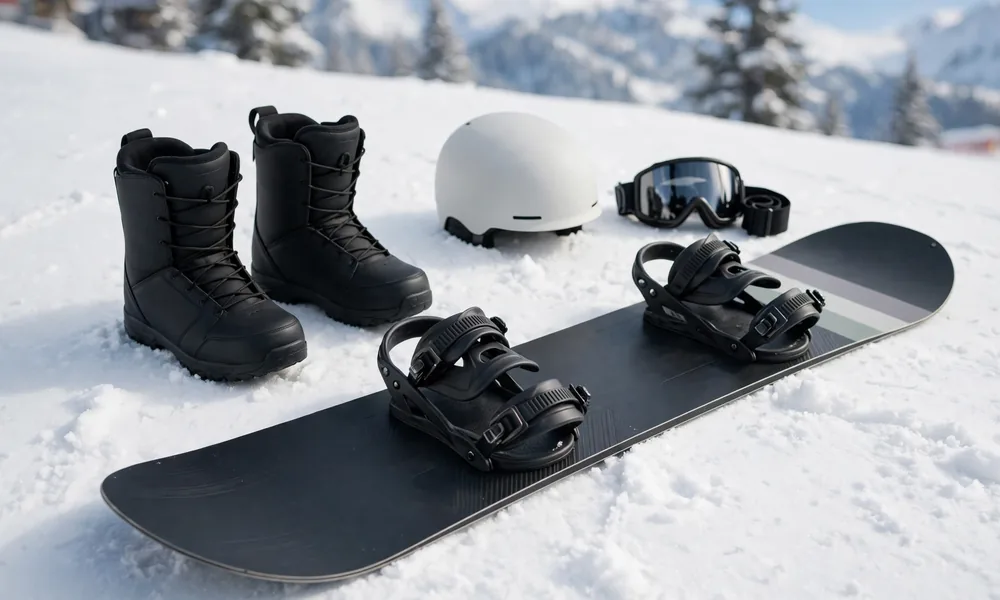
Learning to snowboard is hard enough without your equipment working against you, and the worst snowboarding gear for beginners does exactly that. It turns a fun first trip into sore feet, fogged goggles and a board that refuses to turn. Most beginners fail because somebody sold them gear built for somebody else.
The snowboard industry is full of products that look impressive on a shop wall and perform terribly on a learner slope. Stiff freeride boards, race boots, bargain helmets and fashion-first jackets all promise a shortcut to looking like a pro. They deliver pain and wasted money.
This guide walks through the worst snowboarding gear for beginners piece by piece. For every bad buy there is a cheaper, better alternative.
Key takeaways
- Beginners need a soft, forgiving board, not a stiff board built for speed and powder.
- Boots matter more than the board, and painful boots will end your day faster than any fall.
- Cheap helmets and goggles are a false economy that can put your safety at risk.
- Rent first or buy entry-level, and upgrade once you know your style.
- The worst beginner gear is usually the most expensive-looking, not the cheapest.
Why Beginner Snowboard Gear Goes Wrong So Often
Beginner gear goes wrong for one simple reason: beginners buy gear for the rider they imagine becoming, not the rider they are today. A first-timer who dreams of carving steep powder buys a stiff directional board, when what they actually need is a soft twin that forgives wobbles and catches an edge less often. What matters is flex, fit, shape and simplicity.
The Worst Snowboard for a Beginner
The board is the biggest purchase and the easiest to get wrong. A beginner board should be soft, short, and shaped to help you turn.
A Stiff Freeride Board
A stiff freeride board is built for experienced riders charging down steep terrain. It holds an edge at speed, but demands strength and precision to turn. A beginner simply does not have that strength yet, and the result is a board that feels like a plank. Turns come late or not at all, and every small bump throws the rider off balance.
A Board That Is Too Long
A board that is too long is harder to turn, heavier to carry, and more likely to catch an edge. A board should reach between your chin and your nose when stood on end. Go toward the shorter end of that range if you are light or cautious. If you are between sizes, choose the shorter one.
An Aggressive Camber Profile
Camber is the shape of the board when it lies flat. A traditional full-camber board is springy and precise, but it is also catchy, meaning the edges grab the snow suddenly and throw you down. A flat or rocker-dominant profile is far more forgiving, because the raised contact points make the board less likely to catch an edge.
Boots: The Most Expensive Mistake a Beginner Can Make
If one piece of gear is worth getting right, it is the boots. You can survive a mediocre board, but not boots that hurt. Painful boots cut short every run and ruin your concentration.
Boots That Are Too Tight or Too Loose
Snowboard boots should feel snug around your whole foot, with your toes just brushing the end when you stand upright. They should not pinch, and your heel should not lift when you rise onto your toes. Boots that are too tight cut off circulation and cause numb, freezing feet within an hour. Boots that are too loose let your foot slide around, which kills control and causes blisters.
Stiff Race Boots
Stiff boots give expert riders precise control at high speed, but for a beginner they are a punishment. They restrict ankle movement, making it harder to balance, and tire your legs quickly. A beginner needs a soft to medium flex boot that allows natural movement and forgives imperfect technique.
Bindings That Fight You Every Run
Bindings connect your boots to your board. The worst beginner bindings are too stiff, too fiddly, or so cheap that the straps slip and the ratchets jam. A beginner needs a medium-soft binding that flexes with the boot. Look for simple ratchets and straps you can adjust with gloves on. For a first setup, classic two-strap bindings from a reputable brand are the safest choice.
Helmets and Goggles: Safety Gear That Fails Quietly
Safety gear is the worst place to save money. A helmet that does not fit and goggles that fog constantly are both dangerous, and both are common beginner mistakes.
A Helmet That Does Not Fit
A helmet should sit level on your head, snug all the way around, with no pressure points and no wobble when you shake your head. A loose helmet shifts in a fall; a tight one gives you a headache and tempts you to remove it. Never buy a second-hand helmet. You cannot see internal damage from a previous impact, and a helmet that has already absorbed a crash may not protect you again.
Cheap Goggles That Fog and Distort
Cheap goggles are one of the most frustrating beginner purchases. Poor lenses fog up within minutes, distort your view of the snow, and offer little protection from glare. When you cannot see the bumps ahead of you, you fall more often and learn more slowly. Good beginner goggles do not need to be expensive, but they do need a double lens, proper ventilation and a lens tint suited to the conditions. Sunglasses are no substitute: they fog, slip and can shatter in a fall.
Clothing and Layering Mistakes
Clothing mistakes ruin days on the mountain just as surely as a bad board. Beginners make two opposite errors: dressing for the Arctic, or for a walk in the park.
A Fashion Jacket With No Waterproofing
A stylish jacket that looks great in resort photos but has no real waterproofing is one of the worst beginner buys. Beginners spend a lot of time sitting in the snow, falling in the snow, and getting up from the snow. A jacket that soaks through in twenty minutes leaves you cold, wet and miserable for the rest of the day. Look for a 10,000mm rating or above, with taped seams. The same applies to trousers.
Cotton Base Layers
Cotton is the worst fabric you can wear under snowboard gear. It absorbs sweat, holds it against your skin, and makes you cold the moment you stop moving. Proper base layers made from merino wool or synthetic wicking fabric cost little and transform your comfort. They pull sweat away from your skin and keep you warm even when damp.
Overdressing and Overheating
The opposite mistake is wearing too many layers and overheating. Snowboarding is hard exercise, and beginners work even harder than experts because they fall, get up, and hike back to the lift constantly. The answer is a simple three-layer system: a wicking base layer, an insulating mid-layer such as a fleece, and a waterproof shell.
The Accessories Beginners Waste Money On
Once the main gear is sorted, shops love to sell beginners a pile of accessories. Wrist guards can help, since beginners instinctively put their hands out when falling, but cheap bulky guards that slide around inside your gloves give false confidence while offering little protection. Cheap gloves are one of the most miserable beginner purchases too, because hands in the snow after every fall soak through in half an hour. Mittens are often warmer than gloves for beginners, because your fingers share warmth inside them. Spend your money on lessons and lift passes instead.
Rent First or Buy First
Many beginners agonise over whether to rent or buy, and the honest answer is that renting first is usually the smarter move. A good hire shop will fit you properly and swap anything that does not work. You get to try the sport without committing hundreds of pounds to gear you may not use again. A similar principle applies to other adventure trips, where the worst ski trip mistakes often start with poor planning rather than poor equipment.
If you do buy before your first trip, keep it simple and keep the receipt. Buy from a specialist snowboard shop where staff actually ride, not from a general sports store where snowboards are a seasonal afterthought. The same lesson shows up across outdoor gear, where a well-chosen first setup beats an expensive pile of extras every time, as the guide to the worst camping gear for beginners shows in a different outdoor setting.
| Gear | What goes wrong | What to choose instead |
|---|---|---|
| Snowboard | Stiff, long or full-camber board that will not turn | Soft-flex twin, shorter length, rocker or flat profile |
| Boots | Painful fit, stiff flex, worn rental liners | Soft-flex boots fitted in a shop with proper socks |
| Bindings | Stiff, fiddly straps that jam in the cold | Medium-soft two-strap bindings, easy with gloves on |
| Helmet | Loose fit, no certification, second-hand damage | Certified helmet, snug fit, matched to your goggles |
| Goggles | Single lens that fogs and distorts your view | Double lens, good vents, lens suited to conditions |
| Jacket and trousers | Fashion fabric that soaks through in minutes | 10,000mm waterproofing with taped seams |
| Base layers | Cotton that holds sweat and makes you cold | Merino or synthetic wicking layers |
| Gloves | Cheap gloves that soak through and freeze fingers | Waterproof mittens or gloves, spare liners in pocket |
Beginner Snowboard Gear Checklist
- Board: soft flex, correct length for your height and weight, rocker or flat profile.
- Boots: tried on with snowboard socks, snug with no heel lift, soft to medium flex.
- Bindings: medium-soft, simple straps, tested with gloves on before buying.
- Helmet: certified, snug fit, no gap between helmet and goggles.
- Goggles: double lens, good ventilation, lens tint matched to the day.
- Clothing: waterproof jacket and trousers, wicking base layers, dry gloves or mittens.
Frequently Asked Questions
What is the worst snowboarding gear for beginners?
Stiff, expert-level equipment that punishes mistakes instead of forgiving them. Stiff freeride boards, race boots, fiddly bindings, cheap fogging goggles and non-waterproof jackets top the list.
Should a beginner buy a cheap snowboard?
A cheap snowboard from a reputable brand is often a good choice, as long as it is the right size, flex and profile. Avoid unknown brands with no reviews, poor construction and no warranty.
Are expensive snowboard boots worth it for a beginner?
Expensive boots are not automatically better, and stiff high-end boots are usually worse. What matters is fit, not price. A mid-priced soft boot that fits will serve you far better than a top-of-the-range boot that pinches.
Can a beginner use a second-hand snowboard?
Yes, if you buy carefully. Check for edge damage, delamination and a dead-feeling core, and make sure you know its length, flex and profile. Avoid boards with unknown histories or the wrong size.
Do beginners need a helmet?
Yes. A helmet is essential for every snowboarder, and especially for beginners who fall often. Choose a certified helmet that fits snugly, never buy second-hand, and pair it with your goggles.
Is it better to rent or buy snowboard gear as a beginner?
Renting is usually better for a very first trip, because a good hire shop will fit you properly and swap anything that does not work. If you plan to ride regularly, buying entry-level gear makes sense. Either way, avoid expert-level gear before you can link turns, as even the worst drones for beginners to buy show: beginner-friendly gear beats impressive-looking gear every time.
The Bottom Line
The worst snowboarding gear for beginners is not the cheapest gear on the shelf. It is gear built for someone else: stiff boards, race boots, fashion jackets and gadgets for riders who can already turn. Beginners need the opposite, soft forgiving boards, comfortable boots, simple bindings, certified helmets, clear goggles and properly waterproof clothing. Buy for the rider you are today, rent before you commit, and spend the money you save on lessons and lift passes.