The Worst Courts to Steer Past: The Worst Sports Courts of 2026
The worst sports courts of 2026 are not the smallest halls or the oldest gyms. A small court with a true bounce, a firm footing and a surface that holds up through a whole match can host a wonderful game. The worst sports courts fail more simply: the surface works against the sport, sending the ball anywhere but where it was aimed, taking your footing away, or leaving you lost among the lines. This guide ranks the worst types of indoor sports court in 2026, by playing surface only.
Key takeaways
- A court is judged by its surface, not its size or setting: grip, bounce, level and line clarity decide the game.
- The worst courts take the ball, the footing or the players away from the sport, and no skill can fix a surface that will not behave.
- Old does not mean bad and new does not mean good: a well-kept old wooden court can beat a tired new one.
- Check the grip, the bounce, the lines and the damp before you play, and walk away from any court that fails three of them.
- The worst sports courts are types and patterns, not places: the same seven surfaces turn up in halls everywhere.
How the worst sports courts of 2026 were chosen
Every type below was scored on five measures. Grip comes first: can players stop, turn and change direction safely, or does the floor slide under them? Bounce is second: does the ball behave, or leap, die or skid without warning? Level is third, covering warped boards, cracks and hidden dips that twist ankles. Line clarity is fourth, because a court painted for five sports at once is a court nobody can read. Safety is fifth: the hardness of the floor, the damp on it, and whether a fall ends in a bruise.
Two notes before the list. First, no individual hall or venue is named here, because the same seven surfaces turn up everywhere, and what matters is learning to recognise the pattern before you play. Second, this is about the playing surface itself, the floor under your feet, not the building around it; our guides to the worst sports fields and the worst sports stadiums cover the outdoor pitch and the venue.
Comparison table: the worst sports courts of 2026
| Rank | Court type | Main failure | Worst moment |
|---|---|---|---|
| 1 | The Glassy Slide | Over-polished floor, no grip | Sliding past the ball |
| 2 | The Dead Spot Court | Dead patches where the ball dies | A pass stopping dead mid-court |
| 3 | The Sweating Court | Condensation turns the floor to glass | The team slipping on one damp patch |
| 4 | The Line Salad | Lines for five sports at once | Which line is yours, mid-rally? |
| 5 | The Cracked Concrete Court | Cracks send the ball anywhere | A crack deciding the point |
| 6 | The Dusty Court | Dust kills grip and clouds the air | Coughing through a rally |
| 7 | The Warped Board Court | Warped boards trip and tilt the bounce | A toe caught on a lifted board |
The worst sports courts of 2026
1. The Glassy Slide: the worst court of all
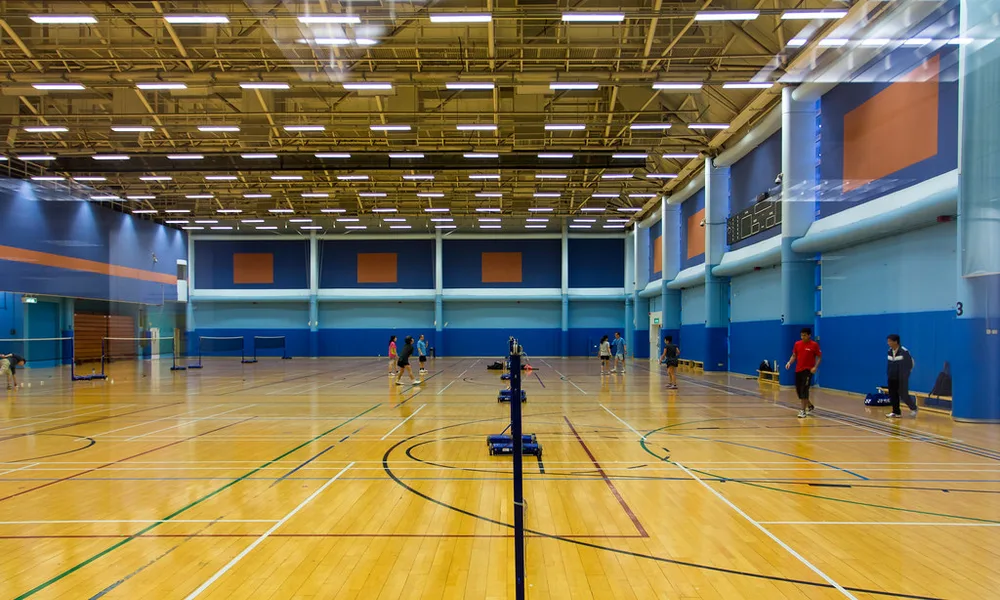
The Glassy Slide is the worst type of sports court, because the floor becomes the opponent. After one polish too many, the wooden surface shines like glass and grips like it too: every step slides, every turn becomes a skid, and every sudden stop ends with a player on the floor. The ball behaves and the lines are clear, and none of it matters, because nobody can stand up long enough to play.
The worst part is the false confidence: it rewards the first few gentle steps, then punishes the first hard change of direction, usually at full speed. Players learn to shuffle instead of run, the game slows to a careful walk, and the match becomes a contest of who falls least rather than who plays best. Test the grip with a hard stop before the game starts.
2. The Dead Spot Court: where the ball goes to die
The Dead Spot Court is a floor that has given up in patches. The sprung boards have lost their life in places, so the ball bounces true on one square metre and dies on the next. Passes stop halfway to their target, dribbles die at a player’s feet, and the game slows to a guessing contest about which patch of floor you are standing on.
What makes it worse is that the dead spots are invisible. The floor looks even from the touchline, and only the ball knows the truth, which it reveals at the worst possible moment. A good court gives the same bounce from corner to corner: bounce the ball in a grid across the floor before you play, and walk away from any court where the bounce changes without warning.
3. The Sweating Court: condensation that turns the floor to glass
The Sweating Court is a hall that cannot cope with a crowd. Warm bodies, a cold floor and poor ventilation meet, and condensation forms across the surface in a thin, invisible film. The floor looks dry, the players run out with confidence, and within minutes the whole team is slipping on the same damp patches. The game stops again and again for mopping, which only buys a few minutes before the damp returns.
The danger is the part nobody talks about until someone is hurt. A fall on a wet indoor floor is a fall onto a hard surface with no give, and the bruises are deep and slow to heal. Halls that sweat need proper ventilation, and players who spot the shine of damp on the boards should call the game off rather than risk it.
4. The Line Salad: five sports, one floor, no sense
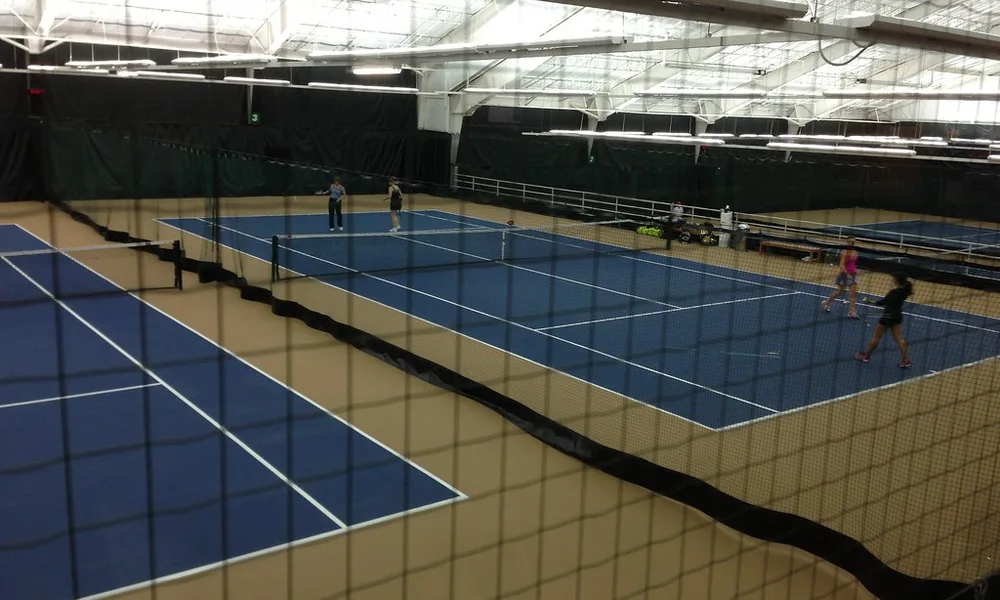
The Line Salad is a court painted for every sport the hall has ever hosted, all at once. Basketball lines in black, volleyball lines in white, badminton lines in yellow, five-a-side lines in blue and a handball court in red, all overlapping and contradicting each other. From a distance it is a jumble of colour with no place for the eye to rest. Up close it is worse, because every line looks like yours until the moment it is not.
A good court has one clear set of lines for the game being played, with the others faded, covered or left off. Stand at the end of the court before the game: if you cannot say in one sentence where your lines run, the floor has failed. Halls that host many sports can work, but only when the markings are clear.
5. The Cracked Concrete Court: a bounce off a crack wins the point
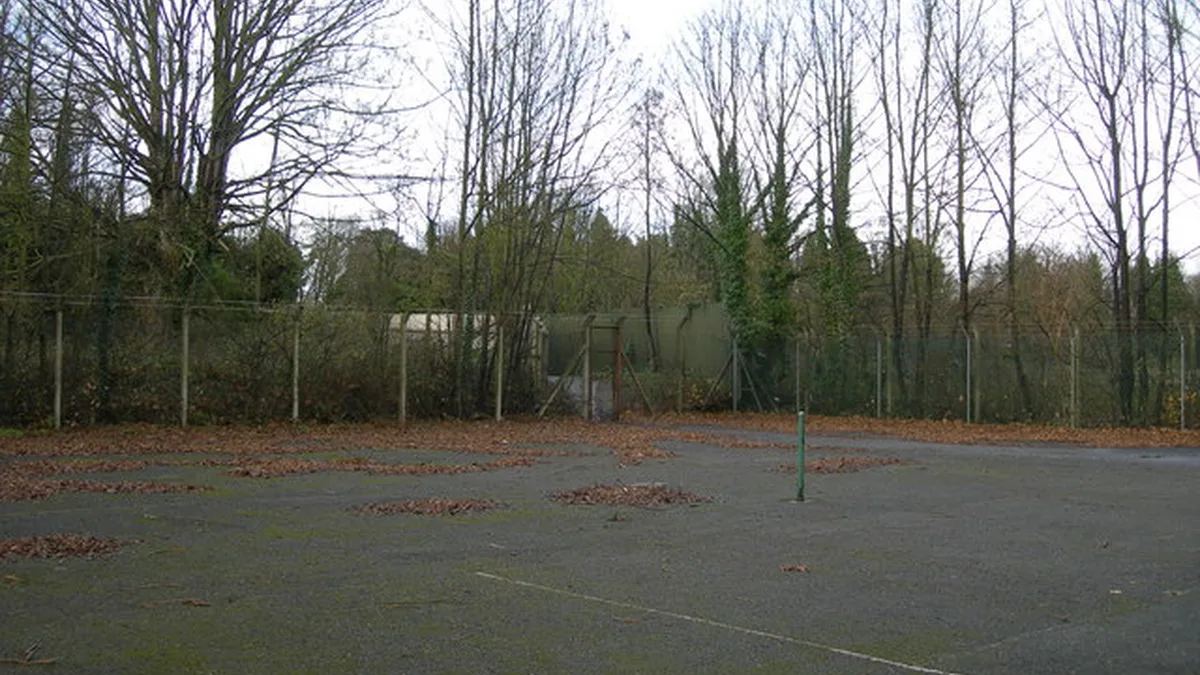
The Cracked Concrete Court is a hard court that has split under years of use, and the cracks now decide the game. The ball hits a crack and leaps sideways, or dies in a dip, or skids along a ridge that was never meant to be there. Players stop trusting the bounce, so they stop moving to it, and the game becomes a slow shuffle instead of a sport.
The cracks are the real danger. The court hides raised edges and loose chips under a thin coat of paint, and a player running at full speed can turn an ankle on a lip they never saw. Each crack spreads a little further with every season, so the court gets more uneven with every repair.
6. The Dusty Court: dry dust, no grip at all
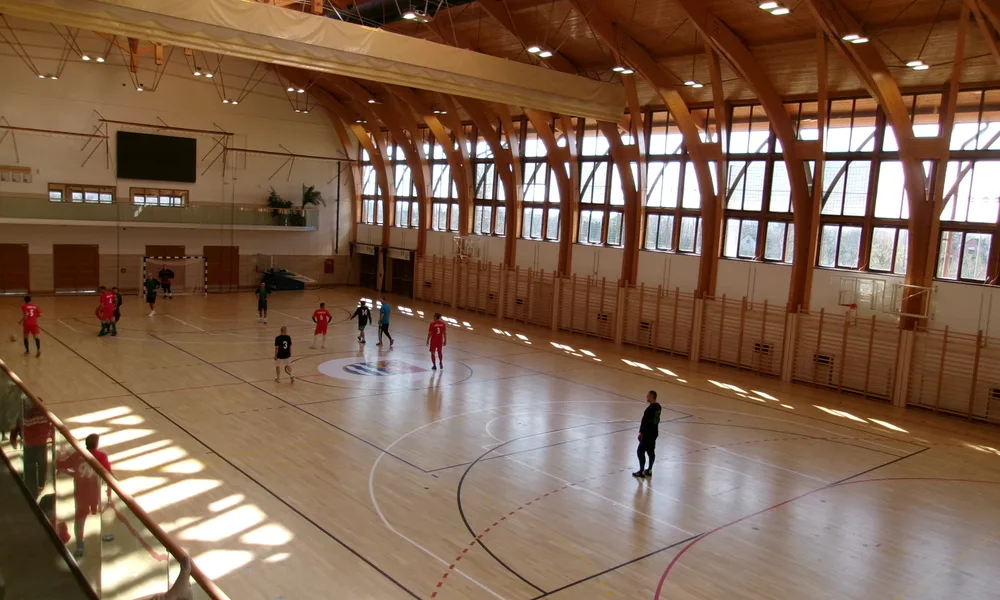
The Dusty Court is a hall where the cleaning gave up and the dust took over. The surface is dry, loose and pale, and every step raises a small cloud that hangs in the air and gets into eyes and lungs. The ball bounces oddly off the powdery top, footing is uncertain, and by the end of the match the players look like they have been working in a warehouse.
The worst part is what the dust hides. Grit, small stones and hard lumps sit just under the surface, waiting for a sliding player or a bare knee. The Dusty Court looks soft from a distance and feels anything but up close. Players deserve a clean floor under their feet.
7. The Warped Board Court: boards that lift, tilt and trip
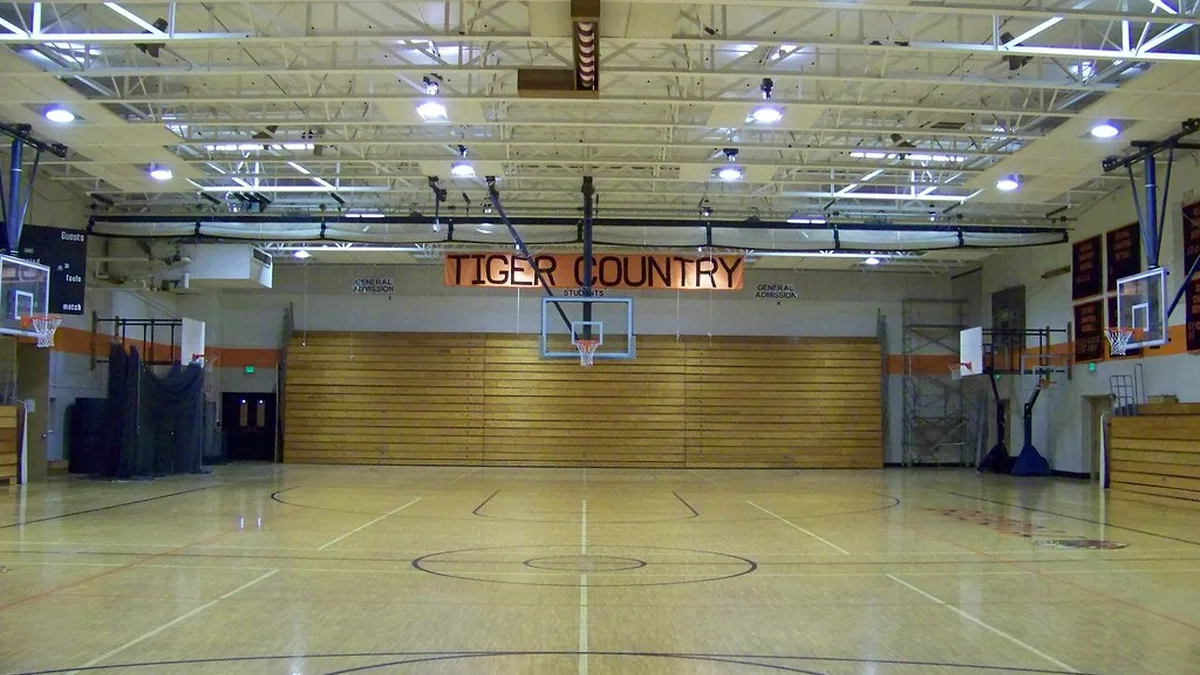
The Warped Board Court is a wooden floor that has been wet once too often, and the boards have never sat flat since. Some have lifted at the edges, some have cupped in the middle, and the whole floor tilts under your shoes. The ball bounces differently on every board, and the players spend the match guessing which floor they are standing on.
The lifted edges are the real danger. A board that has risen a few millimetres is enough to catch a toe at full speed, and a fall on a wooden floor is a fall onto something that does not forgive. A good wooden court is flat, sealed and dry from end to end. Walk the floor before you play, and feel for the edges with your feet before you trust them at speed.
What to avoid when choosing a sports court in 2026
The most common court regret is not a bad hall but a wrong expectation: booking a polished show court for a fast game, or choosing a hall with five sports painted on one floor. Check the grip, the bounce, the lines and the damp before you play, as our guide to the worst stadium tours also advises.
Checklist: choosing a sports court in 2026
- Test the grip with a hard stop and a sharp turn before the game starts.
- Bounce the ball in a grid and walk away from any court with dead spots.
- Trace your lines from end to end and make sure no other sport’s markings cross them.
- Look for damp or shine on the boards, especially near doors and cold walls.
- Walk the floor slowly first and feel for lifted boards, cracks and loose edges with your feet.
- Check the lighting and ceiling height, and skip any court where the ball vanishes into glare.
Frequently asked questions
What makes a sports court bad?
Bad grip, a dead or uneven bounce, and lines nobody can read. A good court holds your footing, gives the same bounce everywhere and shows one clear set of lines.
How do I test a court before I play?
Stop hard and turn sharply to test the grip, then bounce the ball in a grid to find dead spots. Walk slowly to feel for lifted boards and cracks.
Why do indoor courts get slippery?
Over-polishing, dust and condensation are the usual causes. A floor polished too often turns to glass, dust kills grip, and a warm crowd on a cold floor leaves damp behind.
Can you play on a court with lines for other sports?
You can, but it is a poor game. Overlapping lines cause arguments and mistakes, especially at speed, so pick a court where your markings are clearest.
Is a wooden court always better than concrete?
Not always. A well-kept wooden court is the best surface for indoor play, but a warped, dusty or over-polished wooden floor is worse than smooth, clean concrete.
When should a game be called off for a bad court?
When the floor is wet, when boards have lifted, or when players slip on every turn. A called-off game is a disappointment; a bad fall on a hard floor is far worse.
Bottom line
The worst sports courts of 2026 cannot do the simple jobs: hold your footing, give a true bounce and show you where to play. Pick a court with grip, an even bounce and one clear set of lines, and the game will take care of itself. Pick a shiny one on looks alone, and the floor will decide the match for you.