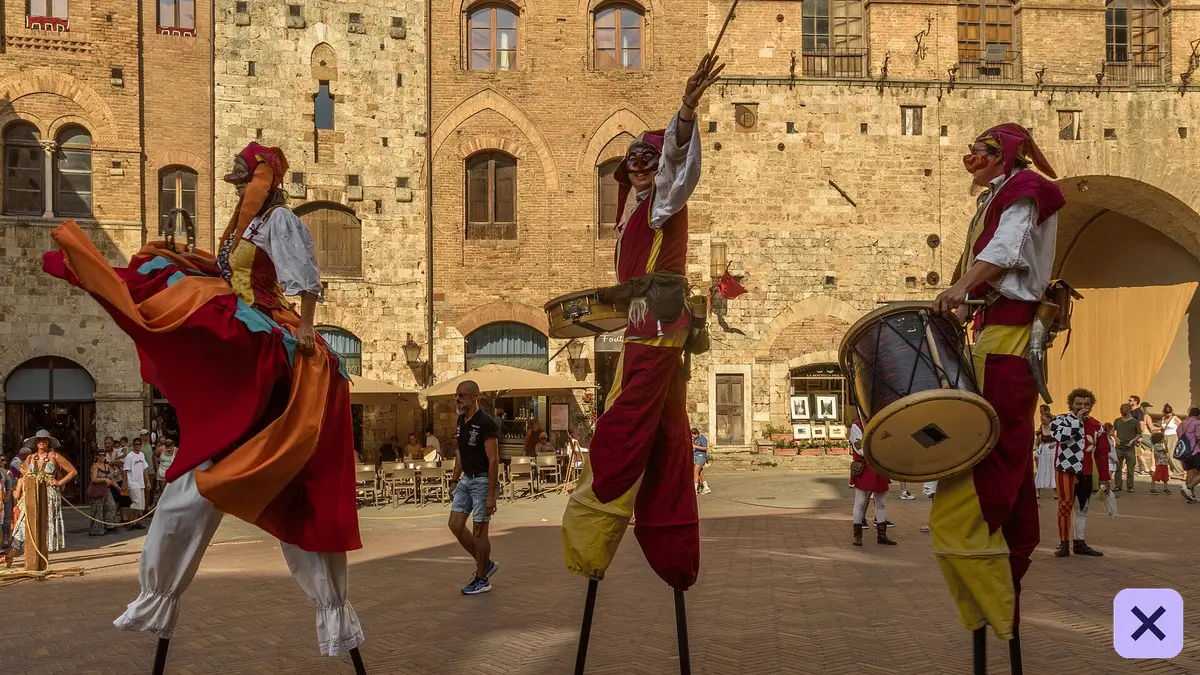
High Above, Falling Short: The Worst Stilt-Walkers of 2026
The worst stilt-walkers of 2026 fail in a way that is visible from across the square. A stilt-walker is supposed to look effortless, gliding above the crowd as if the extra height were natural, but the bad ones wobble, freeze, block the pavement and turn a joyful craft into an obstacle. This guide ranks the worst types of stilt-walkers by the patterns that ruin the performance: legs that never settle, costumes that hide the craft instead of showing it, routines that never move, and walkers who treat a public street like a private stage. No real performer is named here, because the same bad patterns appear in many parades, festivals and town squares, and what matters is learning to recognise them before you follow the crowd.
Key takeaways
- A stilt-walker lives or dies on balance: if the legs wobble in the first minute, the walker has not mastered the stilts.
- The stilts should be part of the performance, not hidden under a costume that reaches the ground.
- A walker who stands still in the middle of a pavement is an obstacle, not entertainment.
- Height alone is not a trick: a tall walker with no movement, no character and no interaction is just a person on sticks.
- If the crowd has to step into the road to get past, the act has failed at its one job.
How the worst stilt-walkers of 2026 were chosen
Every type below was scored on five measures. Balance comes first: does the walker move smoothly, turn without grabbing for support, and recover from a wobble without panic? Movement is second, judged on whether the walker actually travels, dances or interacts, or simply stands in one place. Craft is third, because the stilts themselves should be visible and part of the act, not buried under fabric. Character is fourth, since a stilt-walker in costume should play a role the crowd can read from a distance. Respect for the street is fifth: the best walkers share the pavement with the public, while the worst block it, crowd it or stop it entirely.
Two notes before the list. First, this guide is strictly about stilt-walking as a single craft: the walkers who perform on tall poles at festivals, parades and street corners, judged on balance, movement and how they treat the crowd. It is not about the mixed street bill, covered in our guide to the worst street performers of 2026, where buskers, statues and mime acts share one pavement. It is not about the circus ring, covered in our guide to the worst circus acts of 2026, where height belongs to aerial and trapeze acts on a fixed stage. Second, stilt-walking is a skill built on practice and balance, and the failures below are described so audiences can recognise a weak act and walk past it, not so anyone should try the stilts themselves without training.
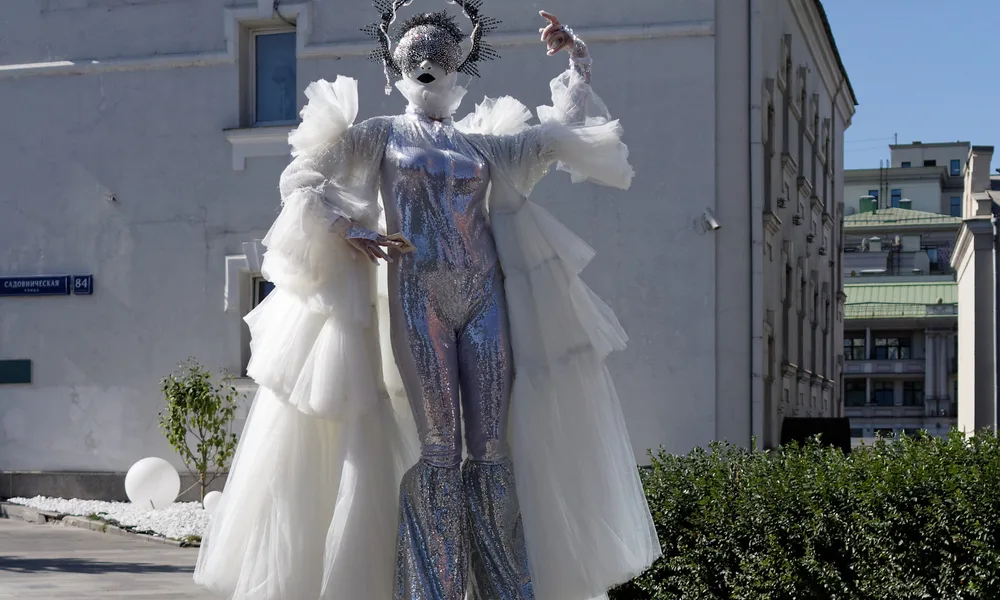
Comparison table: the worst stilt-walkers of 2026
| Rank | Stilt-walker type | Main fault | First warning sign |
|---|---|---|---|
| 1 | The wobbler | Legs that never settle | Grabbing for walls in the first minute |
| 2 | The human roadblock | Standing still, blocking the way | A crowd queueing behind the walker |
| 3 | The costume that eats the craft | Stilts hidden under fabric | Skirts brushing the ground |
| 4 | The statue that forgot to move | No movement, no interaction | Same spot ten minutes later |
| 5 | The giant with no character | Height with no role to play | Plain clothes, blank face, no wave |
| 6 | The parade straggler | Falling behind the whole parade | A widening gap to the float ahead |
| 7 | The fall with no recovery | One stumble ends the act | Helpers rushing in, walker gone |
The worst stilt-walkers of 2026
1. The wobbler: legs that never settle
A stilt-walker’s whole act rests on one promise: that the extra height is under control. The wobbler breaks that promise in the first minute. The legs shake with every step, the walker reaches for walls, railings and strangers’ shoulders, and the crowd watches a tall figure lurch from one near-fall to the next. Nobody in the street is delighted. They are nervous, and nervous is the opposite of entertained. When the legs never settle, the act is already over, because the audience has stopped believing the walker is in charge of the stilts, and once that belief is gone no costume or height can bring it back.
2. The human roadblock: standing still, blocking the way
Some stilt-walkers seem to believe the pavement belongs to them. They plant themselves in the middle of a busy street, strike a pose, and stay there while the crowd piles up behind them, forced to step into the road or squeeze past a pair of poles. The walker is not performing; the walker is obstructing. Height is supposed to make a performer visible, not immovable. A stilt-walker who blocks the way has forgotten that the street is shared, and the crowd’s irritation is the only review that matters.
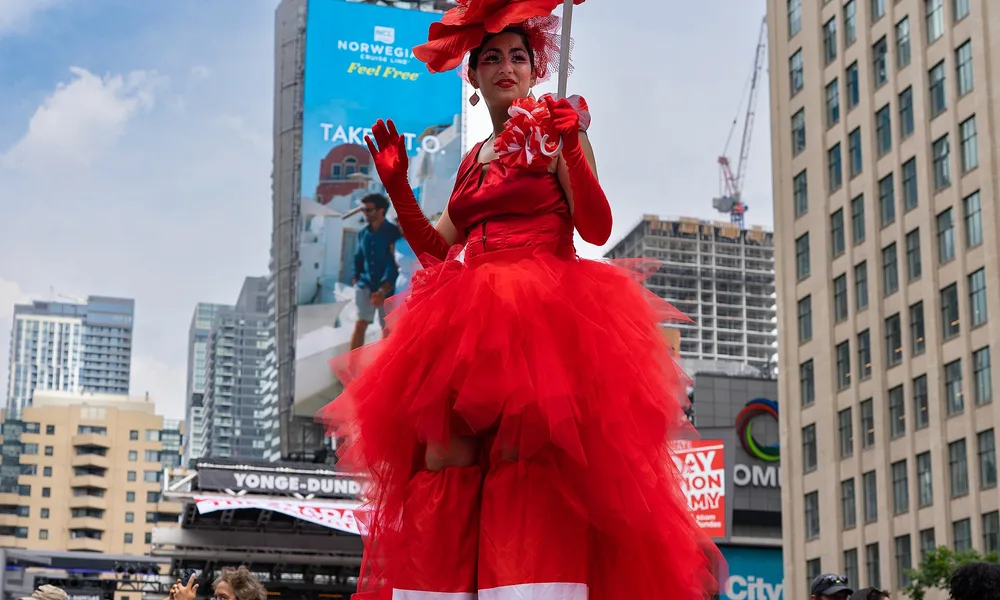
3. The costume that eats the craft: stilts hidden under fabric
The stilts are the act, and the worst stilt-walkers hide them. Long skirts, wide trousers and flowing capes reach all the way to the ground, so the audience sees a tall figure floating along with no visible means of support, and not in a good way: the craft disappears, and with it the reason to watch. When the fabric swallows the stilts entirely, the walker might as well be standing on a hidden platform, and the crowd loses the thread of what is impressive. Stilt-walking is a visible skill, and a costume that hides the skill is working against the act it is meant to serve.
4. The statue that forgot to move: no movement, no interaction
The statue stilt-walker has mistaken stillness for performance. They climb onto the stilts, strike a pose, and stay there, minute after minute, while the festival moves on around them. Children wave and get nothing back. Adults take a photo and move on. Movement is the difference between a stilt-walker and a tall statue, and a walker who never moves has chosen the wrong half of the comparison. Ten minutes later the walker is in the same spot, in the same pose, and the crowd has learned everything there is to learn about the act in the first ten seconds.
5. The giant with no character: height with no role to play
Height alone is not a trick. The giant with no character climbs onto the stilts in plain clothes, with a blank face and no costume, no role and nothing to say to the crowd. There is no jester, no queen, no creature, no story, just a tall person walking through a festival as if the stilts were a commuting choice. A stilt-walker in costume should be readable from fifty metres away: the crowd should know who this giant is supposed to be before the walker gets close. The stilts make the walker visible to everyone, and a performer who does nothing with that visibility has wasted the one advantage the craft gives them.
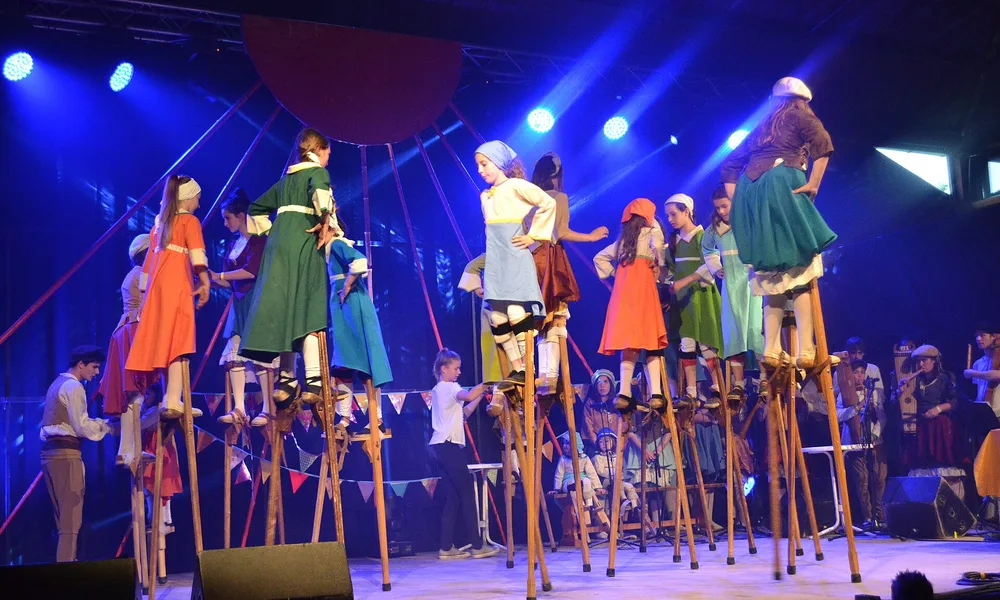
6. The parade straggler: falling behind the whole parade
A parade is a moving act, and the straggler cannot keep up. The float ahead pulls away, the band marches on, and the stilt-walker falls further and further behind, until there is a long empty gap in the middle of the procession and the crowd is watching nothing at all. The straggler stops to rest, stops to adjust a strap, stops to wave at one person for too long, and every stop widens the gap. The straggler trained for a photo, not a parade, and the empty stretch of road behind the band is the review the whole town can see.
7. The fall with no recovery: one stumble ends the act
Every stilt-walker falls sometimes, and the good ones know how to recover: a steadying step, a bow, a laugh, and the act goes on. The worst walkers have no recovery at all. One stumble and the act is over: helpers rush in, the stilts come off, the costume is bundled away, and the performer disappears, leaving the crowd with nothing but an awkward silence. A fall handled badly does the opposite, proving that the walker was never really in charge of the stilts. Recovery is part of the craft, and the walker with no recovery has only half a craft.
What to avoid when watching a stilt-walker
The most common mistake is following a bad act down the street. If the legs wobble in the first minute, if the walker blocks the pavement instead of sharing it, or if the costume hides the stilts entirely, the act will not improve: those are not first-day nerves, they are the act. Walk past rather than waiting for a moment that never comes, because a weak stilt-walker does not get steadier mid-parade. The same judgement applies to the other acts that share the street, and our guide to the worst acrobats of 2026 makes the same point about balance and recovery, because the traps are the same wherever height and a crowd meet.
Checklist: spotting a bad stilt-walker early
- Watch the first minute: if the legs shake and the walker grabs for support, the balance is not there.
- Check the pavement: if the crowd is queueing behind the walker, the act is blocking the street.
- Look at the costume: if the stilts are hidden under fabric that reaches the ground, the craft is buried.
- Notice whether the walker moves, waves and plays to the crowd, or just stands in one spot.
- Ask whether you can tell who the character is from fifty metres away.
- Walk past if one small wobble ends the act, with helpers rushing in and the stilts coming off.
Frequently asked questions
What makes a stilt-walker bad?
Loss of balance and loss of the street. Wobbling legs, standing still in the middle of a pavement, a costume that hides the stilts and no character to play are the patterns that ruin the act.
How tall are stilt-walkers supposed to be?
Tall enough to tower over the crowd, usually on stilts that add a metre or more. The height only works when the walker moves smoothly and the stilts are visible as part of the performance.
Is it normal for stilt-walkers to wobble?
A small wobble, recovered gracefully, is normal. Legs that shake with every step, and a walker who grabs walls and strangers for support, have not mastered the stilts.
Should stilt-walkers perform in busy streets?
Yes, if they share the pavement: moving with the crowd, leaving room to pass and never blocking a doorway, bridge or market entrance. A walker who blocks the way has forgotten the street is shared.
Why do some stilt-walkers wear such long costumes?
Costume should frame the stilts, not hide them. Long fabric that reaches the ground buries the craft, catches on paving and can trip the walker, so the best costumes show the poles and the long legs.
What should a stilt-walker do if they fall?
Recover with confidence: a steadying step, a bow and a laugh, then carry on. A fall handled well shows control; a performer who vanishes after one stumble shows the act was never secure.
Bottom line
The worst stilt-walkers of 2026 fail on balance, movement and respect for the street: wobbling legs, walkers who block the pavement, costumes that hide the craft, and falls with no recovery. A good stilt-walker glides, plays a character the whole square can read, and shares the pavement with the crowd. If the walker in front of you shows none of that in the first minute, walk past and find a performer who has earned the height.


