
Learning to surf is hard enough without the board working against you. A good beginner board catches waves easily, stays steady under your feet, and forgives the wobbles while you find your balance. A bad one does the opposite: you paddle hard and go nowhere, the board slides sideways when you try to stand, and every wave you do catch ends with a nose-dive in front of everyone on the beach. The worst surfboards for beginners in 2026 are the boards that will not catch waves, will not turn, and fall apart within a season, and they are still on sale to people who have never been told what a good beginner board feels like.
What Makes a Beginner Surfboard Bad
The first problem is the size and the float. A beginner board needs enough volume to float easily, paddle fast, and catch waves early. Volume is the amount of foam in the board, and it decides how easily the board carries a rider. Bad beginner boards are too small, too thin, or too narrow for the rider, so they sit low in the water, paddle slowly, and miss wave after wave. A board that cannot catch waves cannot teach anyone to surf, and a beginner who cannot catch waves will spend the whole session paddling and nothing else.
The second problem is the shape. The outline of a board, its length, width, and thickness, decides how it turns, how it handles a steep drop, and how it behaves in white water. A good beginner shape is long, wide, and forgiving, with a rounded nose that catches waves easily and rails that hold their line. A bad shape is copied from a board the maker did not understand: a narrow nose that pearls on the take-off, a pulled-in tail that needs skill to turn, or rails that are too thin to hold. A board with the wrong shape for a beginner fights the rider on every wave.
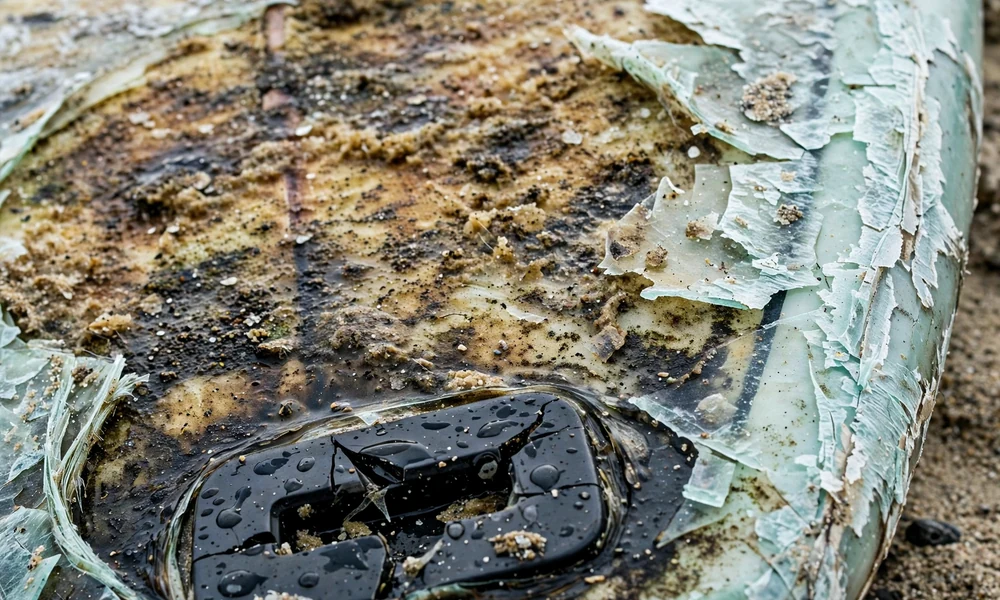
The third problem is the build. A good board is made from proper foam and fibreglass or epoxy, laminated cleanly, with fins that are firmly attached and a deck that stays grippy when wet. Bad boards use cheap foam that goes soft and loses its shape within a season, skins that peel and bubble, and fins that wobble or snap off. A board that goes soft underfoot is a board that will not turn, and a board that loses a fin in the surf is a board that cannot be ridden at all.
The Main Types of Beginner Surfboard, and Where They Go Wrong
Cheap foam boards are the most common trap. Foam boards are the right choice for most beginners, because they are soft, safe, and forgiving. The cheapest ones, though, use low-density foam that dents easily, absorbs water, and goes soft within weeks. They are often sold at a price that seems too good to refuse, and it is: the board is heavy when wet, the deck goes slippery, and the shape warps in the sun. A foam board that absorbs water is a board that gets heavier every session, until it will not float properly at all.
Cheap fibreglass boards are the more expensive trap. Fibreglass boards are harder, faster, and less forgiving than foam, and a bad one costs as much as a good foam board while performing worse. The usual fault is thin glass and poor lamination, so the board dings on the first knock and takes in water. The other fault is a shape copied from a shortboard, with too little volume for a beginner to paddle. A beginner on a board with too little volume cannot catch waves, and a beginner who cannot catch waves cannot learn.
Pop-out boards, the mass-produced epoxy boards sold in surf shops and sports stores, can also disappoint. A good pop-out is tough and reliable, but a bad one is heavy, stiff, and dead, with a shape that was designed by a computer and never tested by a surfer. The most common fault is a board that is too heavy to carry and too stiff to turn, which makes every session feel like work. A beginner needs a board that forgives mistakes, not one that punishes them.
Then there are the novelty and gift boards, the ones sold in toy shops and tourist stores. They look like surfboards, they have fins and a leash plug, and they are not surfboards at all. The foam is often not foam, the fins are plastic, and the whole thing will snap on the first real wave. They are bought as presents and broken within a week.

How to Spot a Bad Board Before You Buy
The shape tells the truth first. Stand the board on its tail and look along it. It should be long and wide for a beginner, with a rounded nose and a smooth, even outline. Run your hand along the rails, the edges of the board. They should feel smooth and consistent, with no bumps, no soft spots, and no cracks. Look at the deck: it should be flat and even, with no dents, no bubbles, and no soft patches. A deck that is soft under your thumb is a deck that will go softer in the water.
Next, check the fins and the leash plug. The fins should be firmly attached, with no wobble and no cracks around the base. Try to move each fin gently. If it moves at all, it will come off in the surf. Check the leash plug, the small fitting where the leash attaches. It should be set cleanly into the deck, with no cracks around it. A leash plug that pulls out leaves a beginner with no board and no way to get it back.
Finally, check the weight and the feel. Pick the board up and carry it. A beginner board should feel manageable, not like carrying a door. Too heavy, and the beginner will dread the walk to the water. Too light, and the board may be too thin to float properly. Press the deck with your thumb in several places. It should feel firm and spring back. If it stays dented, if it feels spongy, or if it crackles under your thumb, walk away.
The Most Common Faults, One by One
Not catching waves is the fault beginners notice first. The board paddles slowly, the wave passes underneath, and the beginner is left sitting in the water while everyone else rides. The cause is almost always too little volume for the rider, or a shape that is too narrow to paddle fast. A board that cannot catch waves cannot teach anyone to surf, and a beginner who cannot catch waves will spend the whole session paddling and nothing else. A board that makes you work harder for less is a board to avoid.
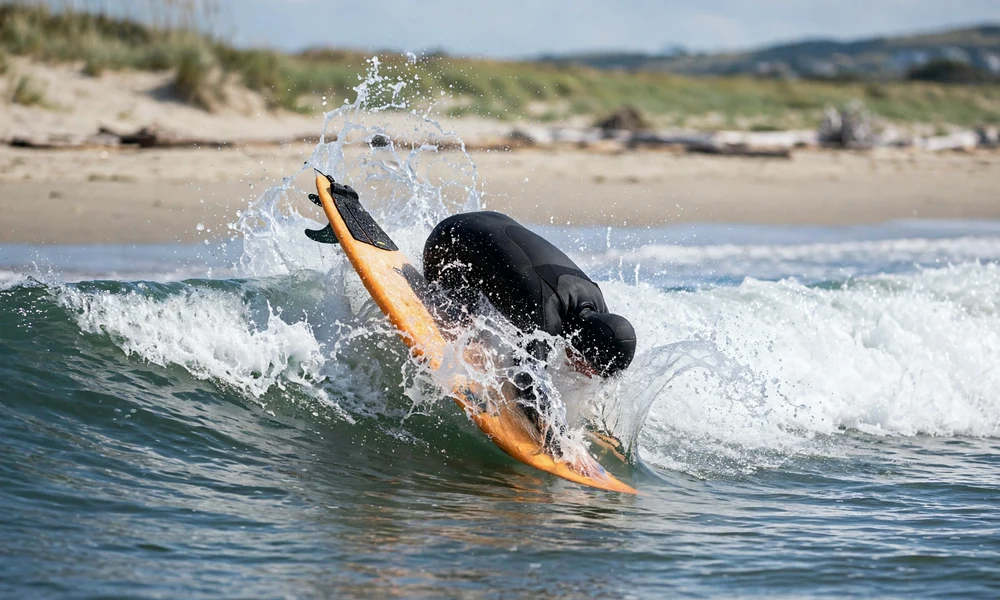
Nose-diving comes second. The board catches the wave, the nose digs in, and the rider goes over the front in front of everyone on the beach. The cause is usually a nose that is too narrow, or a board that is too short for the rider’s weight, so the front sinks as soon as the wave lifts the tail. A board that pearls on every take-off teaches the rider to lean back, and leaning back is a habit that ruins every ride that follows.
Going soft is the third fault. Cheap foam absorbs water, cheap fibreglass delaminates, and a board that goes soft loses its shape, its float, and its ability to turn. A board that is soft underfoot feels vague and unresponsive, and a vague board makes the rider tense up. A tense rider falls more, not less. A board that goes soft within a season was never worth buying.
Losing fins is the last fault, and it is the most dangerous. A fin that snaps off or pulls out leaves a board that cannot hold its line, and a board that cannot hold its line will slide sideways on a steep wave. If the fins wobble, if the fin boxes are cracked, or if the board has been repaired badly around the fins, the board is not safe to use.
Who Gets Hurt Most by a Bad Board
First-time surfers suffer first. A beginner needs a board that helps them, not one that fights them. A bad board makes the first sessions miserable, and miserable first sessions are often the last. Many people who say they hate surfing actually hate their board, and they never get the chance to find out that a decent one changes everything.
Children and smaller adults suffer differently. They need a board with enough float for their weight, and a bad board that is too small or too thin for them will not catch waves at all. A child on a board that will not float properly spends the session paddling and sinking, and learns nothing except that surfing is hard. A board that is the wrong size for the rider is a board that will not teach them anything.
Occasional surfers suffer last, because they buy the cheapest board on the shelf and surf three times a year. The board sits in a garage, the foam dries out, the skin peels, and when they do surf, it feels terrible. They decide surfing is a hard sport, when they never gave themselves a fair chance with a decent board.
What to Buy Instead
The fix is not to buy the most expensive board, but to buy one with enough float, a forgiving shape, and a solid build, and to check all three before you pay. Look for a board that is long and wide for your weight, with a rounded nose, smooth rails, and fins that are firmly attached. Pick it up, press the deck, and trust what your hands tell you. A board that feels right in the shop usually rides right in the water, and one that feels wrong never improves.
Think about the waves you will actually ride. Small, gentle summer waves call for a long, wide board that catches easily and stays steady. Shorter boards only make sense later, once you can catch waves without thinking and turn with confidence. A beginner does not need the most expensive board on the rack. What matters is a board that catches easily, answers when you lean, and forgives the wobbles. For the rest of their beach kit, the same rule applies: our guide to the best paddle boards for beginners of 2026 starts with the same advice, buy for the water you have, not the one in the advert.
The Bottom Line
The worst surfboards for beginners in 2026 share the same faults: too little float, wrong shapes, and builds that go soft. They are easy to spot once you know what to look for, and easy to avoid. Check the shape, the fins, and the deck, and trust your hands. Spend a little more on a board with enough float, a forgiving shape, and a solid build, and it will last longer, catch more waves, and make surfing a thing you want to do again. Surfing is supposed to be fun, and the right board is what makes it feel that way. The same care applies to the rest of the beach: our guides to the best vs worst surfboards of 2026 and the best swim goggles of 2026 start with the same advice, check the build, check the fit, and never trust a board you have not held.


