Every year, travellers spend billions on the worst travel trends — overhyped viewpoints, overpriced coffees, “exclusive” experiences that turn out to be a queue with a gift shop at the end. The photos look perfect. The bank statement does not.
The problem is not travel itself: it is one of the best ways to spend money, when it buys something real. The worst travel trends do the opposite, charging premium prices for crowded rooms and souvenirs nobody wanted.
This guide names the trends that waste the most money, explains why they keep working, and shows what to do instead — spending only on the parts worth it.
Key takeaways
- Popularity is not value: the most photographed places are often the worst value per hour.
- Hidden fees and tourist-menu markups can add 30 to 50 percent to a trip without adding anything.
- A trend that makes you rush makes you spend: slow trips cost less and deliver more.
- Pay for access, comfort or food you will notice, not for a label or a ten-minute queue skip.
- Before booking anything “exclusive”, check what is included and what the ordinary version costs.
1. The Instagram Queue: Paying to Stand in Line
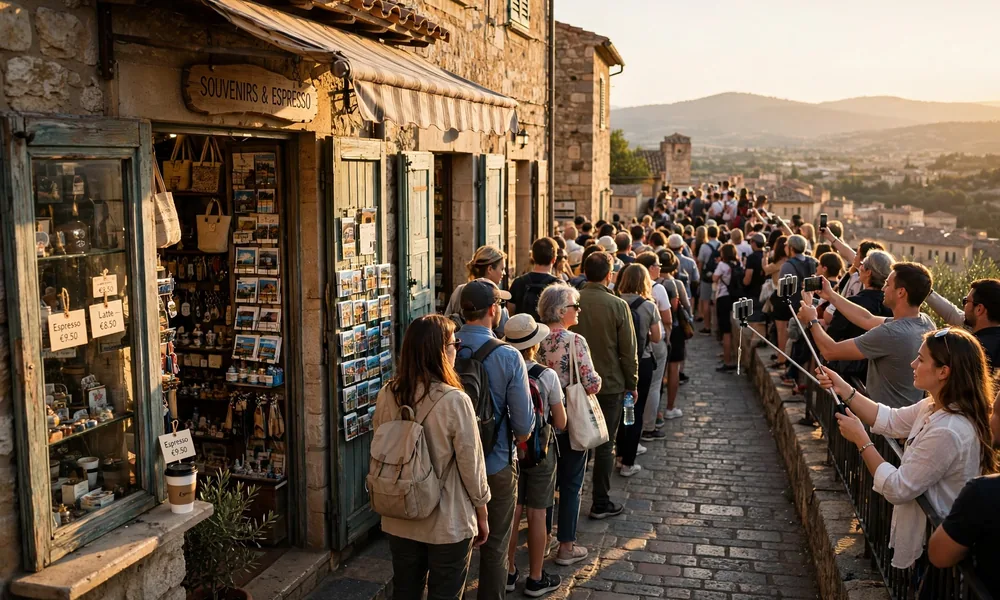
The most expensive thing in modern travel is often not a ticket or a hotel. It is the hour spent queuing for a photo thousands of others took yesterday. The viewpoint is free, but the day is not.
The queue economy works because the photo is the product. A famous staircase or a swing over a valley: forty seconds of experience, two hours of waiting, and cafés nearby charging far more than two blocks away.
The fix is simple: go early, go late, or skip it. The same viewpoint at 7 a.m. is a different place from noon, and if the only reason to go is the photo, ask whether it is worth a morning. As one blunt verdict on the site puts it, the worst travel trend is going just to prove you went — and the queue is where it charges most.
2. Overpriced “Exclusive” Experiences
Few words add as much to a price as “exclusive”, “VIP” and “private”. They promise something rare; they usually deliver the same tour, boat and sunset, with a lanyard and a glass of sparkling wine.
The VIP upsell trap
The classic VIP package adds early entry, a separate line and a branded tote bag, then charges double or triple the standard ticket. At many sites “skip the line” saves ten minutes and the lines merge inside anyway. Before paying, check the ordinary price, the actual queue time, and what the upgrade genuinely changes.
Private tours that are not private
A “private” tour should mean your group, your pace, your guide. Too often it means strangers, a fixed route and a guide reading the big-bus script. If the listing will not state the maximum group size in writing, assume the worst.
3. The Tourist-Trap Dining Bill
Food is where travel budgets quietly die. The restaurant with the laminated menu in six languages, the host waving you in, the table facing the famous square: that is where a simple lunch costs what a very good dinner costs two streets away.
The markup is rarely about quality; it is about location. A café on the main square pays the highest rent in town, and its prices reflect that, not the cooking. The coffee that costs nine euros by the viewpoint costs two euros in the bakery where locals queue in the morning.
The rule is easy: eat one street back from the attraction, where the menu is short and in one language. A short menu means a kitchen that cooks what it knows; a long menu in six languages means a freezer and a microwave. And when a restaurant shows no prices outside, walk on — that omission is never an accident.
4. The Resort Fee and the Hidden-Price Trip
The cheapest-looking booking is often the most expensive trip. Airlines split the fare into a low headline price plus seat selection, bags and boarding; hotels add resort fees, taxes, parking and wifi at checkout. The advertised price is a starting bid, not a price.
Resort fees are the worst of the breed: compulsory and disclosed late. A room advertised at ninety pounds with a forty-pound resort fee is a hundred-and-thirty-pound room. Always compare the final checkout total, not the nightly rate.
The same logic applies to the hotel itself. A beautiful lobby photographs well and means nothing at midnight, when what matters is a quiet room and a comfortable bed. That is why hotel design traps that look beautiful and live terribly cost travellers twice: in the room rate, and in the sleep they do not get.
5. Souvenir Shopping as a Budget Leak
Souvenirs feel like small money, which is why they add up. A magnet here, a tote bag there, a T-shirt never worn: the average traveller comes home with objects that cost more than a good dinner and deliver less pleasure than the dinner did.
The deeper problem is that most tourist souvenirs are not even local. The same mass-produced trinkets appear in gift shops from Lisbon to Ljubljana, made in the same factories. Paying a premium for something generic is the purest form of travel waste: high price, zero connection to the place.
If you want something to take home, buy one thing, made locally, from a maker you can meet: pottery from the potter, oil from the grove, a print from the market artist. One real object beats ten generic ones, costs less in total, and actually reminds you of the trip a year later.
6. The “Must-See” Checklist Trip
The checklist trip wastes the most money per unit of enjoyment. Five cities in seven days, three museums before lunch, a new hotel every night: every transfer costs money, every rushed meal costs money, and constant movement means premium prices for convenience at every step.
Checklist travel removes every chance to spend wisely: no time to find the cheap local lunch, no chance to learn the transport. Slowness is not just more pleasant; it is cheaper.
Cut the list in half: two cities in a week, one neighbourhood properly explored, a morning with nothing planned. The best journeys, like the best mountain escapes that are actually worth the trip, reward the traveller who stays long enough to see past the postcard.
7. Premium Seats, Lounges and Upgrades That Add Nothing
Travel is full of upgrades that sound luxurious and change almost nothing. Priority boarding means sitting in a smaller seat for longer; a premium seat on a two-hour flight buys legroom you will barely notice; lounge access can mean thirty pounds for a coffee and a biscuit worth six.
Upgrades are not always waste: on a ten-hour overnight flight, a better seat is the difference between arriving human and arriving wrecked. The test is simple — will you notice it for more than ten minutes, and is it worth a good meal at your destination? If either answer is no, keep the money.
The same test kills most insurance upsells, fast-track security at quiet hours, and “premium” car hire that differs from standard only in badge and paint. Pay for the thing itself, not the word in front of it.
8. The Influencer Itinerary Copy
The newest money-waster is the copied itinerary: the exact five-day route, hotels and restaurants, taken from a creator whose trip was partly paid for by the places featured. The route looks effortless on screen because the effort, and the bill, were edited out.
Copied itineraries fail for a boring reason: they were built for someone else’s budget, pace and taste. The restaurant perfect for a sponsored dinner is a poor choice for a family of four paying full price — and when thousands copy the route, its prices rise to meet them.
Use other people’s trips as a starting point, never as a script. Take the one idea that fits your trip, then build the rest around your own budget and pace. The trip that fits you is almost always cheaper than the trip that fitted someone else’s camera.
What Each Trend Really Costs
| Trend | Typical waste | Better spend |
|---|---|---|
| Instagram queues and photo spots | Half a day, premium nearby prices | Early or late visit, or skip it entirely |
| VIP and “exclusive” upgrades | Double or triple the standard price | Standard ticket plus one real private guide |
| Tourist-trap dining | Three to four times local prices | One street back, short menu, local queue |
| Resort fees and hidden charges | 30 to 50 percent over the headline price | Compare final checkout totals only |
| Souvenir shopping | A good dinner’s worth of trinkets | One locally made object from its maker |
| Checklist trips | Premium prices at every step | Half the stops, twice the time in each |
| Pointless upgrades | Meal-sized sums, minutes of benefit | Upgrade only the long-haul seat or the bed |
| Copied influencer itineraries | Sponsored prices at full price | One borrowed idea, the rest your own plan |
Checklist: Before You Pay for Any Travel Trend
Run through this list before booking anything with a premium price, a famous name or a queue attached to it.
- Check the ordinary price first: what does the standard ticket, room or meal cost?
- Ask what is included, in writing: group size, times, food, transport and exclusions.
- Price the alternative: the same view at 7 a.m., the same meal one street back, one fewer stop.
- Count the hours, not just the money: a cheap ticket that wastes a morning is expensive.
- Read the checkout total, not the headline: add fees, bags, seats and taxes first.
- Wait a day before booking anything “exclusive”: if you still want it tomorrow, it is worth it.
Frequently Asked Questions
What is the single biggest travel money-waster?
The rushed checklist trip: it makes every other waste more likely, from premium prices for convenience to tourist-trap meals eaten in a hurry. Slowing down is the cheapest upgrade in travel.
Are skip-the-line tickets ever worth it?
Yes, at genuinely crowded attractions in peak season, where the queue is measured in hours. They are rarely worth it on quiet days, at small sites, or when the “skip” covers only the ticket desk. Check recent queue reports before paying.
How much do resort fees really add to a trip?
On a typical city break they commonly add 30 to 50 percent to the advertised room rate once fees, taxes and parking are included. Always compare final checkout totals, never nightly headline rates.
Is it rude to skip the famous sights?
No. A sight you visit only to photograph is a sight you have not really visited. Skipping a crowded landmark for a neighbourhood, a market or a walk is choosing the trip you actually want.
How can I tell a tourist-trap restaurant from a good one?
Look for a short menu in one language, prices displayed outside, and local people eating there. Be wary of hosts beckoning you in, laminated menus in six languages, and tables facing the view rather than the kitchen.
What should I spend extra on when travelling?
Spend on the bed, the long-haul seat and the food you will remember. A quiet room, a good night’s sleep and one genuinely good meal a day change a trip far more than any VIP lanyard or souvenir ever will.
The Bottom Line
The worst travel trends all sell the same thing: the feeling of a great trip, at a premium price, without the trip itself. A queue is not an experience, a label is not luxury, and a photograph is not a memory. Spend on the parts that are real — the place, the food, the rest, the time — and the trends can keep their queues.