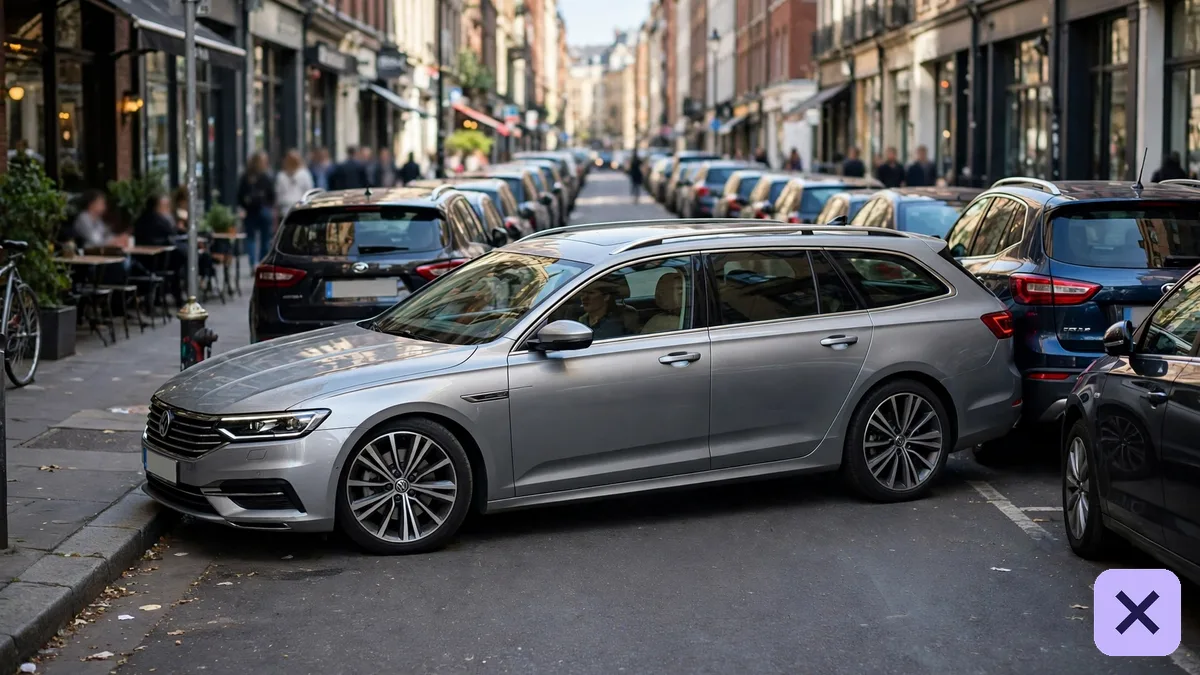
The worst wagons for city driving in 2026 are not bad cars in the usual sense. Many of them are comfortable, well built and pleasant on the open road, which is exactly why they trap city buyers. A wagon that feels superb on a motorway can be a daily frustration in town: too long for the parking space outside your flat, too wide for the multi-storey ramp, too thirsty in stop-start traffic, and too expensive to run for the short trips that make up most city driving. This guide ranks the worst wagons for city driving in 2026, judged on the things that matter in town: length, turning circle, fuel economy in traffic, visibility, parking ease, and running costs.
We have focused on the wagon types and traits that punish city drivers most, rather than naming individual models that may change with a facelift. If a wagon in this guide sounds like the car you are considering, check the numbers carefully before you buy, because the same traits that make a wagon a great motorway cruiser are often the ones that make it a poor city car. The best wagons for city driving are small, light and hybrid; the worst are the opposite in every way that counts.
Key Takeaways
- The worst wagons for city driving are over 190 inches long, which leaves no margin in standard street spaces and multi-storey bays.
- A turning circle over 40 feet turns a simple U-turn into a three-point turn on a normal residential street.
- Large petrol and diesel wagons return only 22 to 28 miles per gallon in stop-start traffic, roughly half what a hybrid wagon manages.
- High beltlines, thick pillars and small rear windows create blind spots that make junctions and car parks stressful.
- A wagon with a high load sill and a deep boot well looks spacious on paper but is awkward to load with shopping and pushchairs.
Why Some Wagons Fail in the City
City driving is a specific test, and it punishes a specific set of traits. A wagon designed for long motorway journeys is usually long, heavy and powerful, with a large engine, a wide body and a long wheelbase for stability at speed. In town, those same traits work against you. Length makes parking hard, width makes narrow streets and ramps stressful, weight makes fuel economy poor in stop-start traffic, and a long wheelbase makes the turning circle wide. A car that is superb at 70 miles per hour can feel clumsy at 7 miles per hour, and that is the speed that matters most in a city.
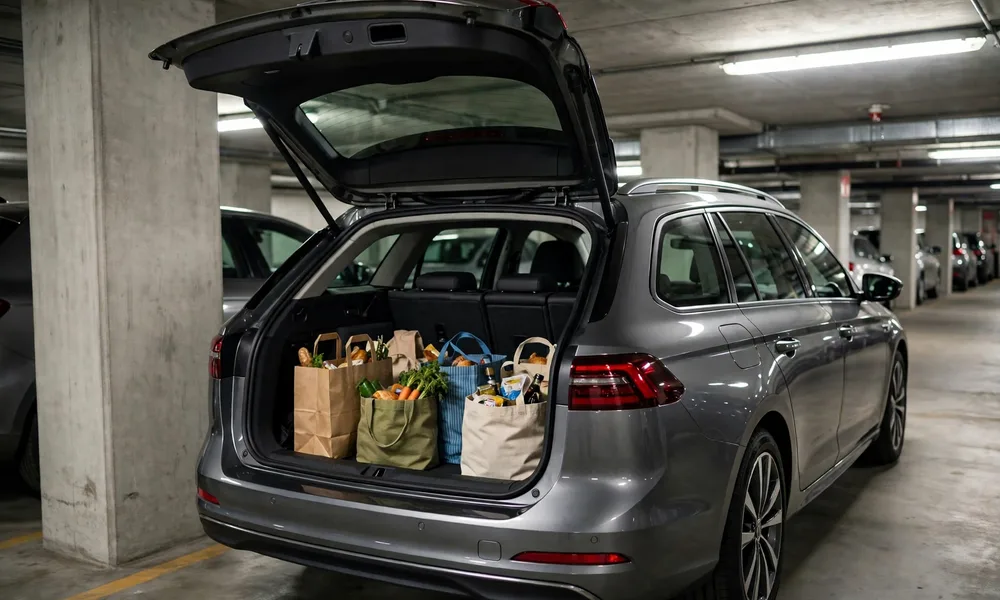
The second problem is that wagons are sold on cargo space, and cargo space is measured in a way that flatters the worst city wagons. Manufacturers quote the volume with the seats folded, or the volume to the roof, which makes a long, tall wagon look far more practical than it is for daily city use. The figure that matters is the volume behind the rear seats with the load cover in place, and the shape of that space. A wagon with 30 cubic feet that is long, narrow and deep is harder to load than a wagon with 25 cubic feet that is wide, flat and low. The worst wagons for city driving score well on the headline number and badly on the one that decides whether you can actually get your shopping in.
Worst Wagons for City Driving Compared
| Wagon Type | Length | Turning Circle | City MPG | Main City Flaw |
|---|---|---|---|---|
| Large petrol estate | 196 in | 41 ft | 24 mpg | Too long to park easily |
| Heavy diesel estate | 194 in | 40 ft | 28 mpg | Thirsty and clean-air charges |
| Performance wagon | 192 in | 40 ft | 22 mpg | Power you cannot use in town |
| Premium luxury estate | 195 in | 42 ft | 25 mpg | Wide, heavy and costly to run |
| Old-shape large wagon | 193 in | 41 ft | 26 mpg | Poor visibility and old safety tech |
The table makes the pattern plain. Every wagon in this ranking is over 190 inches long, every one has a turning circle of 40 feet or more, and none returns more than 28 miles per gallon in the city. The large petrol estate is the worst all-rounder, because it combines the longest body with the second-worst fuel economy. The performance wagon is the worst value, because its extra power is useless in traffic and costs you 22 miles per gallon. The premium luxury estate is the worst for running costs, with a wide body, heavy weight and a turning circle of 42 feet that makes every car park a chore.
Length and Parking: The Number That Decides Everything
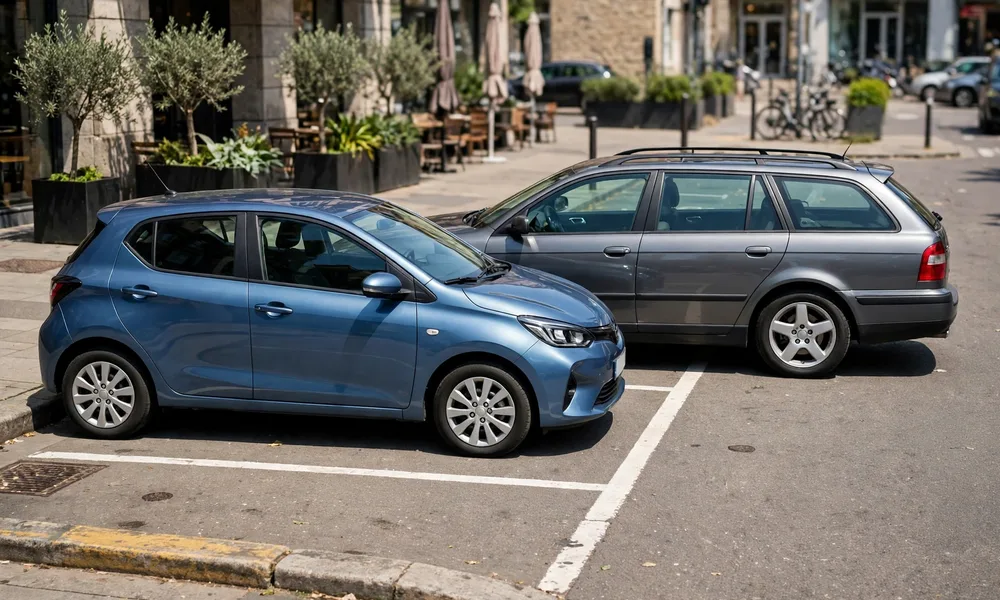
Length is the single most important number for a city wagon, and it is the one buyers most often ignore. Standard street parking spaces in most cities are 200 to 220 inches long, and a wagon of 196 inches leaves almost no room to manoeuvre at either end. That means every parallel park becomes a careful, multi-point operation, with the driver behind you waiting and the bumper of the car in front only inches away. A wagon of 178 inches, by contrast, leaves room to spare and parks in a single smooth movement. The difference of 18 inches sounds small on paper, but in a crowded street it is the difference between parking with confidence and parking with dread.
Multi-storey car parks punish long wagons even more. The ramps are narrow, the turns are tight, and the bays are designed for cars up to about 185 inches long.
The turning circle is the companion problem. A wagon with a turning circle under 38 feet can U-turn on a normal residential street, while one over 40 feet needs a three-point turn, with all the reversing, checking and waiting that involves. If you want the opposite end of the scale, our guide to the best wagons for city driving ranks the small, nimble wagons that turn tightest and park easiest.
Fuel Economy and Running Costs in Traffic
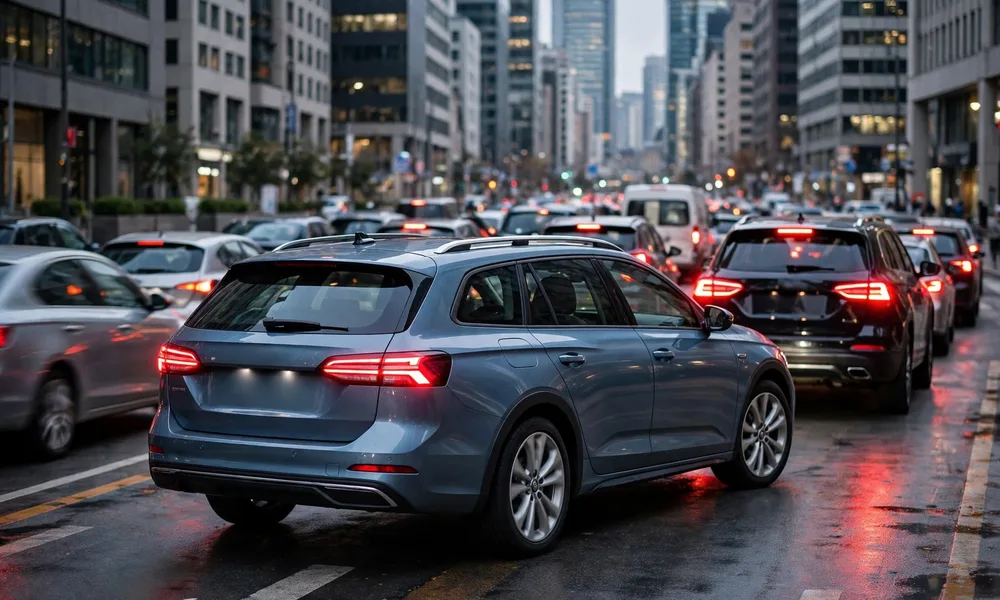
Stop-start traffic is where the worst wagons for city driving lose the most money. A large petrol wagon that returns 35 miles per gallon on the motorway may return only 24 miles per gallon in the city, because it is carrying 1,800 kilograms through constant stopping, starting and idling.
Diesel wagons look better on fuel economy, at 28 miles per gallon in the city, but they face a different cost in town: clean-air zones. Many cities now charge diesel cars to enter the centre, or ban older diesels entirely, and the charges add up fast for a daily driver.
Visibility, Blind Spots and Safety Tech
Visibility is a wagon’s quiet weakness in the city, and the worst wagons are the ones that get it most wrong. A high beltline, thick A-pillars and a small rear window create blind spots at exactly the places where city driving needs vision: junctions, roundabouts, cycle lanes and car parks.
Safety tech is the second gap.
Cargo Space: When Big Numbers Mislead
The worst wagons for city driving often have the biggest cargo numbers, and that is part of the trap. A large estate with 30 cubic feet behind the rear seats sounds more practical than a compact wagon with 24 cubic feet, but the shape of the space matters more than its size.
The load cover is another hidden problem. The same test applies to every body style, and our guide to the worst sedans for city driving shows how a small boot can be a bigger problem than a big one that is badly shaped.
Which Wagons to Avoid, and What to Buy Instead
Avoid the large petrol estate
If your driving is mostly in the city, avoid the large petrol estate. At 196 inches long, with a 41-foot turning circle and 24 miles per gallon in traffic, it is the worst combination in this guide: hard to park, hard to turn, and expensive to run.
Avoid the performance wagon
A performance wagon is a superb motorway car and a poor city car. Its extra power is useless in traffic, its fuel economy is the worst in this guide at 22 miles per gallon, and its wider tyres, stiffer suspension and higher insurance make every city mile more expensive.
Avoid the old-shape large wagon
An older large wagon may look like a bargain, but it is often the worst choice for city driving. It lacks the safety tech, the hybrid engine, and the visibility of a modern wagon, and its resale value will fall as clean-air rules tighten. For a broader warning about large cars in town, our guide to the worst SUVs for city driving covers the tall, heavy cars that struggle even more than the worst wagons.
Checklist: Avoiding the Worst Wagons for City Driving
- Reject any wagon over 190 inches long if you park on the street or in a multi-storey car park.
- Check the turning circle and favour wagons under 38 feet; test it with a U-turn on a residential street.
- Compare real-world city fuel economy, not the combined figure, and avoid petrol wagons under 28 miles per gallon in town.
- Check clean-air zone rules in your city before buying a diesel wagon, since charges can wipe out the fuel saving.
- Inspect the rear window, pillars and beltline for blind spots, and confirm the car has a 360-degree camera.
- Load your actual pushchair and shopping into the boot before you buy, and check the sill height and floor shape.
Frequently Asked Questions
Are wagons bad for city driving?
Not all wagons. Small, light hybrid wagons are among the best city cars, with near-SUV cargo space, easy parking and 40 to 50 miles per gallon in traffic.
What is the worst wagon for city driving?
The worst all-rounder is the large petrol estate: 196 inches long, a 41-foot turning circle, and only 24 miles per gallon in the city. It combines the parking problem, the turning problem and the fuel problem in a single car, and there is no city driving pattern in which it makes sense.
How long is too long for a city wagon?
Over 190 inches is too long for most city drivers. Standard street spaces are 200 to 220 inches, and a wagon over 190 inches leaves almost no margin. The best city wagons are 178 to 188 inches long, which fits comfortably in street spaces and multi-storey bays.
Are diesel wagons bad in the city?
Diesel wagons are worse than hybrids in the city, even though their fuel economy looks reasonable at 28 miles per gallon. Many cities charge diesels to enter clean-air zones, their resale values are falling, and they produce more local pollution in stop-start traffic than a hybrid.
Do performance wagons make sense in the city?
No, for most city drivers. A performance wagon returns only 22 miles per gallon in traffic, costs more to insure and service, and its extra power cannot be used at city speeds. A mid-size hybrid wagon is faster in real city driving, because it is lighter, turns tighter and accelerates more responsively at low speed.
What should I buy instead of a large wagon?
Buy the smallest hybrid wagon that still swallows your weekly shop, usually a compact or mid-size model of 178 to 186 inches with 24 to 28 cubic feet of cargo. If you need more space than that, a minivan is a better step up than a larger wagon, because it is designed for city manoeuvring despite its size.
The Bottom Line
The worst wagons for city driving in 2026 are the large, heavy petrol and diesel estates that are too long to park, too wide to turn, and too thirsty to run in town. Avoid any wagon over 190 inches long with a turning circle over 40 feet and city fuel economy under 28 miles per gallon, and buy the smallest hybrid wagon that still fits your life instead.