
The worst wagons for summer driving in 2026 are not bad cars in the usual sense. Many of them are fast, luxurious, and beautifully built, which is exactly why they trap summer buyers. A wagon that feels superb on a cool morning can turn into a punishment on a hot motorway: thirsty in traffic, firm over broken roads, cramped in the back, and expensive to run.
We ranked the 2026 wagons on fuel economy in heat and traffic, cabin cooling, cargo room, ride comfort, running costs, and value. The minivans we ranked as the worst for summer driving fail families on space and cooling; the wagons below fail summer drivers on thirst, firmness, cost, or size. Here are the six worst choices for summer 2026.
Key Takeaways
- The Audi RS6 Avant is the worst wagon for summer driving overall in 2026, because its huge fuel bills and firm ride punish the long, hot trips wagons are bought for.
- The Mercedes-AMG E 63 S Estate is the worst wagon for running costs, with economy near 20 miles per gallon and servicing bills to match.
- The BMW M3 Touring is the worst wagon for ride comfort, with a stiff setup that turns broken summer roads into a jolt.
- The Porsche Panamera Sport Turismo is the worst wagon for space, offering less rear room and cargo space than its size suggests.
- The Jaguar XF Sportbrake is the worst wagon for ownership, because it is discontinued, with parts and dealer support getting harder each year.
The Worst Wagons for Summer Driving 2026 at a Glance
Six wagons, six ways to spoil a summer. This table compares the numbers that matter on a hot road trip.
| Wagon | Worst For | Seats | Engine | Typical Combined Economy | Max Cargo Space |
|---|---|---|---|---|---|
| Audi RS6 Avant | Worst overall | 5 | 4.0-litre twin-turbo V8 | About 22 mpg | About 59 cu ft |
| Mercedes-AMG E 63 S Estate | Running costs | 5 | 4.0-litre twin-turbo V8 | About 20 mpg | About 64 cu ft |
| BMW M3 Touring | Ride comfort | 5 | 3.0-litre twin-turbo six | About 24 mpg | About 53 cu ft |
| Porsche Panamera Sport Turismo | Space | 4 or 5 | 2.9-litre or 4.0-litre twin-turbo V6/V8 | About 24 mpg | About 45 cu ft |
| Jaguar XF Sportbrake | Ownership | 5 | 2.0-litre diesel or petrol | About 38 mpg | About 60 cu ft |
| Volkswagen Golf Alltrack | Value | 5 | 1.8-litre turbo petrol | About 27 mpg | About 34 cu ft |
How We Compared the Wagons
Summer driving exposes weaknesses that a short test drive hides. A car that feels thrilling on a cool morning can drink fuel at an alarming rate in a traffic jam, and a boot that looks big in a showroom can fail the first time you load it with a pushchair and four bags. We judged every wagon on economy in heat and traffic first, because fuel is the cost that grows with every summer mile, then on cooling, cargo room, ride comfort, and running costs. Economy figures are the combined numbers most owners report rather than the laboratory best.
1. Audi RS6 Avant: Worst Wagon for Summer Driving Overall
The RS6 Avant is a superb car in the wrong season. Its 4.0-litre twin-turbo V8 makes nearly 600 horsepower and covers ground faster than almost anything with a boot, but it returns about 22 miles per gallon in mixed driving and far less in a hot traffic jam with the air conditioning running. On a 500-mile summer trip that means two fuel stops and a bill roughly double that of a normal wagon.
The ride is firm even in its softest setting, and on broken summer roads it passes every ridge into the cabin. Rear passengers get less headroom than the size suggests, and the huge wheels and tyres are expensive to replace after a pothole.
2. Mercedes-AMG E 63 S Estate: Worst Wagon for Running Costs
The AMG E 63 S Estate pairs a wonderful engine with running costs that spoil the summer. Its twin-turbo V8 returns about 20 miles per gallon in mixed driving, and in town it can fall into the mid-teens when the air conditioning is working hard. A long summer trip means frequent, expensive fuel stops, and the big brakes, wide tyres, and specialist servicing add thousands a year.
The car itself is fast, comfortable, and spacious, which makes the bills harder to accept. If you want an E-Class wagon for summer, the mild hybrid diesel does the same job for a fraction of the cost.
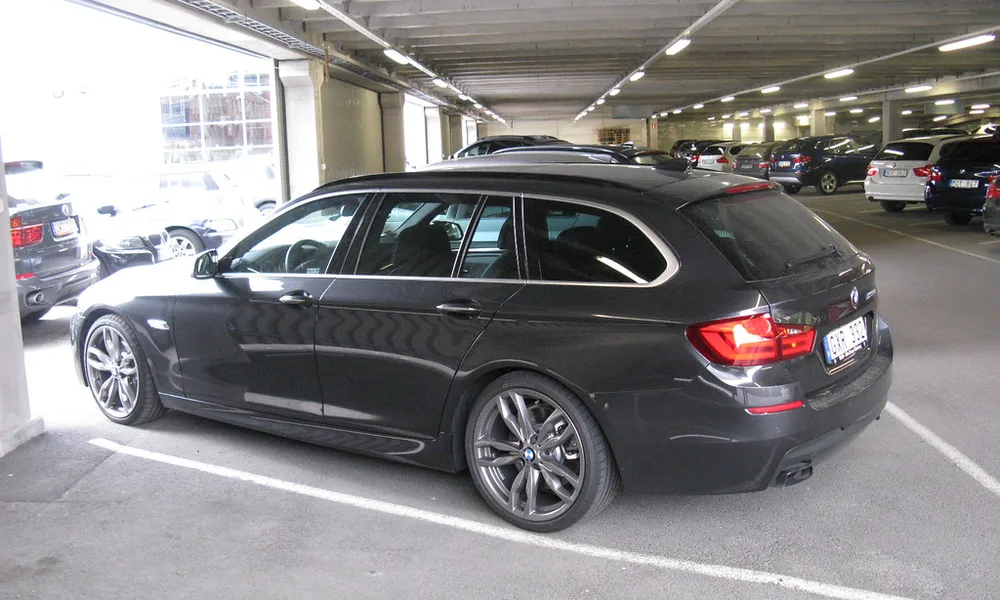
3. BMW M3 Touring: Worst Wagon for Ride Comfort
The M3 Touring is the sharpest wagon in this guide and the least comfortable. Its suspension is set up for a racetrack, not a family holiday, and on the patched roads of summer it never settles. Every pothole reaches the cabin, and after two hours the firm seats leave everyone tired.
Fuel economy is about 24 miles per gallon, and the wide rear tyres wear quickly and cost a lot to replace. The ordinary 3 Series Touring does nearly everything the M3 does for daily driving, with a far better ride and far lower bills.
4. Porsche Panamera Sport Turismo: Worst Wagon for Space
The Panamera Sport Turismo looks like a wagon and costs like a luxury car, but it carries like a saloon. Rear headroom is tight under the sloping roof, the middle rear seat is barely usable, and cargo space is only about 45 cubic feet with the seats folded, less than a mid-size hatchback. A family of four with luggage will fill it on the first day.
Running costs are high as well, with economy around 24 miles per gallon and servicing at Porsche prices. The Panamera is a beautiful grand tourer for two people travelling light; as a family summer wagon it is a costly disappointment.

5. Jaguar XF Sportbrake: Worst Wagon for Ownership
The XF Sportbrake is a fine wagon let down by its own maker. Jaguar discontinued the model, and every year parts, dealer support, and specialist knowledge get harder to find. A summer breakdown far from home becomes a longer, more expensive problem than in a car still in production.
The car itself is attractive, with about 60 cubic feet of cargo space and economy around 38 miles per gallon from the diesel, but resale values are weak. Unless the price is very low and you have a trusted specialist nearby, the XF Sportbrake is a summer risk not worth taking.
6. Volkswagen Golf Alltrack: Worst Wagon for Value
The Golf Alltrack promises wagon practicality at a hatchback price, and delivers neither. Cargo space is only about 34 cubic feet with the seats folded, barely more than a normal Golf hatchback, and the raised suspension and all-wheel drive drag economy down to about 27 miles per gallon.
The Alltrack is also discontinued, so buyers face used cars with ageing parts and no factory support. A used estate from a maker that still builds wagons costs little more and carries far more. The pickup trucks we ranked as the worst for summer driving fail on thirst and size; the Alltrack fails on the simpler test of giving you what you paid for. For summer, it is the worst value in this guide.
Summer Warning Signs Worth Checking
Four warning signs tell you a wagon will punish you in summer, and they are worth checking before you sign anything. First, fuel economy in traffic: a car that returns 30 miles per gallon on the open road can fall below 20 in a hot jam, so test it in town with the air conditioning on. Second, ride firmness: big wheels and stiff suspension feel punishing after two hours on a broken road.
Third, cargo space with the seats up: a sloping roofline can cut usable space by a third, so load your actual luggage before you buy. Fourth, running costs: wide tyres, big brakes, and specialist servicing turn a summer of driving into a summer of bills. Check all four before you commit, and walk away if two or more fail. The hatchbacks we ranked as the worst for summer driving fail on the same tests at a smaller scale, but a big wagon multiplies every cost.
How to Avoid Buying a Bad Summer Wagon
Avoiding a bad summer wagon takes one afternoon of honest checks. Test drive on a hot day, not a cool morning, and take the car through town traffic with the air conditioning running. Load the boot with your actual luggage and sit in the back seat yourself.
Ask for a servicing quote and a tyre price before you buy, and check that parts are available for the exact model and year. A discontinued wagon can wait weeks for a part in the middle of a holiday. Finally, compare the car with a normal wagon at half the price: if the expensive car is not clearly better on space, comfort, or economy, it is not better at all.
Booking Checklist
- Check real fuel economy in hot town traffic with the air conditioning on.
- Test the ride on broken roads for at least 30 minutes, and sit in the back seat yourself.
- Load your actual luggage with the seats up, and check the usable space under a sloping roofline.
- Ask for a servicing quote and a tyre price before you buy, and check parts availability.
- Confirm the model is still in production, or a trusted specialist supports it near you.
- Compare the car with a normal wagon at half the price, and demand a clear advantage.
Frequently Asked Questions
Which wagon has the worst fuel economy for summer driving?
The Mercedes-AMG E 63 S Estate is worst, at about 20 miles per gallon in mixed driving and less in hot town traffic, with the Audi RS6 Avant close behind at about 22. Both cost roughly double a normal wagon to fuel over a summer of long trips.
Which wagon has the least cargo space?
The Volkswagen Golf Alltrack has the least, at about 34 cubic feet with the seats folded, barely more than a hatchback. The Porsche Panamera Sport Turismo is next, at about 45 cubic feet.
Are performance wagons bad for summer driving?
Performance wagons are bad for summer family driving. Their thirst, firm ride, and running costs punish long trips with passengers, yet a driver travelling alone on open roads may enjoy them.
Is a discontinued wagon worth buying?
A discontinued wagon is worth buying only at a very low price with a trusted specialist nearby. Parts, dealer support, and resale value all fall after production ends. For most buyers, a wagon still in production is the safer choice.
Which wagon is worst for rear passengers?
The Porsche Panamera Sport Turismo is worst for rear passengers, with tight headroom and a middle seat that is barely usable. The Audi RS6 Avant is close behind. Test the back seat yourself before buying either.
How much do summer running costs differ between wagons?
Summer running costs differ by thousands a year between the best and worst wagons here. A thirsty V8 wagon can cost twice as much in fuel as a mild hybrid diesel over a summer of long trips. Always price a full summer of driving, not just the purchase.
The Bottom Line
The worst wagon for summer driving in 2026 is the Audi RS6 Avant, because its huge fuel bills and firm ride punish exactly the long, hot trips wagons are bought for. The AMG E 63 S Estate costs even more to run, the M3 Touring is too firm for passengers, the Panamera carries too little, and the Jaguar and Volkswagen are poor ownership bets. Whichever wagon tempts you, test it hot, loaded, and in traffic.


