Sunburn is the holiday souvenir nobody wants, and it is also the most avoidable one. A good sunscreen lets you spend a whole day outside without thinking about your skin at all: no burning, no peeling, no red shoulders the morning after. The best sunscreens of 2026 rub in cleanly, stay put through sweat and swimming, and protect you for hours without feeling like a chore to apply.
The worst sunscreens do the opposite. They leave a white cast that makes you look like a ghost, they sting your eyes the moment you sweat, and they wash off the first time you go in the water. Some are so thick and greasy you dread putting them on, and others feel lovely but offer so little real protection that you burn anyway. This comparison puts the best sunscreens of 2026 head to head against the worst, judging them the way you would actually use them: on a beach, in a garden, on a long walk, and on children who will not sit still. Our guide to the best sunscreens of 2026 looks at the top performers in detail, and this comparison shows how they stand against the ones to avoid.
Key Takeaways
- Judge a sunscreen by whether you still want to use it on the third day of a holiday, not the first.
- A sunscreen you apply properly beats a stronger one you apply thinly, because most people use far too little.
- White cast and stinging eyes are the most common reasons people skip sunscreen, so they matter as much as the SPF number.
- Water resistance is measured in minutes, not in afternoons, and reapplying after swimming is not optional.
- The cheapest sunscreen is the one you actually finish, because a bottle you hate using protects nobody.
What Makes a Sunscreen Good or Bad
A good sunscreen starts with how it feels on the skin. You should be able to rub it in, wait a few minutes, and then forget you are wearing it. The best sunscreens of 2026 manage this because they are built around modern filters and light bases that spread easily and dry down to almost nothing. A good sunscreen does not leave your skin shiny, sticky, or coated, and it does not mark your clothes.
The second thing that separates good from bad is honest protection. A sunscreen is only as good as the layer you actually apply, and most people apply far too little. The best sunscreens are designed for real use: they spread far enough that a proper amount does not feel like a punishment, and they keep protecting after sweating and swimming. The worst sunscreens look strong on the label but fail in real life, because they rub off on towels, wash away in the sea, or were never applied thickly enough to work.
Comfort around the eyes is the third test, and it is the one most buyers underestimate. A sunscreen that stings the moment you sweat will be wiped off within an hour, and then it protects nothing. The best sunscreens are gentle enough for the face, they do not run into the eyes on a hot day, and they sit happily under makeup. The worst ones sting, they blur your vision, and they make you dread the next application.
The Best Sunscreens of 2026
The best sunscreens of 2026 are mostly the quiet, practical ones, and that is exactly the point. They come in plain tubes and bottles, they rub in without a white cast, and they do their job without fuss: they keep skin from burning through a long afternoon outside, they survive a swim, and they never make you look or feel coated. They are not the most expensive sunscreens on the shelf, but they are the ones people buy again and again once they have tried them.
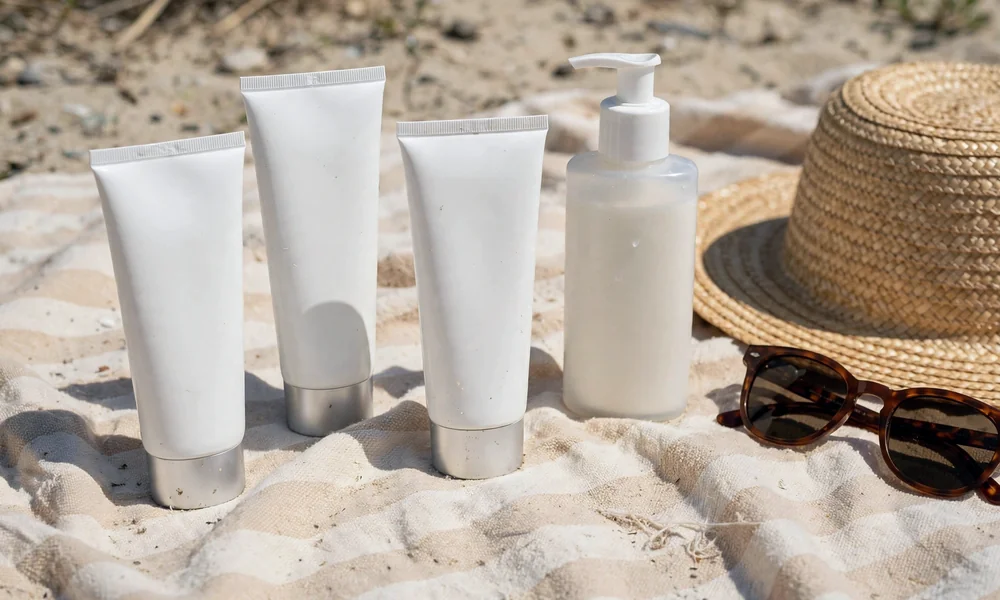
What the best sunscreens share is a feeling of lightness. The cream spreads easily across shoulders and arms, it sinks in within a few minutes, and within a short while you forget it is there. Your skin feels normal, not greasy, and your clothes stay clean. Their packaging helps too: a tube that opens with one hand, a cap that will not come off in a beach bag, and a size that fits in a pocket or a rucksack.
The Worst Sunscreens of 2026
The worst sunscreens of 2026 are not always the cheapest, and that is what makes them so frustrating. Some look impressive in the shop and carry a high SPF number, but within an hour of using them the problems start: a white cast that will not rub in, a greasy film on everything you touch, and a smell that follows you around all day. You find yourself using less and less each time, which is exactly how sunburn happens.

White cast is where many of the worst sunscreens fall down hardest. They are often built around mineral filters that sit on the skin instead of sinking in, and the result is a chalky layer that looks worse the more you apply. On darker skin tones the effect is even more obvious, and on everyone it shows up in photographs. A sunscreen that makes you look strange is a sunscreen you will not use, however strong its protection on paper.
Beach, Garden, or Everyday: Which Type Wins
Light lotions win for everyday use, and it is not close. A fast-absorbing sunscreen you can apply in the morning like a moisturiser is the one you will actually use on ordinary days, and that daily use matters more than the strength of any single application. The best everyday sunscreens of 2026 are light enough to wear under makeup, and they come in small tubes that live in a handbag or a jacket pocket. Their weakness is staying power: on a beach day they need reapplying far more often.
Heavy-duty creams are the right choice for long days in strong sun. If you are spending a whole day on a beach, on a boat, or walking in the mountains, a thicker, more water-resistant formula gives you the margin that a light lotion cannot. A hat helps just as much as any cream, and our comparison of the best and worst hats of 2026 shows how much shade a good hat adds on top of sunscreen. Shade, clothing, and cream together are the real system, not cream alone.
SPF, Application, and the Numbers That Actually Matter
SPF is the number everyone looks at first, and it is worth knowing what it really means. SPF 30 blocks about ninety-seven per cent of the burning rays, and SPF 50 blocks about ninety-eight per cent, so the gap between them is far smaller than the numbers suggest. What matters far more is how much you apply and how often you reapply it. A generous layer of SPF 30, reapplied after swimming, protects you far better than a thin smear of SPF 50 applied once in the morning.
Amount is the next thing to judge, and it is simpler than it sounds. Most adults need about a shot glass full of sunscreen to cover their whole body, and a finger-length strip for the face and neck alone. Almost nobody applies that much, which is why real-world protection is always lower than the number on the bottle. A sunscreen that spreads easily and feels pleasant makes a proper amount far more likely, and that is worth more than a higher SPF number.

Reapplication is the least glamorous part of sun protection and the most important. No sunscreen lasts all day, whatever the label says. Sweat, swimming, towelling, and simply touching your skin all wear it away, and after two hours the protection has faded even on a dry day. The best sunscreens make reapplying easy, with packaging that opens quickly and a texture that layers without going chalky. A beach trip needs the same planning as any day out, and our guide to the best packing lists for beach holidays in 2026 shows how to make sure the sunscreen actually makes it into the bag.
How to Choose a Sunscreen Without Regret
The single most useful thing you can do before buying a sunscreen is to try it on the back of your hand. A ten-second test tells you almost everything: whether it rubs in, whether it leaves a white cast, whether it feels greasy, and whether the scent is too strong. If the shop has no tester, buy the smallest tube first. A small tube you love is worth more than a large bottle you hate.
Check the label with real attention before you buy. Look for broad spectrum protection, which covers both burning and ageing rays, and check the water resistance time in minutes rather than trusting the word resistant on its own. If you have sensitive skin or you are buying for children, choose a fragrance-free formula and test it on a small patch of skin first.
Finally, think about when you will actually use it. A sunscreen that lives in a bathroom cabinet will not help on a walk, and a sunscreen that lives in a beach bag will not help on an ordinary sunny day. Keep a light tube where you spend your mornings and a heavy-duty bottle with your beach things, and use both whenever the sun is strong. Consistency beats strength, and the best sunscreen is the one that is always within reach.
Best vs Worst at a Glance
| What to judge | The best sunscreens | The worst sunscreens |
|---|---|---|
| Rub-in | Disappears in minutes, no white cast | Chalky layer that will not rub in |
| Staying power | Survives sweat and swimming for hours | Washes off at the first swim |
| Comfort | Light, gentle, kind to eyes | Greasy, stinging, heavy on the skin |
| Application | Spreads far, easy to apply enough | Thick and sticky, people apply too little |
| Value | A bottle lasts because you use it properly | Abandoned half full after one holiday |
The Verdict
The best sunscreens of 2026 are the ones that make sun protection feel like nothing at all. They rub in cleanly, they stay put through sweat and swimming, and they never sting your eyes or mark your clothes. They do not need to be expensive or carry the highest number on the shelf: they simply work, day after day, in strong sun and in the sea, with very little fuss.
The worst sunscreens of 2026 are the ones that demand too much and give too little back: too much white cast in the mirror, too much grease on everything you touch, and too much money for a bottle that leaves you burnt anyway. Skin remembers every burn, and a bad sunscreen is worse than an honest one, because it invites you to stay in the sun longer than you should.
So buy with your skin as well as your eyes. Test a sunscreen on the back of your hand before you commit to a large bottle, apply far more than you think you need, and reapply after every swim. Walk away from anything that leaves a chalky cast, stings your eyes, or feels so greasy you dread using it.