A scooter is the simplest deal in personal transport: step on, twist the throttle or push off, and glide past the traffic queue. When the scooter is good, that promise holds every morning. You slip through a gap a car could never use, park in a space no bigger than a doormat, and arrive at work calm instead of frazzled. When the scooter is bad, the same promise turns into a rattling crawl, brakes that fade at the worst moment, and a battery gauge that collapses halfway home. From the pavement, the two look almost identical: the same deck, the same handlebars, the same two small wheels. The difference is in the engine, the brakes, the tyres and the build, and none of it is visible until you ride. This comparison puts the best scooters of 2026 against the worst, across the whole family: petrol step-through scooters, stand-up electric scooters, and classic kick scooters.
Scooters have grown far beyond the noisy two-stroke machines of twenty years ago. Today the market stretches from quiet 125cc step-throughs built for the daily commute to folding electric scooters that live under a desk, and from sturdy kick scooters for the school run to retro-styled machines that turn heads on a summer evening. A good scooter will forgive the mistakes of a new rider and still be going strong after years of daily use. What has not changed is what matters. The frame decides how steady the machine feels, the brakes decide whether you stop in time, the suspension decides whether your back survives a potholed street, and the build quality decides whether a knock in a car park is a story or a repair bill.
Key Takeaways
- Brakes matter more than speed: a scooter that stops quickly and predictably keeps you safe every single day.
- A good scooter feels steady at walking pace and at full speed, while a bad one wobbles the moment you relax your grip.
- Cheap scooters cut corners where you cannot see them: thin tyres, weak brakes, and batteries that fade within a year.
- Buy for the trip you actually make: a 125cc step-through for longer commutes, a folding electric for mixed train-and-scooter days.
- Always test the real thing: ride over a bumpy street, brake hard from speed, and fold it up before you pay.
What “Scooter” Actually Means
The word scooter covers three very different machines, and much of the confusion when buying comes from mixing them up. A petrol step-through scooter is a small motorcycle with a flat floorboard, a low seat, automatic gears and storage under the seat. It is the machine most people picture when they hear the word, and it is the one built for real distance: ten, twenty or thirty miles a day through traffic, rain and winter. A stand-up electric scooter is the folding machine you see on cycle lanes: a deck, a stem, a small motor and a battery, built for short hops and for carrying onto a train. A kick scooter has no motor at all, just a deck, two wheels and your own leg, and it is the simplest, cheapest and most reliable of the three.

The Best Scooters of 2026
The best petrol scooters of 2026 share a calm, unshowy competence. They start first time on a cold morning, pull away smoothly from every set of lights, and hold a steady line through a wet roundabout. The engine is quiet and smooth rather than loud, the seat is wide and comfortable for an hour in the saddle, and the underseat storage swallows a helmet, a bag and a rain jacket without a fight. The brakes are the star: a front disc that bites progressively, a rear brake that does not lock, and on the better machines, anti-lock braking that saves you when a car pulls out without looking. These are machines built by companies that have been making scooters for decades, and it shows in every weld and every switch.
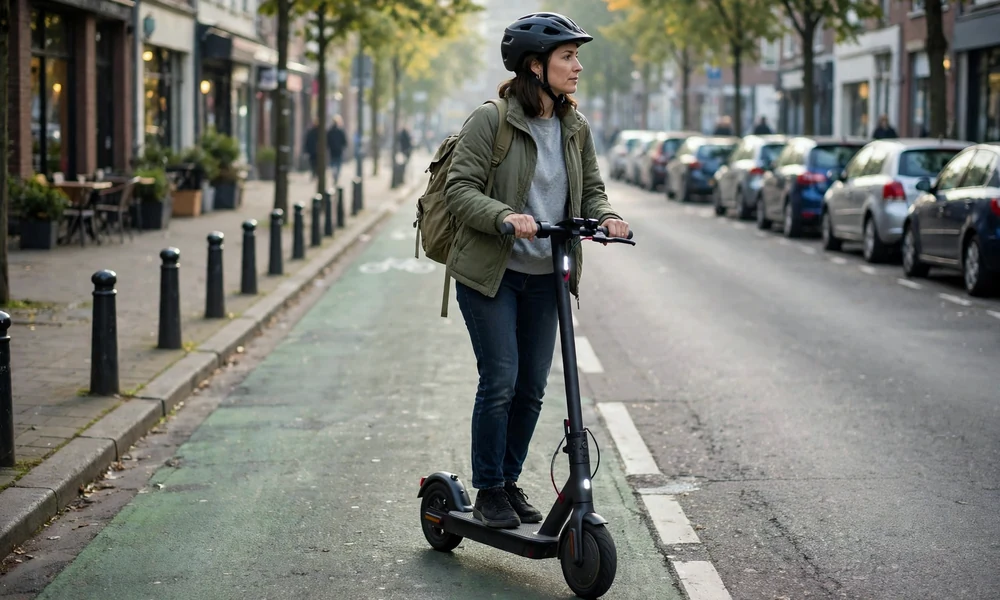
The best electric stand-up scooters are just as considered, in a smaller package. They weigh little enough to carry with one hand, fold in three seconds, and ride over a city street without rattling your teeth loose. The deck is wide enough for both feet, the tyres are pneumatic rather than solid, so bumps are absorbed instead of transmitted straight up your legs, and the battery delivers its promised range in real weather rather than only in a laboratory. The motor pulls smoothly from a standstill instead of lurching, and the brakes, a disc at the back and a regenerative brake at the front, bring you to a stop in a straight line. Our comparison of the best vs worst electric scooters looks at this corner of the market in full, and the same rules apply: good brakes, honest range, and a frame that does not flex.
The Worst Scooters of 2026
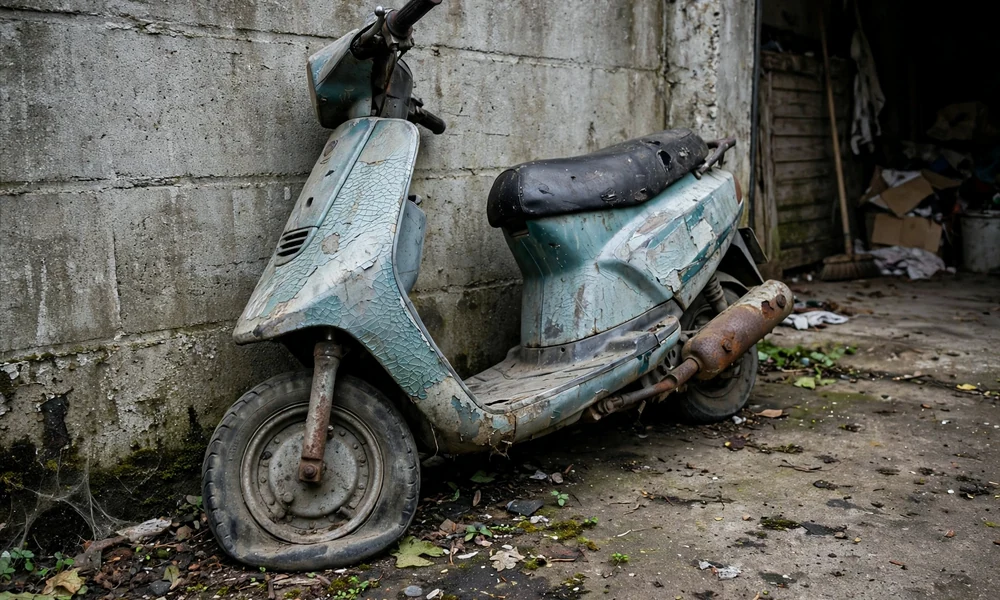
The worst scooters of 2026 fail in ways that are hard to spot in a shop and impossible to ignore on the road. The cheapest petrol scooters look the part, with glossy paint and a familiar shape, but the engine is rough and thirsty, the brakes fade after two hard stops, and the suspension is so stiff that every pothole goes straight into your spine. The plastics rattle within a month, the mirrors vibrate until they are useless, and the electrics fail in the first winter. Worse still, some of these machines are built by companies with no dealer network, so when something breaks, and it will, there is nobody to fix it and no parts to fix it with.
The worst electric scooters are even more disappointing, because the failure arrives silently. The battery gauge reads full until it suddenly reads empty, the solid tyres transmit every crack in the road into your knees, and the single drum brake fades on a gentle downhill. The folding mechanism develops play within weeks, so the stem wobbles at speed, and the whole machine feels like it is arguing with you. A bad electric scooter is not just uncomfortable; it is unsafe, because a scooter that cannot stop and cannot be trusted at speed puts its rider in real danger. If you ride on two wheels of any kind, the same lesson holds in our guide to the best vs worst bicycles: the cheapest machine is the one that costs the most in the end.
How to Test Any Scooter Before You Buy
The single best thing you can do before buying a scooter is to ride the exact machine, on a real street, for at least fifteen minutes. A showroom floor tells you nothing. Ride over a bumpy side road and notice whether the scooter tracks straight or wanders. Brake hard from speed, twice, and feel whether the brakes bite smoothly or snatch and fade. Stand on the deck of an electric scooter and shift your weight: does the stem flex, or does it feel like part of the machine? Sit on a petrol scooter and reach the ground flat-footed; if you cannot, it is too tall for you, whatever the brochure says.
Then check the things that decide whether the scooter survives its first year. Look at the tyres: a good scooter wears branded tyres with real tread, not smooth, nameless rubber. Ask where it will be serviced and how long parts take to arrive. Check the warranty in writing, and ask what it actually covers: a warranty that excludes the battery, the brakes and the electrics is not a warranty at all. Finally, fold it, lift it and carry it. If you plan to take it on a train, the weight in your hand matters far more than the weight on the specification sheet.
Price is a useful signal, but only up to a point. The very cheapest scooters are cheap because something has been left out, and that something is usually safety. The most expensive are not always the best either; some charge a premium for a badge while fitting the same budget brakes as a machine half the price. The sweet spot sits in the middle: a recognised maker, a dealer who will answer the phone, and a specification sheet that names its brakes, its tyres and its battery honestly. Pay for those three things and the rest of the scooter will usually follow.
Petrol, Electric or Kick: Which Type Suits You?
The choice comes down to distance, hills and storage. If your daily trip is more than five miles, or it includes a dual carriageway, a hill, or a passenger, a petrol step-through is the honest answer. A 125cc machine cruises at real road speeds, carries shopping and a passenger, and shrugs off rain and winter. It needs a licence, insurance and servicing, but it repays that with years of dependable use. It is the closest thing to a car that still fits through a gap in the traffic, and for a longer commute it is the scooter that makes sense.
If your trip is short, under three miles, and ends at a train or an office, a folding electric scooter is hard to beat. It costs little to run, needs almost no servicing, and folds away under a desk or in a hallway. The catch is range and weather: a battery that promises twenty miles will give you twelve in winter, and solid tyres on a wet road demand respect. Buy one with pneumatic tyres, a proper disc brake and a battery from a maker you recognise, and it will serve you well. Buy the cheapest one on the internet and you will learn why the good ones cost more.
A kick scooter suits the shortest trips of all, and it suits them beautifully. The school run, the walk to the station, a ride along the seafront with the children: no charging, no fuel, no licence, nothing to go wrong. The best kick scooters are not toys, and they are worth paying for, because a wide deck and large wheels turn a wobbly toy into a proper vehicle. For everything else, the motorised machines do the work. The wider family of two-wheeled transport has the same pattern, as our look at the best vs worst motorcycles shows: the machine that matches the journey is the machine that lasts.
The Verdict
The best scooters of 2026 are the ones that disappear into your daily life. You stop thinking about them, because they start every morning, stop every time, and carry you through traffic without drama. They are not the fastest, the cheapest or the flashiest machines on the market. They are the ones built by makers who understand that a scooter is a tool you trust with your body, every single day, and they build accordingly: proper brakes, honest batteries, sturdy frames and dealers who answer the phone.
The worst scooters are the ones that demand your attention for all the wrong reasons: a battery that dies halfway home, brakes that fade on a hill, a stem that wobbles at speed, a machine that no one will service. They cost less on the day you buy them and far more over the year that follows, in repairs, in frustration and in the journeys you end up making by car instead. Choose the scooter that matches your real journey, test it on a real street, and pay for brakes, tyres and build quality. Do that, and the scooter you buy in 2026 will still be the one you reach for in 2030.