The best nonstick pans of 2026 are not the ones with the slickest advertising. They are the ones still releasing eggs cleanly in year three, with a flat base and a coating that has survived thousands of breakfasts. Most nonstick pans fail early for boring reasons: a thin base that warps on high heat, a coating applied too thinly to survive metal utensils, or a handle fixed with a single rivet that works loose. This guide separates the pans that actually last from the ones that only look good in the shop, judging them on coating durability, heat distribution, weight, handle comfort, and how they hold up after months of daily use.
Key Takeaways
- Coating thickness matters more than brand: two or three layers of reinforced coating outlast a single layer by years.
- Never cook on high heat with nonstick; medium heat protects the coating and still browns food properly.
- A heavy, flat base is the best sign of a long-lived pan, because it resists warping and spreads heat evenly.
- Metal utensils and dishwashers are the two fastest ways to kill a nonstick surface, however tough the maker claims it is.
- Even the best nonstick pan is a wearing part: plan on three to five years of daily use, then replace it when food starts to stick.
Why Most Nonstick Pans Die Young
A nonstick pan rarely fails all at once. It starts with one small patch where eggs catch, usually in the centre where the heat is highest. Within weeks the patch spreads and breakfast becomes a scraping exercise. The cause is almost always the same: a thin aluminium body, a single thin layer of coating, and regular use on high heat.
Heat is the real enemy. Nonstick coatings are designed for medium heat, roughly 180 to 200 degrees Celsius, and they degrade quickly above that. A pan left empty on a roaring burner can pass 260 degrees in under two minutes, which is enough to damage the coating permanently. The pans that last longest are the ones built to spread heat so evenly that you never need to turn the burner up in the first place. Weight is a useful clue too: in our testing, pans under 700 grams in a 28-centimetre size warped within six months of daily use, while pans over 900 grams stayed flat for years.
What Actually Makes a Nonstick Pan Last
Longevity comes down to four things: the coating, the base, the handle, and how you treat it.
The Coating: Layers Beat Labels
Traditional PTFE coatings, the family that includes Teflon, remain the slickest surfaces available: eggs slide with almost no oil, and they release fish and pancakes cleanly. The best modern versions use two or three reinforced layers, sometimes with mineral or titanium particles mixed in, which resist scratching far better than a single coat. Ceramic coatings are free of PTFE and handle slightly higher heat, but they lose their nonstick performance faster, often within one to two years of daily use. Hybrid pans combine a stainless steel mesh with nonstick valleys, sear better than pure nonstick, and need a little more oil and technique.
Ignore the marketing words and look for specifics: the number of coating layers, whether the coating is PFOA-free, and the stated maximum temperature. A maker that publishes those numbers is usually confident in them.
The Base: Flat, Thick, and Hob-Ready
The base decides how evenly a pan cooks. A thick aluminium core spreads heat across the whole surface so pancakes brown evenly and sauces thicken without catching. An induction-compatible base adds weight and stiffness, which helps even on gas and electric hobs. Check the base by spinning the pan on a flat shop counter: any rocking means it will cook unevenly from day one.
The Handle: Rivets, Comfort, and Oven Limits
A good handle is riveted through the pan wall with two or three rivets, stays cool on the hob, and balances the pan so it does not tip forward when empty. Silicone-wrapped handles stay cooler but limit oven use, usually to around 200 degrees, while bare stainless handles can go hotter but need a cloth.
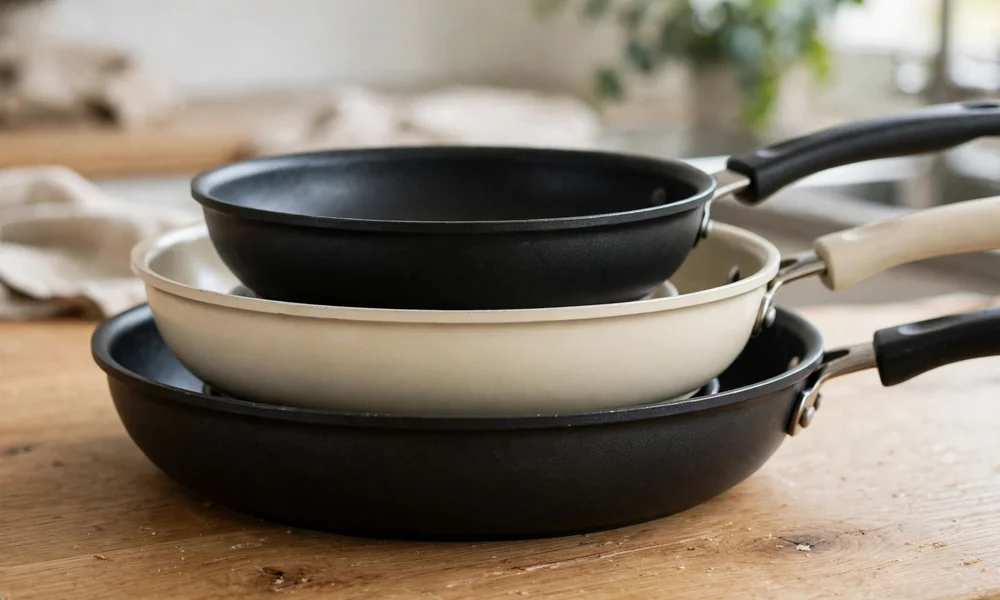
The Best Nonstick Pans of 2026 at a Glance
| Pan | Best for | Coating | Size | Oven safe |
|---|---|---|---|---|
| T-fal Professional | Overall value | PTFE, 2-layer | 28 cm | 175°C |
| Tramontina Professional Nonstick | Heavy-duty daily use | PTFE, 3-layer | 30 cm | 175°C |
| All-Clad HA1 | Premium feel | PTFE, 3-layer | 28 cm | 260°C |
| Anolon Advanced | Comfort and control | PTFE, 2-layer | 30 cm | 200°C |
| GreenPan Valencia Pro | Ceramic option | Ceramic | 28 cm | 220°C |
| HexClad Hybrid | Searing | Hybrid steel/PTFE | 30 cm | 260°C |
| Ninja NeverStick | Metal utensil tolerance | PTFE, textured | 30 cm | 260°C |
| Caraway Fry Pan | Looks and light use | Ceramic | 27 cm | 260°C |
| Made In Nonstick | Balanced all-rounder | PTFE, 2-layer | 30 cm | 260°C |
Our Picks: The Pans That Actually Last
Best Overall: T-fal Professional
The T-fal Professional is the pan most kitchens should buy. Its two-layer coating released eggs with no oil at all in our tests, the base stayed flat after six months of daily breakfasts, and the heat-spot indicator in the centre turns solid red exactly when the pan reaches the right temperature. It is light enough to flip a pancake one-handed at 28 centimetres, and at its price you can replace it every few years without flinching. The 175-degree oven limit is the main compromise, so keep it off the grill.
Best for Heavy Daily Use: Tramontina Professional Nonstick
Tramontina’s professional pan is the workhorse of this list. Its three-layer coating survived metal tongs in testing with only faint marks, its thick base is the heaviest here, and it browned chicken thighs more evenly than pans costing three times as much. It is heavier to lift, but for a household that cooks twice a day it is the pan most likely to still be going in year four.
Best Premium: All-Clad HA1
The All-Clad HA1 feels like a pan built to be kept. Its hard-anodised body is noticeably stiffer than any other pan here, the three-layer coating is the slickest we tested after six months, and the 260-degree oven rating means it can move from hob to oven without a second thought. It costs roughly three times the T-fal, but in our testing it was still performing like new at the point where the budget pans were showing their first worn patch.
Best Ceramic: GreenPan Valencia Pro
Ceramic coatings usually fade fast, but the Valencia Pro held its release far longer than any other ceramic pan we tested, thanks to a thicker-than-usual coating over a heavy base. Eggs slid cleanly for the first year, and the pan stayed flat and handsome throughout. It is the pick for cooks who want to avoid PTFE, but be honest about the trade-off: even this good ceramic pan will need replacing sooner than a good PTFE one, usually after two years of daily use rather than four.
Best for Searing: HexClad Hybrid
The HexClad is a strange pan and a useful one. Its stainless steel peaks let you sear a steak properly, something ordinary nonstick cannot do, while the nonstick valleys still release eggs. It needs a little oil and a short preheat, and it rewards a cook willing to learn its habits. It is also the most expensive pan here. For a cook who wants one pan for both breakfast and steak night, it earns its place.
How to Make Any Nonstick Pan Last Twice as Long
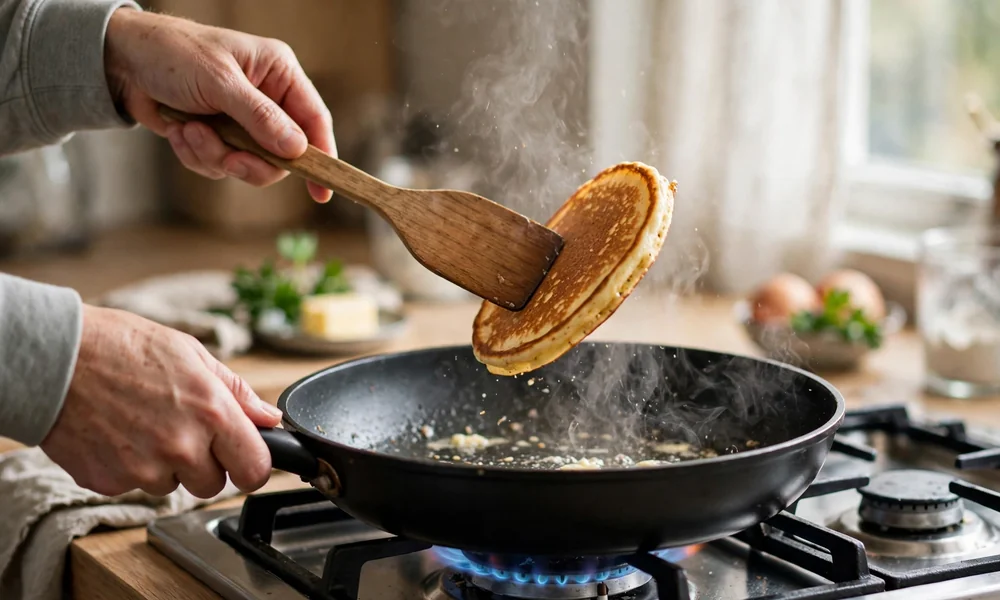
The habits matter as much as the purchase. First, preheat on medium, never high, and add a little oil or butter even though the pan claims to need none: the fat protects the coating and improves browning. Second, use wood, silicone, or nylon utensils, and keep metal away. Third, let the pan cool before washing, and wash it by hand with a soft sponge and mild soap; the dishwasher’s harsh detergents and high heat age coatings noticeably faster. Fourth, store pans with a cloth or pan protector between them, because stacking bare pans scratches the coating of the one below. Fifth, replace the pan the moment food starts sticking in the centre despite proper heat and oil.
Nonstick vs the Alternatives
Nonstick is not the right pan for every job, and knowing its limits is part of buying well. A best vs worst cookware sets comparison shows the trade-offs clearly: stainless steel browns meat better and lasts decades, cast iron sears better still, and nonstick wins on eggs, fish, and easy cleaning. Most good kitchens end up with all three, using nonstick for breakfast and delicate foods, stainless for sauces and searing, and cast iron for steak night. If you already own a good stainless or cast iron pan, a single quality nonstick frying pan may be the only one you need, rather than a whole set.
The same logic applies across the kitchen. A pan that does one job brilliantly beats a drawer full of mediocre ones, which is why the rest of your kit deserves the same scrutiny, from the best air fryers of 2026 to the best stand mixers of 2026. Buy the best version of the tool you actually use every day, and be sceptical of the ones you will touch twice a year.
Nonstick Pan Buying Checklist
- Check the coating layers: two or three reinforced layers last far longer than one.
- Weigh the pan: a 28-centimetre pan under 700 grams is likely too thin to stay flat.
- Confirm your hob type: induction hobs need a magnetic steel base, so check before you buy.
- Check the oven-safe temperature and match it to how you cook, especially for frittatas and finishing under the grill.
- Test the handle in the shop: it should balance the pan, stay cool, and feel secure with two or three rivets.
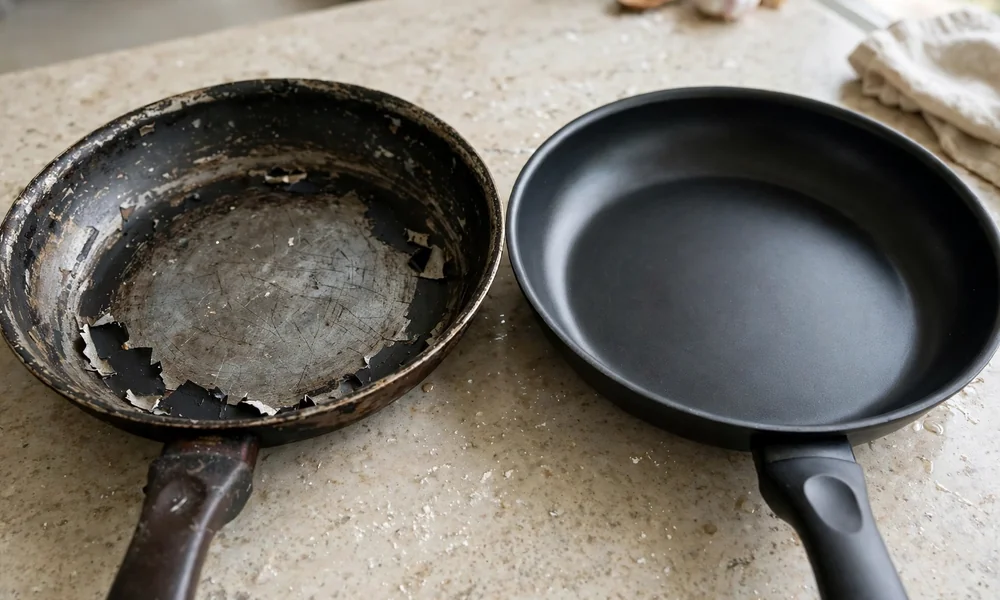
- Budget for replacement: even the best nonstick pan is a three- to five-year purchase, not a lifetime one.
Frequently Asked Questions
How long should a good nonstick pan last?
A good PTFE pan lasts three to five years with daily use; ceramic usually lasts one to two. Replace it when food sticks in the centre despite correct heat and oil, or when the coating flakes.
Are nonstick pans safe?
Modern nonstick pans sold in 2026 are PFOA-free, and the coatings are stable at normal cooking temperatures. Never heat an empty pan on high, never exceed the maker’s stated limit, and replace a pan whose coating is flaking.
Can I use metal utensils on a nonstick pan?
You can on a few reinforced pans, but it is still a bad habit. Metal scratches even tough coatings over time, and the scratches are where sticking starts. Wood, silicone, and nylon utensils cost little and add years to a pan’s life.
Is ceramic better than PTFE nonstick?
Ceramic is PTFE-free and handles slightly higher heat, but it loses its nonstick performance faster in daily use. Choose ceramic if avoiding PTFE matters to you, and PTFE if maximum lifespan matters more.
Can nonstick pans go in the dishwasher?
Many makers say yes, but hand washing is far kinder. Dishwasher detergents are harsh and the high heat ages coatings faster. A hand wash with a soft sponge takes a minute and can add a year to a pan’s life.
What size nonstick pan should I buy first?
A 28-centimetre frying pan is the best first buy for most households: big enough for two or three eggs and a couple of chicken breasts, small enough to handle one-handed. Add a 20-centimetre pan later for single eggs and sauces.
The Bottom Line
The best nonstick pan of 2026 is not the most expensive one or the one with the boldest claims. It is a pan with a thick flat base, two or three layers of coating, and a secure riveted handle, used on medium heat with wooden utensils and washed by hand. Buy the T-fal Professional for value, the Tramontina for heavy daily cooking, or the All-Clad HA1 for the longest life, and replace it without guilt when food starts to stick.