Canned mackerel deserves a spot in your pantry in 2026, and not just as the tin you buy once and forget at the back of the shelf. It is cheap, it keeps for years, and it is rich in protein and omega-3 fats. The trick is buying the right tin. A bad tin tastes grey and tired. A good tin tastes clean and meaty, with firm flesh and a rich, savoury flavour.
Mackerel is a bigger, oilier fish than sardines and a stronger one than tuna. Eaten well, in a sandwich, through pasta, or flaked over rice, it is one of the most satisfying tinned fish there is. This guide explains how canned mackerel is made, how oil, water and tomato sauce change it, and the best uses for each style.
Key Takeaways
- Mackerel in olive oil is the richest tin, and the best choice for eating plain or in a sandwich.
- Mackerel in water is leaner and lighter, but drier and more strongly fishy.
- Mackerel in tomato sauce is the friendliest first tin: sweet, tangy, and ready to eat.
- The bones in canned mackerel are soft and edible, but fillets are the safer buy for nervous eaters.
- Once opened, canned mackerel keeps for two to three days in the fridge in a sealed container, never in the opened tin.
What Is Actually in the Tin?
A tin of canned mackerel holds pieces of mackerel, a fast-swimming oily fish, cleaned, cooked and packed in oil, water or tomato sauce, then sealed and heated again so the tin keeps for years without refrigeration. The fish is usually packed as fillets, neat skin-on pieces that hold their shape, or as chunks, broken pieces that suit flaking into a dish.
Mackerel is one of the oiliest fish in the tin, and that oil is the point: it carries the flavour, keeps the flesh moist, and supplies the omega-3 fats that make oily fish so valued. A little goes a long way: half a tin is a generous sandwich filling, and a whole tin feeds two people in pasta. The skin is thin, dark and edible.
The canning process also explains the bones, which surprise first-time buyers. Some tins hold pieces with the spine still in, and the heat of canning makes those bones soft enough to eat; other tins hold boneless fillets. If you want to round out the same shelf, our guide to the best canned sardines for quick, healthy meals covers the smaller cousin of mackerel, and the storage and seasoning rules are the same.
In Oil vs in Water vs in Tomato Sauce
The first decision is the packing liquid, and it changes the fish more than the brand does. Mackerel in olive oil is the classic tin: rich, silky and forgiving. The oil keeps the fish moist, softens the strong flavour, and protects the fillets for years. It is the best tin for eating plain, on toast or in a sandwich. If the label says “in olive oil”, check the back: some tins blend it with cheaper oils, and the blend tastes plainer.
Mackerel in water is leaner and lighter, but drier and more strongly fishy, because there is no oil to soften the flavour. It suits dishes where you add your own dressing or sauce, like a salad or a pasta with a rich tomato sauce, but eaten plain it can taste stark. Drain it well and season the fish afterwards.
Mackerel in tomato sauce is the friendliest tin of all. The sauce is sweet and tangy, it tames the fishiness, and the tin is ready to eat with bread, rice or a baked potato. It is the best first tin for anyone wary of oily fish, and the best tin for a quick hot meal: tip the tin into a pan, warm it through, and serve it over rice. The trade-off is sugar: some brands add sugar to the sauce, so check the label. Mackerel in mustard sauce is sharper, better for sandwiches than for eating plain.
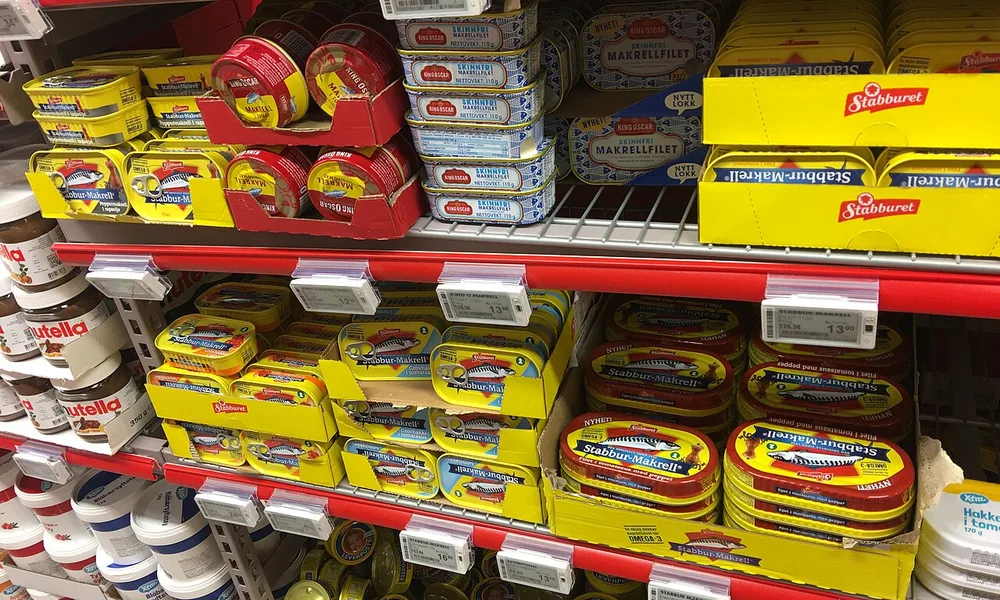
Canned Mackerel, Compared
| Packed in | Flavour | Best for | Watch out for |
|---|---|---|---|
| Olive oil | Rich, silky, mellow | Eating plain, sandwiches | Costs more; check it is pure olive oil |
| Water | Lean, strongly fishy | Salads, pasta with sauce | Dry texture, stark flavour |
| Tomato sauce | Sweet, tangy, mild | Bread, rice, first-timers | Added sugar in some brands |
| Mustard sauce | Sharp, pungent | Sandwiches, crackers | Overpowers delicate dishes |
Price is a rough guide to quality, but only rough. Very cheap tins often hold larger, tougher fish in bland oil, while mid-priced tins from Norway, Portugal or Spain are usually the sweet spot. Expensive tins are worth it for eating plain; for cooking, a mid-priced tin does the same job.
The Bones Question
Every first-time mackerel eater asks about the bones, and the answer is simpler than the worry. The bones in canned mackerel are soft: the heat and pressure of canning break down their structure, so the spine and ribs are pliable enough to chew and swallow without noticing. They are also rich in calcium.
Bones are a matter of size and form. Fillets usually have the spine removed, and their remaining pin bones are fine and easy to miss. Chunks packed with the spine in have thicker bones you will feel. If you are serving mackerel to children or to someone nervous about bones, choose a tin labelled boneless fillets, or flake the fish well with a fork and pick out the spine, which lifts away in one piece.
Do not be put off by the dark skin: it is thin, richly flavoured and entirely edible. The dark flesh along the belly is the oiliest part: trim it away if the flavour is too much for you.
Flavour: What Good Mackerel Tastes Like
Good mackerel tastes rich and savoury, a little salty, with a clean finish. Bad mackerel tastes muddy, metallic or stale, and the flavour lingers unpleasantly.
Seasoning is the step most people skip, and it is the step that matters most. Mackerel straight from the tin tastes flat and one-note. A squeeze of lemon, a drizzle of good olive oil, a crack of black pepper and a pinch of flaky salt transform it. Fresh herbs help too: parsley, dill or chives cut through the richness, and chopped red onion, capers or pickled cucumber add bite. Canned salmon needs the same treatment, as our guide to why canned salmon deserves a spot in your pantry explains: tinned fish is at its best when you season it like fresh fish.
Quick Meals: Five Ways to Use a Tin
A tin turns into a meal in under ten minutes. The simplest way is a mackerel sandwich: good bread, butter or mayonnaise, flaked mackerel, lemon and black pepper, with sliced tomato or cucumber for crunch.
Second, mackerel on toast: flake the fish with chopped celery, red onion and parsley, dress with lemon and olive oil, and pile it on hot buttered toast. Third, mackerel pasta: warm olive oil with garlic and chilli, add the fish, toss with spaghetti, lemon zest and breadcrumbs. Fourth, mackerel rice: flake the fish over warm rice with soy sauce, spring onion and a soft egg. Fifth, warm the tomato-sauce tin in a pan and serve it over a baked potato.

Health: What You Are Actually Eating
Mackerel is one of the healthiest foods you can buy in a tin. A single tin provides high-quality protein, long-chain omega-3 fatty acids, vitamin D, vitamin B12 and selenium, and calcium from the soft bones. It is one of the richest natural sources of omega-3, richer per tin than tuna or salmon.
The one number to watch is sodium. Canned mackerel is salted for preservation, and a tin can hold a large share of a day’s recommended salt. Rinsing the fish briefly under cold water cuts the sodium, and choosing a low-sodium tin does the same job more neatly.
Mercury is the other question people ask, and the answer is reassuring. The canned mackerel on supermarket shelves is Atlantic mackerel, the smaller species: it carries more mercury than sardines but far less than swordfish or king mackerel, and eating it a few times a week is well within the usual guidance for adults. Children and anyone who is pregnant should follow their local guidance. Our guide to how to choose canned tuna that actually tastes good covers mercury in more detail, and the same rule applies here: variety across different tinned fish beats eating one kind every day.
Buying and Storing Mackerel
Mackerel keeps for years unopened, which is why it is such a good pantry staple. Check the date, but do not worry if a tin is a year old. Avoid tins that are dented, swollen or rusty: a dent on the seam can break the seal, a swollen tin means gas inside, and rust can eat through the metal.
Once opened, mackerel keeps two to three days in the fridge, in a sealed container, covered in a little of its oil. It does not freeze well, so only open a tin you plan to finish quickly. Buy small tins if you only eat mackerel occasionally, and keep two or three in the cupboard in different styles: one in olive oil for sandwiches, one in tomato sauce for quick hot meals.
Checklist: Before You Buy
- Choose mackerel in olive oil for eating plain, and in tomato sauce for a first tin.
- Pick fillets over chunks when you plan to eat the fish plain, and check whether the tin is boneless.
- Read the ingredients: the tin should list mackerel, oil or tomato sauce, and salt.
- Avoid tins that are dented, swollen or rusty, and check the date even though mackerel keeps for years.
- Plan the meal before you open the tin: lemon, olive oil and black pepper make the difference.
- Keep two or three tins in the cupboard, and use leftovers within three days.
Frequently Asked Questions
Is canned mackerel healthy?
Yes. It is rich in protein, omega-3 fatty acids, vitamin D, vitamin B12 and calcium from its soft bones, and one of the richest sources of omega-3 of any tinned fish. Watch the sodium: drain the fish well and choose a low-sodium tin if salt is a concern.
Do I need to cook canned mackerel before eating it?
No. Mackerel is fully cooked during canning, so it is safe to eat straight from the tin. It tastes much better seasoned first, with lemon, olive oil and black pepper, or flaked into a hot dish like pasta or rice.
Should I eat the bones in canned mackerel?
Yes, if you can. The bones are soft from canning, safe to eat, and an excellent source of calcium. Fillets usually have the spine removed already; if the bones bother you, buy boneless fillets.
Why does my mackerel taste too fishy?
A strongly fishy taste usually comes from the packing liquid, a damaged tin, or fish stored in the opened tin. Drain the mackerel well, transfer leftovers to a clean container, and season with lemon and black pepper. Mackerel in tomato sauce tastes milder than mackerel in water, so try that style first.
How long does canned mackerel last once opened?
Two to three days in the fridge, in a sealed container. Never store it in the opened tin, and do not freeze it.
Is canned mackerel the same as sardines?
No, though they are often confused. Mackerel is larger, oilier and stronger-flavoured than sardines, and usually sold as fillets or chunks rather than whole fish. Sardines are smaller and milder, and the two are not interchangeable in recipes.
The Bottom Line
Canned mackerel deserves a spot in your pantry in 2026: a single tin turns into a proper meal in ten minutes. Buy fillets in olive oil for sandwiches and eating plain, or in tomato sauce for a quick hot meal over rice. Drain the tin well, season the fish with lemon and black pepper, and flake it into a sandwich, through pasta, or over rice.