
The best shower mats do two jobs at once: they keep you upright on a wet, slippery floor, and they help the shower dry out properly afterwards. A good shower mat grips the floor with suction cups, drains freely so water never pools underneath, and feels comfortable under bare feet. A bad one slides, traps water, and turns slimy within weeks.
This guide explains how to choose a shower mat for your exact shower, whether it is a walk-in, a bath with an overhead shower, or a small cubicle. We cover materials, sizing, suction, drainage, and cleaning, and flag the mats that suit older bathers, children, and anyone with sensitive feet.
Key Takeaways
- Suction cups are the single most important feature: a mat that cannot grip the floor is a hazard, not a help.
- Rubber mats with drainage holes suit most showers; pebble-textured mats add comfort and grip for bare feet.
- Measure your shower floor before ordering — a mat that covers the drain or curls at the edges causes more problems than it solves.
- Teak mats look superb and dry fast but need oiling and do not suit every shower floor.
- Lift the mat after every shower and rinse it weekly; a mat left flat on a wet floor grows mould underneath.
Why a Shower Mat Matters
Wet tile and smooth acrylic are among the slipperiest surfaces in the home, and the shower combines them with soap, shampoo, and eyes full of water. Falls in the bathroom are a leading cause of household injury. A shower mat is the simplest, cheapest defence: a textured, grippy layer between your feet and the floor that stays put even when the water is running.
The second job is less obvious but just as important. A shower mat protects the shower floor, catching grit and preventing the wear that makes old trays more slippery. It also makes the shower more comfortable: a mat insulates your feet from cold tile while giving them something softer to stand on.
The Main Types of Shower Mat
Rubber mats with suction cups
The classic shower mat is a rubber rectangle covered in small bumps, with dozens of suction cups underneath. The cups grip smooth floors firmly, the bumps add traction, and drainage holes let water flow through to the drain instead of pooling on top. Rubber mats are cheap, easy to clean, and available in almost every size. Their weakness is the underside — trapped water can breed mould if the mat is never lifted. Look for at least 100 suction cups and a thickness of 5 millimetres or more.
Pebble-textured mats
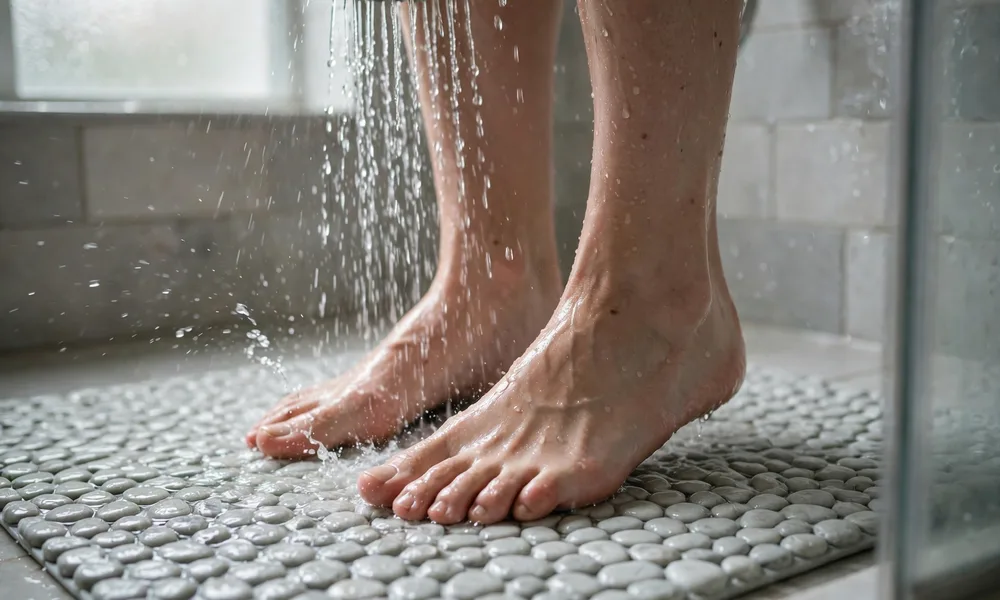
Pebble mats mimic smooth river stones, either as a moulded rubber surface or as real pebbles set into a backing. They are the most comfortable mats to stand on, with a gentle massaging texture, and they look far better than plain rubber. Moulded versions are practical and easy to clean; real-pebble versions look wonderful but are heavier and need more thorough drying.
Teak and wood mats
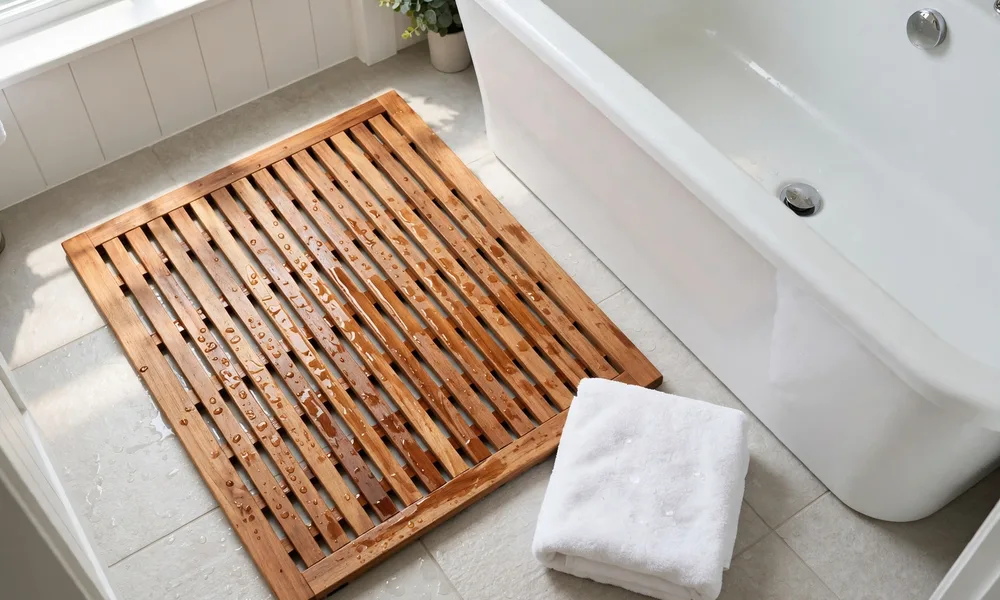
Teak shower mats are slatted wooden platforms that sit on the shower floor, letting water drain through the gaps. They look superb — warm, natural, and spa-like — and dry fast because air circulates underneath. The drawbacks are weight, price, and maintenance: a teak mat needs oiling every few months, and it does not grip the floor the way suction cups do, so it suits flat, level shower floors.
Mesh and quick-dry mats
Mesh mats are made from woven or perforated material that lets water pass straight through and dries within minutes. They are the lightest option, easy to roll up and store, and popular in guest bathrooms. They grip less firmly than suction-cup rubber, though, and thin mesh can bunch underfoot in a small shower.

What to Look for Before You Buy
Size is the first decision. Measure the flat area of your shower floor, then choose a mat that covers the standing area without covering the drain or curling up the walls. In a bath with an overhead shower, measure the flat section of the bath bottom, not the full length, because the curved ends will lift the mat. A mat that is too large is worse than one slightly too small: curled edges are a trip hazard.
Suction is the second test, and it depends on your floor. Suction cups grip smooth surfaces — glazed tile, acrylic, enamel — but fail on textured stone or grouted mosaic. If your floor is textured, a heavy teak or pebble mat that relies on weight is the better choice. When you first lay a suction mat down, press each cup firmly; if it slides when you push it sideways with your foot, it is not gripping and should go back.
Drainage is the third thing to check. A mat without drainage holes traps a puddle underneath, which is where mould and smells start. Look for holes across the whole mat, not just at the edges. Thickness matters too: anything under 5 millimetres feels flimsy, while very thick mats can make the floor feel uneven.
Shower Mats Compared
| Type | Best for | Grip | Drying speed | Watch out for |
|---|---|---|---|---|
| Rubber, suction cups | Most showers | Excellent on smooth floors | Moderate | Mould under the cups if never lifted |
| Pebble-textured | Comfort and looks | Very good | Moderate | Real pebble versions are heavy |
| Teak slatted | Walk-in showers | Good on flat floors | Fast | Needs oiling; no suction grip |
| Mesh, quick-dry | Guest bathrooms | Fair | Very fast | Can bunch underfoot |
| Loofah | Soft feel, low cost | Fair | Slow | Wears out fast; holds moisture |
The Best Shower Mats in 2026
Best overall: the thick rubber mat
For most households, a thick rubber mat with strong suction cups and full drainage is the right answer. It grips firmly, costs very little, and does the safety job better than any other design. Choose one at least 5 millimetres thick with more than 100 suction cups, and check that the drainage holes run across the whole surface.
Best for comfort: the pebble-textured mat
If you stand in the shower for a long time, or you have sensitive feet, a pebble-textured mat is worth the upgrade. The rounded bumps feel pleasant underfoot and add grip without being harsh. Moulded rubber pebble mats are the practical choice — they clean easily and dry reasonably fast — while real-pebble mats are the luxury version for a walk-in shower.
Best for style: the teak slatted mat
A teak mat turns a plain walk-in shower into something that feels like a spa. The warm wood contrasts beautifully with white tile, water drains through the slats, and the mat dries quickly. Accept the maintenance — a light oiling every few months — and make sure your shower floor is flat and level, since teak relies on weight rather than suction.
Best for small showers: the compact mesh mat
Small cubicles punish big mats. A compact mesh mat, cut to fit the standing area exactly, dries in minutes and rolls up for storage. Just be aware that mesh grips less firmly than suction rubber, so press it flat before every shower and replace it at the first sign of bunching.
Best for older bathers: the extra-long mat with handles
For older bathers or anyone with limited mobility, an extra-long mat that covers the full standing area gives the most security. Some designs include a raised edge or textured border that signals where the mat ends, which helps when eyes are closed against the water. Pair the mat with a grab rail for the safest setup, and check the suction every week.
How to Fit and Test Your Mat
Fitting a shower mat takes five minutes and is worth doing properly. Clean the shower floor first — soap scum and limescale stop suction cups gripping — then lay the mat flat and press down firmly over every cup, working from the centre outwards. Run the shower briefly and check that water flows through the drainage holes toward the drain. Then test it: stand on it, shift your weight, and push sideways with one foot. If it moves, lift it, clean the floor again, and refit it.
Cleaning and Care
A shower mat needs cleaning more often than most people think. Lift it after every shower and hang it over the shower door so both sides dry — this single habit prevents most mould. Once a week, rinse it under hot water and scrub it with a brush and a little washing-up liquid or white vinegar, paying attention to the underside and the suction cups. For stubborn mould, soak it in warm water with a cup of white vinegar for an hour. Replace a mat when the cups no longer grip, the surface feels slimy even after cleaning, or the material has gone brittle — usually every six to twelve months for rubber, longer for teak with proper oiling.
Your Shower Mat Checklist
- Measure the flat standing area of your shower floor before ordering.
- Check whether your floor is smooth enough for suction cups or needs a weight-based mat.
- Look for drainage holes across the whole mat, not just at the edges.
- Choose a thickness of at least 5 millimetres and more than 100 suction cups for rubber mats.
- Test the grip by pushing sideways with your foot before the first proper shower.
- Lift the mat after every shower and rinse it weekly to stop mould.
Frequently Asked Questions
Do shower mats work on textured tiles?
Suction-cup mats do not grip textured or heavily grouted tiles well. For those floors, choose a heavy teak or pebble mat that stays in place by weight, or a mat with a textured backing designed for uneven surfaces.
How often should I replace a shower mat?
Rubber mats usually last six to twelve months before the suction cups weaken or the surface goes slimy. Teak mats last years with regular oiling. Replace any mat as soon as it slides, smells after cleaning, or feels brittle.
Can I put a shower mat in the washing machine?
Many rubber mats can be machine-washed on a gentle, cool cycle, but heat warps suction cups, so never use hot water or a tumble dryer. Check the label first, and air-dry the mat flat afterwards.
Will a shower mat damage my bath or shower tray?
No, provided it is fitted correctly. Suction cups can leave faint rings on acrylic if left in one spot for months, so lift the mat weekly and move it slightly when you refit it.
Are shower mats safe for children?
Yes — they are one of the best safety additions for a family bathroom. Choose a mat with a soft, textured surface and strong suction, and check the grip before every bath, since children move around far more than adults.
What is the difference between a shower mat and a bath mat?
A shower mat goes inside the shower or bath, under your feet, and is designed to grip a wet surface and drain. A bath mat goes on the floor outside the bath to soak up water as you step out. They do different jobs, and most bathrooms benefit from both.
The Bottom Line
A shower mat is a small purchase with an outsized effect: it keeps the shower safe, protects the floor, and makes every morning that little bit more comfortable. Measure your floor, match the mat to its surface — suction cups for smooth floors, weight for textured ones — and lift it after every shower so it dries properly. The floor outside the shower matters too, which is where the right bath mat for a small bathroom takes over, and a well-chosen bathroom rug that stays put keeps the rest of the room dry. For the shower itself, the matching upgrade is a shower curtain for a large bathroom that keeps the water where it belongs.


