An ice cream scoop is a small tool with one job, and when it works well you barely notice it. The scoop glides through a tub of firm ice cream, curls a neat round ball, and lets go of it cleanly into a bowl or a cone. When it works badly, the job turns into a struggle: the scoop sticks, the ice cream tears, your wrist aches, and the serving looks like it was hacked out with a spoon. The best ice cream scoops of 2026 are the ones that make the first outcome ordinary, tub after tub, summer after summer.

What Makes a Great Ice Cream Scoop
The first thing to notice is the bowl of the scoop, the curved cup that does the cutting. A good bowl has a sharp, thin edge that bites into cold ice cream instead of sliding across it, and a smooth inside curve that rolls the ice cream into a ball as you drag it. Cheap scoops often have a thick, blunt edge and a shallow bowl, which is why they skate over the surface and leave ragged flakes behind. The depth of the bowl matters too: a deep bowl makes taller, rounder scoops, while a shallow bowl makes flatter ones that melt faster.
The second thing is the handle. You will be pushing the scoop through ice cream that has just come out of the freezer, and that takes more force than most people expect. A handle that is too thin will dig into your palm, and a handle that is too short will leave your knuckles brushing the frozen surface. The best scoops have a handle that fills the hand, with a slight curve or a soft grip that stops it twisting when you turn it. Weight helps as well: a scoop with a little heft behind it does some of the work for you, while a very light scoop makes your wrist do all of it.
The Main Types of Scoop
The trigger scoop, also called a disher, is the workhorse of ice cream parlours, and it is easy to see why. A lever on the handle drives a small blade across the inside of the bowl, scraping the ice cream out in one clean movement. It is fast, it is consistent, and it makes near-identical scoops, which is why it is the first choice for anyone serving a crowd, filling cones at a party, or portioning desserts for a table of guests. The moving parts need cleaning after use, and a cheap trigger can jam, but a well-made one lasts for years.
The spade is the scoop for people who like control. It has a flat, slightly pointed blade rather than a round bowl, and it is used to cut and fold the ice cream into quenelles, the elegant oval shapes you see in restaurants. A spade is slower than a trigger scoop and it takes practice, but it is the tool for soft, freshly churned ice cream, and for serving straight from a tub at the table. It also doubles as a server for sorbet and gelato, where a round ball is not always what you want.
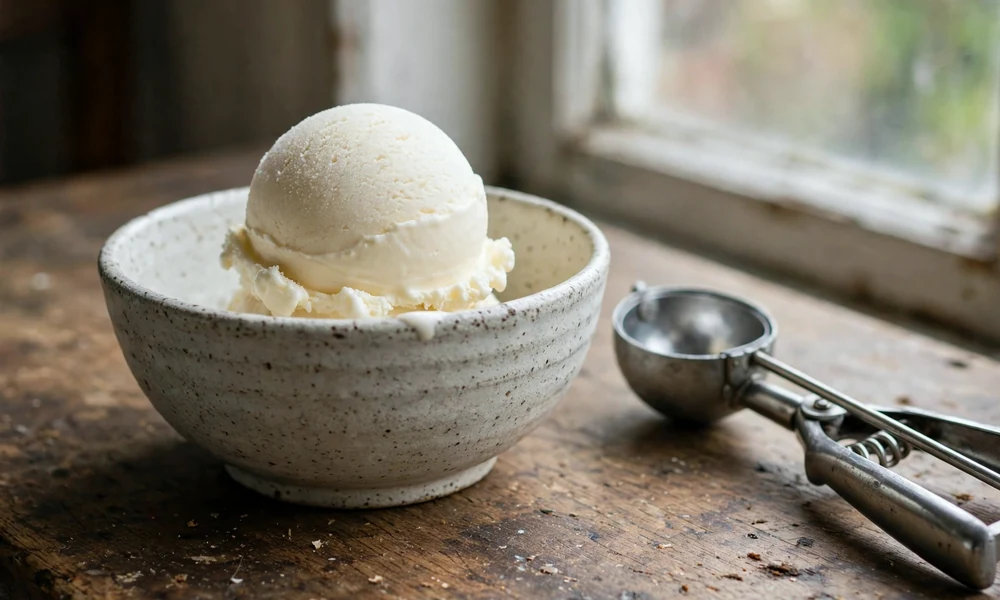
The classic solid scoop is the simplest of all: a single piece of metal, no moving parts, nothing to jam or break. Its bowl is usually a deep oval, and the best ones are made from a single casting so there is no joint to trap water or ice cream. A classic scoop depends entirely on its shape and its polish, so the difference between a good one and a bad one is all in the curve of the bowl and the sharpness of the edge. It is the quietest choice, and for many kitchens it is the only one that is ever needed.
How to Choose the Right Size
Scoops are sized by the number that fits in a litre, a system borrowed from professional kitchens. A number eight scoop is large, roughly the size of a tennis ball, and it is the one for generous servings and sundaes. A number twelve is the everyday size, a comfortable ball for a bowl or a cone. A number sixteen suits smaller portions and children, while a number twenty or twenty-four makes the small, neat scoops used for tasting flights, petit fours and garnishes. The smaller the number, the bigger the scoop.
Materials: What Lasts and What Does Not
Stainless steel is the standard for a reason. It does not rust, it does not pick up flavours, it survives the dishwasher, and a well-polished bowl releases ice cream cleanly. The best stainless scoops are made from a single casting or a heavy gauge of steel, so they do not bend under pressure. A thin, pressed-steel scoop will flex when you push it through hard ice cream, and once it bends it never quite cuts straight again.
Aluminium is lighter and cheaper, and it conducts heat well, which is why some of the classic heat-conducting scoops use it. The drawback is that aluminium is softer: it scratches, it can dent if it is dropped on a hard floor, and it should not go in the dishwasher, because the harsh detergents dull and pit the surface. An aluminium scoop that is washed by hand and dried properly will last a long time, but it asks more of its owner than steel does.

Trigger, Spade or Classic: Which Suits You
If you serve ice cream often, to a family or to guests, start with a trigger scoop. The lever does the releasing for you, the portions come out even, and you can work through a whole tub without stopping to tap the scoop against the side of a bowl. Look for a trigger that moves smoothly and returns firmly, and a bowl that is deep enough to make a proper ball. A trigger scoop that rattles or sticks on its first use will only get worse, so test the action before you commit.
If you want one tool that will last a decade with no maintenance, buy a classic solid scoop in stainless steel. There is nothing to jam, nothing to clean out of a hinge, and nothing to wear down except the edge itself. Choose a comfortable handle and a bowl deep enough for a proper ball, and it will serve every tub you buy. Many of the best-loved scoops in home kitchens are classics that have been in a drawer for twenty years.
Getting Perfect Round Scoops
Temperature is the secret. Ice cream straight from the freezer is too hard to scoop neatly, and ice cream left out too long is too soft to hold a shape. Take the tub out five to ten minutes before serving, and the scoop will glide instead of fighting. If you are in a hurry, run the scoop under hot water for a few seconds and dry it before you start; the warm metal cuts far more easily than cold metal, and the first scoop will tell you the difference.
The motion matters as well. Press the edge of the bowl into the ice cream at a low angle, then drag it towards you in a smooth curve, rolling the scoop as you go so the ice cream curls into a ball inside the bowl. Do not stab straight down, and do not twist the scoop in the tub, because both leave a ragged hole and a misshapen serving. When the bowl is full, lift it clear and release the ball with the trigger, a tap on the rim of the bowl, or a gentle push from a spoon.
For serving, a warm bowl helps the scoop keep its shape. Our guide to the best serving bowls of 2026 covers bowls that hold the cold well and look good on the table, and a chilled bowl is even better: ten minutes in the freezer before serving slows the melting and keeps the ball round while it is carried to the table. A cone needs the opposite treatment. If you make your own cones, our guide to the best waffle makers of 2026 covers the irons that make crisp, sturdy cones, and a cone that is still slightly warm will grip the scoop better than a cold one.
Caring for Your Scoop
Clean the scoop as soon as you have finished serving. Dried ice cream sets like cement in a trigger hinge and in the joint of a spade handle, and it is far harder to shift once it has hardened. Rinse under hot water, wash with a little washing-up liquid, and dry it straight away, especially if it is aluminium. Stainless steel scoops can go in the dishwasher, but hand washing keeps the edge sharper for longer, and it takes less than a minute.
What to Avoid When Buying
Avoid scoops with a handle that is hollow and sealed with a plastic cap. The cap is the first thing to fail, and once water gets inside the handle the scoop becomes unbalanced and, in time, unpleasant to hold. Avoid very light scoops made from thin pressed metal, because they flex under pressure and the edge goes blunt quickly. And avoid scoops with a rough or painted finish inside the bowl: paint flakes into food, and a rough surface grips the ice cream instead of releasing it.
Making Your Own Ice Cream
A good scoop earns its keep twice over when the ice cream is homemade. Freshly churned ice cream is softer than shop-bought, and it takes a scoop beautifully, holding a clean shape without cracking. If you are thinking of churning your own, our guide to the best ice cream makers of 2026 covers the machines that churn like the parlour, from simple freezer-bowl models to compressor machines that need no pre-freezing. Homemade ice cream also freezes harder than shop-bought after a night in the freezer, which is when a heat-conducting scoop or a warmed classic scoop really proves its worth.
Frequently Asked Questions
Why does my scoop stick to the ice cream? Usually the bowl is too cold, too rough, or too shallow. Warm the scoop under hot water, dry it, and try again, and check that the inside of the bowl is smooth and polished. A scoop with a pitted or scratched bowl will always grip, and no amount of warming will fix it.
Can I put my ice cream scoop in the dishwasher? Stainless steel scoops, yes, though hand washing keeps the edge sharper. Aluminium scoops should be washed by hand, because dishwasher detergent dulls and pits the surface. Trigger scoops benefit from a hand wash too, since the hinge is the part that suffers most from trapped water.
Do I need a heat-conducting scoop? Not unless hard-frozen ice cream is a regular struggle. A well-made classic scoop, warmed under hot water for a few seconds, does the same job for most people. A heat-conducting scoop is worth it if you have a weaker grip or you serve straight from a very cold freezer every time.
The best ice cream scoop is the one that fits your hand, cuts cleanly and lets go of the ball without a fight. Choose a solid stainless trigger or classic scoop in a number twelve, keep its edge sharp and its bowl smooth, and it will serve every tub you buy for years. Buy on looks alone, and you will be buying again before the summer is out.