
A garden feeder is only as good as what goes into it. Put the right seed out and the same small patch of garden can host finches, robins, tits and nuthatches within a few weeks. Put the wrong seed out and the feeder sits untouched while the seed underneath turns into a damp mat that nothing wants. The difference is rarely the feeder itself. It is the mix in the bag, the freshness of the seed and whether what you bought actually suits the birds that live near you. The best bird seed of 2026 is not one single product. It is a small set of mixes and single seeds, each doing a different job, and this guide works through them in the order that matters: what is in the bag, which birds each seed brings, what to avoid, and how to keep the whole thing fresh.
What Makes a Good Bird Seed Mix
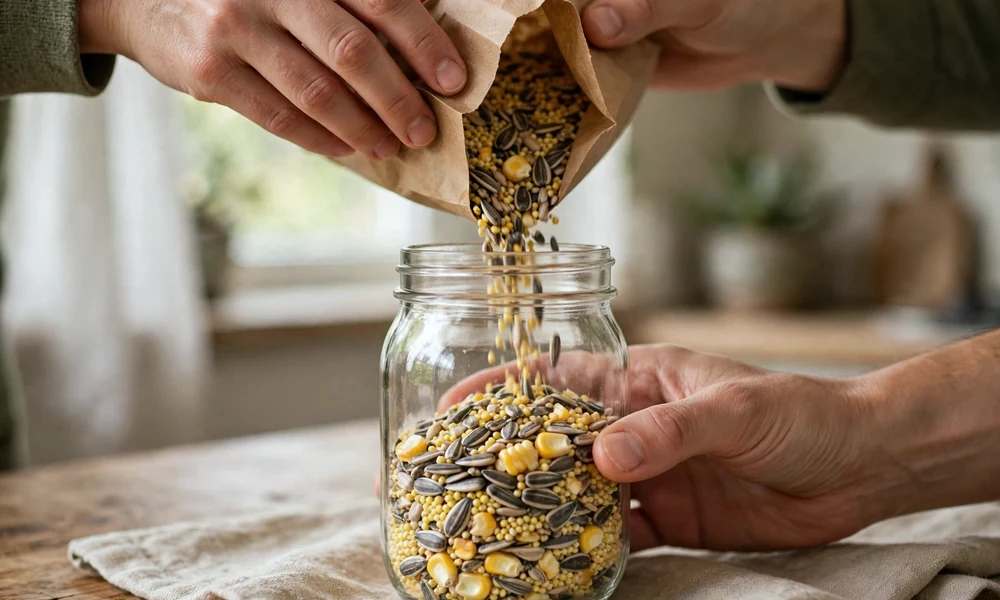
The first thing to check is the ingredient list, and the honest mixes make this easy. A good bag names its seeds in plain words and lists them in order of how much is inside. Sunflower seeds should usually come first, because they are the seed most garden birds will eat first. After that you want to see millet, cracked corn, safflower or peanuts, depending on the mix. What you do not want to see is a long list of cheap grains doing the heavy lifting while the sunflower sits near the end of the list. That is the most common trick in a cheap bag, and it is the reason so many feeders go quiet.
Freshness matters just as much as the recipe. Seed is a natural food, and it goes stale. A bag that smells dusty, musty or faintly sour has been stored badly or kept too long, and birds will notice before you do. Good seed looks clean and dry, feels light in the hand, and pours freely without clumps. If you open a bag and find a fine grey dust at the bottom, or seed that sticks together in damp lumps, do not put it out. The same rule applies to seed that has been sitting in a feeder through weeks of rain. Tip it out, clean the feeder, and start again with dry seed.
The Seeds That Matter Most
Black oil sunflower seed is the backbone of almost every good mix, and for a simple reason: more garden birds eat it than any other single seed. Its thin shell is easy for small beaks to crack, and the kernel inside is rich and filling. If you were to buy only one seed, this would be it. Striped sunflower seed is the larger, thicker-shelled cousin. It suits bigger birds such as jays and grosbeaks, but smaller birds often leave it alone, so it works better as part of a mix than as the main event.
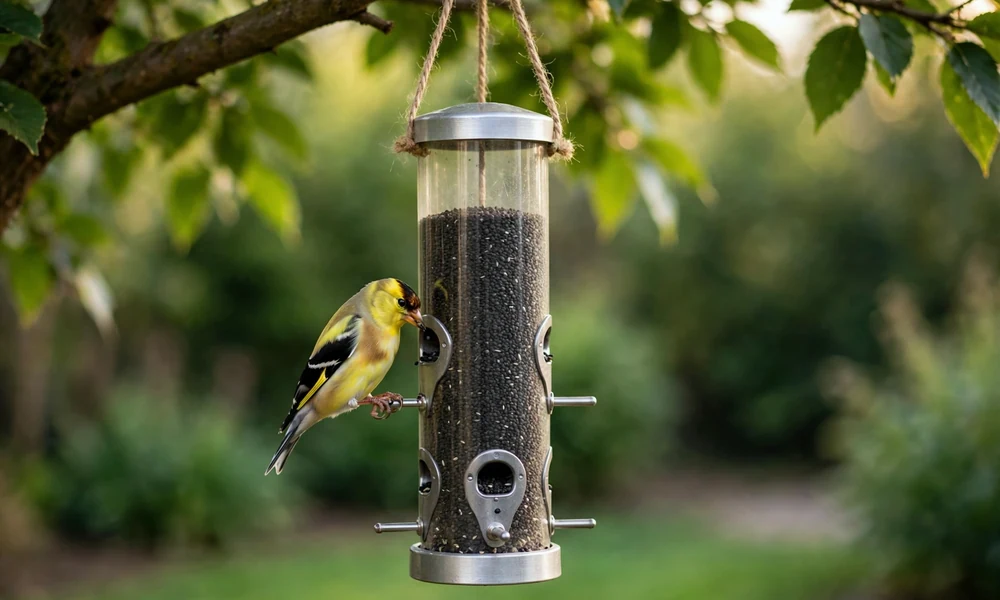
Nyjer seed is the small black seed that finches love, and it is worth buying on its own if goldfinches visit your garden. It is too small for a normal feeder, so it needs a tube feeder with tiny ports or a fine mesh sock. It is also one of the seeds that goes stale fastest once the bag is open, so buy it in smaller bags and keep it dry. When it is fresh, a nyjer feeder can be the busiest spot in the garden. When it is stale, the finches will simply stop coming.
White millet is the seed that brings ground-feeding birds to the garden. Sparrows, juncos and doves prefer to eat from the ground or a low tray, and millet scattered on a flat surface suits them perfectly. It is also one of the seeds that squirrels and larger pest birds tend to ignore, which makes it a useful part of a mix. Safflower seed plays a similar role. Cardinals and chickadees eat it happily, while squirrels and starlings usually leave it alone, so a mix with a good share of safflower can quietly solve a squirrel problem without any extra equipment.
The Best Bird Seed Mixes of 2026
The best all-round mix of 2026 is a sunflower-heavy blend with no cheap filler. Look for a bag where black oil sunflower makes up at least half the contents, with white millet, cracked corn and a little safflower making up the rest. This is the mix that brings the widest range of garden birds, from finches and chickadees at the feeder to sparrows and juncos on the ground below. It is not the cheapest bag, but it is the one where the least ends up wasted, and over a season that matters more than the price on the shelf.
The best no-mess mix is the one to buy if you are tired of shells and husks piling up under the feeder. These mixes use shelled sunflower hearts and shelled peanuts, so there is nothing for the birds to crack open and drop. They cost more per kilo, but nothing is thrown away, so a bag lasts longer than it looks like it should. They also suit patios, balconies and small gardens where a carpet of husks would be a real problem. If you feed birds near a seating area, this is the mix to choose.
The best mix for finches is a nyjer-led blend, usually nyjer mixed with a little fine sunflower heart. It needs a proper nyjer feeder, and it needs to be kept fresh, but it is the surest way to bring goldfinches into a garden and keep them coming back. Buy it in small bags, store it somewhere dry, and refill the feeder little and often rather than filling it to the top and leaving it for a month. A half-full feeder of fresh nyjer beats a full feeder of stale seed every time.
Matching Seed to the Birds in Your Garden
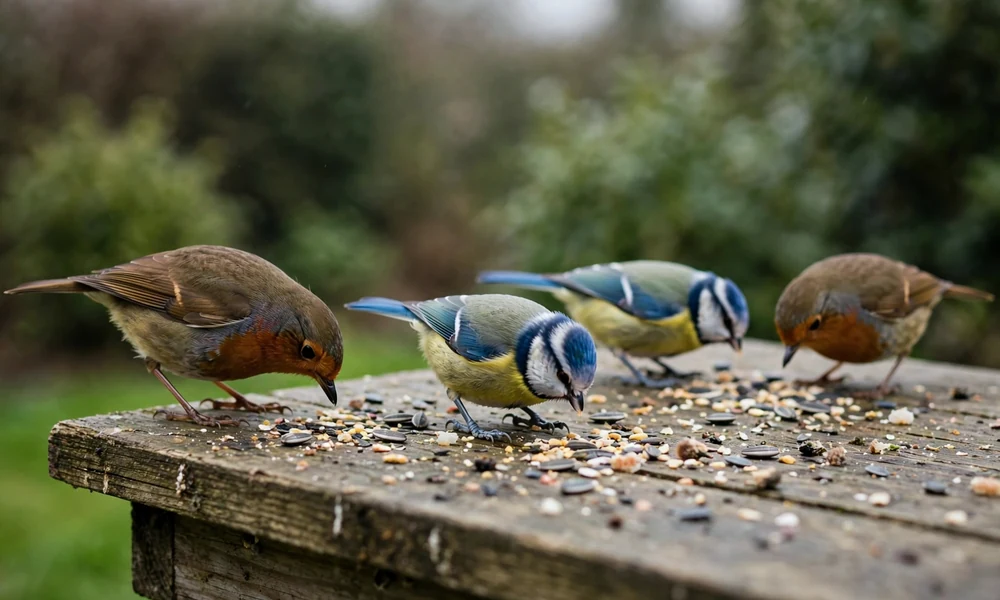
The right seed depends on the birds you actually have, not the birds on the front of the bag. If your garden is full of finches, nyjer and sunflower hearts are the seeds to buy. If cardinals are your regulars, safflower and sunflower will keep them coming. If woodpeckers and nuthatches visit, peanuts and sunflower will do more than any fancy blend. Spend a week watching which birds already visit, and which seeds disappear fastest, and let that decide what you buy next. The birds will tell you what works, and they will tell you quickly.
Where you put the seed matters as much as what it is. Hanging feeders suit tits, finches and chickadees. A bird table suits robins, blackbirds and larger birds that like a flat surface. The ground suits sparrows, doves and juncos. A garden that offers all three, with a different seed in each place, will always attract more birds than a garden with one feeder and one mix. Our guide to the best bird feeders of 2026 covers the feeders themselves in detail, and the right feeder for each seed makes a real difference to how much of it gets eaten.
Water belongs in this conversation too, because seed is dry food and birds that eat it need to drink. A shallow dish of fresh water near the feeder, changed daily, will bring in birds that seed alone never would. If you want to go further, our guide to the best bird baths of 2026 explains which designs stay clean and which ones are more trouble than they are worth. Seed, water and a bit of cover nearby are the three things that turn a feeder into a regular stop.
What to Avoid in a Bag of Bird Seed
Milo is the filler to watch for. It is a small round red-brown grain that looks harmless in the bag, but most garden birds will not eat it. It ends up on the ground, where it sits until it rots or sprouts. Wheat and red millet are nearly as bad in a hanging feeder, though ground-feeding birds will eat some of them. A bag that lists milo, wheat or red millet among its first three ingredients is a bag that is mostly there to make the bag heavier and cheaper, not to feed birds.
How to Store Seed and Keep Feeders Fresh
Seed keeps best in a cool, dry place in a sealed container. A metal bin with a tight lid is ideal, because it keeps out damp and keeps out mice. A plastic tub with a clip lid works well too. What does not work is leaving the bag open in a damp shed or garage, where the seed picks up moisture and goes stale within weeks. Buy seed in quantities you will use within a month or two, and keep the bag sealed between fills. The same rule applies to nyjer, only more so, because it loses its appeal faster than any other seed once the bag is open.
Feeders need cleaning more often than most people expect. A feeder that is never cleaned builds up old seed, droppings and damp husks, and birds will avoid it even when it is full. Take feeders down every couple of weeks, tip out the old seed, scrub them with hot water and let them dry fully before refilling. In wet weather, check them more often and refill with smaller amounts. A little fresh seed in a clean feeder is worth far more than a full feeder that has gone damp.
How Much Seed, and When
Start small. A cup of seed in a feeder is enough to find out whether the birds in your garden like it, and it will be eaten before it has a chance to go stale. Once the feeder is being emptied regularly, fill it a little more each time. In winter, when natural food is scarce, birds will eat far more than they do in summer, so keep the feeder topped up and add a ground tray for the birds that feed low. In summer, feed less and check more often, because seed left out in warm rain goes off quickly.
One last note on hummingbirds: they do not eat seed at all, and a seed feeder will never bring them in. They feed on nectar, and they need a completely different kind of feeder. If they visit your garden, our guide to the best hummingbird feeders of 2026 explains what they need. For every other garden bird, though, the right seed in the right feeder is the whole secret, and it is a small thing to get right.
The best bird seed of 2026 is not a mystery and it is not a luxury. It is a bag with sunflower first, no milo doing the heavy lifting, seed that smells fresh and pours dry, matched to the birds that already visit your garden. Buy a little, watch what disappears, and let the birds choose the next bag. They are honest critics, and they will not eat a bad mix twice.


