Embroidery Hoops That Keep Fabric Taut in 2026
Embroidery hoops that keep fabric taut in 2026 are the simple wooden, bamboo, plastic and metal rings that hold your cloth drum-tight while you stitch. A good hoop grips the fabric evenly all the way round, so the stitches lie flat and the finished piece comes out smooth instead of puckered. A bad hoop slips, pinches, or leaves a ring mark that never quite washes out.
The difference is rarely the price. It is the fit of the rings, the quality of the screw, and the way you put the fabric in.
Key Takeaways
- A hoop keeps fabric taut by sandwiching it between an inner and an outer ring, and the grip depends on how closely the two rings fit, not on how hard you turn the screw.
- Wooden hoops suit most hand embroidery, bamboo hoops are light and cheap, plastic hoops grip well but can mark delicate fabric, and metal hoops are the most durable for heavy work.
- Choose a hoop a little larger than your design, so the stitching never sits under the ring where you cannot reach it.
- Tighten the screw gradually and pull the fabric evenly from all sides, like tuning a drum, rather than yanking one edge tight.
- Remove the fabric from the hoop when you stop stitching for the day, because fabric left in a hoop can hold a crease or a ring mark.
What an Embroidery Hoop Actually Does
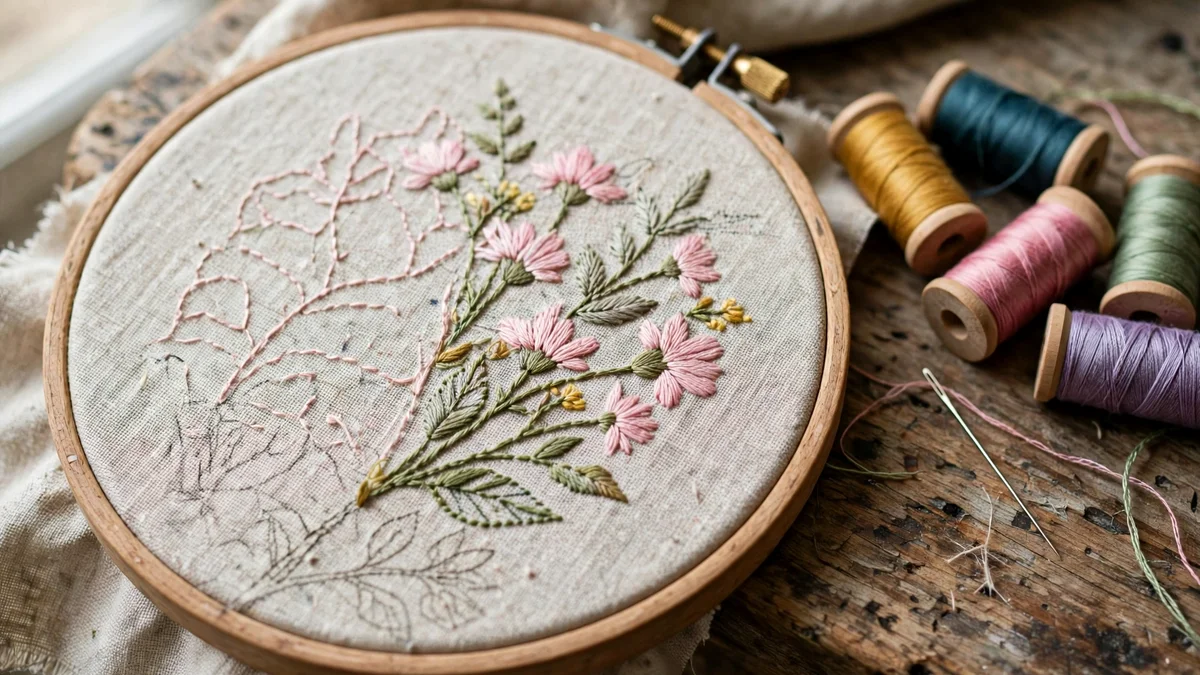
An embroidery hoop is two rings, one inside the other. The fabric is laid over the inner ring, the outer ring is pressed down around it, and a screw draws the outer ring tighter until the fabric is held firm. The tension stops the fabric shifting, keeps the weave open so stitches sink in evenly, and gives you a firm surface to work against.
Without a hoop, embroidery is a fight: the fabric bunches, the stitches pull unevenly, and the finished work ripples. With a good hoop, the fabric behaves like a small drum, and the design keeps its shape.

Hoop Materials Compared
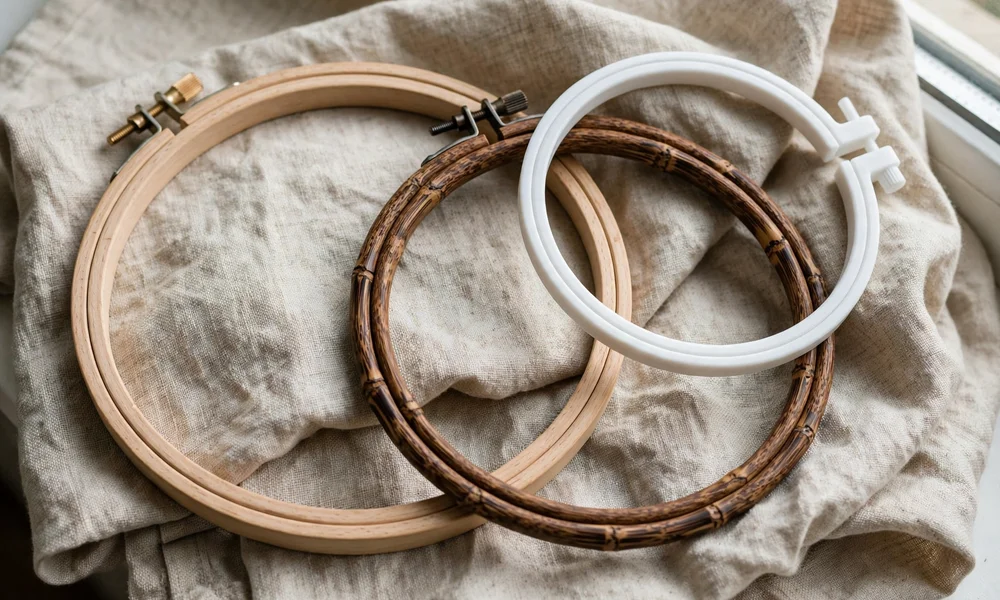
Wood is the classic choice, and for most stitchers it is still the best one. A well-made beech or birch hoop is light, warm in the hand, and gentle on fabric. The rings are sanded smooth so they do not snag threads. Cheap wooden hoops are the exception: rough edges and rings that do not quite match will fight you on every project.
Bamboo hoops are lighter still and usually the cheapest option. They suit beginners and small, light projects on cotton or linen. The drawback is strength: bamboo flexes under tension, so on a larger hoop the fabric can sag in the middle.
Plastic hoops grip fabric firmly and never warp, which makes them popular for heavier fabrics and machine embroidery. The trade-off is that plastic can leave a shiny ring mark on delicate fabrics, especially silk and fine linen.
Metal hoops, usually spring-tension steel or aluminium, are the workhorses. They hold tension better than any other material, they do not warp in damp rooms, and they survive being dropped or packed in a bag. They are heavier, and the metal edge can be hard on very fine fabric.
Choosing the Right Size
Hoops are measured across the inside of the ring, and the common sizes run from about 10 centimetres up to 30 centimetres. Pick a hoop a little larger than the design you are stitching, so that all of the stitching sits inside the ring with a margin of fabric around it. Stitching that falls under the ring is hard to reach, and the tension there is uneven.
Small hoops of 10 to 15 centimetres suit motifs, monograms and small samplers. Medium hoops of 18 to 20 centimetres are the most versatile size, big enough for a floral spray or a small scene. Large hoops of 25 to 30 centimetres suit big designs and quilting, but they are heavy, and most stitchers use them in a stand.
Keep a small, a medium and a large hoop rather than a drawer full of nearly identical ones: three hoops cover almost every project. If you stitch in a frame or stand, check that the hoop fits the clamp before you buy.
The Screw Matters More Than You Think
The screw is the part of the hoop you will touch most, and it is where cheap hoops fail first. A good screw turns smoothly and holds its setting, letting you adjust tension a fraction at a time. A bad screw sticks, jumps, or slowly unwinds while you stitch, so the fabric slackens.
Brass screws are the best common fitting: they turn smoothly, they do not rust, and they hold their thread well. Steel screws are fine if they are properly made, but cheap ones can seize or strip. Plastic wing nuts are comfortable to turn, but they wear faster and can crack if you force them. Never force a screw: if it will not turn, the fabric is probably too thick for that hoop.
Spring-tension hoops have no screw at all. The outer ring is a sprung metal band that you squeeze open, place over the fabric, and release. They hold tension well and are quick to set up, but you cannot fine-tune the tension the way you can with a screw.
How to Keep Fabric Taut
Getting fabric taut is a technique, not a matter of strength. Loosen the screw, lay the fabric over the inner ring, smooth out the wrinkles, and press the outer ring down over it. Tighten the screw just enough to hold, then pull the fabric gently from the edges, a little at a time, working your way round the hoop. Tighten a little more, pull again, and repeat until the fabric sounds like a drum when you tap it.
The key is evenness. Pulling hard on one side while the other is slack leaves the hoop tight one way and loose the other, and the stitches will pucker along the loose edge. Pull from all sides in turn, in small amounts, and check by tapping the fabric: it should give a soft, even drum sound all over.
Thick fabric needs a different approach. Heavy linen, canvas and layered fabric will not fit in a hoop made for a single layer of cotton, and forcing the rings together will crush the weave. Use a hoop with a deeper ring, or wrap the inner ring with a strip of bias tape to take up the slack and protect the fabric. The wrap also helps on slippery fabrics like silk, which slide in a bare hoop.
Re-tighten as you work. Fabric relaxes under the needle, especially cotton and linen, and after an hour of stitching the drum-tight surface you started with will have softened. Stop every so often, give the screw a quarter turn, and pull the slack out from the edges. If you are working on a project over several days, take the fabric out of the hoop overnight: fabric left clamped for days can hold a crease.
Embroidery Hoops at a Glance
| Hoop type | Best for | Grip and tension | Watch out for |
|---|---|---|---|
| Wooden hoop | Most hand embroidery | Even, gentle grip | Rough edges on cheap hoops |
| Bamboo hoop | Beginners and small projects | Light, adequate grip | Flexes on larger sizes |
| Plastic hoop | Heavy fabric, machine work | Firm, warp-proof grip | Can mark delicate fabric |
| Metal hoop | Quilting, stands, daily use | Strongest tension | Heavy, hard on fine fabric |
| Spring-tension hoop | Quick setup, simple work | Fast and even | No fine tension adjustment |
What to Avoid
The most common mistake is buying the cheapest hoop in the shop and expecting it to behave like a good one. A hoop whose rings do not match will never hold tension evenly, however hard you turn the screw. Check the fit before you buy: the inner ring should slide into the outer ring snugly with no wobble, and the screw should turn smoothly.
Another mistake is leaving the hoop on the fabric between sessions. Fabric clamped for days or weeks takes a set, and the ring mark can survive washing and pressing. Take the fabric out, roll it loosely instead of folding it across the stitched area, and put it back in the hoop when you sit down again.
Finally, do not use a hoop that is too small for the design and move it around as you stitch: moving the hoop clamps the ring over finished stitches, which flattens them and can leave a permanent ring mark. If the design is bigger than your largest hoop, stitch it in a frame or a large hoop on a stand. For a fuller picture of the tools around the hoop, our guide to the best sewing machines for beginners in 2026 covers the machines that pair well with hand embroidery, and the best vs worst sewing machines of 2026 shows which machines are worth the money and which to avoid.
Buying Checklist
- Check the rings fit snugly with no wobble, and that the screw turns smoothly.
- Choose a hoop a little larger than your design, so no stitching ever sits under the ring.
- Pick wood for most hand embroidery, metal for heavy work and stands, and plastic only for sturdy fabrics.
- Feel the inner ring for rough spots or splinters that could snag thread or fabric.
- Make sure the hoop fits your stand or frame clamp if you use one.
- Keep three sizes, small, medium and large, rather than a drawer of nearly identical ones.

Frequently Asked Questions
How tight should the fabric be in an embroidery hoop?
Tight enough to sound like a soft drum when you tap it, and even all the way round. It should not sag under a fingertip, but it should not be stretched so hard that the weave distorts. If the grain looks pulled out of square, loosen the screw and start again.
Do embroidery hoops leave marks on fabric?
They can, especially on fine linen and silk left in the hoop for days. To reduce marks, wrap the inner ring with bias tape, do not over-tighten, and remove the fabric when you stop stitching. Most light marks press out with a warm iron, and our comparison of the best vs worst ironing boards of 2026 covers the boards that make pressing finished embroidery easiest.
What size embroidery hoop should a beginner buy?
Start with a medium hoop of about 18 to 20 centimetres in wood: big enough for most beginner designs, light enough to hold comfortably, and cheap enough that a good one is not a big investment.
Can I use an embroidery hoop for cross-stitch?
Yes, though many cross-stitchers prefer a frame that holds the fabric by its edges. A hoop is best for smaller pieces; for large pieces, a scroll frame keeps the whole design visible.
How do I clean a wooden embroidery hoop?
Wipe it with a barely damp cloth and dry it straight away. Never soak a wooden hoop or leave it in a damp room, because the wood can warp and the screw can rust. A drop of beeswax on the screw thread once a year keeps it turning smoothly.
Are expensive embroidery hoops worth it?
Up to a point, yes. The jump from the cheapest hoop to a well-made mid-priced one is the one that matters: smooth rings, a good screw, and a true fit. Beyond that, you are paying for beautiful wood or a brand name, which does not change how the hoop holds fabric.
The Bottom Line
The best embroidery hoop is the one that holds your fabric drum-tight and even from the first stitch to the last: usually a well-made wooden hoop in the right size, with a smooth brass screw and rings that fit properly. Choose the size for the design, learn the even pull, and take the fabric out when you stop for the day.


