
Toilet Cleaners That Cut Through Grime in 2026
Toilet cleaners that cut through grime are the difference between a bowl that looks clean for a day and one that stays fresh all week. Hard water leaves limescale, waste leaves stains, and the damp, warm air helps a dark ring form at the waterline within days. A quick flush barely touches any of that. The right toilet cleaner dissolves the grime where it sits, so a short scrub leaves the porcelain bright again. This guide covers the toilet cleaners worth buying in 2026: the main types, what makes one cut through grime fast without damaging porcelain or seals, and how to use them well.
Key Takeaways
- A thick gel toilet cleaner is the best all-round choice, because it clings under the rim and down the bowl instead of running straight into the water.
- Dwell time does more work than scrubbing: apply the cleaner, wait the time on the label, then scrub, and most grime lifts in one pass.
- Acid-based cleaners beat limescale and hard-water stains fastest, while bleach cleaners are best for whitening and disinfecting a stained bowl.
- Never mix a bleach toilet cleaner with an acid or limescale cleaner, and never use two different cleaners in the same bowl at once.
- Prevention is worth more than any single bottle: a weekly clean stops the waterline ring from hardening into a stain that needs heavy scrubbing.
Why Toilet Bowl Grime Is So Stubborn
A toilet bowl collects grime in places you cannot see as easily as on a sink or a shower screen. Under the rim there is a hidden channel where water flows out with every flush, and it is damp all the time, so limescale and stains build up there first. At the waterline, minerals settle every time the bowl refills, forming a faint ring that darkens week by week. Lower down, the curved throat traps waste and residue. A cleaner that only touches the visible wall leaves the dirtiest parts alone, and the stains return within days.
Hard water makes everything worse. When tap water is rich in calcium and magnesium, every flush leaves a thin mineral layer that bonds to the porcelain, and ordinary soap and water cannot break that bond. A toilet cleaner has to do two jobs at once: dissolve the mineral part of the grime and lift the staining part away. That is why the formula matters more than the brand. Acid cleaners handle the mineral side, bleach cleaners handle stains and germs, and a thick gel holds the formula against the surface long enough to work.
The Main Types of Toilet Cleaner
Toilet cleaners come in several distinct types, and the right one depends on the problem in your bowl. A gel that is perfect for a weekly clean may be too gentle for a bowl that has not been cleaned for months. Matching the type to the job saves time, money, and scrubbing.

Gel Bowl Cleaners
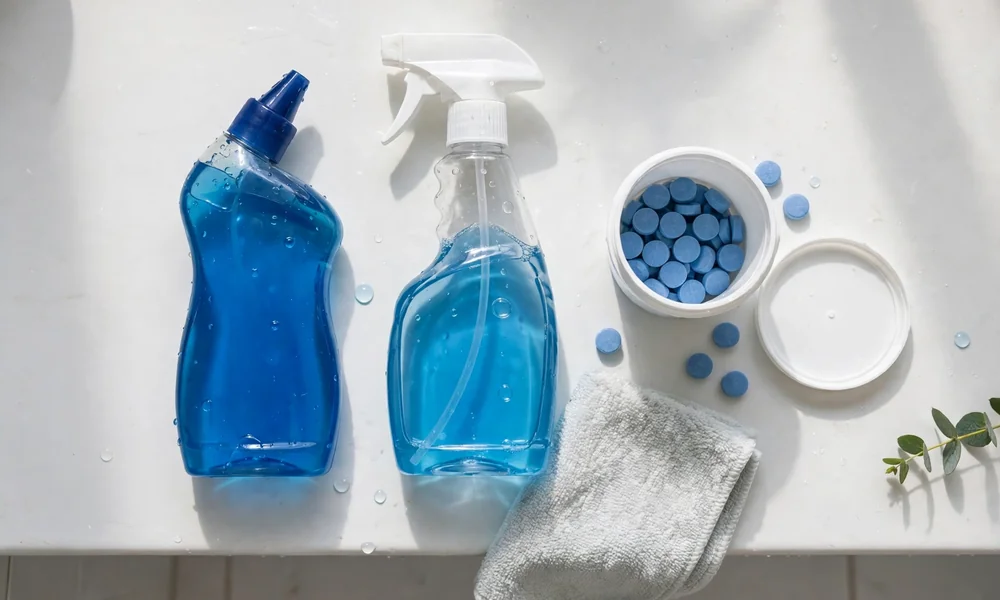
A gel toilet cleaner is the best toilet cleaner for most homes in 2026. The thick formula is squeezed under the rim, where it clings to the porcelain and runs slowly down the bowl wall instead of diluting straight into the water. That cling time is the whole point: the active ingredients stay in contact with limescale and stains for ten minutes or more. Gels come in acid, bleach, and dual-action versions, so check the label, and one bottle lasts for many cleans because a little goes a long way.
Liquid and Spray Cleaners
A thin liquid or spray toilet cleaner is best for quick, light cleans and for the outside of the toilet. Sprays reach the seat, the hinges, the base, and the floor around the bowl, which a gel cannot do well. Their weakness is the bowl itself: a thin liquid runs down the wall and into the water within seconds, so it has almost no dwell time. Use a spray for a fast freshen-up between deep cleans, but do not expect it to shift a hardened waterline ring.
Tablets and Drop-In Cleaners
Tablets and drop-in cleaners sit in the cistern or in the bowl and release a small dose of cleaner with every flush. They freshen the smell and slow down new stains between proper cleans. Their weakness is power: the dose per flush is small, so they maintain a clean bowl rather than cleaning a dirty one. Some strong tablets can wear rubber seals in older cisterns over time, so check that yours is marked safe for your toilet.
Bleach Toilet Cleaners
A bleach toilet cleaner is the strongest choice for whitening a stained bowl and disinfecting it. Bleach breaks down the colour in stains and kills the germs that cause smells, leaving the porcelain visibly whiter after one treatment. The trade-offs are real: bleach has a strong smell, it can irritate skin and eyes, and it must never be mixed with an acid cleaner or a limescale remover, because the mixture can release dangerous fumes. Wear gloves, open a window, and use bleach cleaners on their own.
Descaling and Limescale Cleaners
A descaling toilet cleaner is built for hard-water homes, where the main problem is a crusty, chalky ring rather than a coloured stain. These are usually acid-based, using citric or hydrochloric acid to dissolve the calcium deposits that make the ring hard. Apply under the rim, leave the full dwell time, and scrub with a brush. Avoid them on damaged porcelain or on toilets with metal parts the acid could corrode.
Toilet Cleaners at a Glance
| Cleaner type | Best for | Grime power | Ease of use |
|---|---|---|---|
| Gel bowl cleaner | Weekly deep cleans | High | Easy, clings well |
| Liquid or spray | Quick freshen-ups | Low to medium | Very easy |
| Tablets or drop-ins | Keeping a clean bowl fresh | Low | Effortless |
| Bleach cleaner | Whitening and disinfecting | High on stains | Needs care |
| Descaling cleaner | Hard-water limescale rings | High on limescale | Needs dwell time |
| Enzyme cleaner | Gentle, regular maintenance | Medium | Easy, mild smell |
How to Clean a Toilet Bowl Properly
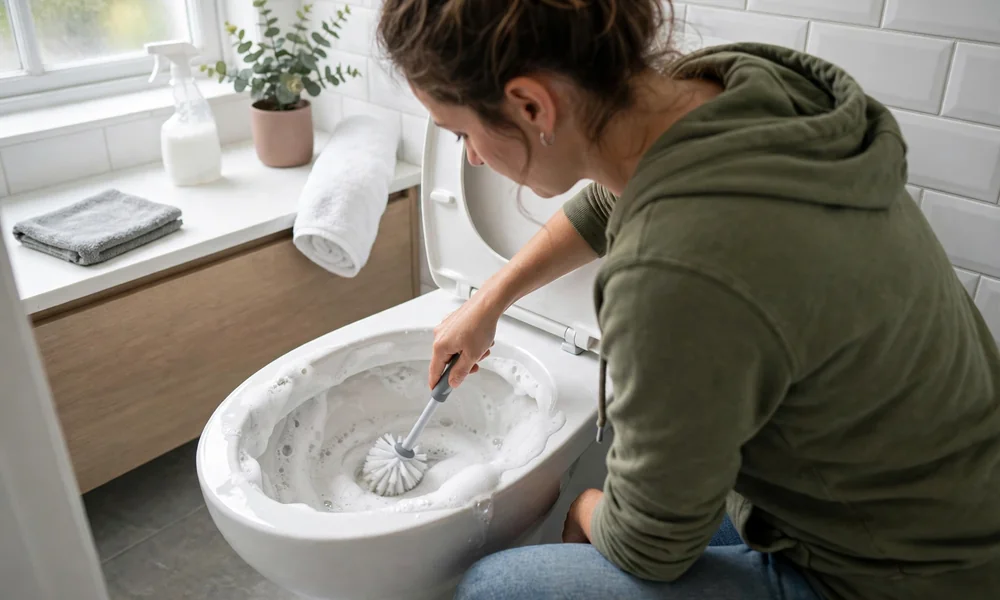
A good toilet cleaner still needs a good method. Flush once, so the bowl is wet, then apply the gel under the rim, all the way around, and let it run down the bowl wall. Do not scrub straight away: leave it for the dwell time on the label, usually ten to fifteen minutes, and let the formula dissolve the grime. Then scrub with a toilet brush, paying attention to the hidden channel under the rim, the waterline, and the throat at the back of the bowl. Flush, and check the bowl in good light. If a faint ring remains, repeat the treatment rather than scrubbing harder. For the rest of the bathroom, a good bathroom cleaner handles the shower, tiles, and basin, where the problem is soap scum rather than bowl grime.
The brush matters as much as the cleaner. A brush that reaches under the rim and holds its shape under pressure will clean in one pass what a soft, splayed brush cannot manage in three. Our guide to the best toilet brushes explains head shapes, bristle materials, and holders in detail. After scrubbing, rinse the brush in the flush water, then let it dry in a vented holder. A brush stored wet in a sealed cup holds on to everything it just removed.
What to Avoid When Cleaning a Toilet
The biggest mistake is mixing cleaners. Bleach and acid together can release chlorine gas, which is dangerous even in small amounts, so never pour a second cleaner into a bowl that already has one in it. The second mistake is using an abrasive scourer or a pumice stone on porcelain: it scratches the glaze, and the rough surface then collects grime faster than a smooth one. The third mistake is pouring a drain cleaner into the toilet. Drain cleaners are made for pipes, not bowls, and they can damage the porcelain and the seals. Our guide to the best drain cleaners covers what those products are actually for. Finally, do not skip gloves and ventilation: even a mild cleaner is not meant for bare skin.
How to Choose the Right Toilet Cleaner for Your Home
Start with your water. If you live in a hard-water area and the ring at the waterline feels chalky, an acid gel or a descaling cleaner is the right first buy. If your bowl is stained yellow or grey but the surface feels smooth, a bleach gel will whiten it faster. If your bowl is already clean, a gentle gel for a weekly clean plus a drop-in tablet will keep it that way with the least effort. Homes with a septic tank should check the label, since some strong bleach and acid formulas are not septic-safe, while enzyme cleaners usually are. Store every bottle up high, out of reach of children and pets, and buy the smallest bottle first when trying a new formula.
Your Toilet Cleaning Checklist
- Choose a gel cleaner that matches your main problem: limescale, stains, or general freshness.
- Apply under the rim and leave the full dwell time on the label before you scrub.
- Scrub under the rim, at the waterline, and in the throat of the bowl, not just the visible wall.
- Never mix bleach with an acid or limescale cleaner, and never add a second cleaner to the same bowl.
- Clean weekly, so the waterline ring never hardens into a stain that needs heavy scrubbing.
- Rinse the brush after use and let it dry in a vented holder, and replace it when the bristles splay.
Frequently Asked Questions
How often should I clean the toilet bowl?
Once a week is enough for most households. A weekly gel clean stops the waterline ring from hardening and keeps smells down. In a busy family bathroom, or in a hard-water area, twice a week is better.
Which toilet cleaner is best for limescale?
An acid-based gel or a dedicated descaling cleaner is best, because acid dissolves the calcium deposits that make the ring hard. Leave the full dwell time, then scrub, and repeat if the ring is old and thick.
Can I use bleach toilet cleaner every week?
Yes, if you use it on its own and follow the label. Do not mix it with anything else, ventilate the room, and wear gloves. If your toilet feeds a septic tank, check that the product is marked septic-safe first.
Are toilet cleaning tablets safe for the cistern?
Most tablets are safe when used as directed, but very strong ones can wear rubber seals in older cisterns over time. Choose tablets marked safe for your toilet type, and stop if the flush starts to leak.
Why does the ring at the waterline keep coming back?
The ring comes back because hard water leaves minerals behind with every flush, and the damp bowl never fully dries. A weekly gel clean, plus a descaling treatment every month or two, keeps it from hardening into a permanent stain.
Do I need a separate cleaner for the toilet seat and the outside?
Yes, a spray or a mild bathroom cleaner is better for the seat, hinges, base, and floor. Gel bowl cleaners are made for the porcelain inside the bowl, not for the surfaces you sit on and touch.
The Bottom Line
The best toilet cleaner in 2026 is a thick gel that matches the problem in your bowl: acid for limescale, bleach for stains and whitening, and a gentle formula for weekly maintenance. Apply it under the rim, give it time to work, scrub the hidden spots as well as the visible ones, and clean weekly so grime never gets the chance to harden. Do that, and the bowl stays bright with far less effort than a neglected one ever takes to rescue.


