The worst restaurant trends share one habit: they put the restaurant’s ego ahead of the diner’s dinner. A good meal needs good food, a comfortable room and service that stays out of the way, yet trend-chasing kitchens keep trading those basics for spectacle. Tiny portions arrive on enormous plates, dining rooms go dark enough to need a phone torch, and menus stretch across twenty pages the kitchen cannot cook well. The result is a meal you remember for the wrong reasons.
None of this is about resisting change — some of the best meals of the past decade came from chefs willing to break rules. The problem starts when a trend becomes a template, copied by every new opening until every menu, dining room and bill looks the same. Diners pay more, wait longer and enjoy less.
This guide names the worst offenders, explains what each one costs you, and shows how to spot the warning signs before you book. Some trends will fade on their own; others need diners to stop rewarding them. Knowing them in advance is the difference between a great night out and an expensive lesson.
Key takeaways
- Tiny tasting portions and oversized plates leave you hungry after a three-figure bill.
- Overlong menus mean nothing is cooked particularly well.
- Dark rooms and loud music are obstacles to enjoying dinner, not atmosphere.
- Food built for photographs often tastes worse than food built for eating.
- The best defence: read recent reviews, check the menu first, and walk away from rigid rules.
Tiny Portions, Enormous Prices
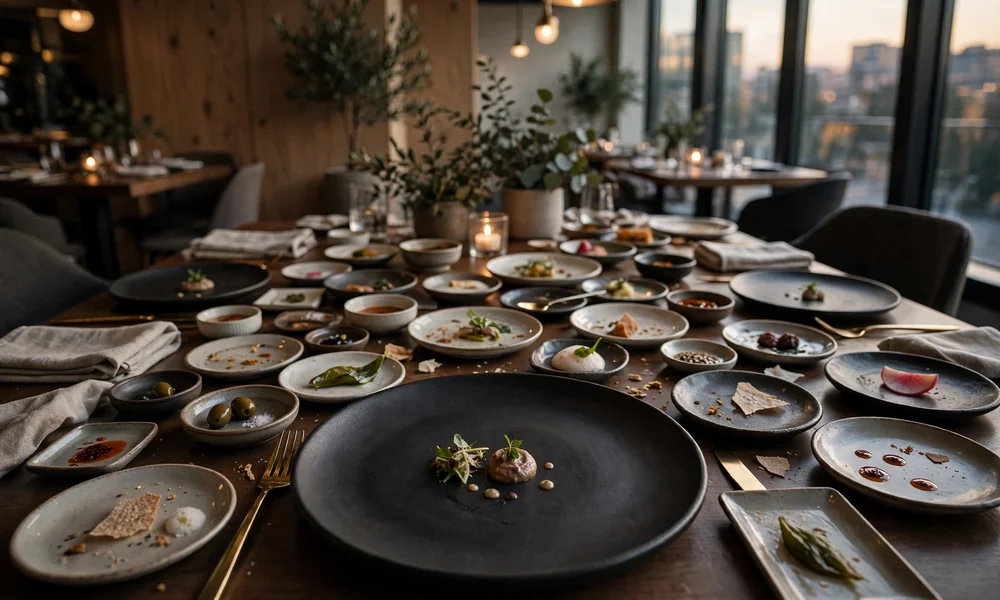
The tasting menu was once a showcase: a chef’s best ideas, in sequence, at a fair price. Today it is often a way to charge a premium for very little food. Seven courses arrive, each a mouthful or two, and the bill lands near the cost of a weekly shop. You leave hungry, slightly annoyed, and quietly ordering a takeaway on the way home.
Small plates are not the enemy, and sharing dishes with friends is one of the great pleasures of eating out. The trouble is proportion. When a plate is mostly empty space, or a main course fits on a side plate, the restaurant is selling presentation instead of dinner. Hunger is not a style choice.
The tasting-menu trap
The classic trap is the set menu with no alternatives: you pay in advance, eat what you are given, and the meal stretches past three hours with long gaps between courses. Some of these menus are genuinely brilliant, and fine dining can still be worth the money when the cooking justifies the price. The warning sign is a menu that hides its prices, portion sizes and length behind vague poetry about seasons and journeys. If a restaurant will not tell you plainly what you are paying for, the answer would probably put you off.
When small stops being elegant
Elegance has a limit, somewhere around the third course that amounts to a single scallop and a smear of sauce. A good kitchen feeds you — perhaps beautifully, with small precise dishes that build into something satisfying — but the total must add up to a meal. Ask yourself before booking: would you be happy with this amount of food at home? If not, the candles and ceramics will not save it.
Menus That Read Like Novels
A menu should help you choose dinner, not test your patience. Yet the overlong menu is everywhere: ten pages of starters, mains from four cuisines, a drinks list longer than the food list, and specials recited from memory at speed. It looks like abundance, but it means the kitchen is spread thin, ingredients sit around unused, and nothing gets the attention it deserves.
A short menu is a sign of confidence: the kitchen knows what it does well and buys the ingredients to do it properly. A long menu says the opposite, and it shows: sauces from jars, frozen chips, dishes that taste assembled rather than cooked. Menus that try to do everything usually do nothing well, and the longer the menu, the more likely your dish was an afterthought.
There is also the cost of deciding: a table that spends twenty minutes negotiating a novel-length menu has started its evening tired. Good restaurants edit. They pick a lane, cook it properly, and let you get on with the enjoyable part — eating.
Noise, Darkness and Other Atmosphere Failures
Atmosphere should support the meal, not compete with it. The worst trends in this category all make the same mistake: they treat discomfort as character. A dining room can be moody without making you squint at your plate, and lively without making conversation impossible.
Dining in the dark
Dim lighting is romantic until you cannot read the menu, see what you are eating, or tell whether your steak is rare or raw. Restaurants that lean on candlelight alone are asking your phone torch to do their lighting designer’s work. If you need to photograph your food with a flash to see it, the room has failed at its most basic job.
Music you have to shout over
Loud music is the other half of the same problem. A playlist at conversation volume adds energy; at nightclub volume it ends conversation altogether. You should not have to lean across the table and repeat yourself three times to order dessert. When the staff are shouting too, the restaurant has chosen a soundtrack over its customers.
Theatrics That Get in the Way of Dinner
A little theatre can be delightful — a dish finished at the table, a chef showing off a signature plate. The problem arrives when the show becomes the point and the food becomes a prop. Smoke machines, sparklers, dry ice and edible glitter make for a good photograph and a forgettable meal.
Smoke, sparklers and tableside shows
Tableside theatre has its place, but it should never delay your food or dominate your evening. When every dish arrives with a performance, the meal slows to a crawl and the food cools while the waiter explains it. One flourish is charming. Ten is a dinner service held hostage by its own gimmicks.
Food designed for cameras, not mouths
The most damaging trend is food designed to be photographed rather than eaten. Dishes are built tall and unstable, sauces are painted on, and ingredients are chosen for colour rather than flavour. Like the travel hype that promises more than it delivers, a restaurant built on spectacle can fill its tables for a season and empty them just as fast. Diners arrive with expectations set by filtered photos, eat something that looks better than it tastes, and never return.
The Hidden Costs and Awkward Rules
Some trends do not ruin the food; they ruin the bill. Compulsory service charges, card surcharges, water at a markup, and bread you did not order but are charged for anyway all add up to one feeling: you were not told the real price until it was too late.
Rigid rules belong in the same category. A two-hour table limit is fair when explained at booking, not when it appears as a surprise halfway through your main course. No-substitution policies, no-sharing rules and set menus that ignore allergies all send the same message: the system matters more than the people sitting in it.
| Trend | What it costs you | A better choice |
|---|---|---|
| Tiny tasting portions | Hunger after a three-figure bill | Menus with clear, filling courses |
| Twenty-page menus | Stale ingredients and dull cooking | Short menus the kitchen owns |
| Dining in darkness | Food you cannot see or enjoy | Warm light you can read by |
| Tableside theatre | Cold food and a slow evening | One flourish, then dinner |
| Hidden charges | A bill far above the menu price | Clear pricing before you order |
Service Trends That Wear Diners Out
Service should feel effortless, which is why bad service trends are so tiring: they make the diner do the restaurant’s work — scanning codes, ordering on phones, flagging down staff, guessing how much to tip on a screen that starts at twenty-five percent. Technology can improve a meal, but only when it helps people rather than replacing them.
The rushed table turn
Your starter is cleared before you have finished it, the main arrives while you are still talking about the first course, and the dessert menu appears with the unspoken message that your time is up. Restaurants need to seat a second sitting, but a meal should never feel like a relay race. If you feel hurried, you will not relax — and if you do not relax, you will not enjoy the food.
Tipping confusion
Tipping has become a maze: suggested amounts climb higher, screens present preset percentages before you have seen the bill, and service charges appear on top of tips you have already added. Most diners happily reward good service. The confusion comes when the system makes it hard to tell what is a tip, what is a charge, and who receives it. Clear, honest tipping is one of the clearest signs a restaurant respects its customers.
How to Spot a Bad Trend Before You Book
Most of these trends leave clues before you ever sit down, and a few minutes of checking can save you an evening and a sizeable bill. Read recent reviews, look at photos taken by diners rather than the restaurant’s own shots, and check the menu for prices and set-menu rules. A restaurant proud of its food will show it plainly. One that hides behind theatre has a reason.
A quick checklist before you book
- Check the menu online and confirm prices are listed clearly.
- Read recent diner photos to see real portion sizes.
- Look for reviews that mention noise, lighting or rushed service.
- Confirm the table time limit and any set-menu rules before booking.
- Ask about allergies and substitutions rather than assuming flexibility.
- Trust a short menu over a long one that promises everything.
Frequently Asked Questions
What is the worst restaurant trend right now?
Tiny portions at premium prices cause the most complaints — disappointment plus a large bill. Overlong menus and rooms too dark or too loud are close behind; all three put style ahead of the meal.
Are tasting menus always a bad idea?
No. A good tasting menu from a confident kitchen can be one of the best meals you will ever have. Watch for hidden prices, no alternatives, and a meal stretching past three hours with long gaps between very small courses.
Why do so many restaurants have huge menus?
Long menus try to please everyone, but they spread a kitchen thin and waste ingredients. A short menu lets a kitchen buy better produce, cook each dish properly, and keep quality consistent.
Is it rude to complain about loud music or dim lighting?
Not at all. A polite word to the staff is useful feedback, and a good restaurant will adjust what it can. If nothing changes, vote with your feet and choose somewhere else next time.
How can I tell if a restaurant is style over substance?
Look at diner photos rather than professional ones, and read reviews that describe the food. If every review talks about the decor but nobody mentions a dish they loved, the restaurant is selling an experience, not a meal.
Should I avoid trendy restaurants altogether?
Not at all. Many trends start as genuine improvements, and a fashionable restaurant can serve superb food. The trick is separating trends that help the diner from ones that only help the restaurant’s social media feed.
The bottom line: the worst restaurant trends all make the same trade, swapping a good meal for a good photograph, a long menu or a bigger bill. Skip the restaurants that ask you to pay more for less, eat in the dark, or applaud the theatre instead of the cooking. Choose the places that feed you well and let the food do the talking — they are still out there, and they are worth finding.