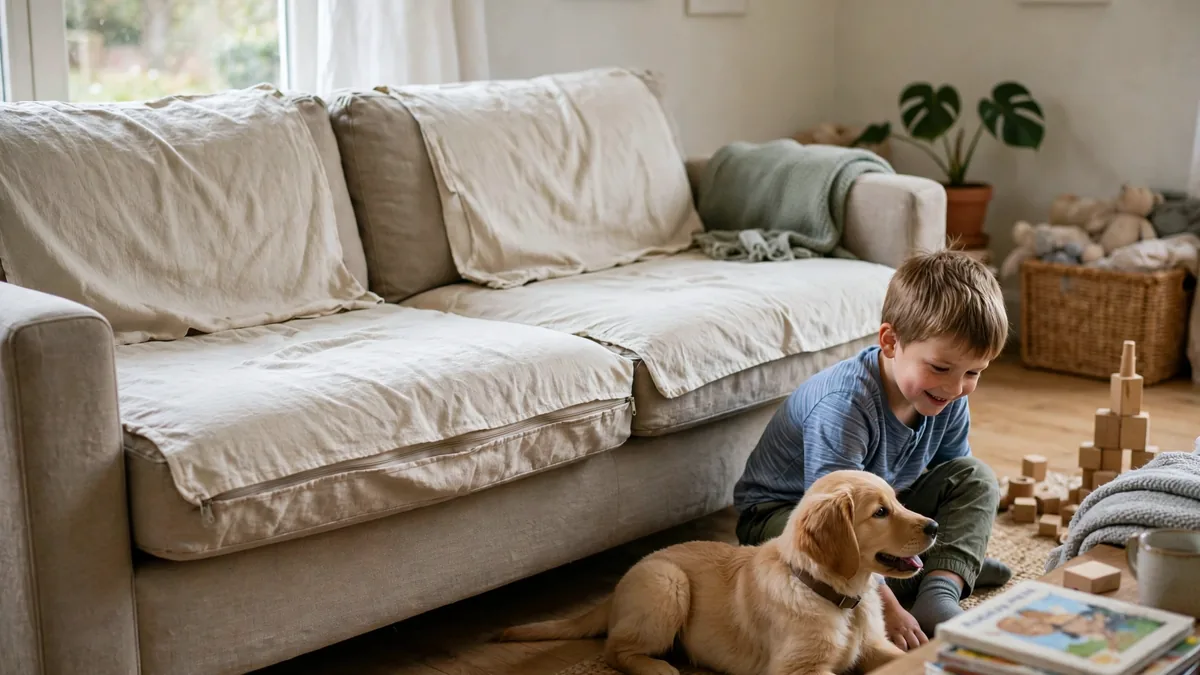
A sofa in a house with kids and pets takes a beating no other furniture has to survive: juice on the seat cushions, muddy paws on the back cushions, felt-tip pens in places no one can explain. Cushion covers are the reason a sofa like that can still look good after three years instead of looking ready for the tip. A removable, washable cover turns a stain from a disaster into a laundry load, and it lets you change the look of a room for the price of a set of covers.
The trick is buying covers built for real life. Most look the same in a photograph, but the ones that survive kids and pets share a few traits: a tight, hard-wearing weave, a proper zip, a fabric that washes without shrinking or fading, and a fit snug enough not to slide off. This guide explains what a cushion cover really is, which fabrics last, how zips and fit work, how to wash covers without ruining them, and how indoor and outdoor covers differ.
Key Takeaways
- Buy removable zip covers, not sewn-on upholstery: a cover you can take off and wash is the only kind that survives.
- Tight-weave cotton canvas, performance polyester, and outdoor acrylic are the toughest fabrics; loose weaves snag on claws.
- A hidden zip running most of the way along the back keeps the cover snug and stops it sliding off.
- Measure the cushion, not the sofa, and buy the cover one or two centimetres smaller for a smooth, tight fit.
- Keep a spare set: one on the sofa and one in the wash means a spill never leaves a bare cushion.
Cushion Cover Fabrics Compared
| Fabric | Washability | Stain resistance | Pet-claw resistance |
|---|---|---|---|
| Cotton canvas | Machine wash, cold | Good | Good |
| Performance polyester | Machine wash, cold | Excellent | Very good |
| Outdoor acrylic | Hose or machine wash | Excellent | Very good |
| Linen blend | Machine wash, gentle | Fair | Fair, looser weave |
| Velvet | Often dry-clean only | Poor | Poor, claws catch the pile |
What Counts as a Cushion Cover
A cushion cover is the removable fabric case over a single sofa or chair cushion, usually a seat or back cushion, closed with a zip along one edge. It is not a throw pillow, a separate decorative cushion with its own filling, and it is not a pillowcase, the case for the pillow you sleep on. It is also different from a slipcover, which covers a whole sofa in one piece and is a bigger job to take off and wash. Cushion covers are the smallest practical unit of washable upholstery: one cover, one cushion, one wash.
That distinction matters when you shop, because the words get mixed up online. A listing that says cushion cover but shows a throw pillow is selling decoration, not protection. Look for the zip, the measurements, and the words seat cushion or back cushion. If it asks for the length, width, and depth of your cushion, it is a real cushion cover, sold to fit a specific cushion rather than one-size-fits-all.
The Fabrics That Survive Kids and Pets
Performance polyester is the safest all-round choice for a busy house. It is woven tightly, so crumbs sit on the surface, and most performance fabrics carry a stain-resistant treatment that buys time to blot a spill before it sets. It washes cold without shrinking, dries quickly, and keeps its colour after dozens of washes. Cheap polyester can feel slick, so look for a brushed or textured finish that feels more like cotton.
Cotton canvas and outdoor acrylic
Cotton canvas is the toughest natural fabric: a heavy canvas resists claws, washes well, and softens with every wash instead of wearing out. It stains more easily than treated polyester, so pre-treat spills quickly. Outdoor acrylic is the toughest of all: it shrugs off sun, rain, and mud, and most outdoor covers can be hosed down outside. Indoors it feels stiffer, but for a garden room, a conservatory, or a sofa by the back door, it is hard to beat.
What to skip
Linen looks beautiful but creases, stains set fast, and a loose weave catches on claws. Velvet is worse: it marks with every touch, shows every paw print, and is usually dry-clean only, which defeats the point of a washable cover. The rule is simple: if the care label says dry-clean only, it is not a cover for real life.
Zips, Seams and Fit
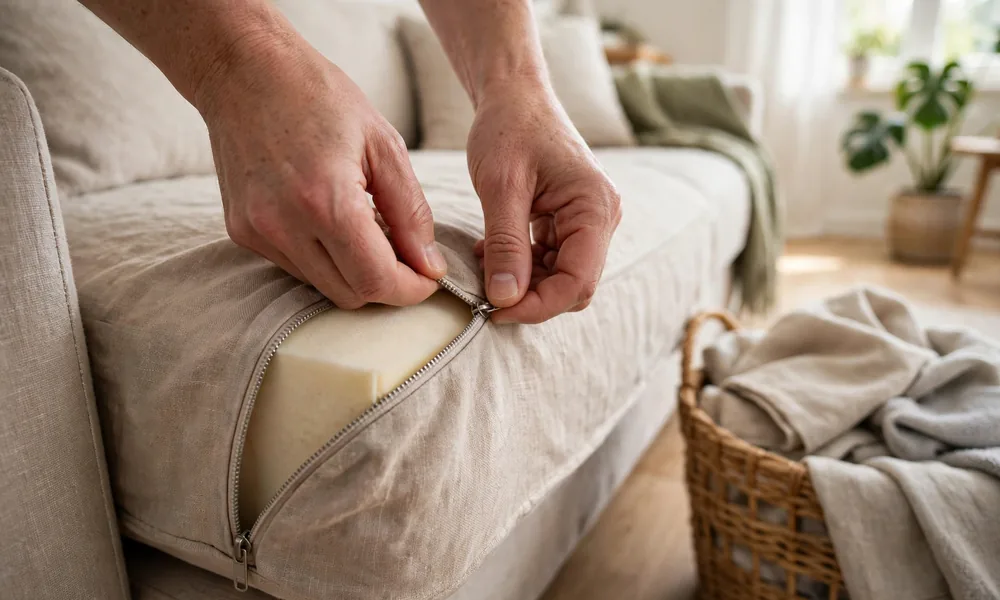
The zip is the part that fails first on a cheap cover, so it deserves as much attention as the fabric. A good cover has a hidden zip running most of the way along the back edge, with a metal or heavy-duty plastic pull that does not snag. A short zip makes the cover hard to get on and off, and the fabric tears at the opening after a few washes. An envelope closure, where the fabric overlaps at the back with no zip, is cheaper but gapes open when someone sits down and lets crumbs and pet hair inside.
Fit is measured on the cushion, not the sofa. Take the cushion out, measure its length, width, and depth, and buy a cover one or two centimetres smaller in each direction. A slightly smaller cover stretches smooth and stays put; one the same size or larger bags, wrinkles, and slides off every time someone stands up. Piping around the edge holds the shape, stops the seams rolling, and makes the cushion look tailored. Our guide to Best Sectional Sofas for Big Living Rooms in 2026 covers sofas with loose back cushions, the easiest to fit with covers, and the same habit applies to any sofa: measure the cushion, not the frame.
Washing Without Ruining Them
Most good covers wash at thirty degrees on a gentle cycle. Turn the cover inside out, close the zip, and wash with similar colours; an open zip catches on other fabrics and can tear the cover. Skip fabric softener, which dulls stain-resistant treatments, and skip the tumble dryer, which shrinks cotton and warps polyester. Air dry flat or on the line, and put the cover back on while still very slightly damp: it stretches smooth as it dries.
For stains, speed matters more than products. Blot, never rub, and rinse a fresh stain under cold water before it sets. Bicarbonate of soda paste lifts most food stains, and a dedicated stain remover handles the rest. For pet smells, a cup of white vinegar in the wash works better than scented detergent, which only masks the smell. If a stain has set, an upholstery cleaner can save the cover, and our guide to How to Pick an Upholstery Cleaner That Lifts Stains in 2026 explains which type suits which fabric. Keep a spare set, so one set is always on the sofa while the other is in the wash.
Indoor Covers vs Outdoor Covers
Outdoor cushion covers live a harder life and are built for it. They are usually solution-dyed acrylic, so the colour runs through the fibre and does not fade in the sun, and they resist water, mildew, and mud. Indoor covers are softer but fade in a sunny window and go musty if they stay damp. The two are not interchangeable: an indoor cover left outside for a summer will fade and mildew, and an outdoor cover used indoors feels stiff.
If your sofa sits in a garden room, a conservatory, or near a back door that is always open, outdoor covers are the better choice even indoors. Our guide to Outdoor Cushions That Stay Comfortable All Summer in 2026 covers the cushions themselves, and the same logic applies: buy for the conditions the cushion actually lives in. For a normal living room, performance polyester or cotton canvas is the right balance.
Colour and Pattern That Hide Real Life
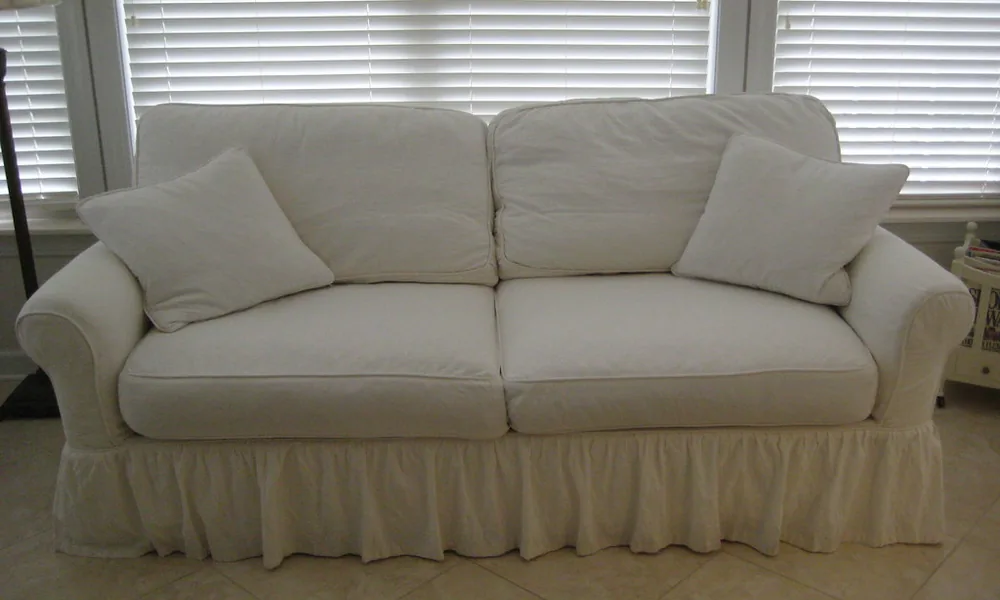
Colour is a practical choice, not just a style choice. Mid-tones hide more than either extreme: mid-grey, warm beige, or muted green shows less pet hair than black and fewer crumbs than white. Match the cover to the pet, not to the paint: a pale cover shows every hair from a light-furred dog, and a dark cover does the same for a dark-haired one. Pattern helps more than colour: a small check, a subtle stripe, or a textured weave breaks up stains and hair, while a plain flat fabric shows everything.
What to Avoid
A few mistakes waste money. Dry-clean-only covers are the biggest: a cover you cannot wash is not a cover for kids and pets. Loose, open weaves catch on claws and trap crumbs, so run a fingernail across the fabric in the shop; if it snags, a claw will snag it too. Cheap zips break within a year, and a cover with a broken zip is useless. One-size-fits-all covers rarely fit anything well, and a baggy cover slides off and looks worse than no cover at all. Do not buy a full set before testing one cover: wash it twice, let the kids and the dog at it for a week, then buy the rest.
Checklist: Before You Buy Cushion Covers
- Choose a removable zip cover, not sewn-on upholstery, with a zip running most of the way along the back.
- Pick a tight weave: performance polyester, cotton canvas, or outdoor acrylic, and skip dry-clean-only fabrics.
- Measure the cushion itself, and buy the cover one or two centimetres smaller for a snug, smooth fit.
- Check the care label: machine wash cold, no softener, air dry, or the cover will not survive real life.
- Buy a spare set, so one set is on the sofa while the other is in the wash.
- Test one cover first: wash it twice and let the kids and pets at it before buying the set.
Frequently Asked Questions
Are cushion covers the same as throw pillow covers?
No. A cushion cover fits over a sofa or chair seat or back cushion, usually with a zip, and is sized to that cushion. A throw pillow cover fits a separate decorative pillow, and is usually square and sold by the pillow size.
Can I put cushion covers in the washing machine?
Yes, if the care label allows it. Most cotton canvas, performance polyester, and outdoor acrylic covers wash at thirty degrees on a gentle cycle. Turn the cover inside out, close the zip, skip softener, and air dry rather than tumble drying.
How do I stop cushion covers sliding off?
Buy the cover one or two centimetres smaller than the cushion, so it stretches smooth and grips. A long hidden zip and piping around the edge also help hold the shape.
What fabric is best for homes with dogs?
Tight-weave performance polyester or outdoor acrylic: both resist claws, wash well, and hold their colour. Avoid velvet, which catches claws and marks easily, and loose linen weaves, which snag. Match the colour to the dog’s fur so hair shows less.
How often should I wash cushion covers?
Every two to four weeks in a house with kids and pets, and straight away after a spill. A spare set makes this easy: one set on the sofa, one in the wash. Covers washed regularly last longer than covers left until visibly dirty.
Can I use outdoor cushion covers indoors?
Yes, especially in a garden room, conservatory, or by a back door. Outdoor acrylic covers are tougher and fade-proof, though stiffer than indoor fabrics. For a normal living room, performance polyester or cotton canvas is more comfortable.
The Bottom Line
Cushion covers are the cheapest way to keep a sofa looking good in a house with kids and pets. Buy removable zip covers in a tight-weave, washable fabric, measure the cushion rather than the sofa, keep a spare set, and test one cover before buying the rest, and a spilled drink becomes a laundry load instead of a ruined sofa.


