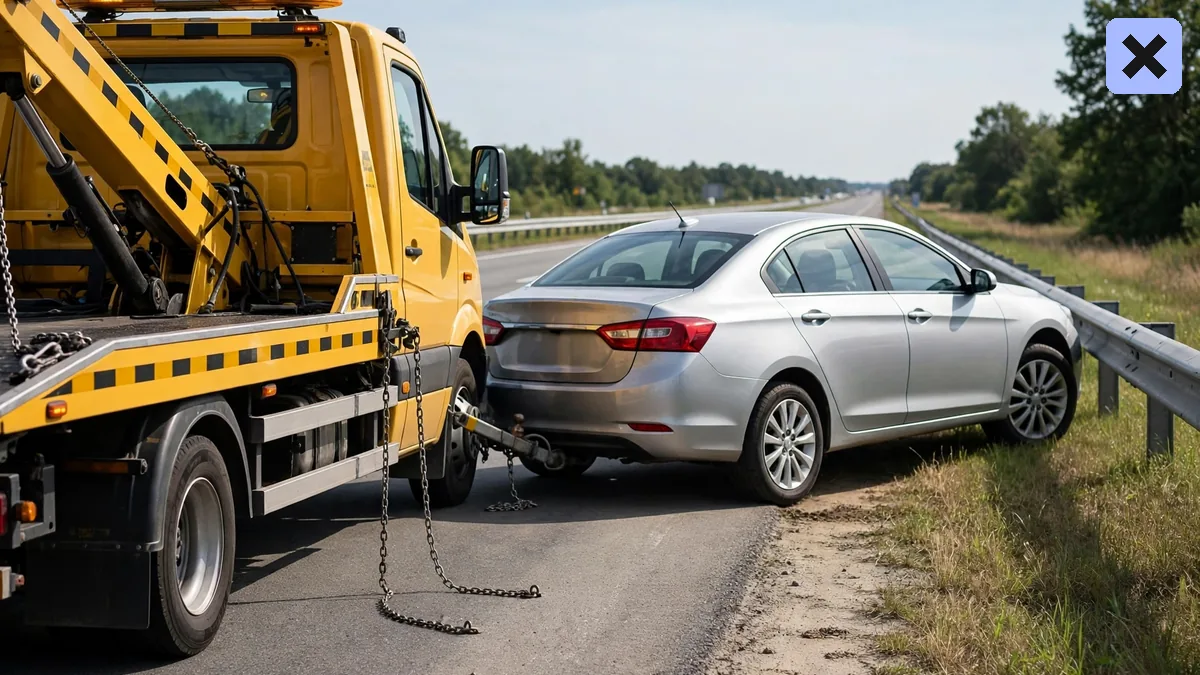
Towing looks simple from the driver’s seat. You hitch the trailer, pull away slowly, and the load follows you down the road. The worst towing mistakes drivers make rarely feel like mistakes at the time. They feel like shortcuts or small guesses. Then a trailer sways at motorway speed, a hitch lets go on a hill, or a transmission overheats far from home.
The problem is that towing punishes things drivers normally get away with. A little extra weight, a loose coupling, or a few extra miles per hour would not matter in an empty car. Behind a trailer, each one changes how the vehicle steers, brakes, and balances. The margin for error shrinks with every kilogram on the hitch.
This guide covers the worst towing mistakes in the order drivers make them, from loading the trailer to pulling away without a final check. Each one is avoidable, and most cost nothing to fix. What they cost when they go wrong is a damaged car, a wrecked trailer, or a dangerous moment on a busy road.
Key takeaways
- Never guess your weights. Know the trailer weight, the tongue weight, and your vehicle’s towing and payload limits before every trip.
- Check the hitch, the ball size, the coupler lock, and both safety chains every single time, even on a short tow.
- Keep tongue weight at roughly ten to fifteen percent of the loaded trailer weight to stop sway before it starts.
- Slow down, leave a much longer braking distance, and never tow in overdrive on hills.
- Flat towing, tow dollies, and electric vehicles each have their own rules. The wrong method can destroy a transmission in a single trip.
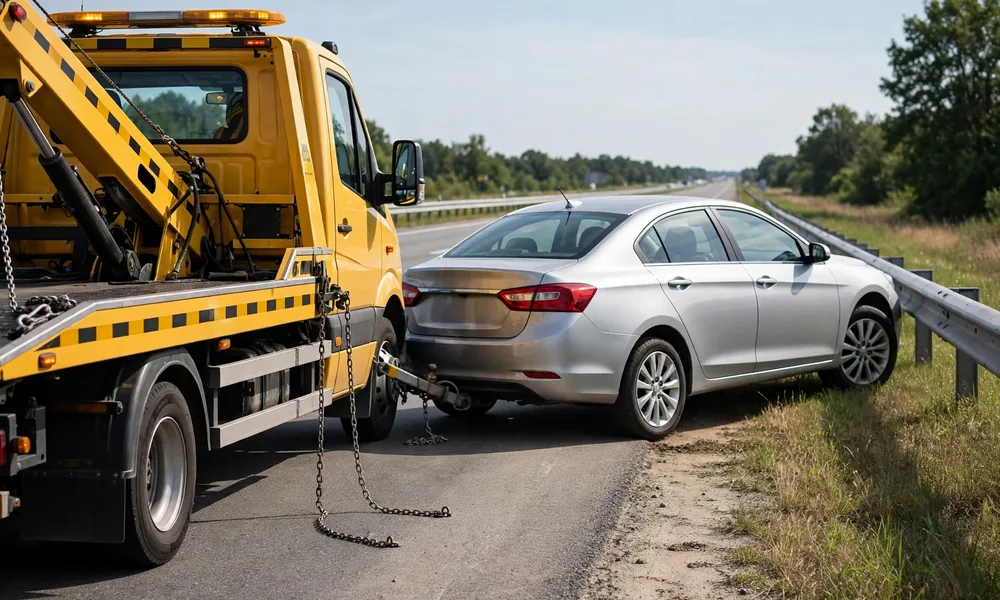
Why Towing Goes Wrong So Often
Most towing failures are not caused by faulty equipment. They are caused by confident drivers using equipment they have not checked, on a vehicle they have not weighed, at a speed they have not adjusted. The trailer pushes the tow vehicle when braking and pulls it sideways in crosswinds.
Overloading the Trailer and the Tow Vehicle
Overloading is the most common and the most expensive towing mistake. Every vehicle has a maximum towing capacity, a maximum payload, and a maximum combined weight for vehicle and trailer together. Exceed any one of them and the brakes, suspension, tyres, and transmission all work beyond what they were built to handle.
Guessing the Trailer Weight
Drivers usually know what their trailer weighs empty. They rarely know what it weighs loaded. A boat trailer gains the boat, fuel, and gear. A box trailer gains furniture and tools that seemed light one at a time. A caravan gains water, gas bottles, and food. The total can easily be hundreds of kilograms more than imagined, so weigh the loaded trailer at a public weighbridge or add up the load honestly.
Ignoring Payload Limits
Towing capacity gets all the attention, but payload is the limit drivers break first. Payload is everything the vehicle itself carries: passengers, luggage, fuel, the tow bar, and the downward weight of the trailer on the hitch.
Getting Tongue Weight Wrong
Tongue weight is the downward force the trailer puts on the hitch, and it should be roughly ten to fifteen percent of the loaded trailer weight. Too little is the classic cause of trailer sway: the trailer starts to wag, the wag grows with speed, and at some point the driver can no longer correct it. Too much overloads the rear axle and lifts the front wheels. Heavy items belong low and just ahead of the trailer axle, never piled at the back,
Hitching Up Wrong
The hitch is the only thing connecting the trailer to the vehicle, and it is the part drivers rush most. A proper hitch check takes two minutes. Skipping it can end a trip in seconds, usually at the worst moment: pulling away from a junction or climbing a hill.
Using the Wrong Ball Size
Trailer couplers and tow balls come in different sizes, and a coupler that looks seated on the wrong ball is not seated at all. A two-inch coupler on a smaller ball can pop off over a bump, leaving the trailer to run free on its safety chains or into traffic. Match the coupler size stamped on the trailer to the ball size stamped on the tow bar, and never assume the last person who used the trailer got it right.
Skipping the Coupler Lock and the Chains
A coupler lowered onto the ball but never locked is held in place by gravity alone. The first sharp bump can lift it clear. Lock the latch, fit the safety pin, then try to lift the coupler off the ball by hand. Safety chains are the backup plan, but only if fitted correctly: cross them under the coupler in an X shape
Forgetting the Lights and Brakes
Trailer lights are easy to ignore in daylight and impossible to ignore after a rear-end collision. Check every light before every trip: indicators, brake lights, tail lights, and number plate light. A corroded plug or blown fuse is a five-minute fix at home and a serious hazard on the road. If the trailer has its own brakes, test the breakaway cable and the brake controller, and set the controller for the loaded weight rather than the empty weight.
Driving Like the Trailer Is Not There
The driving mistakes are just as dangerous as the loading mistakes, and harder to spot because the driver feels in control right up until the moment they are not. A loaded trailer changes stopping distances, turning circles, and stability, and the driver has to change with it. Drivers who want to understand how everyday habits quietly wear a car out should read our guide to the worst driving habits that wear your car out before their next tow.
Driving Too Fast and Following Too Closely
Speed is the great multiplier of towing problems. Sway that is a gentle wobble at fifty miles per hour becomes a violent fishtail at seventy. Braking distances grow longer, tyres run hotter, and a crosswind gust that would barely move an empty car can push a tall trailer sideways. Most trailers and trailer tyres have a maximum rated speed, often lower than the motorway limit.
Towing in Overdrive on Hills
Automatic gearboxes love to shift into overdrive for fuel economy, but overdrive is the worst gear for towing on hills. The gearbox hunts between gears, the torque converter overheats, and the transmission fluid breaks down. On long climbs, lock out overdrive, select a lower gear, and let the engine rev.
Towing a Vehicle the Wrong Way
Towing another car is where the most expensive mistakes hide, because the damage is invisible until the car is driven again. Flat towing, dolly towing, and trailer towing are three different methods with three different rules, and using the wrong one can destroy a transmission or a transfer case in a single journey.
Flat Towing Without Checking the Manual
Flat towing means pulling a car with all four wheels on the ground, and many modern cars simply cannot be flat towed. Automatic transmissions rely on the engine running to circulate fluid and lubricate the gearbox. Towing one with the engine off starves the gearbox of lubrication, and the damage builds silently with every mile. The owner’s manual is the only authority that matters.
Electric Vehicles and Towing
Electric cars can tow well but towing hits them harder than it hits a petrol or diesel car. Range can fall by a third or even a half with a heavy trailer, and the charging stops that follow are longer and harder to plan. Our guide to the worst electric cars for road trips looks at the models that struggle most when the journey gets long, and towing is a big part of why they struggle.
What Towing Damage Really Costs
Towing mistakes are expensive because the damage is rarely limited to one part. A swaying trailer stresses the hitch, the tow bar mounts, the trailer frame, and the tyres.
| Mistake | Typical damage | Typical repair cost |
|---|---|---|
| Trailer sway from low tongue weight | Bent hitch, damaged trailer frame, collision | High, often a write-off |
| Overloading the tow vehicle | Worn suspension, overheated brakes, tyre failure | Moderate to high |
| Flat towing the wrong car | Destroyed transmission or transfer case | Very high |
| Towing in overdrive on hills | Burnt transmission fluid, gearbox failure | High |
| Hitch failure from a loose coupler | Runaway trailer, collision, liability | Very high |
| Ignoring trailer brakes | Overheated tow vehicle brakes, longer stops | Moderate to high |
The other cost is insurance. Many drivers discover after an accident that their policy does not cover what they assumed. Towing damage to the trailer, damage caused by overloading, and damage to a car towed incorrectly can all fall outside a standard policy The gaps are easy to miss until a claim is refused, which is why it is worth reading our guide to the worst car insurance mistakes and checking exactly what your cover includes before you tow anything valuable.
The Pre-Tow Checklist
A checklist sounds dull until it saves a trip. Run through these six items every time you tow, even on a short journey, and do it in the same order so nothing gets skipped.
- Weights checked: trailer weight, tongue weight, payload, and towing capacity all within limits.
- Hitch secure: correct ball size, coupler locked and pinned, safety chains crossed and clipped.
- Lights and brakes: all trailer lights working, brake controller set, breakaway cable attached.
- Tyres and wheels: pressures checked on tow vehicle and trailer, wheel nuts tight, spare present.
- Load balanced: heavy items low and ahead of the axle, load strapped down, nothing loose.
- Vehicle ready: mirrors adjusted for the trailer, parking brake off, steering unlocked, route planned.
Frequently Asked Questions
What is the most common towing mistake?
Overloading, usually from guessing the trailer weight instead of weighing it. Drivers know the empty weight and forget to add the load, the water, the fuel, and the gear.
How much tongue weight do I need?
Roughly ten to fifteen percent of the loaded trailer weight. For a 1,500-kilogram trailer, that means 150 to 225 kilograms on the hitch. Too little causes sway, and too much overloads the rear axle. A tongue weight scale gives an exact answer in under a minute.
Can I tow in overdrive?
You can on flat ground at a steady speed with a light trailer, but lock out overdrive on hills, in headwinds, or with a heavy load. If the gearbox keeps shifting up and down, the transmission is overheating.
Why does my trailer sway?
Usually too little tongue weight, a load placed too far back, or driving too fast. Slow down gently without braking hard, keep the steering steady, and stop as soon as it is safe to reload with more weight forward.
Can any car be flat towed?
No. Many modern cars, especially automatics and all-wheel-drive models, cannot be flat towed at all. Towing one with the engine off can destroy the transmission because the gearbox receives no lubrication. Always check the owner’s manual for your exact model first.
Does towing damage my car?
Towing within the rated limits, with the right hitch and the right driving style, causes only normal wear. Towing overloaded, too fast, or with the wrong setup damages the transmission, brakes, suspension, and tyres, and the damage can appear months after the trip.
The Bottom Line
The worst towing mistakes drivers make are not complicated. They are ordinary oversights: an unweighed trailer, an unlocked coupler, a guessed tongue weight, a speed that felt fine until the trailer started to sway. Every one of them is fixed by slowing down, checking the numbers, and treating the trailer as part of the vehicle rather than something that simply follows it.