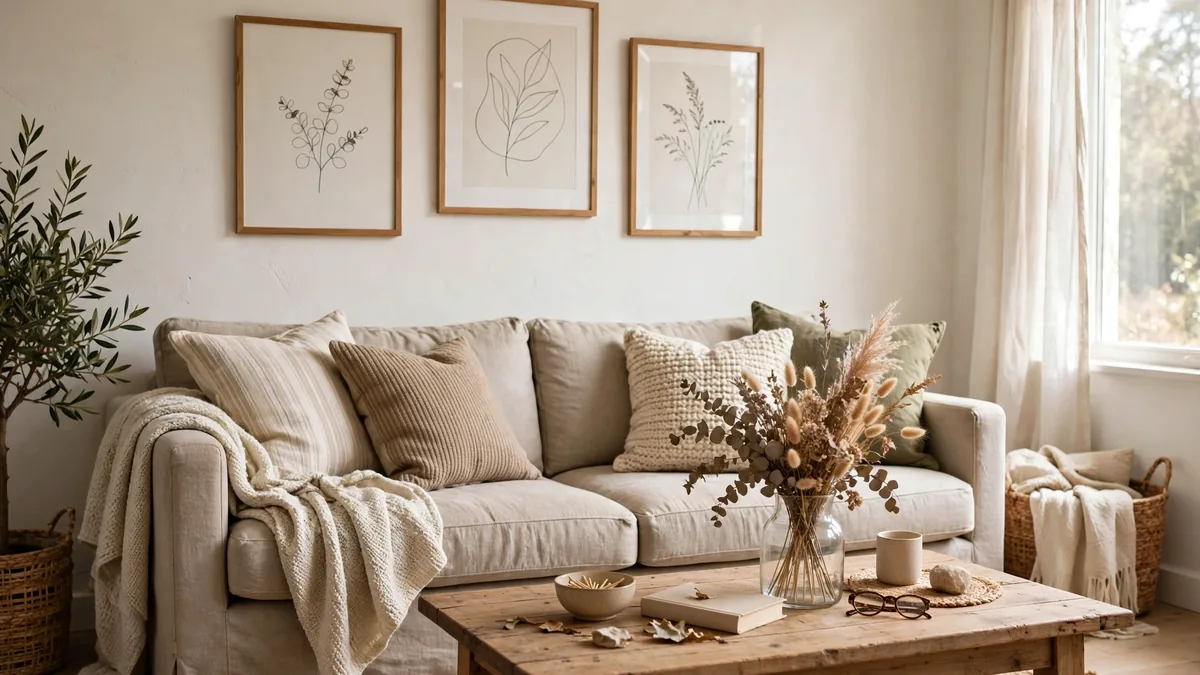
Blanket ladders are the simplest fix for the pile of throws that lives on the arm of the sofa. A leaning ladder gives every blanket a home, keeps throws off the floor, and turns a messy stack into something that looks intentional. The best blanket ladders do all of that without drilling a single hole, and they cost far less than a new storage unit. This guide covers the types worth buying, the sizes that fit real rooms, and the small details that separate a sturdy ladder from a wobbly decoration.
A blanket ladder is a tall, narrow ladder that leans against a wall, with rungs for draping folded throws, quilts, and even towels. Most stand between 150 and 180 centimetres tall and about 45 to 60 centimetres wide, which is enough for four or five throws without blocking a whole wall. Nothing is fixed in place, so you can move one in seconds.
Key Takeaways
- Measure first: a ladder 150 to 180 centimetres tall and 45 to 60 centimetres wide suits most living rooms and bedrooms.
- Solid wood is the safest all-round choice, while metal suits modern rooms and bamboo suits light, airy spaces.
- Rungs should sit 25 to 30 centimetres apart so folded throws hang without bunching or dragging on the floor.
- Check stability before you buy: wide feet, a gentle lean angle, and rubber pads stop slipping on hard floors.
- One ladder holds four or five throws comfortably; keep a spare basket nearby for the overflow.
Why a Blanket Ladder Earns Its Place
Throws are awkward to store. Folded in a cupboard, they are forgotten. Draped over the sofa arm, they slide off. Stuffed in a basket, the one at the bottom never sees daylight. A ladder solves the problem by keeping blankets visible, aired, and within reach. Grabbing one takes no more effort than reaching out.
There is a decorating payoff too. A ladder adds height to a flat wall and brings in a natural material that softens a room full of screens and hard edges. The throws themselves become the colour: swap a rust throw for a sage one in spring and the whole corner changes without buying anything new.

The Main Types of Blanket Ladder
Solid wood ladders
Wood is the classic choice and still the best for most homes. Pine is light and affordable, and it suits farmhouse and Scandinavian rooms. Oak and walnut cost more but feel heavier and more substantial, and their grain looks better with age. A well-made ladder has rungs fixed with dowels or screws rather than glue alone, and the wood is sanded smooth so it cannot snag a knit throw.
Metal ladders
Metal ladders suit modern and industrial rooms. Black steel frames look sharp against white walls, and brass or gold finishes warm up a minimalist space. Metal is easy to wipe clean and will not warp in a damp room, which makes it a good pick for a bathroom where the ladder holds towels instead of throws. Bare metal feels cold in winter, and thin tubing can flex, so look for a frame at least 20 millimetres thick with welded joints.
Bamboo and rattan ladders
Bamboo ladders are the lightest option and the easiest to move. They suit coastal, boho, and airy rooms, and their pale colour keeps a small room feeling open. Rattan adds texture but needs more care, since its wrapped joints can loosen over time. Neither is as strong as solid wood, so they are best for lighter throws rather than heavy quilts.
Folding and freestanding ladders
Some ladders fold flat for storage, which is handy in a small flat or a guest room that changes use. Others are freestanding A-frames that stand away from the wall, giving you two sides of rungs instead of one. A-frames hold more blankets but take up more floor space, so they suit larger rooms.
What to Look for Before You Buy
Height comes first. A ladder that is too short looks lost against a tall wall, while one that is too tall can crowd a low ceiling. Measure your wall, then choose a ladder that leaves at least 15 centimetres of breathing room at the top. Wider than 60 centimetres dominates a small room; narrower than 40 centimetres looks spindly.
Rung spacing decides how the blankets hang. Rungs 25 to 30 centimetres apart let a folded throw drape naturally with a clean fold at the top. Rungs closer together look cluttered and make it hard to pull one blanket out without disturbing the rest. Five rungs suits most households; four rungs is enough for a bedroom.
Stability is the test most buyers skip. A ladder should lean at a gentle angle, roughly 70 to 75 degrees to the floor, with its feet sitting flat. Rubber or felt pads under the feet stop it sliding on wood or tile, and they protect the floor from scratches. Give the ladder a firm push from the side: it should not rock, and the rungs should not twist. Check the finish too: a smooth, sealed surface will not catch on knit throws.
Blanket Ladders Compared
| Type | Best for | Weight | Typical price | Watch out for |
|---|---|---|---|---|
| Solid wood | Most homes, farmhouse style | Heavy | Mid | Rough finish snagging knits |
| Metal | Modern and industrial rooms | Medium | Mid to high | Thin tubing flexing under weight |
| Bamboo | Light, airy, coastal rooms | Light | Low to mid | Less strength for heavy quilts |
| Rattan | Boho and textured rooms | Light | Mid | Wrapped joints loosening |
| Folding | Small flats, guest rooms | Light to medium | Low to mid | Hinges wearing with daily use |
| A-frame | Large rooms, big collections | Heavy | High | Takes up more floor space |
The Best Blanket Ladders in 2026
Best overall: the solid pine ladder. For most homes, a five-rung pine ladder is the right answer. It is light enough to move, strong enough for heavy wool throws, and cheap enough to replace without regret. Choose one with smooth, sealed rungs and rubber feet, and it will last for years.
Best budget pick: the folding bamboo ladder. If you want the look for the least money, bamboo is hard to beat. A folding model costs less than a solid wood one, weighs almost nothing, and folds flat when guests need the floor. It suits lighter throws best.
Best rustic pick: the reclaimed wood ladder. A ladder made from old timber has a texture no new wood can match, and each one looks slightly different. Check the wood is cleaned and sealed and the rungs firmly fixed, since old timber can snag a knit.
Best modern pick: the black metal ladder. A slim black steel ladder looks at home in a modern living room, especially against a pale wall. It is easy to clean, will not warp, and pairs well with grey and neutral throws. Choose welded joints and a matte finish, since glossy metal shows every mark.
Best for small rooms: the narrow four-rung ladder. In a small bedroom or a flat, a ladder around 40 centimetres wide and 150 centimetres tall gives you storage without stealing the room. Keep two or three throws on it rather than five.
Best for bedrooms: the wide oak ladder. A bedroom ladder can be wider and sturdier, since it does not need to move often. Oak looks warm against bedding and holds heavier throws and quilts without flexing. Place it at the foot of the bed, where it can hold the quilt in the morning.
How to Style a Blanket Ladder
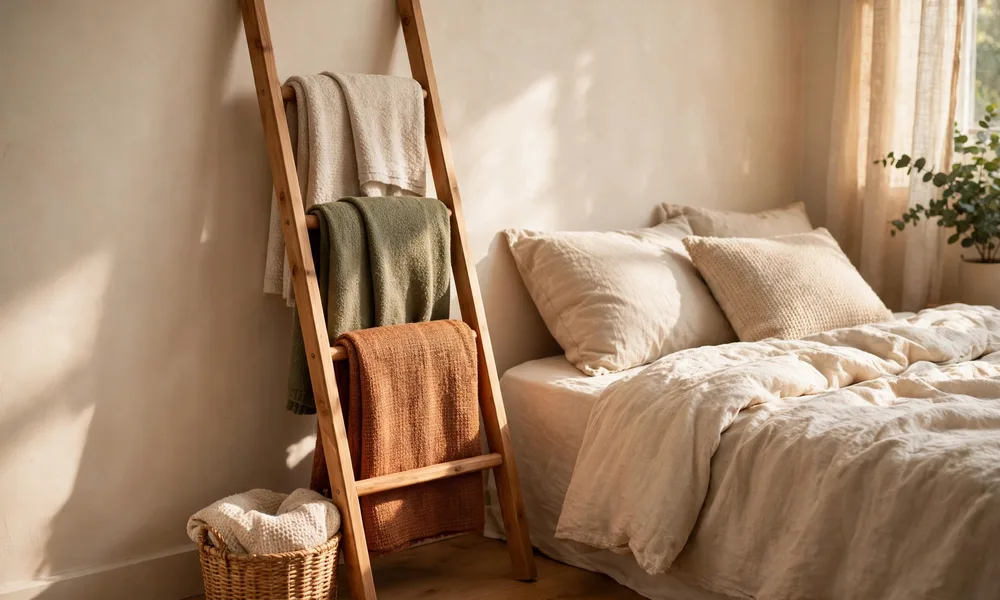
Start with the heaviest throw at the bottom and the lightest at the top. Heavy wool at the bottom keeps the ladder stable, and light cotton at eye level is easier to grab. Fold each throw in thirds lengthways, then drape it over the rung so both ends hang evenly.
Colour is where a ladder earns its keep. Keep two or three throws in the room’s main colours and one in a contrast colour for interest. Do not overload it: three throws looks better than a ladder stuffed full. If the collection keeps growing, pair the ladder with one of the storage baskets for the overflow, keeping the ladder for the throws you reach for every day.
Where to Put a Blanket Ladder
The living room is the obvious home, beside the sofa or in the corner by the reading chair. That is where throws get used most, and a ladder there means nobody has to fetch a blanket from another room. In a bedroom, the ladder belongs on the wall nearest the bed, so a throw is within reach on a cold night.
Whatever the room, keep the ladder out of the main walkway. A ladder in a doorway gets knocked daily, and a blanket on the floor is a trip hazard. A quiet corner or a stretch of blank wall beside furniture works well. Leave enough room to pull a throw off without moving furniture, and the ladder will get used every day instead of becoming decoration.
Blanket Ladder Buying Checklist
- Measure your wall height and width, and leave 15 centimetres clear above the ladder.
- Count your throws and choose a rung count that holds them with space to spare.
- Check rung spacing of 25 to 30 centimetres so throws drape without bunching.
- Test stability: a firm push from the side should not rock the ladder or twist a rung.
- Look for rubber or felt feet that protect hard floors and stop slipping.
- Run a hand along every rung to check for rough spots that could snag a knit.
Frequently Asked Questions
How many blankets can a blanket ladder hold?
Most five-rung ladders hold four or five folded throws comfortably, with one throw per rung. Heavy quilts take up more space, so a ladder holding quilts may only fit three.
Will a blanket ladder damage my wall?
A leaning ladder rests against the wall and should not mark it, especially with felt pads on the top of the rails. On soft plaster or fresh paint, add a small felt pad at the contact points.
Are blanket ladders safe with children and pets?
A ladder is safer than a tall shelf because it is low and light, but it can still tip if climbed. Keep it in a corner where it cannot be pulled forward, and avoid placing it where a toddler can reach the top rung.
Can I use a blanket ladder in the bathroom?
Yes, if the finish can handle steam. Metal and sealed wood work best, while unfinished wood and rattan can absorb moisture and grow mould.
How do I stop blankets sliding off the rungs?
Fold the throw so it drapes evenly over the rung, with the same length on each side. Rungs with a slight texture grip better than polished ones, and a throw folded in thirds is less likely to slide than one folded in half.
What is the best wood for a blanket ladder?
Pine is the best value: light, affordable, and easy to paint or stain. Oak is stronger and looks better with age, but it costs more and weighs more. For a damp room, teak resists moisture best.
Bottom Line
A blanket ladder is one of the cheapest ways to make a room feel organised and cosy at the same time. Pick a solid wood ladder for most homes, a metal one for a modern room, or bamboo for a light budget buy, and measure before you order. The ladder will earn its corner for years. If you are refreshing the whole room, pair it with the throw blankets that suit your space and the bookshelves that frame the same wall, and the living room will feel finished rather than furnished.