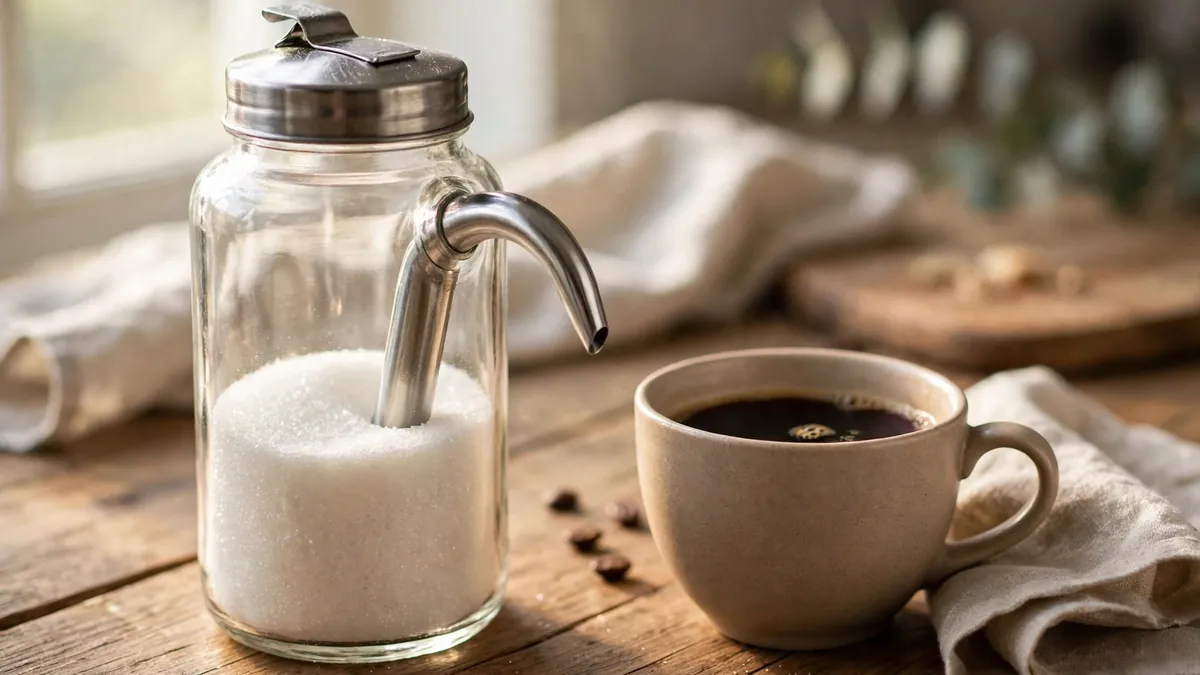
Top Sugar Dispensers That Pour Cleanly Without the Clumps in 2026
The top sugar dispensers for 2026 are the ones that pour a clean, measured stream of sugar into a cup of tea or coffee, then stop the moment you set them down. A good sugar dispenser never clogs on a damp morning, never dumps a heap of sugar into a drink you wanted lightly sweetened, and keeps the sugar inside dry, dust-free and close at hand. A bad one jams, then rushes, and dusts the table with sugar no one meant to spill. This guide covers the sugar dispensers worth buying in 2026, from glass pourers to flap lids, pumps and ceramic pots.
Sugar is harder to serve well than it looks. Granulated sugar draws moisture from a steamy kitchen, clumps into a plug, and bridges across a narrow neck. A dispenser built for sugar takes that into account, with a spout wide enough for the sugar you use, a lid that seals tightly between pours, and a body that is easy to fill and clean.
Key Takeaways
- The spout decides everything: wide enough for your sugar, with a flap or valve that closes cleanly so the pour stops when you stop tipping.
- A tight lid matters more than price; most dispensers fail because damp sugar clumps, not because the design is poor.
- Glass bodies are the most practical for everyday use: you can see when a refill is due and whether moisture has got in.
- Match the dispenser to your sugar: granulated, caster, brown sugar and cubes all flow differently.
- Buy a dispenser that fits your table and hand: too tall and it topples, too small and you refill it constantly.
What a Sugar Dispenser Is — and Is Not
It helps to be clear about what a dispenser is, because several different tools get mixed up under the same name. A sugar dispenser is a closed container that pours sugar in a controlled stream when you tip it, through a spout, a flap or a measured valve. A sugar bowl is a different thing altogether: an open bowl with a lid and a spoon, where you serve sugar by the spoonful rather than by the pour. Our guide to the best sugar bowls covers that option in depth.
A honey dispenser is different again, built for a thick liquid that drips and sticks, with a pump, a squeeze bottle or a dipper, and judged on whether it stops dripping the moment the pour stops. Our guide to the best honey dispensers covers that problem in full. Sugar is a dry granule, not a liquid, so it needs a different solution: a spout that lets dry sugar flow freely and a seal that keeps damp air out. If your sugar is granulated and you want to pour it straight into a cup, the dispenser is the right tool.
The Main Types of Sugar Dispensers
Glass Pourers with a Spout: The Cafe Classic
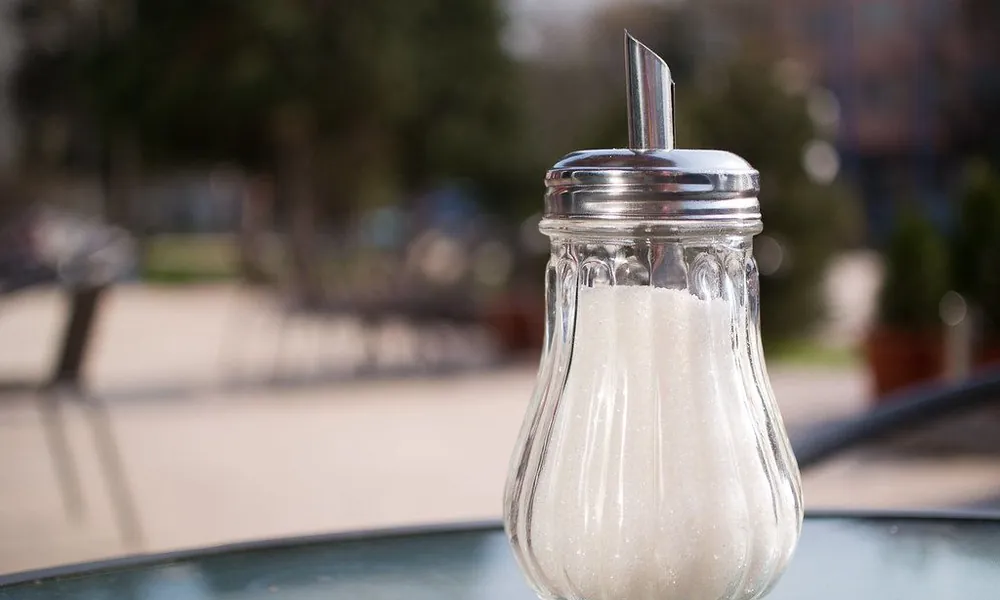
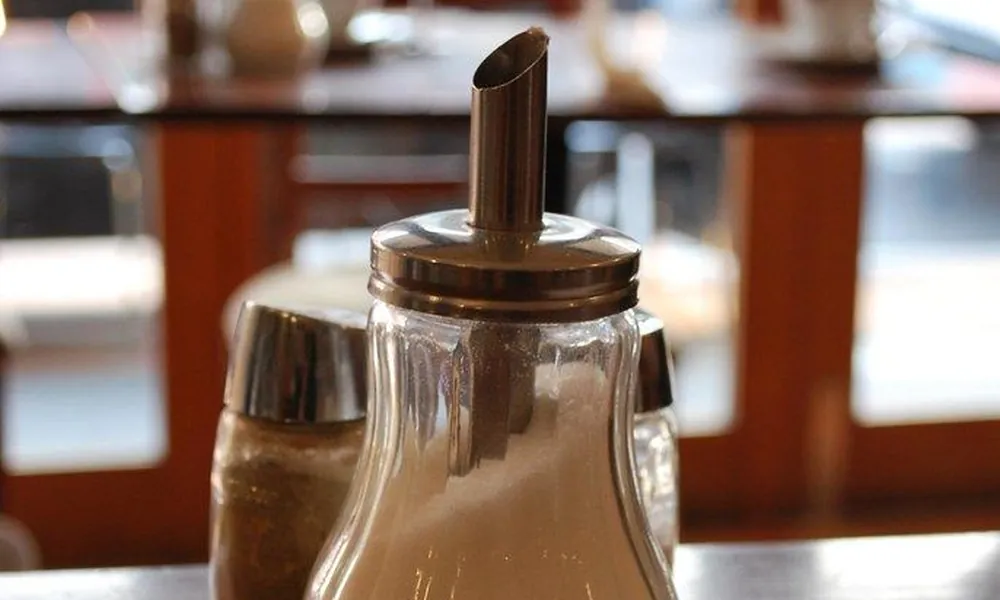
The glass pourer with a metal spout is the sugar dispenser most people picture, and it is still the best choice for most tables. You can see the sugar level at a glance, the glass does not stain or absorb smells, and a good one is easy to wash and refill. The spout is the whole point: a wide, smooth tube that pours a thin, even stream, with a flap that closes when the pourer is set upright. Look for a thick glass body, a spout that screws on firmly, and an opening wide enough for your sugar.
Flap-Lid Dispensers: The Everyday All-Rounder
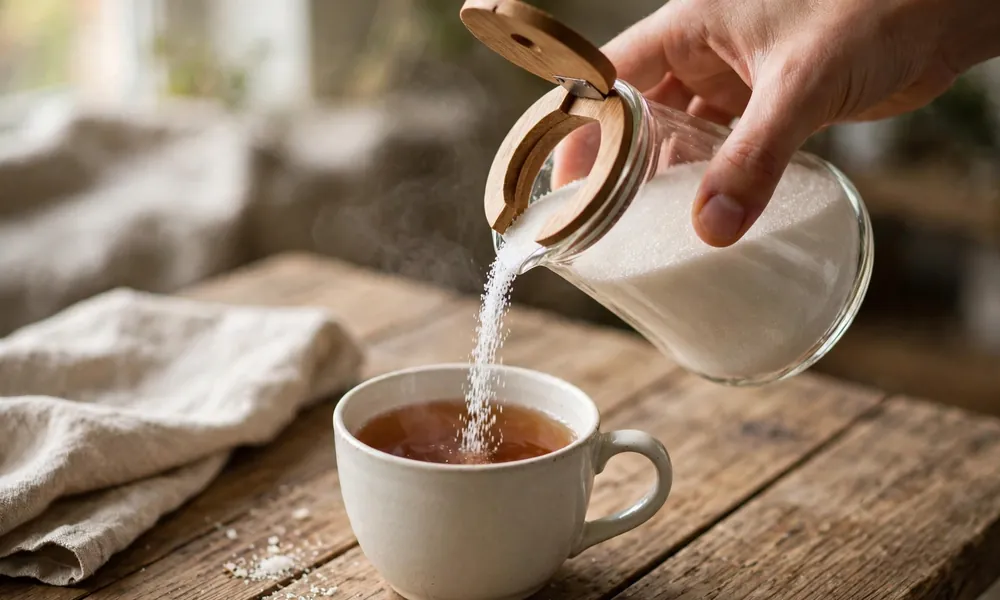
A flap-lid dispenser is a jar with a hinged lid that flips open when you tip it and falls shut when you set it down. It suits households that want a simple, sturdy dispenser with no separate spout to lose. The flap must close cleanly and completely: a flap that hangs half open lets damp air in and sugar dust out, and the dispenser slowly fails from that day on.
Pump and Measured Dispensers: The Precise Pour
Pump and measured dispensers deliver a fixed amount of sugar with each press or turn, usually about a teaspoon, and they suit anyone who watches their sugar intake or serves the same drink every morning. A measured pour means no guessing, and the mechanism keeps the sugar sealed between servings. The trade-off is complexity: a pump has moving parts that can clog with damp sugar, and it needs to come apart for cleaning.
Ceramic Dispensers: The Pretty Table Piece
Ceramic sugar dispensers earn their place by looking good, and the best ones are just as practical as they are pretty. A glazed ceramic body is non-porous, so it keeps sugar a little drier than glass in a humid kitchen, and it comes in colours and shapes that suit a dressed table. The trade-off is that you cannot see how much is left, so it needs a wide opening and an easy refill.
Stainless Steel Dispensers: The Tough, Modern Option
Stainless steel sugar dispensers suit busy kitchens that want something that will not break. They are light, they do not chip or crack, and a well-made steel spout resists corrosion far better than chrome-plated alternatives. The downside is that you cannot see the level, and cheap steel can spot, so buy food-grade steel.
Sugar Dispensers Compared
| Type | Best for | See the level? | Clog risk | Durability |
|---|---|---|---|---|
| Glass pourer with spout | Granulated sugar, everyday tables | Yes | Low | Good, but breakable |
| Flap-lid dispenser | Simple daily use, families | Yes, if glass | Low | Good |
| Pump or measured | Fixed servings, watching intake | Depends on body | Medium | Fair, moving parts |
| Glazed ceramic | Humid kitchens, dressed tables | No | Low | Good, can chip |
| Stainless steel | Busy kitchens, outdoor eating | No | Low | Excellent |
Glass remains the default because it lets you see the sugar. With ceramic or steel, check the level weekly.
How to Choose the Right Sugar Dispenser
Start with the sugar you actually use, not the sugar you wish you used. Fine granulated sugar flows through almost any spout, caster sugar flows faster and needs a gentler tip, brown sugar is stickier and needs a wider spout, and cubes need a bowl, not a dispenser. If you only buy one kind of sugar, buy a dispenser made for it, and never mix white and brown sugar in one jar: brown sugar clumps faster and will block the flow for both.
Next, check the seal. Sugar draws moisture from the air, and once damp it clumps into a plug that no amount of shaking will shift. A spout that closes cleanly, a flap that falls shut, or a lid that screws on firmly keeps sugar dry far longer than a loose cap. Then check the size: about two weeks of sugar for your household is right. A wide, stable base matters too, since tall, narrow dispensers get knocked over.
Finally, think about where the dispenser will live. A dispenser for the breakfast table needs to look settled beside the teapot and the cups, while a dispenser for a busy kitchen needs to survive splashes and knocks. Large-format pouring has its own rules, and our guide to the best drink dispensers covers bulk pouring for parties, where capacity and a tap matter more than a neat teaspoon.
Keeping Sugar Flowing Freely
Most sugar dispensers fail because of damp sugar, not poor design, and the fix is a dry routine. Fill the dispenser on a dry day, with dry hands, over a dry bowl, and never fill it straight from a steaming kettle or over a sink. Store it away from the hob and the kettle, where steam rises every day, and keep the spout closed between pours. If sugar does clog, do not shake harder: tap the base gently against your palm, then unscrew the spout and clear it with a dry skewer.
Cleaning is simple but worth doing properly. Wash the body in warm soapy water, rinse, and dry it completely before refilling, ideally upside down overnight: one drop of water will clump the next fill. Steel spouts can go in the dishwasher, but wooden flap lids must be wiped, never soaked, and ceramic dispensers should be dried straight away. Refill little and often, and throw out sugar that has gone hard as a brick.
Checklist: Before You Buy a Sugar Dispenser
- Tip it in the shop with your usual sugar in mind: the stream should start at once, stay even, and stop cleanly.
- Check the spout width and the seal: a wide spout suits brown sugar, and a flap or valve must close completely.
- Unscrew the lid and check the neck: a wide neck makes filling easy and a screw thread that turns smoothly will seal well.
- Pick it up and set it down: it should feel steady, with a wide base, and not so tall that it topples easily.
- Check the material against your kitchen: glass for visibility, steel for toughness, ceramic for damp rooms.
- Ask how it cleans: the spout should come apart, the body should dry fully, and wooden parts should never need soaking.
Frequently Asked Questions
Why does my sugar dispenser keep clogging?
Clogging is almost always moisture or the wrong spout size. Sugar draws damp from steamy kitchens, clumps, and blocks narrow spouts. Fill it with dry hands, store it away from the hob, and if it persists, switch to a wider spout.
Can I put brown sugar in a sugar dispenser?
You can, but brown sugar is stickier than white sugar and needs a wider spout and a drier store. Use a wide-spout glass pourer, keep it away from steam, and do not mix brown and white sugar in one dispenser.
Is a sugar dispenser better than a sugar bowl?
Neither is better in every home. A dispenser pours sugar straight into a cup with one hand and keeps it sealed from dust and damp. A bowl serves sugar by the spoonful and handles cubes and brown sugar more easily. Many households keep both: a dispenser for coffee and a bowl for tea.
How much sugar should a dispenser hold?
About two weeks of sugar for your household is right. Much smaller and you refill it constantly; much larger and the sugar at the bottom goes stale. A dispenser holding roughly 250 to 350 grams suits most family tables.
Can I put powdered sugar in a sugar dispenser?
Powdered sugar needs a duster with a fine mesh top, not a pourer, because it is so fine that it packs solid in a spout. Keep a duster for baking and a pourer for granulated sugar.
What is the best material for a sugar dispenser?
Glass is the best all-rounder because you can see the level and the condition of the sugar. Ceramic suits humid kitchens and dressed tables, stainless steel suits busy households and outdoor eating, and a flap lid in wood suits a rustic table. The best material is the one that matches how and where you eat.
Bottom Line
The best sugar dispenser pours your sugar in a clean, even stream, seals tightly against damp, and feels steady in your hand — and for most tables in 2026, that is a glass pourer with a metal spout, sized for the sugar you use. Spend more on the spout and the seal than on the look, fill it dry, and it will sweeten every cup without a second thought.


