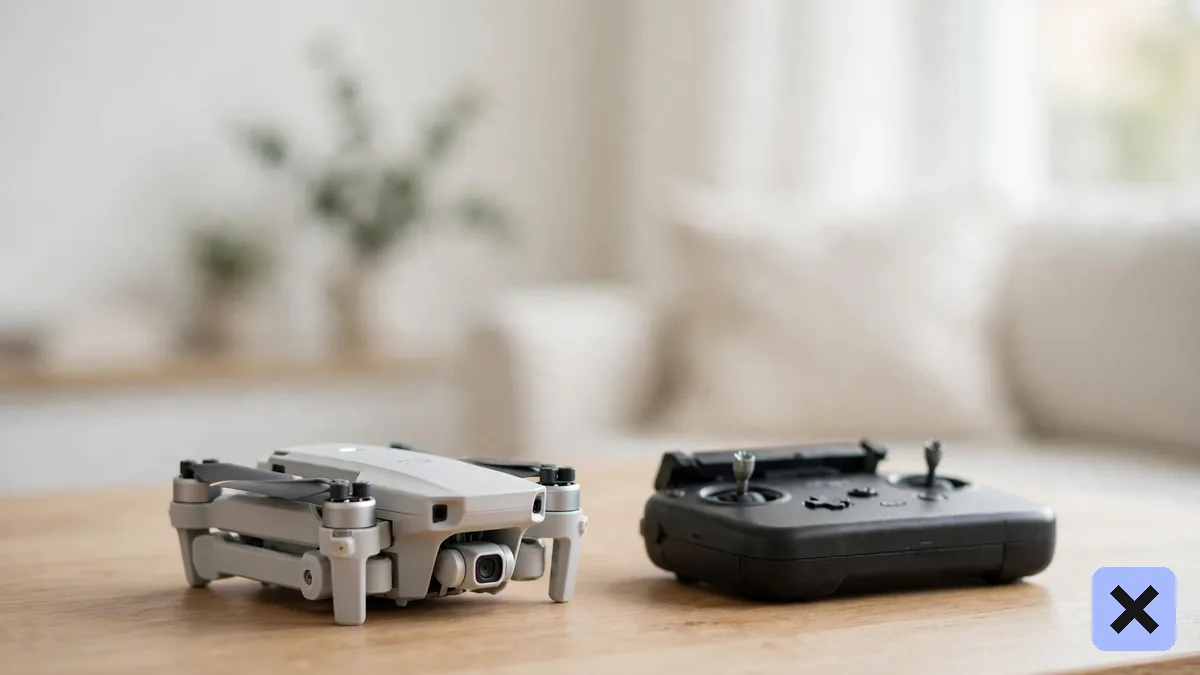
Buying your first drone should feel exciting, not like a slow lesson in regret. Yet the worst drones for beginners keep selling in huge numbers, because they look impressive in photos and promise far more than they can deliver. A first-time pilot does not need a professional rig or a racing machine. They need a drone that is stable, forgiving, and honest about what it can do.
The beginner market is crowded with drones built to a price rather than to a standard. Many are too light to hold steady in a breeze, too fragile to survive a learning crash, or too confusing to set up. Others hide real costs behind cheap batteries and weak apps. By then, the drone is often already broken or lost.
This guide looks at the kinds of drones that disappoint new pilots most, and why each one fails: the patterns to avoid, the warning signs to spot, and the features that actually matter while you are still learning.
Key takeaways
- Very cheap toy drones are usually too light and unstable to fly outdoors, which teaches new pilots bad habits.
- Missing obstacle avoidance, weak GPS, and poor return-to-home features are the main reasons beginners lose drones.
- Short battery life and slow charging turn a fun afternoon into ten minutes of flying and hours of waiting.
- Confusing apps, forced updates, and unreliable connections cause more crashes than pilot error.
- A good beginner drone is stable, repairable, and forgiving, with spare parts you can buy.
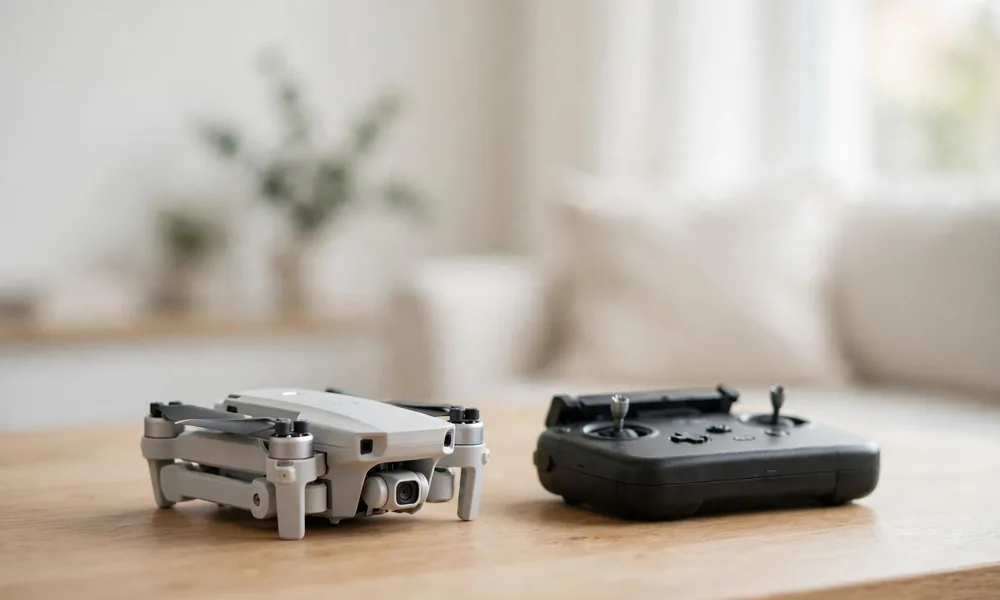
Why So Many First Drones Disappoint
A first drone must teach someone to fly while surviving the mistakes that are part of learning. Good beginner drones hover steadily, respond gently, and recover gracefully when the pilot panics. Bad ones drift, overreact, and punish small errors with a crash into a fence or a tree.
Manufacturers know beginners shop mainly on price and camera specs. That is why budget drones boast about 4K video and long range while saying little about wind resistance or stability. A 4K camera is useless if the drone cannot hold still to frame a shot. Very light drones are pushed around by a gentle breeze, while heavier drones with better motors and GPS hold position and give a beginner time to think.
The Worst Types of Drones for Beginners
Not every bad beginner drone fails the same way. Some are too fragile, some are too complicated, and some are built for a different pilot. These categories cause the most trouble.
Ultra-Cheap Toy Drones
Toy drones at the lowest price point are the most common first purchase, and the most common first regret. They usually have no GPS, no proper stabilisation, and motors that struggle in anything stronger than still air. Indoors they bounce off walls, and outdoors they drift away. The controller often feels vague.
The camera is usually the biggest letdown. It may be advertised as high definition, but the footage is shaky, washed out, and delayed on the phone screen, making flying by the feed almost impossible. A toy drone can teach basic stick movements indoors, but those skills transfer poorly to a real camera drone.
Drones With No Obstacle Avoidance
Obstacle avoidance is often treated as a luxury, but for a beginner it is one of the most useful safety nets. New pilots are still learning depth perception, and it is hard to tell how close a drone is to a branch from the ground. A drone with no sensors will fly straight into anything in its path.
This matters most where beginners actually fly: gardens, parks, and beaches with trees and fences nearby. A single collision can break propellers or send the drone into water. Some budget drones have one forward sensor, but that leaves the sides and rear exposed, exactly where a turning drone is most vulnerable.
Drones With Weak GPS and Return-to-Home
GPS keeps a modern drone hovering in one place when you let go of the sticks. Without a strong lock, a drone drifts and the pilot must constantly correct it. That is tiring for a beginner, and a main reason first flights end early. Weak GPS also makes return-to-home unreliable, the feature meant to save the drone when the signal drops or the battery runs low.
Some cheap drones claim GPS but take a long time to lock on, or lose the lock near buildings and trees. Check reviews for complaints about drifting and failed returns. A drone that cannot be trusted to come home is not a bargain at any price.
Overpowered Racing and FPV Drones
Racing and first-person-view drones look thrilling, but they are a poor choice for a first drone. They are fast and twitchy, with controls that respond instantly to the smallest input. A beginner still learning to hover will find them almost impossible to keep in the air.
FPV drones also need goggles, extra batteries, and often assembly or tuning. The learning curve is steep, and the crash rate is high even for experienced pilots. Start with a stable camera drone, learn orientation and landing, then move to FPV later.
Drones With Terrible Apps and Forced Updates
Modern drones depend on their apps, and a bad app can ruin a good drone. Some need an app that is slow, buggy, or full of adverts, and that crashes at the worst moment. Others demand a firmware update before the first flight, which can take an hour and sometimes fails halfway through.
A weak Wi-Fi link also causes laggy video, frozen screens, and sudden disconnections. When the feed freezes, a beginner has no idea where the drone is pointing, and pushing the sticks harder usually makes things worse. The pattern is familiar from other gadgets, and smart home devices with unreliable apps and connections show how quickly that frustration builds.
How the Worst Beginner Drones Compare
The table below sums up the main failure patterns. Be wary of any drone that ticks more than one box.
| Drone type | Main weakness | Typical result | Beginner risk |
|---|---|---|---|
| Ultra-cheap toy drone | No GPS, very light frame | Drifts away in wind | High |
| No obstacle avoidance | Blind in most directions | Crashes into trees and walls | High |
| Weak GPS model | Poor hover and return-to-home | Lost drone | Very high |
| Racing or FPV drone | Too fast and twitchy | Frequent crashes | High |
| Bad app drone | Buggy app, weak video link | Frozen feed, lost control | Medium |
| Feature-packed budget drone | Too many modes, poor instructions | Confusion and mistakes | Medium |
The worst offenders are not always the cheapest. Some mid-priced drones fail because they try to do too much. A drone that is hard to understand is a drone that is easy to crash.
Features That Actually Matter for a Beginner
Good beginner drones share a short list of practical features: stable hovering from GPS and a decent vision system, a sensible top speed with a beginner mode that limits range, and a reliable physical controller, because physical sticks give far better control than a phone screen.
Battery life matters more than most buyers expect. A twelve-minute flight sounds fine until half of it is spent taking off and landing. Look for at least twenty minutes of real flight time, and budget for a spare battery. Repairability matters too: propellers break and arms crack. A drone with cheap, widely available spare parts beats a slightly better drone whose parts are impossible to find.
The Feature Overload Trap
Many beginner drones are sold on the number of features they include, as if more modes meant a better drone. In practice, the opposite is often true. Gesture control and tracking modes add menus and failure points a new pilot does not need. A beginner who triggers the wrong mode can send the drone somewhere unexpected, and cancelling it mid-flight is stressful.
The best beginner drones keep the basics excellent and the extras optional. Take-off, landing, hover, and return-to-home should be one tap each and reliable every time. This is the same trap that affects many modern gadgets, where the feature list grows while usability shrinks, and feature overload in tech products explains why simpler designs often age better.
Beginner Drone Buying Checklist
Run through this checklist before spending money. If a drone fails several points, keep looking.
- GPS hold that keeps the drone steady when you release the sticks.
- Return-to-home that works reliably, with a clear low-battery warning.
- At least twenty minutes of real flight time per battery, with spares available.
- Obstacle sensors in more than one direction, or a strict beginner speed limit.
- A physical controller with clear, responsive sticks, not phone-only control.
- Spare propellers, batteries, and arms sold separately at a fair price.
Common Mistakes New Pilots Make
Even a good drone can be ruined by a bad first flight. The most common mistake is flying too far, too soon. Distance makes it harder to judge orientation, and a small drone is hard to see against the sky. Keep the first dozen flights close, low, and in an open field.
The second mistake is flying in wind that is too strong. A breeze that feels gentle on the ground is often much stronger at twenty metres up. The third mistake is ignoring the battery: beginners fly until the warning appears, then try to squeeze out one more minute, which is how drones land in fields or on roofs. Land with plenty of charge left.
What to Buy Instead
The best first drone is usually a well-known, mid-priced camera drone from a brand with a strong support network. It should have GPS, vision sensors, a good app, and a large community that has already answered every beginner question online. When something goes wrong, a quick search will usually find a fix.
Buy from a retailer with a clear returns policy, and keep the box and receipt until you have flown the drone several times. Test return-to-home in an open space on the first day, and read the local rules about where drones can fly. Comfort matters too, and headsets that cause discomfort during use show how quickly poor comfort can spoil an otherwise capable gadget.
Frequently Asked Questions
What is the worst drone for a beginner?
Usually a very cheap toy drone with no GPS, weak motors, and a poor camera. It drifts in wind, is hard to control, and teaches little that transfers to a real camera drone. Unreliable return-to-home is a close second.
How much should a beginner spend on a first drone?
Most beginners do best in the mid-price range, where GPS, stabilisation, and a decent camera are included. Very cheap drones cost more in the long run through crashes, while expensive professional drones are wasted on a pilot still learning to land.
Do beginners need obstacle avoidance?
It is not essential, but very helpful. It turns many small mistakes into near misses, especially in gardens and parks with trees. If your budget allows, choose sensors in two directions.
Can a beginner fly a drone without GPS?
It is possible, but much harder, because the drone drifts and the pilot must correct it constantly. GPS hold makes learning far easier and safer.
How long does a beginner drone battery last?
Most beginner camera drones fly for twenty to thirty minutes per battery in real conditions, less than advertised. Toy drones often manage only five to ten minutes. Always carry a spare battery.
Is it better to learn indoors or outdoors?
Outdoors in a wide open space is better for a camera drone, because there is room to make mistakes safely. Indoors suits only small toy drones, over a soft floor.
The bottom line: the worst drones for beginners look like a bargain and fly like a liability, with no GPS, weak obstacle sensing, poor apps, or more speed than a new pilot can handle. Spend a little more on a stable, well-supported camera drone with reliable return-to-home and spare parts you can buy. Learn in open space, respect the battery, and let the drone earn your trust before you ask it to do anything ambitious.