
Finding the best coffee makers for home in 2026 is less about chasing the most expensive machine and more about matching a brewer to the way you actually drink coffee. Some households need a full pot ready before the school run, while others want a single slow cup on a quiet morning. The right machine makes that routine effortless.
The market has never been wider. Drip machines are smarter and more consistent than they used to be, pour-over kits have moved from café counters into ordinary kitchens, and single-serve brewers now compete on flavour as well as convenience.
This guide cuts through that choice. It explains what separates the best coffee makers from the rest, compares the main types side by side, and gives you a practical checklist for buying with confidence.
Key takeaways
- The best coffee maker for your home depends on how many cups you drink and how much control you want over the brew.
- Stable brewing temperature between 195 and 205 degrees Fahrenheit is the single biggest driver of good flavour.
- Drip machines suit busy households, while pour-over and French press suit drinkers who enjoy a slower ritual.
- A thermal carafe keeps coffee hot without scorching it, which matters far more than a warming plate.
- Clean your brewer regularly, use fresh beans and filtered water, and most machines will taste far better than their price suggests.

What Makes a Great Coffee Maker
A great coffee maker does a small number of things very well. It heats water to the right temperature, spreads it evenly over the grounds, and holds that temperature steady from the first cup to the last. Consistency is what you are really paying for: the best home brewers repeat the same result without fuss, so your morning coffee tastes the way you expect it to.
Brewing Temperature and Even Extraction
Water that is too cool under-extracts the coffee, leaving it sour and thin. Water that is too hot over-extracts it, pulling out bitter compounds and masking the sweetness. The sweet spot sits between 195 and 205 degrees Fahrenheit, and the best machines hold it there for the whole brew cycle. Even extraction matters just as much: a good spray pattern wets all the grounds at the same time, so no pocket of coffee is left dry while another is drowned. Look for a wide spray head or a pre-infusion step, which blooms the grounds before the main pour.
Capacity and Carafe Choice
Capacity should match your household, not your ambition. A twelve-cup machine is a waste of counter space for one person, and a single-serve brewer will frustrate a family of four. Think about your busiest morning, not your quietest one, and buy for that.
The carafe is a bigger decision than it looks. Glass carafes sit on a hot plate that keeps cooking the coffee after brewing, which is why the last cup often tastes burnt. Thermal carafes keep coffee hot for hours without extra heat and preserve flavour far better, so if you drink slowly or brew a pot to last the morning, a thermal carafe is worth the extra cost.
The Main Types of Coffee Maker Compared
Every home brewer falls into one of a few families. Drip machines are the workhorses, pour-over brewers are the precision instruments, French presses are the simple classics, and single-serve machines are the convenience players. Knowing which family fits your routine narrows the choice dramatically.
| Type | Best For | Flavour | Effort | Typical Cost |
|---|---|---|---|---|
| Drip machine | Families and busy mornings | Balanced and consistent | Low | Moderate |
| Pour-over | Flavour lovers and slow mornings | Bright and clear | High | Low to moderate |
| French press | Rich, full-bodied coffee | Bold and heavy | Medium | Low |
| Single-serve pod | One cup at a time | Good but limited | Very low | Low machine, higher pods |
| Cold brew maker | Smooth iced coffee | Sweet and low acid | Low, but slow | Low to moderate |
No type is best for everyone. A household that values speed will love a drip machine that another household finds boring, and a drinker who enjoys the ritual of pouring will find a pod machine soulless. Match the machine to your mornings and the choice becomes easy.
Drip Coffee Makers: The Reliable Workhorse
Drip machines earn their place in most kitchens because they do the hard work while you get on with your morning. You add water and grounds, press a button, and a full pot appears. Modern drip machines have improved enormously, with better temperature control, pre-infusion and thermal carafes that were once found only on expensive models.
The best drip machines now brew at a stable temperature and spread water evenly, which closes much of the quality gap with manual methods. Programmable timers mean coffee can be ready when you wake, and pause-and-serve features let you steal a cup mid-brew. Buy the best drip machine you can afford rather than the biggest, and check that it has a thermal carafe and a removable reservoir before you commit.
Single-Serve Machines and Espresso at Home
Single-serve pod machines suit households where everyone drinks at different times or prefers a different roast. They are fast, tidy and nearly impossible to get wrong. The cost of pods adds up, and the flavour ceiling is lower than a good drip or pour-over setup.
If your tastes run towards stronger, milk-based drinks, a dedicated espresso machine may be a better investment than a pod brewer. Our guide to the best espresso machines for home covers the models that handle milk steaming and pressure properly, so you can compare them against a standard drip setup before spending more.
Pour-Over and French Press: The Hands-On Choices
Pour-over brewing gives you total control. You choose the grind, the water temperature and the pour speed, and the result is a clean, bright cup that shows off the character of the beans. It takes a few minutes and a little practice, and a gooseneck kettle helps enormously because it gives you a slow, controlled pour.
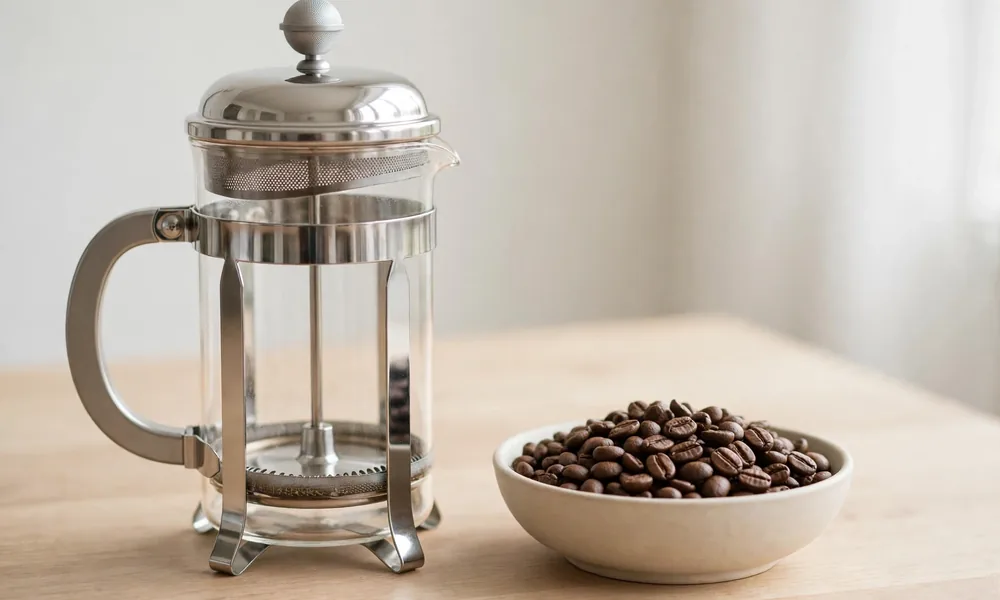
French press is the opposite in spirit. It is forgiving, sturdy and almost impossible to break. Coarse grounds steep in hot water for four minutes, then a mesh plunger separates them from the drink. The result is rich and full-bodied, with more oils and texture than a paper-filtered cup. Its two weaknesses are sediment slipping through the mesh and coffee turning bitter if left sitting on the grounds, so pour it out promptly and clean the mesh well.
How to Choose the Right Coffee Maker for Your Home
Start with your routine, not the catalogue. Count how many cups your household drinks on a normal weekday, note whether everyone drinks at the same time, and be honest about how much effort you will put in before breakfast. A machine that matches your real life will be used every day.
Next, set a budget that includes the running costs. Pods, paper filters and descaling solution all add up over a year, so a slightly more expensive machine with a reusable filter and a thermal carafe can work out cheaper than a bargain model. Finally, measure your counter: check the height with the lid open and the depth with the carafe out, and make sure you have room to fill the reservoir.
Your Coffee Maker Buying Checklist
- Brewing temperature holds steady between 195 and 205 degrees Fahrenheit.
- Capacity matches your household on its busiest morning, not its quietest.
- Thermal carafe included, so coffee stays hot without a scorching hot plate.
- Removable water reservoir and dishwasher-safe parts for easy cleaning.
- Reusable filter or affordable paper filters, with no expensive proprietary parts.
- Fits your counter with room to open the lid and remove the carafe comfortably.
Common Mistakes That Ruin Home Coffee
Even the best coffee maker cannot save bad habits. The most common mistake is stale coffee: beans lose flavour within weeks of roasting, and pre-ground coffee fades faster still. Buy smaller bags more often and grind just before brewing when you can.
Water is the second culprit. Coffee is almost entirely water, so tap water with heavy chlorine or mineral flavours will show up in the cup. Filtered water is a cheap upgrade that improves every machine, and the same goes for cleaning: a brewer that has never been descaled brews cooler and slower than it should, and old oils turn rancid and bitter.
Grind size is the third. Too fine a grind for a drip machine clogs the filter and over-extracts, while too coarse a grind for a French press leaves the coffee weak and watery. Match the grind to the method and measure your coffee rather than guessing. Many of the worst coffee trends that waste money at home come from exactly these avoidable mistakes, dressed up as clever shortcuts.
Coffee Makers and Your Morning Routine
The best coffee maker is the one that fits the first hour of your day. If you wake early and move fast, a programmable drip machine with a timer is worth more than any manual brewer.
Think about who else drinks coffee in your home. A machine that makes one perfect cup is useless to a couple who wake together, and a twelve-cup pot is wasteful for a solo drinker. Some households solve this with two brewers: a drip machine for weekdays and a French press for slow weekends, a combination that costs less than one premium machine and covers every mood.

A thermal carafe lets you brew once and drink for hours without keeping a hot plate running, and a machine with an auto-off feature is safer and cheaper to run. If you are weighing your options, our comparison of coffee versus tea for morning energy looks at how the two drinks differ in caffeine and focus, which can help you decide how much your brewer really matters to your day.
Frequently Asked Questions
How much should I spend on a coffee maker for home?
Most households will be happy with a moderate spend on a well-built drip machine with a thermal carafe. Manual brewers like a French press or pour-over set cost very little and can produce excellent coffee. Spending more mainly buys consistency, build quality and convenience.
Is a thermal carafe really better than a glass carafe?
Yes, for most people. A thermal carafe keeps coffee hot for hours without cooking it further, while a glass carafe on a hot plate slowly scorches the coffee. The difference is obvious by the second cup.
Do I need a built-in grinder?
A built-in grinder is convenient and guarantees fresh grounds, but it is not essential. A separate grinder often gives you better control and is easier to replace if it breaks.
How often should I clean my coffee maker?
Rinse the carafe and filter basket after every use, wash removable parts weekly, and descale every one to three months depending on your water hardness. A clean machine brews hotter, tastes better and lasts longer.
Are pod machines bad for coffee flavour?
Pod machines are not bad, but they have a lower ceiling than fresh-ground methods. The coffee is pre-ground and sealed, so it cannot match the brightness of beans ground minutes before brewing. For a quick single cup they are perfectly good.
What is the best coffee maker for a small kitchen?
A pour-over set or a compact French press takes up almost no space and makes excellent coffee. If you want an electric machine, look for a slim five-cup drip brewer with a thermal carafe, and measure your counter before buying.
The Bottom Line
The best coffee makers for home in 2026 are the ones that brew at the right temperature, match your household size, and fit the way you actually start your day. A good drip machine with a thermal carafe will satisfy most homes, a pour-over or French press will reward anyone who enjoys the ritual, and a single-serve brewer suits solo drinkers who value speed. Choose for your routine, keep the machine clean, and use fresh beans and filtered water.


