A college notebook has one job: to survive a semester of lectures, library sessions, and a bag that gets thrown around, while keeping notes readable until exam day. The worst notebooks for college in 2026 fail at it in ways that leave a student with ink bled through every page, a binding split open in the bag, or a cover that falls apart by October. They use paper too thin for a pen, bindings too weak for daily use, or sizes that do not fit a student bag. Students buy them hoping for a notebook that lasts the term. What they get is a notebook that falls apart, a notebook that wastes pages, or a notebook that cannot be read when it matters most. A notebook that is bought for a semester should be judged in December, not in September, because September is when every notebook still looks new.
Paper That Bleeds Through
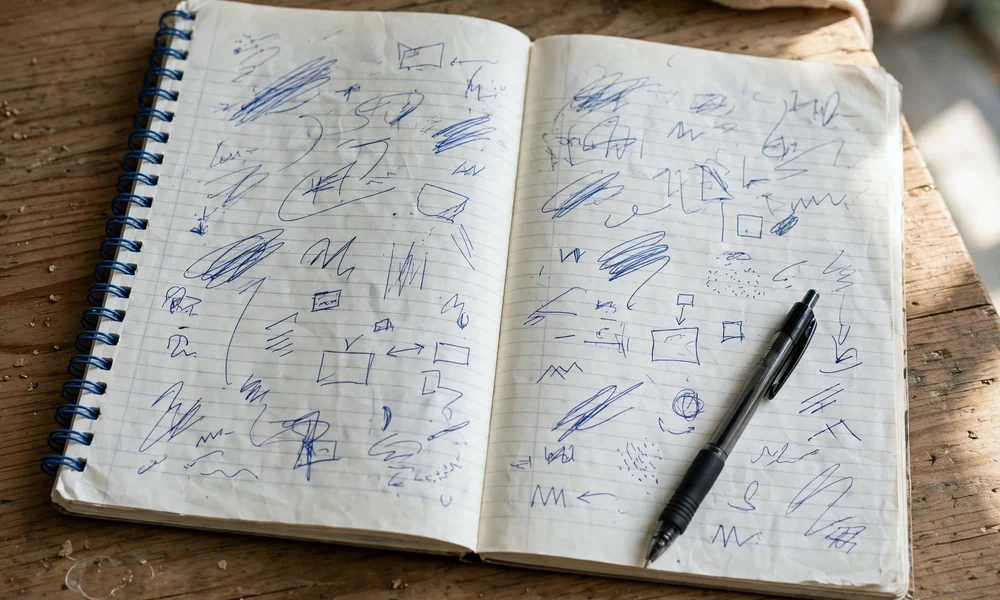
Notebook paper must hold ink on one side, and the worst college notebooks let it bleed through to the other. Thin, absorbent paper soaks up ink from a pen, so every line shows through on the back, and a page that should hold two sides of notes holds only one. The problem is worst with fountain pens and gel pens, which lay down more ink, but even a ballpoint will ghost through the thinnest paper. A student who can only use one side of every page needs twice as many notebooks, and a notebook that wastes half its pages is a notebook that costs twice as much. A page that bleeds through wastes the page behind it, and a notebook that wastes half its pages costs twice as much as it should.
The test takes ten seconds in a shop: write on a page with your usual pen and check the back. A good notebook shows nothing, or only the faintest shadow, while a bad one shows every word. Look for paper of at least 80 gsm, and 100 gsm or more if you use a fountain pen or a gel pen. Dotted or squared pages at a good weight are the best compromise for most students, because they handle ink well and suit both writing and sketching. If the paper bleeds, the notebook is not fit for college. A pen that bleeds on thin paper may write perfectly on thick paper, so the test must be done with the pen the student actually uses.
Bindings That Split in the Bag
A college notebook lives in a bag, and the worst ones split open there. Stapled bindings pull apart, spiral bindings snag on everything and unwind, and glued bindings crack the first time the notebook is opened flat. A notebook that splits in the bag loses pages, and a student who loses pages loses notes, which is the worst failure a notebook can have. The binding is the part of the notebook that takes the most punishment, and it is the part that fails most often. A binding that splits in the bag will lose the pages with the most important notes, because those are the pages that are opened most often.
Look for a binding that suits how you use the notebook. A sewn binding opens flat and lasts the longest, while a good spiral binding should be strong and have its ends tucked in so it does not snag. Avoid glued bindings for a notebook that will be opened flat every day, because the glue will crack. Open the notebook flat in the shop and check the middle: if the pages pull away from the spine, the binding will not survive a semester. Our guide to the best backpacks for college of 2026 covers the bags that protect a notebook instead of crushing it. A spiral that snags on everything in the bag will unwind a little further every day, until the notebook falls apart in the middle of a lecture.
Pages Too Few for a Semester
A college notebook should last a whole course, and the worst ones run out halfway through. A notebook with eighty pages sounds generous until a student fills it in six weeks, and then the notes for one course are split across two notebooks, which is confusing at revision time. Some notebooks look thick but use thin paper and wide margins, so the real writing space is far less than the page count suggests. A notebook that runs out mid-semester forces a student to start a new one, and a course split across notebooks is a course that is hard to revise from. A course that is split across two notebooks is a course that is hard to revise, because the notes are never in the order they were written.
Count the pages before you buy, and match the notebook to the course. A lecture-heavy course needs 180 to 240 pages, while a seminar course may need far fewer. Check the margins too: a notebook with wide margins and large line spacing holds far less writing than its page count suggests. A good notebook tells you its page count plainly on the cover, and a notebook that hides it is probably hiding a small number. Buy the notebook that lasts the term, not the one that looks thickest on the shelf. A notebook that looks thick may use wide margins and thin paper, so the real writing space is far less than the page count suggests.
Covers That Fall Apart
A college notebook cover must survive a semester in a bag, and the worst ones do not. Thin card covers bend, tear, and peel, soft covers scuff and stain, and laminated covers split at the corners. A cover that falls apart leaves the first and last pages exposed, and those pages are usually the ones with the most important notes on them. The cover is the notebook’s only protection, and a cover that fails leaves the notes unprotected. A cover that peels at the corners will keep peeling, because every day in the bag pulls a little more of it away.
Look for a cover that is stiff enough to protect the pages but flexible enough not to crack when the notebook is opened flat. A hardcover notebook lasts longest, while a good softcover with a sturdy card and rounded corners is a fair compromise. Check the corners in the shop: if they are already bent or split on a new notebook, the cover will not survive a week in a bag. A notebook that looks tidy in December is a notebook whose cover did its job, and a cover that falls apart is a cover that failed. A hardcover notebook is heavier to carry, but it is also the notebook most likely to still look tidy when the exams arrive.
Ruling That Fights Your Handwriting
Notebook ruling should help handwriting, and the worst ruling fights it. Lines too close together cramp large handwriting, lines too far apart waste space, and faint lines that disappear under ink are no help at all. Some notebooks use ruling that does not match the paper size, so the lines run off the edge, or they use a ruling that is too dark and shows through to the other side. A student who fights the ruling on every page will write less, and a notebook that discourages writing is a notebook that has failed. A ruling that is too faint to see is no help at all, and a ruling that is too dark shows through to the other side of the page.
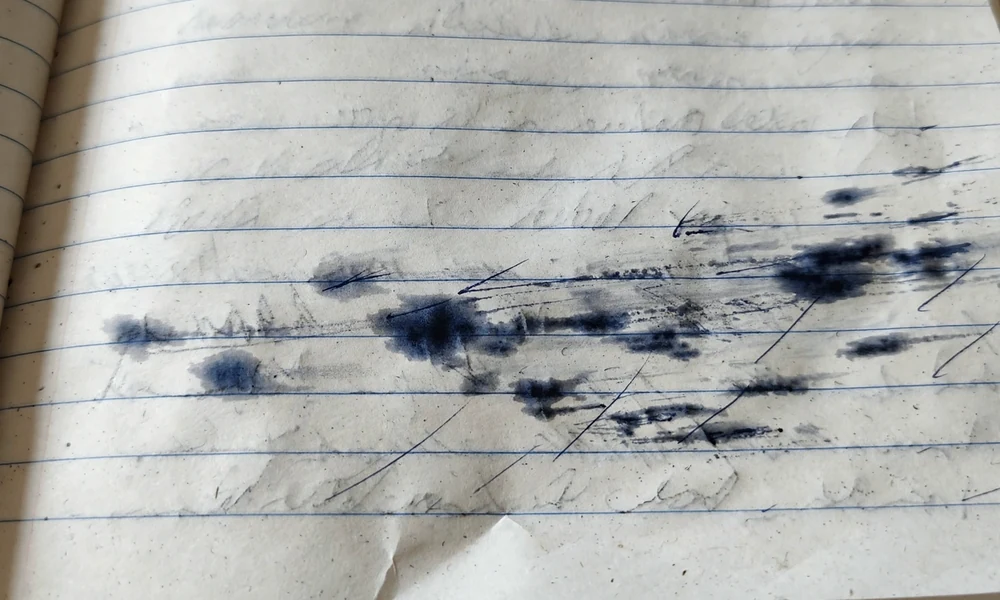
Choose the ruling that suits your handwriting: wide-ruled for large writing, college-ruled for most students, and dotted for a mix of writing and sketching. Write a few lines in the shop if you can, and check that the lines guide your hand without crowding it. If the ruling is too faint to see or too dark to ignore, it is the wrong ruling for you. A notebook whose ruling suits your hand is a notebook you will enjoy writing in, and a notebook you enjoy is one you will use. A dotted page suits a student who mixes writing and sketching, because it guides the hand without forcing it into lines.
Sizes That Do Not Fit the Bag
A college notebook must fit the bag it lives in, and the worst ones do not. A notebook that is too big sticks out of the bag and gets bent, while one that is too small holds too little writing for a full lecture. Some notebooks are an odd size that fits no standard bag, so they get carried by hand and dropped, or squeezed into a bag that crushes them. A notebook that does not fit the bag is a notebook that gets damaged, and a damaged notebook is a notebook that loses pages. A notebook that sticks out of the bag will get bent at the corners, and a bent notebook is a notebook that loses pages.
Measure your bag before you buy, and choose a notebook that fits it with room to spare. A5 suits a small bag and short notes, while A4 suits a large bag and long lectures, and B5 is the best compromise for most students. Check the notebook’s dimensions on the cover, and compare them with your bag, your folders, and your laptop sleeve. A notebook that fits the bag, the folder, and the desk is a notebook that survives the semester, and a notebook that does not fit is a notebook that will not. A notebook that fits the bag, the folder and the desk is a notebook that survives the semester, while one that fits none of them will not.

What to Buy Instead
The notebooks worth buying share a short list of features, and none of them is expensive on its own. Paper of at least 80 gsm that holds ink on one side. A sewn or strong spiral binding that opens flat and does not split. Enough pages for the whole course, a cover that survives a semester in a bag, and ruling that suits your handwriting. A size that fits your bag. If a notebook fails any one of those checks, keep looking.
Fit matters as much as build, and the notebook should suit the student in front of you rather than the student in the photograph. A science student needs squared pages for diagrams, while a humanities student needs ruled pages for long notes, and a sketcher needs blank or dotted pages at a heavier weight. Write in the notebook before you buy it, and check the back of the page for bleed. If you need the pen to go with it, our guide to the best pens of 2026 covers the pens that write cleanly without smearing.
The Bottom Line
The worst notebooks for college in 2026 share a pattern: paper that bleeds through, bindings that split in the bag, pages too few for a semester, covers that fall apart, ruling that fights your handwriting, and sizes that do not fit the bag. Avoid those six failures and you avoid almost every notebook regret. Write on a page, check the back, and open the notebook flat before you pay. Do that, and the notebook you buy will be the one that carries your notes safely to exam day. And if you want the rest of your college kit covered, our guide to the best notebooks of 2026 covers the notebooks that last the whole year.