
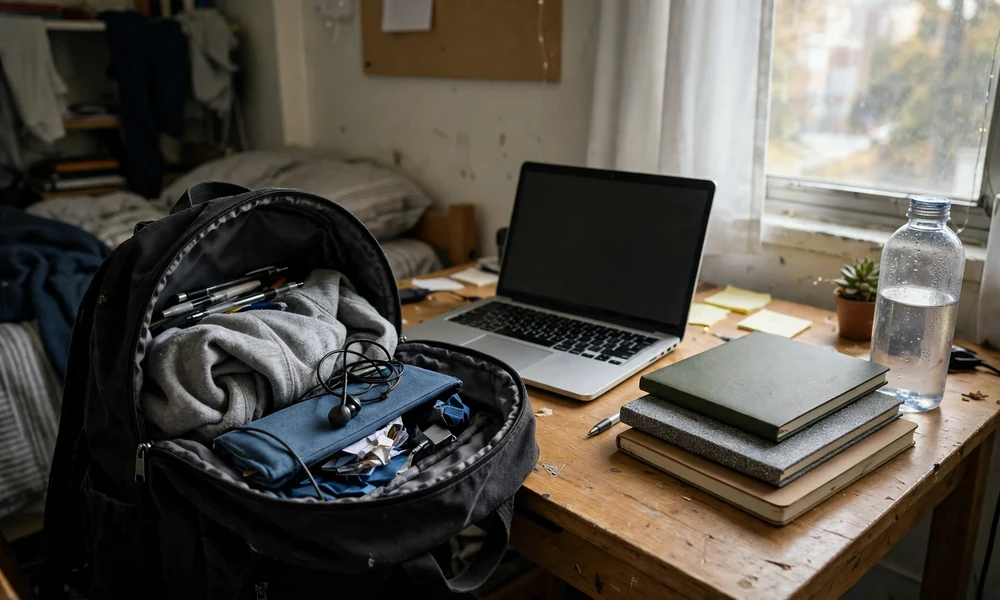
A college backpack carries more than books. On a normal weekday it holds a laptop, chargers, notebooks, a water bottle, a jacket, and the small things that get a student through lectures, the library, and a long afternoon of study. It gets thrown on floors, stuffed into lockers, carried up stairs, and worn in rain. The best backpacks for college in 2026 are the ones that handle that daily load without hurting shoulders, without falling apart, and without making every morning a packing puzzle.
What Makes a Backpack Good for College
The first test is comfort. A college backpack is worn for hours, often while walking between buildings with a heavy laptop inside. Padded shoulder straps that spread the weight, a padded back panel that does not dig in, and a chest strap for heavier loads make a real difference by the end of the day. A bag that feels fine empty can feel very different once it is full, so weight distribution matters more than the weight of the bag itself.
The second test is the laptop fit. Most students carry a laptop every day, and a backpack without a proper padded laptop sleeve leaves it bouncing against books and bottles. The sleeve should be padded on all sides, suspended slightly above the bottom of the bag so a bump does not jar the laptop, and sized honestly for the laptop it claims to fit. A sleeve that is too tight is just as bad as one that is too loose, because a laptop that has to be forced in will wear out the lining and the zip.
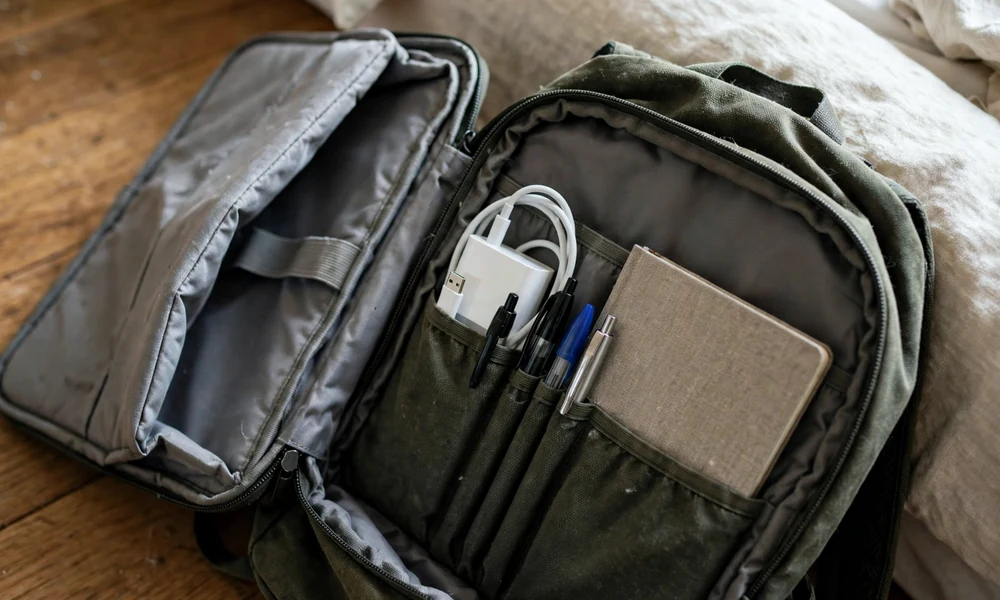
Organisation is the third test, and it is where cheap bags usually fail. A single big compartment sounds simple, but it turns into a pile where chargers tangle with pens and a notebook ends up bent under a water bottle. A good college bag has a main compartment for books and folders, a separate laptop section, a front pocket for small items, and a side pocket for a bottle. The pockets do not need to be many, but each one should have a clear job.
Size: How Big Should a College Backpack Be
For most students, a bag of around twenty to thirty litres is the right size. That is enough for a laptop, two or three notebooks, a folder, a charger, and a water bottle, with a little room left for a light jacket or a packed lunch. A bag smaller than that forces hard choices every morning, and a bag much bigger than that invites overpacking, which is how shoulders get sore and zips get strained.
Comfort and Carrying: Straps, Back and Weight
Shoulder straps should be wide, padded, and adjustable, with a shape that sits flat on the shoulder rather than digging in at the edges. Thin straps cut in when the bag is heavy, and straps that cannot be adjusted short enough leave the bag hanging low, which pulls the shoulders back and strains the lower back. The bag should sit high enough that its weight rests close to the body, not swinging behind.
A padded back panel helps on long walks, especially in warm weather. A flat, unpadded back lets the shape of books and a laptop press through, and it traps heat against the back. Some bags use a shaped panel with air channels, which keeps the back cooler and stops hard edges from pressing in. It is a small detail, but on a hot day walking across campus, it matters more than it sounds.
Laptop Protection and Tech Organisation
A laptop is often the most valuable thing a student carries, so its protection deserves attention. A padded sleeve with a soft lining stops scratches, and a sleeve that is raised off the bottom of the bag protects against drops and bumps when the bag is set down hard. A separate, zipped laptop compartment is even better, because it keeps the laptop away from pens, keys and other hard objects that can scratch or dent it.
Chargers, cables and small tech need their own place too. A small internal pocket or organiser panel stops a charger from tangling with everything else, and a cable loop or elastic strap keeps earphones from knotting. Some bags include a pocket designed for a tablet as well, which suits students who take notes on a tablet alongside a laptop. Our guide to the best backpacks for laptops in 2026 looks in more detail at laptop sleeves, padding and tech organisation, which matter just as much on campus as they do anywhere else.
Durability: What Lasts a Whole Degree
A college backpack should last more than one term. The most common failure points are zips, seams and the bottom of the bag. Zips should run smoothly when the bag is full, not catch on fabric, and feel sturdy rather than thin and rattly. Double stitching at stress points, especially where straps meet the bag, is a good sign. A reinforced base, either with a tougher fabric or an extra panel, stops the bottom wearing through when the bag is set down on rough ground every day.
Fabric matters too. Tightly woven nylon and polyester resist scuffs and light rain better than thin cotton, and they are easier to wipe clean after a spill. Water resistance is worth having even for students who mostly walk between buildings, because a sudden shower can soak a bag in minutes. A bag does not need to be fully waterproof, but a water-resistant coating and covered zips keep books and a laptop dry in ordinary rain. A rain cover is a useful extra for students who cycle or walk a long way.
Backpacks for Different Kinds of College Day
Not every college day is the same, and the best bag depends on what the day holds. A lecture-heavy day needs room for notebooks and folders, and easy access to them between classes. A library day needs a bag that sits neatly under a desk and opens without spilling. A lab or studio day may need room for extra equipment, a change of clothes, or materials that do not fit a standard bag. Thinking about the heaviest regular day, rather than the average day, gives a better idea of the size and layout needed.
Students who commute by bus or train need a bag that is easy to carry in a crowd and easy to set down without blocking the aisle. A slim profile helps here, as does a top handle for lifting the bag onto a rack. Students who cycle need a bag that stays stable on the back, with a chest strap and a shape that does not catch the wind. Students who walk a long way need comfort above all, with good straps and a padded back.
School Bags and College Bags: What Changes
A college backpack is not quite the same as a school backpack, even though the two look similar. School bags often carry more textbooks and fewer expensive electronics, while college bags carry a laptop every day, a charger, and often a tablet as well. College bags also need to work in more settings: lectures, the library, a part-time job, and a trip home at the weekend. A bag that only works in a classroom is not enough.
That said, the basics carry over. The same rules about comfort, size and durability apply, and many students find that a good school bag served them well for the first part of college. Our guide to the best backpacks for school in 2026 covers those shared basics, from strap comfort to choosing the right size, and it is a useful starting point before narrowing down the college-specific details like laptop protection and commuting.
Packing a College Backpack Well
Even the best bag works badly if it is packed badly. Heavy items, especially the laptop and thick books, should sit closest to the back, where their weight rests against the body rather than pulling away from it. Lighter items, like a jacket or a packed lunch, should sit further out. Small items that are needed often, like keys, a student card and earphones, should go in a front or top pocket where they can be reached without opening the main compartment.
A water bottle deserves its own pocket, not a place inside the main compartment. A leaking bottle inside a bag can ruin notebooks and damage a laptop, and a bottle rolling around loose can dent a laptop corner. An external side pocket keeps the bottle upright and separate, and it makes it easy to grab a drink between lectures without opening the bag.

What to Avoid
The most common mistake is choosing a bag for its looks alone. A fashionable bag with thin straps, a weak zip and no laptop padding will look good for a week and then start to cause problems. Always check the straps, the zips and the laptop sleeve before worrying about colour or style. A bag that is comfortable and well made in a plain colour is a better buy than a stylish bag that hurts to carry.
Another mistake is buying too small in the hope of travelling light. A bag that is too small forces books to be carried by hand, which defeats the purpose of a backpack, and it strains zips and seams until they fail. It is better to have a little spare room than to fight the zip every morning. The spare room can hold a jacket on a cold morning or extra notes before an exam.
Best and Worst: Learning From Comparisons
It helps to know what to avoid as well as what to look for. The worst college bags share the same faults: thin straps that cut in, zips that catch or split, laptop sleeves that are little more than a pocket, and fabric that scuffs and stains in weeks. The best bags are not always the most expensive, but they are the ones that get the basics right and keep getting them right after months of daily use. Our guide to the best versus worst backpacks of 2026 sets out both sides in detail, so it is easier to spot a bad bag before buying it.
The Bottom Line
The best backpack for college is the one that fits the student’s real day: the right size for their laptop and books, comfortable enough to wear for hours, organised enough that nothing gets lost or damaged, and tough enough to last the whole degree. It does not need to be the biggest bag, the most expensive bag, or the most fashionable bag. It needs to be the bag that makes the daily routine easier, from the first lecture to the last library session.
The simplest way to choose is to try before buying. Load the bag with the actual laptop, notebooks and bottle, put it on, walk around, and open and close the pockets. Notice whether the straps dig in, whether the laptop feels protected, and whether the things needed most are easy to reach. The bag that feels right when it is full, not just when it is empty, is the right bag for college.


