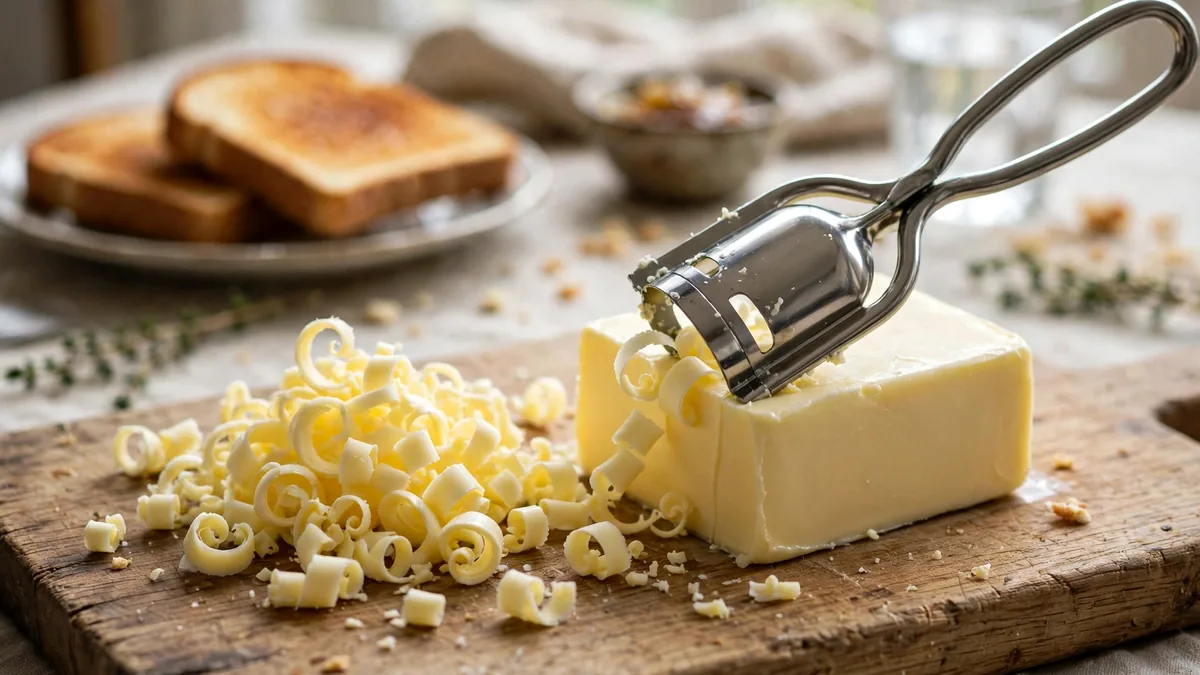
How to Use Butter Curlers for Perfect Butter Curls in 2026
Butter curlers are the small tools that turn an ordinary block of butter into the neat curls and ribbons you see on a well-set breakfast table, and the best butter curlers in 2026 do it with cold butter straight from the fridge. A good curler shaves a thin ribbon off the block that rolls itself into a curl, soft enough to spread on toast. A poor one skids across hard butter, gouges a ragged strip, or clogs after two passes. The difference is rarely the price. It is the edge, the holes or wire, and whether the butter is at the right temperature. This guide explains how butter curlers work, which type suits your table, and the technique that gives you clean curls on the first pass.
Key Takeaways
- Use fridge-cold butter: a cold block shaves into ribbons that curl on their own, while warm butter smears and soft butter tears.
- A holed curler knife is the best all-rounder for toast, turning hard butter into thin ribbons that soften in seconds on warm bread.
- A handled wire curler makes the neatest garnish curls for serving, with a grip that keeps your fingers clear of the blade.
- Pull in one smooth stroke and let the butter roll: stopping halfway, pressing hard, or sawing back and forth all break the curl.
- Wash a curler straight after use in warm soapy water and dry it fully, because dried butter in the holes clogs the next curl.
What a Butter Curler Actually Does
A butter curler is a small hand tool with a cutting edge shaped to shave butter into thin ribbons. As the ribbon leaves the edge it rolls into a curl, because one side of the ribbon is stretched slightly more than the other as it peels away from the block. That curl is the whole point: a thin ribbon softens instantly on warm toast, and a pile of curls looks generous while using no more butter than a thick slice. A curler is not a butter knife, though the two share a drawer. Our guide to the best butter knives of 2026 covers the wide flat blades that spread butter across toast; a curler is the tool that shapes butter before it is spread. It is also not a butter dish: a dish keeps butter soft and covered on the counter, and our guide to why a butter dish keeps butter softer and fresher in 2026 explains the lidded trays and keepers that hold a block at room temperature.
The Main Types of Butter Curler Compared
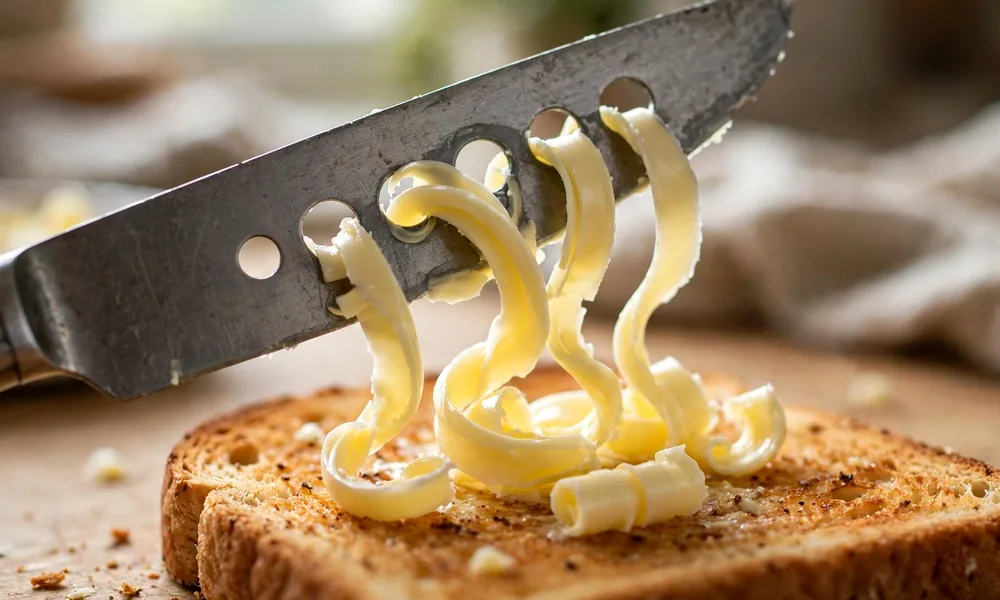
Butter curlers fall into four types, and the right one depends on whether you curl for toast or for the table. The holed curler knife is a short steel knife with a row of holes along the blade: drag it across cold butter and ribbons rise through the holes and curl as they come free. The handled wire curler is a small frame with a thin wire edge on a wooden or steel handle, pulled along the top of the block. The butter shaver is a peeler-style tool with a single flat blade that takes wide, flat shavings. The single-piece curler is a moulded steel tool with a curved cutting edge built into the handle.
| Type | Best for | Curl shape | Watch out for |
|---|---|---|---|
| Holed curler knife | Everyday toast, fridge-hard butter | Thin ribbons that soften fast | Holes clog if butter is too soft |
| Handled wire curler | Garnish curls for serving | Tight, even rosettes | Needs a steady pull and a flat block |
| Butter shaver | Wide shavings for cooking | Flat ribbons, less curl | Too wide for neat table curls |
| Single-piece curler | Occasional use, easy cleaning | Loose curls | Fixed edge cannot be adjusted |
The holed curler knife is the one most kitchens should buy first. It is a knife as well as a curler, so it earns its drawer space twice. Its ribbons are the thinnest of any type, which is why it wins on fridge-hard butter. The handled wire curler is the better tool for the table, because the handle lets you pull with a steady grip and the wire makes tighter, more even curls. The shaver suits cooking, where wide shavings melt into a pan, but its ribbons are too flat to curl neatly for serving. The single-piece curler is the simplest to clean and the hardest to break.
How to Curl Butter Step by Step
Start with the butter, not the tool. Take the block straight from the fridge and leave it on the counter for no more than two or three minutes. Fridge-cold butter, around 4 to 7 degrees, is firm enough to shave cleanly and soft enough not to crack. Butter left out for half an hour is too warm: the ribbon smears instead of curling. Butter straight from a very cold fridge can be too hard, and the edge will skip across the surface; if it does, wait one minute and try again rather than pressing harder. Salted butter curls slightly better than unsalted, because the salt firms the fat, and our comparison of the best and worst butters of 2026 shows which hold their shape best.
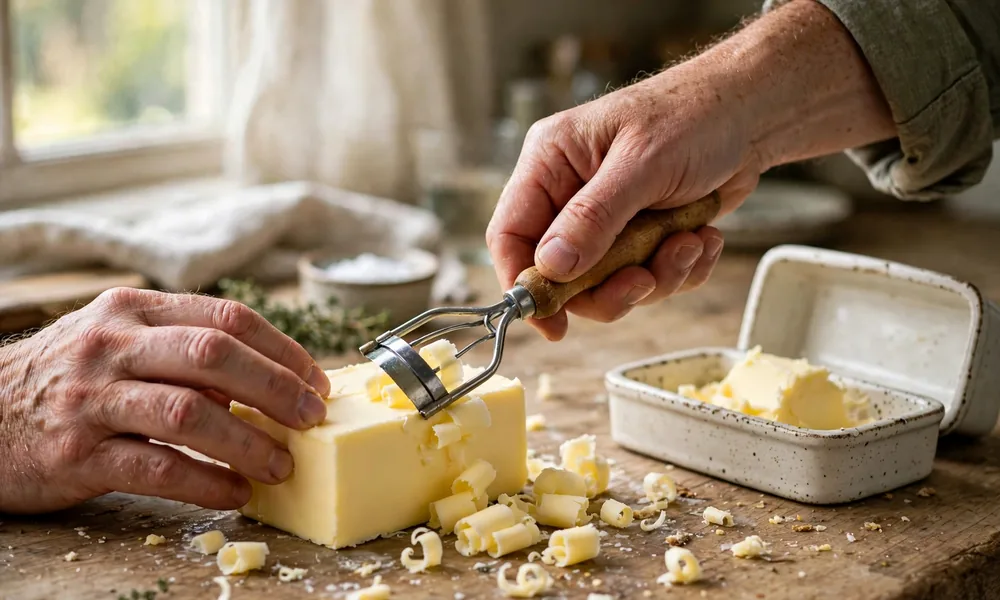
Set the block on a board with its widest flat face up, and hold it steady with your free hand well clear of the cutting edge. Place the curler at the far end of the block, edge down, at a low angle of about 30 degrees. Pull towards you in one smooth, even stroke, using the weight of the tool rather than your strength, and do not stop halfway. The ribbon should rise through the holes or over the wire and roll into a curl as it comes free. Pressing down hard crushes the ribbon flat and stops it curling; sawing back and forth tears the butter and leaves crumbs. If the curls come out ragged, the butter is usually too warm or the edge is clogged. Wipe the edge clean and chill the block for five minutes before trying again.
Choosing a Butter Curler That Curls Cleanly
The edge decides whether a curler curls or crumbles. On a holed knife, the holes should have smooth, even rims with no burrs, because a burr catches the ribbon and tears it. On a wire curler, the wire should be taut and straight, with no sag in the middle, because a sagging wire cuts an uneven ribbon that will not curl.
The handle matters more than it looks. A curler is pulled, not pushed, so the handle has to stay secure in a hand that is always a little greasy. Wood handles grip well even with butter on your fingers, but they need hand washing. Steel handles wash easily and never crack, but they can feel slippery when wet, so look for a handle with a slight curve or a textured grip. A handle that fills your palm gives you the steady pull a good curl needs.
Material is simple. Stainless steel is the practical choice for the cutting parts: it takes a smooth edge, resists rust, and stays smooth for years. Cheaper plated steel can chip or roughen, and a rough edge drags instead of cutting. Plastic curlers cost very little, but plastic cannot hold a truly smooth edge, so it presses more than it cuts, and dishwasher heat warps the frame so the wire goes slack.
Serving Butter Curls and Keeping Them Neat
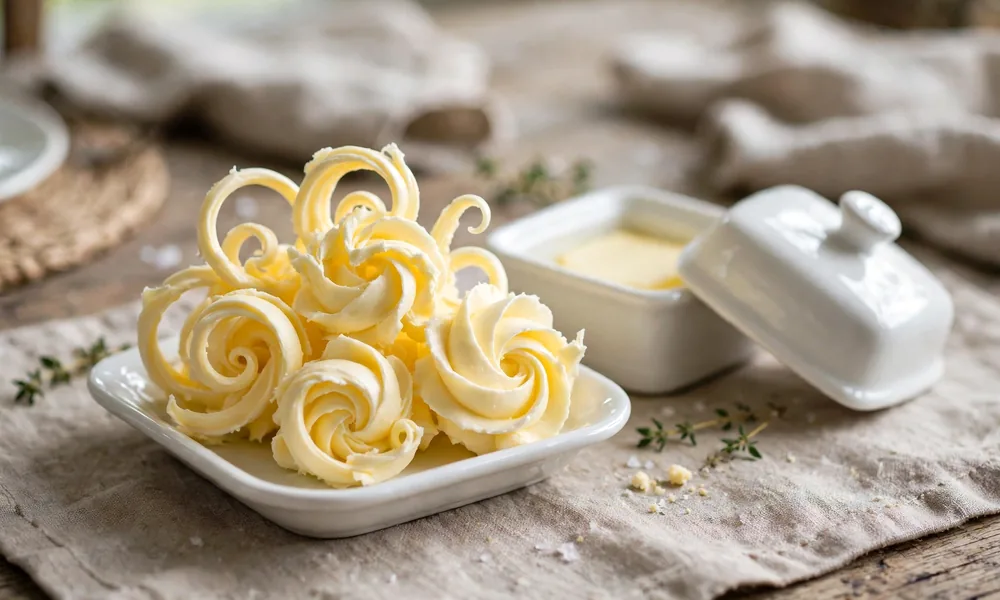
Curls are at their best in the first hour, so make them close to serving time. Arrange them loosely on a small cold dish, not in a heap: a heap traps warmth and the bottom curls soften, while a loose layer stays crisp. A dish straight from the fridge keeps curls firm for an hour on a cool table. Curls made for toast do not need presenting at all: ribbon the butter straight onto the hot toast and let the heat do the softening.
For a dinner party, a pile of curls beside the bread basket makes the table look considered for almost no effort, and a pinch of flaky salt scattered over the dish finishes it. Make a few more than you think you need: curls disappear faster than pats, because people take two or three without thinking. Leftover curls keep in a covered dish in the fridge for two or three days, and they are still good for cooking, where the shape does not matter.
What to Avoid When Buying a Butter Curler
Avoid curlers with holes that have rough, sharp rims, because they tear every ribbon at the same place. Avoid wire curlers with a loose or sagging wire, and any curler where the cutting part wobbles in its handle. Avoid novelty sets of a dozen tiny curlers: you will use one, and the rest will live in the drawer. Avoid buying a curler when what you need is a spreader: if the job is getting butter across toast, a wide flat butter knife is the right tool. And avoid the cheapest plastic curlers for daily use: they clog and warp.
Butter Curler Checklist
- Use fridge-cold butter, around 4 to 7 degrees, and curl within minutes of taking the block out.
- Pick a holed curler knife for everyday toast and a handled wire curler for neat serving curls.
- Check the edge before you buy: smooth holes or a taut wire, no burrs, no wobble in the handle.
- Pull in one smooth stroke at a low angle, let the weight of the tool do the work, and never saw back and forth.
- Serve curls in a loose layer on a cold dish, and chill the dish again if the table is warm.
- Wash the curler straight after use in warm soapy water, dry it fully, and store it where the edge cannot knock against other tools.
Frequently Asked Questions
What is a butter curler used for?
A butter curler shaves thin ribbons off a cold block of butter that roll into curls as they come away. The curls soften quickly on warm toast and look neat on a plate, so the tool suits both breakfast and the dinner table.
Is a butter curler the same as a butter knife?
No. A butter knife is a wide flat blade made for spreading butter across toast. A butter curler is a shaping tool with holes or a wire that cuts butter into ribbons and curls. A holed curler knife does a little of each job.
Why do my butter curls fall apart?
Usually the butter is too warm. Warm butter smears instead of curling. Chill the block for ten minutes and try again with a single smooth pull.
Can I curl butter that is too hard?
Yes, with a minute of patience. Butter straight from a very cold fridge can make the edge skip, so leave the block out for two or three minutes until the surface gives slightly under a fingertip, then curl.
How do I clean a butter curler?
Wash it straight after use in warm soapy water, using a soft brush to clear butter from the holes or around the wire, then dry it fully. Dried butter in the holes is the most common cause of clogged, ragged curls.
Are butter curlers worth buying?
Yes, if you serve butter at the table or fight fridge-hard butter at breakfast. A good steel curler costs little, lasts for years, and turns cold butter into ribbons that spread without tearing toast.
The Bottom Line
The best butter curler of 2026 is a stainless steel tool with a smooth edge and a handle that stays secure in a greasy hand: a holed curler knife for everyday toast, and a handled wire curler added for neat curls at the table. Use fridge-cold butter, pull in one smooth stroke without pressing down, and serve the curls in a loose layer on a cold dish. Do that, and a cold block of butter becomes ribbons that soften on warm toast and a table that looks finished.