A nutmeg grater is a small tool with one job, and it does that job better than anything else in the kitchen drawer. Nutmeg graters turn a whole, hard seed into a fine, fragrant dust in a few strokes. Ground nutmeg fades within months, while a whole nut keeps its flavour for years.
Most kitchens already own something that can grate nutmeg after a fashion: the fine side of a box grater, a rasp zester, or a spice grinder. Each works, and each misses something. A box grater is too big for a seed the size of an olive, a rasp zester leaves your fingertips inches from a razor edge, and a spice grinder means a bowl to wash for a single pinch. A dedicated nutmeg grater solves all three problems: it holds the seed, it grates it fine, and it stores the rest.
Key takeaways
- Whole nutmeg keeps its flavour for years, while ground nutmeg fades within months, so grate fresh and buy whole.
- A rotary nutmeg grater is the safest choice, because your fingers never come near the teeth.
- A small flat rasp grater is the cheapest, most versatile option, and it also handles garlic, ginger, and cheese.
- Grate nutmeg at the last moment, over the finished dish, because its aroma is strongest in the first minute.
- A little goes a long way: two or three passes flavour a single drink, and eight to ten passes season a family dish.
Why fresh nutmeg tastes nothing like the jar
Nutmeg is the dried seed of the nutmeg tree, and its flavour lives in essential oils locked inside a hard, dry shell. Grinding exposes those oils to air, and they escape quickly. A jar of ground nutmeg is at its best in the first weeks after grinding and is mostly dust after a year. A whole nutmeg keeps for two years or more, and one nut flavours dozens of dishes.
That is why the form matters more than the brand. The best nutmeg you can buy is a whole nutmeg, bought dry and hard, that rattles slightly when you shake it. Grate it late: long cooking drives the aroma off, so add nutmeg near the end of cooking or over the finished dish. A quarter-teaspoon, about eight to ten passes, flavours a family dish. Past a point nutmeg turns bitter, so grate less than you think you need.
The main types of nutmeg grater
Every nutmeg grater falls into one of three families, each trading safety against versatility. Most cooks need only one, and the right one depends on how often you grate nutmeg.
Rotary nutmeg graters
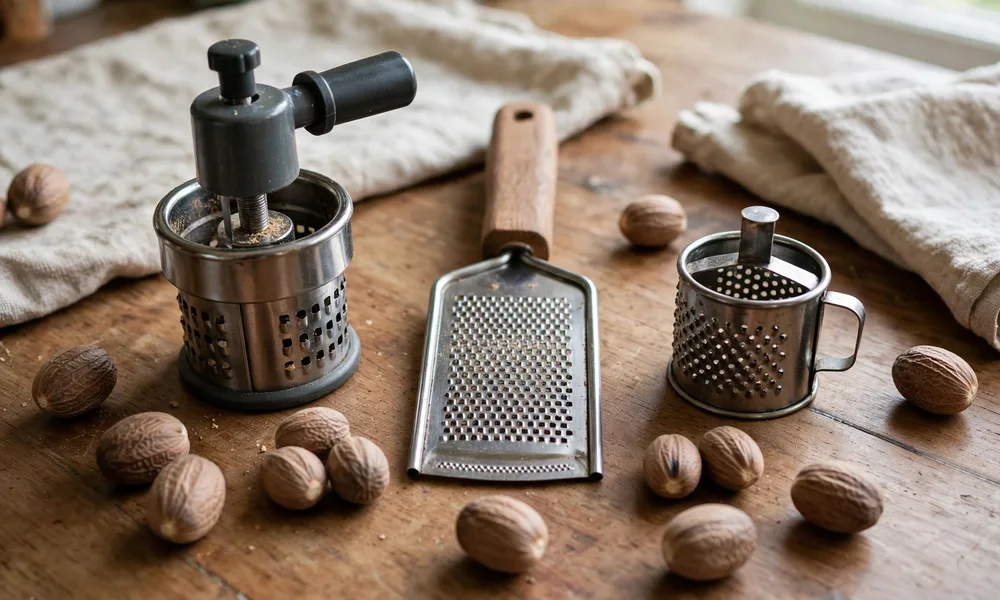
A rotary nutmeg grater is a small mill, about the size of a spice jar, with a drum or a rasp inside and a crank or a twist top. You drop the nut into the chamber, close the lid, and turn, and the teeth shave it into a fine dust below. Your fingers never come near a blade, which makes this the safest shape of all, and the best option for weak grip and for grating at the table. The chamber also stores the nut between uses, though its corners need a brush to clean.
Flat rasp nutmeg graters
A flat rasp grater is a small steel plate with hundreds of tiny etched teeth, sometimes set in a frame with a compartment to store the nut. It costs less than a rotary mill, rinses clean in seconds, and is the most versatile of the three: the same rasp grates garlic, hard cheese, and lemon zest. The best zesters use exactly this rasp design, and for citrus it is the whole story. For nutmeg, the rasp is fast and fine, but it asks more of your fingers, so choose one with a blade guard or a holder that grips the nut.
Drum and mill graters
Drum graters sit between the two: a small drum with teeth, turned by a handle, with the nut held inside by a spring or a plunger. They suit cooks who grate nutmeg in larger amounts, for baking days or big batches of sauce. Their weakness is size and price, and the drum is the hardest part of any grater to clean. For most homes, a rotary mill or a rasp is the better buy.
Nutmeg graters compared at a glance
| Grater type | Fineness | Finger safety | Cleaning | Best for |
|---|---|---|---|---|
| Rotary mill | Fine, even dust | Best, fingers never near teeth | Needs a brush | Table use, frequent grating |
| Flat rasp | Finest, feathery dust | Good, with a guard or holder | Easiest, rinse clean | Everyday grating, garlic, zest |
| Drum grater | Fine, even dust | Good, nut held inside | Hardest, drum corners | Large batches, baking days |
| Box grater, fine side | Medium, coarser dust | Poor, knuckles near teeth | Needs a brush | Occasional grating only |
Nutmeg grater vs ginger grater: the sibling distinction
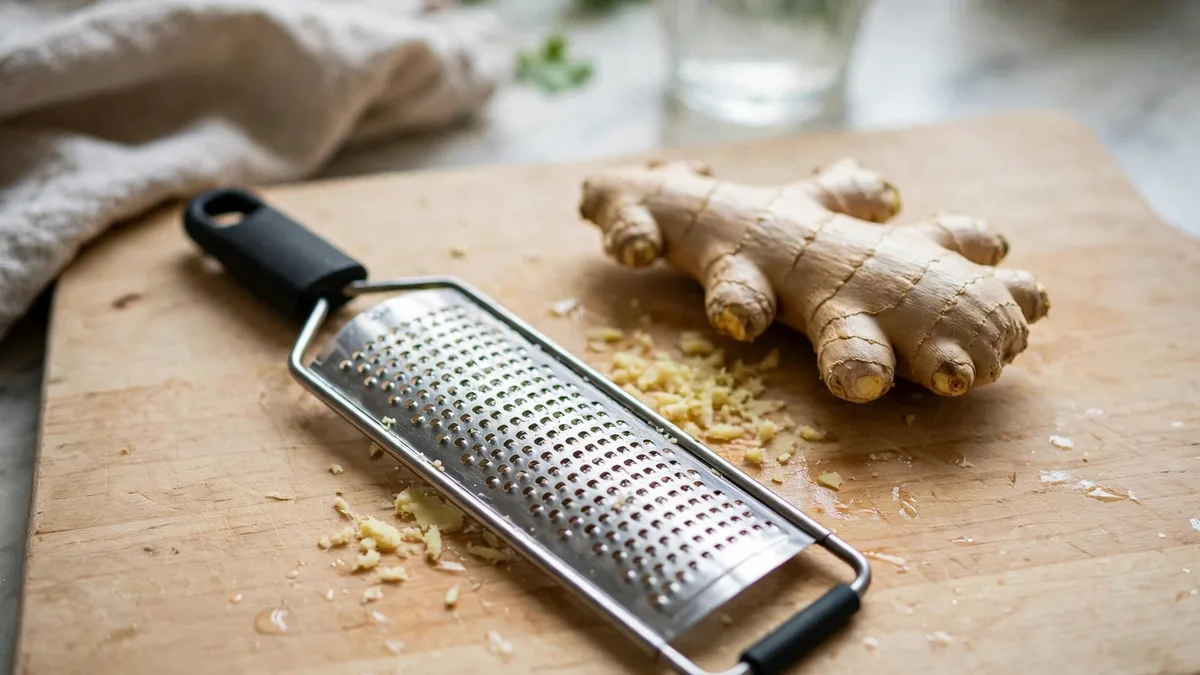
Nutmeg graters and ginger graters look like siblings, but they are built for opposite jobs. A ginger grater is a fine rasp built for a fresh, wet root: it shreds fibrous, juicy ginger into a fine, wet pulp that melts into a stir fry, with wide, sharp teeth that cut through fibres instead of clogging. A nutmeg grater is built for a whole, dry, hard spice, and it shaves a small, dense seed into a dry, fine dust, with a chamber or a holder that keeps a seed the size of an olive under control.
The distinction matters in practice. Use a rotary nutmeg grater on fresh ginger and the wet pulp smears across the drum and clogs the teeth. Use a ginger rasp on nutmeg and it will work, but you will be holding a tiny hard seed with bare fingertips against a razor edge. The rule is simple: a ginger grater handles wet roots, a nutmeg grater handles dry seeds, and the rasp is the one shape that crosses over with a guard or a holder.
How to grate nutmeg properly
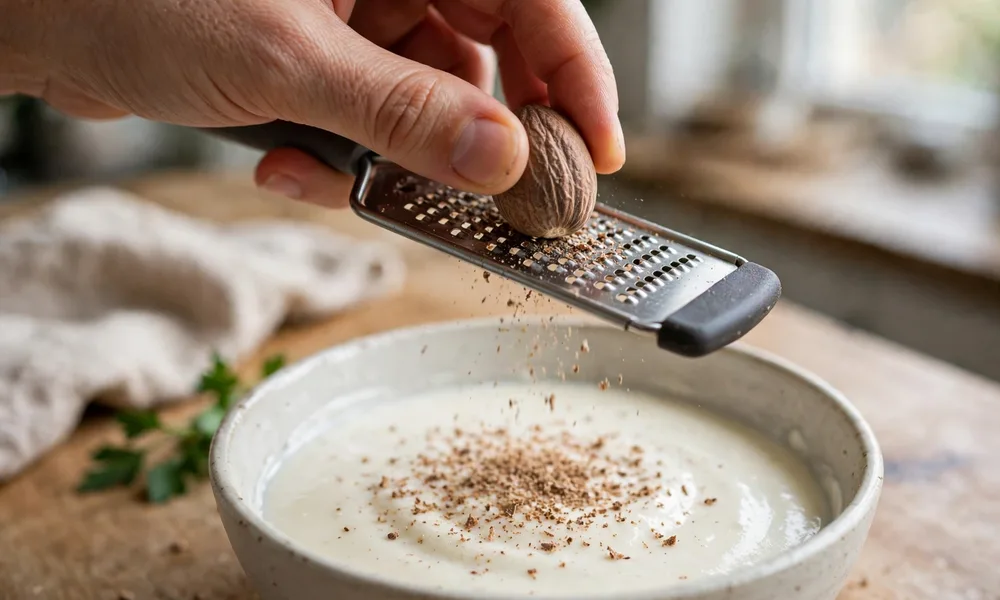
Grating nutmeg takes seconds, but technique decides whether you get fragrance or dust on the counter. Hold the nut between thumb and forefinger and draw it across the grater in short, firm strokes, letting the teeth do the work. Do not press hard: pressure makes the nut slip, and a slipping nut is how fingers meet teeth. Grate directly over the food, at the last moment, because the aroma is strongest in the first minute after grating.
With a rotary grater, drop the nut in, close the lid, and turn the crank steadily. About five turns give a pinch, and fifteen to twenty give a quarter-teaspoon. With a rasp, keep the blade flat and still, move only the nut, and stop when the seed is too small to hold safely.
What makes a good nutmeg grater
Sharpness decides everything. A good nutmeg grater uses sharp, etched stainless steel teeth, cut cleanly and spaced evenly, so each stroke shaves the nut instead of crushing it. Dull teeth mash the seed into gritty crumbs, and gritty nutmeg tastes harsh. Stainless steel beats thin plastic, because it stays sharp longer and does not stain.
Size and storage matter too. A rotary mill with a storage chamber earns its space twice over, because it holds the nut and the dust in one place. If you cook with whole spices often, the ginger graters cover the electric and manual options for larger batches, but for a pinch of nutmeg, a small hand grater is faster and easier to wash.
Common mistakes that spoil the nutmeg
The most common mistake is grating too much. Nutmeg is a background spice: it rounds out dairy and softens sweetness without announcing itself the way chilli does. Past a point it turns bitter and medicinal. The second mistake is grating too early: nutmeg added at the start of a long simmer loses its aroma to the steam, so the dish ends up with the bitterness and none of the warmth.
The third mistake is buying ground nutmeg and expecting it to behave like fresh. A jar that has sat open for a year is not a weaker version of fresh nutmeg, it is a different ingredient. The fourth mistake is storing whole nuts badly: nuts kept damp, in sunlight, or in an open jar lose their oils and go soft, and a soft nut crumbles instead of grating. Keep them dry, dark, and airtight.
Cleaning and care
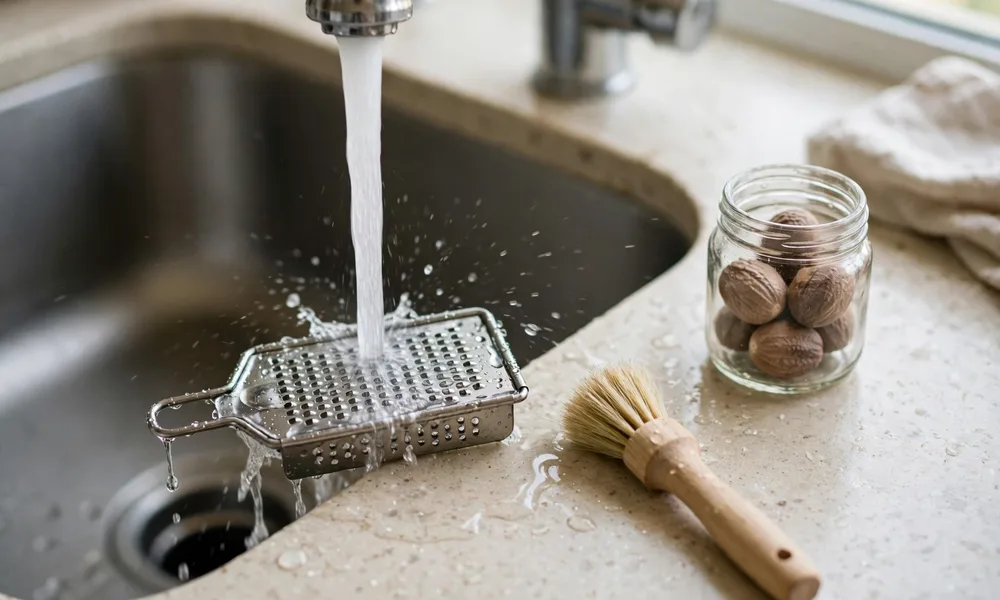
Cleaning is where a nutmeg grater lives or dies. Nutmeg dust is oily, and once it dries in the teeth it is almost impossible to shift. Rinse a rasp under running water straight after use, brushing along the teeth in the direction they point, never against them. A rotary mill needs its chamber emptied and brushed out after each use. Never leave a used grater in the sink to soak: the dust sets like glue.
Most good graters are dishwasher safe, but hand washing keeps the teeth sharp for longer. Dry the grater fully before putting it away, because trapped moisture dulls steel and softens stored nuts. Replace a rasp when the teeth feel smooth or it needs real pressure to take anything off, and replace a rotary mill when the crank slips or the lid no longer closes firmly.
Checklist: buying a nutmeg grater
- Choose a rotary mill for safety and storage, or a flat rasp for versatility.
- Check the teeth are sharp, etched stainless steel, evenly spaced, with no rough burrs.
- Make sure the grater holds a whole nutmeg securely, with a chamber, a holder, or a guard.
- Pick a size that fits your drawer and your hand, with a grip you can hold without squeezing hard.
- Look for a clear compartment so you can see how much you have grated.
- Confirm it rinses or brushes clean in under a minute.
Frequently asked questions
Do I need a nutmeg grater if I already have a rasp zester?
Not always. A rasp zester grates nutmeg beautifully, because the teeth are the same fine, etched steel. The case for a dedicated grater is safety and storage: a rotary mill keeps your fingers away from the teeth and stores the nut.
Can I use a nutmeg grater for other spices?
Yes, within limits. A rotary nutmeg grater also handles other small, hard seeds, such as allspice berries and cloves, and a flat rasp handles garlic, ginger, cheese, and zest. Do not use a nutmeg grater for fresh ginger: the wet pulp clogs the drum.
How much nutmeg should I grate at once?
Two or three passes for a single drink, eight to ten passes for a family dish, and about a quarter-teaspoon at most. Fresh nutmeg is stronger than the jar, so use about half the amount a recipe for ground nutmeg suggests.
How long does whole nutmeg keep?
Whole nutmeg keeps for two years or more when stored dry, dark, and airtight, while ground nutmeg fades within three to six months. A nut that feels light, looks cracked, or has no scent when grated is past its best.
Is a nutmeg grater better than a spice grinder?
For a pinch of nutmeg, yes. A nutmeg grater is faster, quieter, and easier to wash, and it grates exactly the amount you need, directly over the dish.
How do I clean a clogged nutmeg grater?
Rinse it under running water straight after use, brushing across the teeth from the back, or dried dust glues itself in. For a rotary mill, empty the chamber and brush the drum.
The bottom line
The nutmeg grater that earns its place in 2026 is a small rotary mill with sharp steel teeth and a chamber that stores the nut, or a flat rasp with a guard that keeps your fingers safe. Buy whole nutmeg, grate it fresh at the last moment, and use less than you think you need. Our verdict: a dedicated nutmeg grater beats pre-ground nutmeg every time, because fresh grating is the only way to taste what nutmeg actually is.