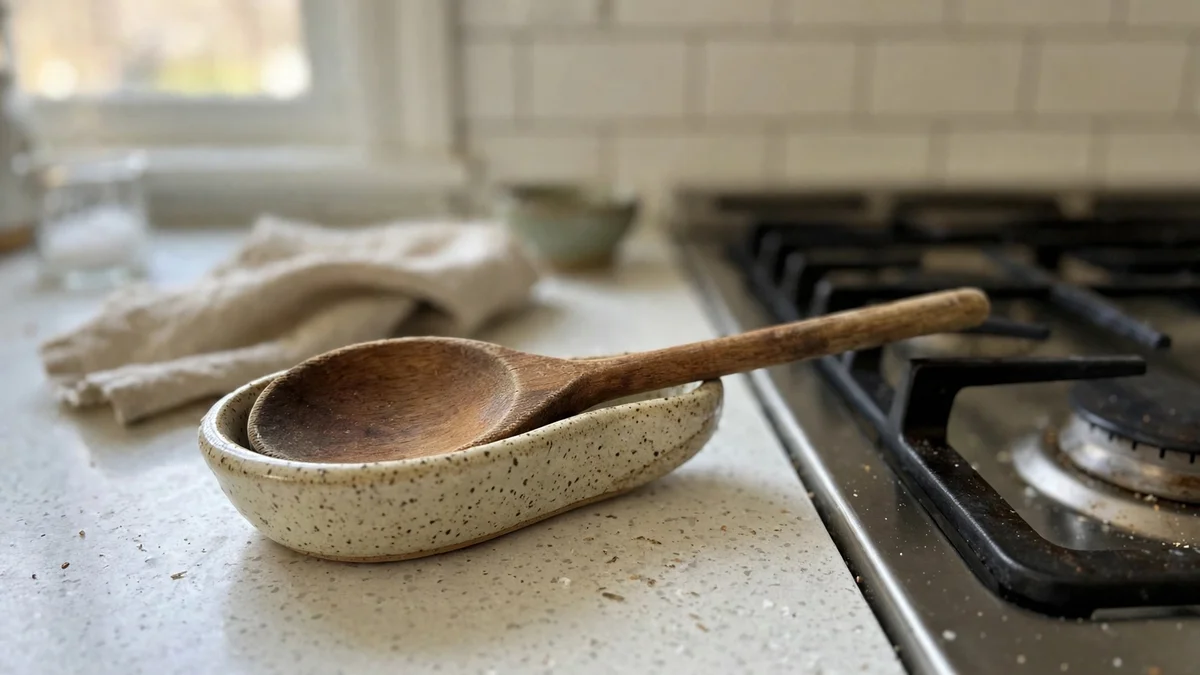
A spoon rest is a small dish that sits beside your stove and holds your cooking spoon between stirs, and the best spoon rests in 2026 do one simple job brilliantly: they catch the drips so your worktop stays clean. Every cook knows the moment: you stir a pot of tomato sauce, lift the spoon out, and look around for somewhere to put it. The worktop gets a red smear, or the spoon ends up balanced on a plate that slides away. A spoon rest ends that little dance, giving the spoon a home and keeping the sauce off the counter. This guide explains which materials hold up to daily cooking and how to choose one that fits your stove and your spoons.
Key Takeaways
- A spoon rest is a heat-safe dish that holds a cooking spoon or ladle beside the stove and catches drips, so the worktop stays clean while you cook.
- Ceramic and stoneware spoon rests suit most kitchens: they are heavy enough to stay put, easy to wash, and handle hot, saucy spoons without a fuss.
- Stainless steel spoon rests are the toughest option and go in the dishwasher, while silicone rests are light, flexible, and best for small kitchens and non-stick cookware.
- Size matters more than looks: the rest should be longer than your longest cooking spoon and wide enough to catch drips from a ladle.
- Keep the spoon rest beside the hob, not across the kitchen, because a rest you have to walk to is one you will stop using.
What a Spoon Rest Actually Does
A spoon rest is not decoration, though the good ones look nice. It is a working tool with three jobs: first, it catches drips. A spoon fresh from a simmering pot carries sauce, oil, or stock on its bowl, and that liquid has to go somewhere. On a worktop it leaves a stain; in a spoon rest it pools in a shallow well you rinse out later. Second, it keeps the spoon off surfaces that would stain or burn: a hot spoon can mark a wooden worktop and stain a tea towel for good. Third, it keeps the spoon where your hand expects it, so the rhythm of stir, rest, stir again is never broken.
The difference between a spoon rest and a trivet is worth knowing, because the two are often confused. A trivet protects a table from a hot pot or dish that is being served, while a spoon rest holds a utensil beside the stove while you cook. They live in different places and solve different problems. Our guide to the best trivets of 2026 covers the table side of the story, while this guide stays at the stove.
The Main Types of Spoon Rest
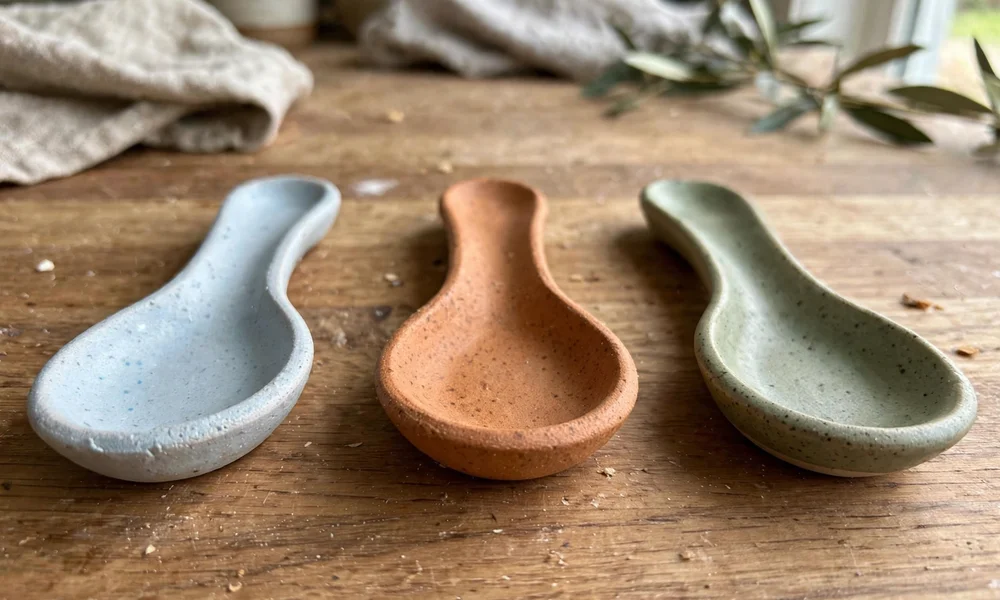
Spoon rests come in five main materials, and each one suits a different kind of cook. Most kitchens need just one good rest, so it is worth choosing the material that matches how you actually cook rather than the one that looks best in the shop.
Ceramic and Stoneware Spoon Rests
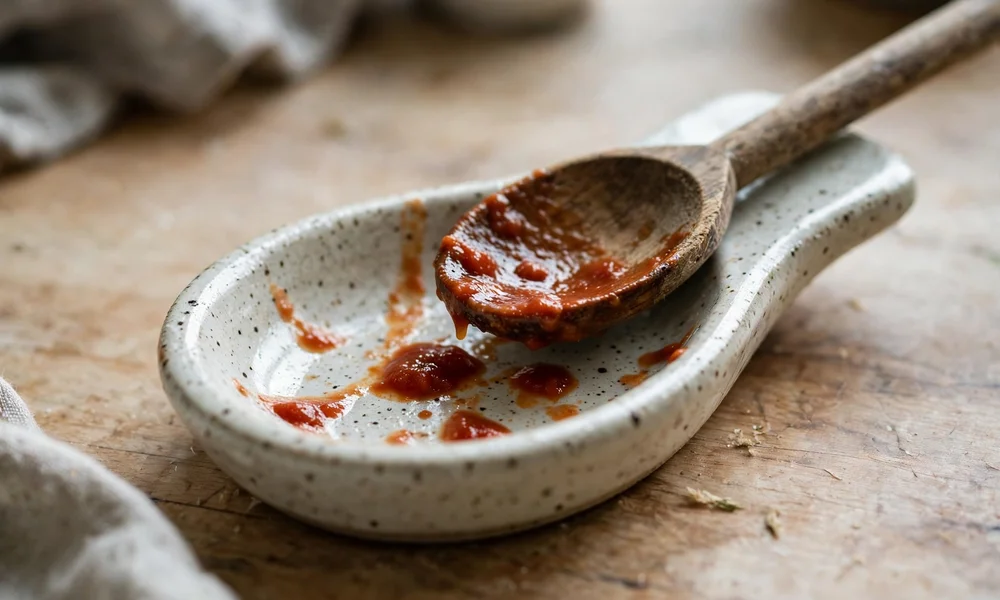
Ceramic spoon rests are the classic choice, and for most kitchens they are the right one. They are heavy enough to stay put when you set a spoon down, they handle hot spoons without complaint, and they wash clean in the sink or the dishwasher. Glazed ceramic shrugs off tomato sauce, curry, and beetroot, which are the stains that ruin lighter materials. The shallow well holds a surprising amount of liquid, and the raised edge stops a spoon from sliding off. The trade-off is breakability: drop a ceramic rest on a tiled floor and it will chip or crack. If your kitchen has hard floors and you are clumsy with dishes, keep that in mind.
Stainless Steel Spoon Rests
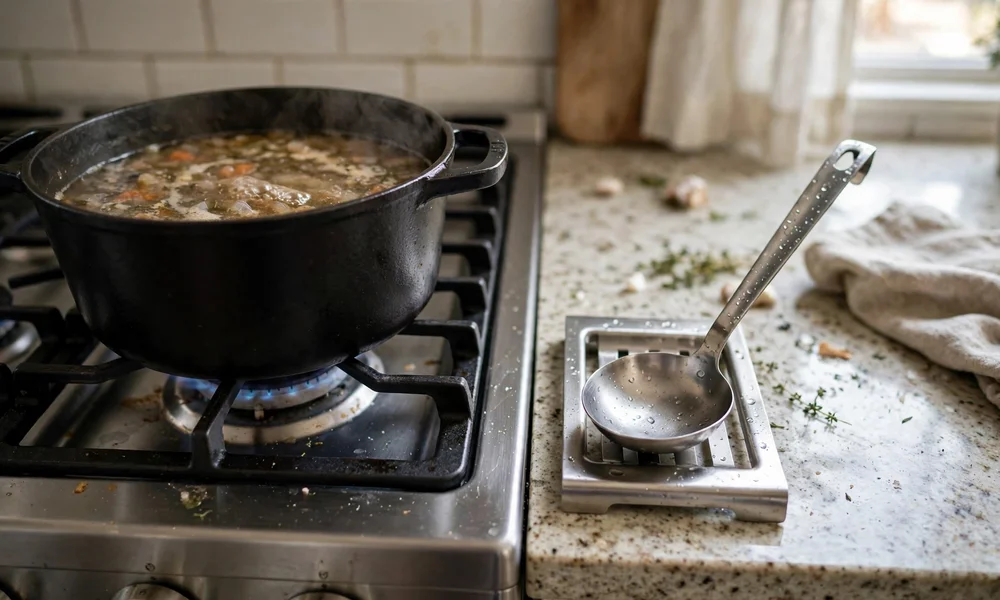
Stainless steel spoon rests are the toughest option you can buy. They do not chip, crack, or stain, they go straight in the dishwasher, and they handle the hottest spoon without a mark. Many steel rests are long and narrow, shaped to hold a ladle as well as a spoon, and some have a raised lip that stops the spoon sliding off. The downsides are noise and heat: a steel rest clatters when a spoon lands on it, and the rest itself can get warm if it sits too close to the hob. If you want to know which utensils deserve a place beside it, our guide to the best spatulas of 2026 is a good place to start.
Silicone Spoon Rests
Silicone spoon rests are the modern, flexible option. They are light, they grip the worktop so they do not slide, and they are kind to non-stick cookware because they never scratch a spoon or a pan. Silicone handles heat up to about 230 degrees, which covers any spoon coming out of a home pot, and it washes in seconds. The trade-offs are staining and floppiness: tomato and turmeric can tint pale silicone, and a thin rest can flex under a heavy ladle. Choose thick silicone with a firm base, and expect to replace it sooner than a ceramic or steel rest. Silicone is the best choice for small kitchens, caravans, and anyone who wants a rest that can be rolled up and tucked in a drawer.
Wooden and Bamboo Spoon Rests
Wooden spoon rests bring warmth to the kitchen and suit rustic and natural settings. Bamboo is the most common wood, because it is hard, light, and resists moisture better than most timbers. A wooden rest feels good in the hand and looks at home next to wooden spoons and chopping boards. The care is real, though: wood needs hand washing, occasional oiling, and time to dry, and it will stain if tomato sauce sits in it for hours. Never soak a wooden rest, and never put it in the dishwasher.
How to Choose the Right Size and Shape
Size is the detail most people get wrong, and it matters more than colour or brand. Measure your longest cooking spoon from tip to the end of the handle, then add a few centimetres. The rest should be long enough that the spoon lies flat without its bowl hanging over the edge. For most home cooks that means a rest of 25 to 30 centimetres. If you use a ladle, measure that too — our guide to the best ladles of 2026 explains which sizes suit which pots — and consider a long rest instead.
Width matters for drips: a rest of 10 to 12 centimetres wide gives you room for a spoon set down in a hurry. Depth matters too — a well of about 2 centimetres holds a spoonful of sauce without overflowing, while a flat rest lets liquid run off the edge. Look for a raised rim all the way around.
Spoon Rest Materials Compared
| Material | Best For | Cleaning | Watch Out For |
|---|---|---|---|
| Ceramic and stoneware | Everyday cooking, saucy dishes | Dishwasher safe | Chips if dropped on hard floors |
| Stainless steel | Busy kitchens, heavy ladles | Dishwasher safe | Clatters, shows water spots |
| Silicone | Small kitchens, non-stick cookware | Dishwasher safe | Stains with tomato and turmeric |
| Wood and bamboo | Rustic kitchens, wooden spoons | Hand wash, oil occasionally | Stains, never soak or dishwash |
| Long ladle rests | Soups, stews, big pots | Depends on material | Too long for a small worktop |
Where to Put Your Spoon Rest
Placement decides whether a spoon rest gets used or gathers dust. The right place is beside the hob, on the side of your dominant hand, within arm’s reach while you stir. If you stir with your right hand, the rest belongs on the right of the hob. That sounds obvious, but many kitchens put the rest wherever there is a gap, and a gap across the stove means a dripping spoon carried over the worktop, which defeats the purpose.
Care and Cleaning
Cleaning depends on the material. Ceramic and steel rests go in the dishwasher, though a quick rinse after cooking stops sauce drying into the well. Silicone rinses clean under a tap, though turmeric may leave a faint, harmless tint. Wooden rests need hand washing, a towel dry, and a rub of food-safe oil once a month.
Common Mistakes When Buying a Spoon Rest
The first mistake is buying a rest that is too small. A rest that looks neat in the shop often cannot hold a full-size ladle, and a spoon that overhangs the edge drips exactly where you did not want it. Measure your spoons before you buy, and when in doubt, go bigger. The second mistake is choosing looks over weight. A light, decorative rest slides across the worktop when a heavy spoon lands on it, and a rest that moves is a rest that spills. Pick it up in the shop: it should feel solid for its size.
The third mistake is buying a rest made from a material that cannot handle your cooking. A wooden rest in a kitchen that cooks tomato sauce every night will stain and wear out fast, and a thin silicone rest under a heavy ladle will flex and tip. Match the material to the meals you actually cook.
Your Spoon Rest Checklist
- Measure your longest spoon and ladle, and buy a rest longer than both.
- Choose ceramic or steel for saucy, everyday cooking and silicone for small kitchens.
- Check the rest sits flat and does not rock on the worktop.
- Look for a raised rim and a well deep enough to hold a spoonful of sauce.
- Place it beside the hob on your dominant-hand side, within arm’s reach.
- Rinse the well after cooking so sauce never dries into it.
Frequently Asked Questions
What is a spoon rest used for?
A spoon rest holds your cooking spoon or ladle beside the stove between stirs and catches the drips, so sauce and oil stay off your worktop and the spoon stays within reach.
Do I really need a spoon rest?
You do not need one to cook, but most cooks who try one keep it. It saves wiping the worktop after every meal and keeps the spoon where your hand expects it.
What size spoon rest should I buy?
Buy a rest longer than your longest cooking spoon, usually 25 to 30 centimetres, and 10 to 12 centimetres wide. If you use a ladle, choose a long rest of 30 centimetres or more.
Can a spoon rest go in the dishwasher?
Ceramic, stainless steel, and silicone spoon rests are usually dishwasher safe. Wooden and bamboo rests are not: wash them by hand and dry them straight away.
What is the difference between a spoon rest and a trivet?
A spoon rest holds a cooking spoon beside the stove and catches drips, while a trivet protects a table from a hot pot or dish being served. They solve different problems and live in different places.
How do I stop my spoon rest sliding around?
Choose a heavier rest, such as ceramic or steel, or a silicone rest that grips the surface, and place it on a flat part of the worktop.
The Bottom Line
The best spoon rest is the one that fits your spoons, stays put beside your hob, and gets rinsed after cooking. Ceramic suits most kitchens, steel suits busy ones, and silicone suits small ones, but any rest beats a bare worktop. Buy one long enough for your ladle, wide enough for a careless set-down, and heavy enough not to slide, then leave it out where your hand can find it without looking. It is one of the cheapest tools in the kitchen, and once it is part of your cooking rhythm you will wonder how you managed without it.