
A trivet is the quietest hero in the kitchen, and the table only notices it when it is missing. One hot casserole dish set straight onto a wooden table leaves a pale ring that never quite fades, and a cast iron pot on a varnished surface can blister the finish in seconds. A trivet stands between that heat and your table, and the trivets that protect the table from hot pots in 2026 do the job without fuss: they take the heat, hold the pot steady, and look good enough to stay on the table through the whole meal. The best trivet matches the weight and heat of the pots you actually serve, and is one you remember to use every time.
Most tables carry at least one heat scar, and most were avoidable: the trivet was in a drawer, too small for the dish, or it slid across the table the moment the pot was set down. This guide explains which materials handle real heat and how to choose a trivet that protects your table for years.
Key Takeaways
- The best trivet for hot pots is one wider than the base of the dish it holds, with feet or a raised design that keeps heat and steam away from the table surface.
- Cast iron and steel trivets handle the highest heat and the heaviest pots, while cork, wood and silicone suit lighter dishes and everyday serving.
- A trivet must stay put. Look for non-slip feet, enough weight to resist sliding, and a flat base that sits evenly on the table.
- Match the trivet to the dish: a large casserole needs a wide, rigid trivet, while a small saucepan is fine on a compact cork or silicone mat.
- Keep trivets where you serve food, not buried in a drawer. A trivet you can reach in two seconds is one you will actually use.
What Makes a Great Trivet
A great trivet starts with heat resistance, and the honest test is simple: it must survive the hottest pot you own without scorching, melting, or passing the heat straight through to the table. Cast iron and stainless steel pass this test easily, which is why they are the classic choice for heavy, oven-hot dishes. Silicone handles moderate heat gracefully and grips the table, but it has a lower limit, usually around 200 to 230 degrees, so it suits serving dishes rather than pots straight from a fierce oven.
Stability is the second thing that matters, and it is the one most people discover too late. A trivet that rocks, slides, or tips under a heavy pot is a hazard, not a help. The best trivets have a wide footprint, small feet that grip the table, and enough weight to stay where they are put. Openwork designs, with gaps between the bars or slats, let steam escape instead of trapping it against the table, which prevents the damp rings that appear under solid mats.
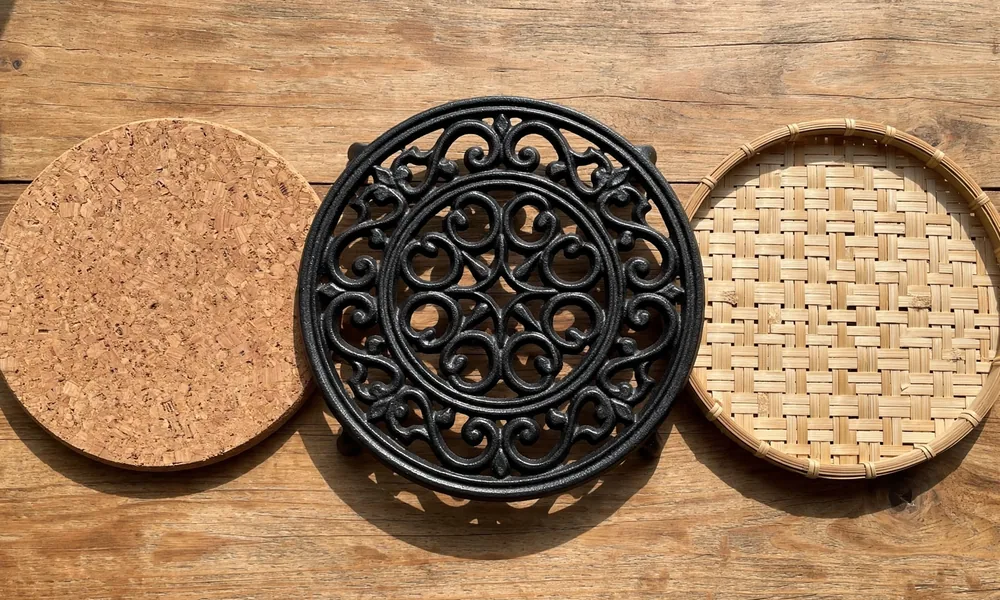
Finally, a great trivet is one you will actually use, which means it has to look at home on your table. A trivet that clashes with everything gets hidden in a drawer, and a hidden trivet protects nothing. Cast iron suits rustic tables, woven bamboo and cork suit light, natural settings, and clean steel or silicone fits a modern kitchen. The best placemats work the same way: tableware you like looking at stays out and does its job.
The Trivets That Protect the Table in 2026
The trivets that protect the table from hot pots in 2026 come in five main materials, and each one has a job it does best. Most households need two: a heavy-duty trivet for oven-hot pots and casseroles, and a lighter one for everyday serving.
Cast Iron Trivets
Cast iron is the workhorse of the trivet world. It handles any heat a home kitchen can produce, supports the heaviest casserole without flexing, and lasts for decades. The classic openwork design, with decorative scrolls or a grid of bars, lets steam escape and looks good on the table. Cast iron is heavy, which is a virtue here: it stays put when a pot is set down and does not slide when someone serves. It can scratch a delicate table if dragged, and it needs to be kept dry to avoid rust.
Cork Trivets
Cork is the quiet, practical choice for everyday serving. It is a natural insulator, so the underside stays cool even under a hot dish, and it is light, cheap, and kind to table surfaces. Cork trivets suit lighter dishes, teapots, and serving bowls, and they come in sizes from small coasters to large rounds that fit a family casserole. Keep cork trivets dry, use them for dishes that have cooled for a minute or two, and replace them when the surface starts to flake.
Wooden Trivets
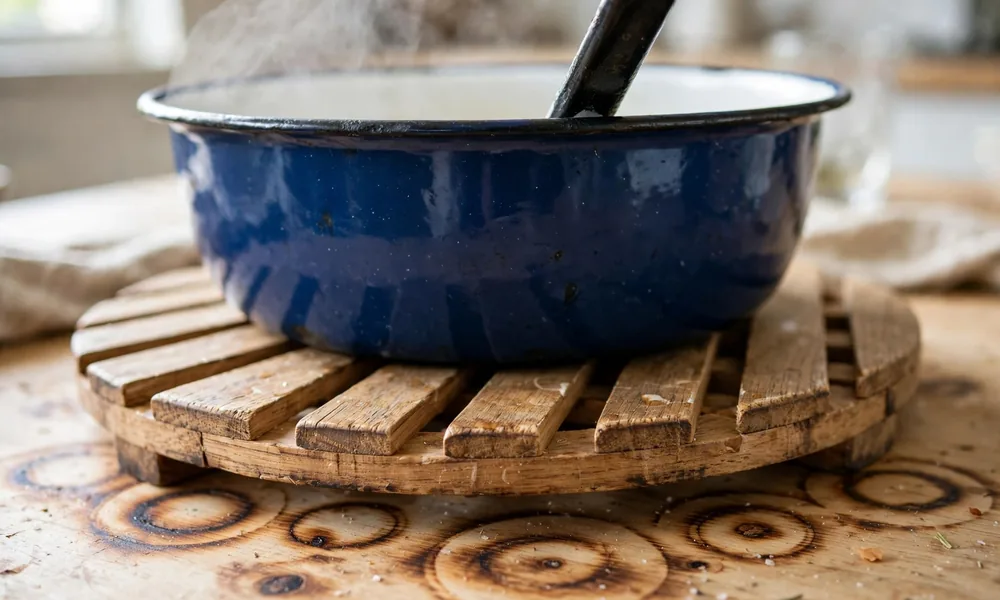
Wooden trivets, usually made from bamboo, acacia, or teak, bring warmth to the table and handle everyday heat well. Slatted designs let air circulate and steam escape, which protects the table from damp rings as well as heat. Wood suits rustic and natural table settings, and a well-made wooden trivet feels substantial in the hand. Oil the wood occasionally, keep it away from prolonged soaking, and do not leave a scorching-hot pot on it for a whole meal. Wood is best for serving dishes and moderately hot pots, while cast iron takes the hottest jobs.
Silicone Trivets
Silicone trivets are the modern, flexible option. They grip the table and the pot, roll up for storage, and wash in seconds. Their heat limit is lower than metal, usually around 200 to 230 degrees, which covers most serving dishes and pots that have rested for a moment, but not a roasting tin straight from a very hot oven. Choose thick silicone with a textured surface, and check that it lies flat: a mat that curls at the edges will not hold a pot steady.
Stainless Steel Trivets
Stainless steel trivets are the lightest of the heavy-duty options. They handle high heat, support heavy pots, and clean in the dishwasher without any special care. Many steel trivets expand or fold, so one trivet adjusts to fit dishes of different sizes, which is useful in a small kitchen. Choose a design with raised feet or an open grid that keeps the hot surface away from the table. Steel suits modern kitchens and cooks who want a trivet that goes straight into the dishwasher and comes out looking new.

Trivet Comparison
Each trivet material trades heat resistance against weight, care, and looks. The table below compares the five main types.
| Trivet material | Best for | Heat limit | Care needed |
|---|---|---|---|
| Cast iron | Heaviest, hottest pots and casseroles | Very high | Keep dry, avoid dragging |
| Cork | Everyday dishes, teapots, light serving | Moderate | Keep dry, replace when flaking |
| Wood | Serving dishes, rustic tables | Moderate to high | Oil occasionally, avoid soaking |
| Silicone | Non-slip serving, easy storage | Up to around 200 to 230 degrees | Dishwasher safe |
| Stainless steel | Heavy pots, easy cleaning | High | Dishwasher safe |
Using a Trivet Properly
A trivet only protects the table if it is used correctly, and the most common mistake is size. Always choose a trivet wider than the base of the dish, with at least a couple of centimetres to spare all round. A trivet that is too small lets the edges of the pot touch the table, and the heat reaches the finish exactly where the trivet ends. For a large casserole or roasting tin, use two trivets side by side rather than one small one, or buy an expanding trivet that grows to fit the dish.
Think about the whole journey from oven to table. The best oven mitts protect your hands on the same trip, and both should be within reach before the dish comes out. Set the pot down gently and centrally, and check that it sits flat: a pot that rocks on a trivet can spill, and a trivet that rocks on the table can scratch. After the meal, lift the pot straight up rather than sliding it across the trivet, and let the trivet cool before putting it away.
Caring for Your Trivets
Trivets need very little care, but the care differs by material. Cast iron should be washed, dried immediately, and rubbed with a drop of oil now and then to prevent rust. Cork and wood should be wiped clean rather than soaked, and wood benefits from an occasional coat of food-safe oil to stop it drying and cracking. Silicone and stainless steel are the easiest: they go in the dishwasher and come out ready to use.
Storage matters too. Keep at least one trivet on the sideboard or in the drawer nearest the dining table, not in a cupboard in another room. The trivet you can reach in two seconds is the one you will use, and the one buried at the back of a cupboard might as well not exist. If you entertain often, keep two or three trivets of different sizes in the same spot, so there is always one that fits the dish being served. The best vs worst cutting boards protect the worktop in the kitchen, and trivets do the same job at the table.
Trivet Buying Checklist
- Measure your largest casserole or pot base, and buy a trivet at least a few centimetres wider on every side.
- Check the heat rating: cast iron and steel for oven-hot dishes, cork and wood for serving, silicone for moderate heat.
- Test stability. The trivet should sit flat, grip the table, and not rock or slide under a heavy pot.
- Choose an open or slatted design so steam escapes instead of trapping damp against the table.
- Pick a material you can care for: dishwasher-safe steel or silicone for busy kitchens, oiled wood or iron for traditional ones.
- Keep trivets where you serve food, and buy two sizes so there is always one that fits the dish.
Frequently Asked Questions
What is the best trivet material for very hot pots?
Cast iron is the best choice for the hottest pots, because it handles any heat a home oven produces and supports heavy dishes without flexing. Stainless steel is a close second and is easier to clean.
Can I use a trivet on a glass table?
Yes, but choose a trivet with a soft, flat base, such as cork or silicone, and avoid dragging cast iron across the glass. Glass is vulnerable to thermal shock and scratches, so a trivet with good grip and a wide footprint is the safest choice.
How big should a trivet be?
A trivet should be wider than the base of the dish it holds, with a few centimetres to spare all round. If the pot overhangs the trivet, heat reaches the table at the edges.
Do silicone trivets melt?
Good silicone trivets do not melt at normal serving temperatures, but they do have a limit, usually around 200 to 230 degrees. Do not place a roasting tin straight from a very hot oven on a silicone trivet. Let the dish rest for a minute, or use cast iron or steel for the hottest pots.
How do I remove heat marks from a wooden table?
Light heat marks can sometimes be lifted with gentle heat from a hair dryer or by rubbing with oil and salt, but deep scorch marks and blistered varnish usually need sanding and refinishing.
How many trivets do I need?
Most households need two or three: a large cast iron or steel trivet for heavy casseroles, and one or two smaller cork, wood or silicone trivets for everyday dishes and teapots.
The Bottom Line
The trivets that protect the table from hot pots in 2026 are a wide cast iron or stainless steel trivet for oven-hot dishes, and a cork or wooden one for everyday serving. Buy trivets wider than your largest pot base, choose an open design that lets steam escape, and keep them where you serve food so they are always within reach.


