How to Choose Melon Slicers That Handle Watermelon Without the Mess in 2026
Melon slicers do one big job very well: they turn a heavy watermelon, cantaloupe, or honeydew into even wedges, spears, or sticks in a few quick cuts, with no slipping board and no juice running across the worktop. If you serve melon through the summer, the best melon slicers in 2026 save time, keep the serving plate neat, and make a daunting fruit feel easy. This guide explains how they work and how to choose one for the melons you actually buy.
A melon is the hardest fruit in the kitchen to cut well: a watermelon can weigh five kilos or more, with a tough, slippery rind and heavy, wet flesh. Cutting it with an ordinary knife means holding a round, rolling fruit steady with one hand while driving a long blade through it with the other, and the board slides, the juice pools, and the wedges come out uneven. A slicer fixes that by giving the cut a shape, a long curved blade, a wheel of blades, or a frame that presses through the melon in one motion.
Key Takeaways
- A long curved-blade melon slicer is the best choice for most kitchens: it cuts a watermelon into even wedges in a few strokes.
- Match the slicer to the melon: a watermelon needs a long blade, a cantaloupe suits a wheel.
- Look for a sharp stainless steel blade and a handle you can grip firmly with wet hands.
- Cut the melon in half first and work on a flat surface, because a rolling melon causes most slips.
- Rinse the slicer straight after use, because dried melon juice sticks to the blade and dulls the edge.
What a Melon Slicer Actually Does
A melon slicer cuts a large, heavy fruit into even portions. A watermelon is difficult to cut: the rind is hard and smooth, the fruit is round and wants to roll, and the flesh is so wet that the board turns slippery within seconds. A well-made slicer gives you leverage and a fixed cutting path, so the blade goes where you want it instead of skating across the rind. The wedges come out the same size, which matters when you are serving a crowd.
Melon tools are easily confused. A melon slicer cuts the melon into wedges, spears, or sticks; it does not scoop anything. A melon baller is a different tool: a small handle with a tiny cup that cuts neat round balls from the flesh for fruit salads. Our guide to the best melon ballers covers that tool in full: balls are for display, while wedges are for eating. A slicer is also not a knife, which works slowly, one cut at a time, and it is not a corer, since a melon has no core, only seeds.
Even portions matter more with melon than with most fruit, because melon is almost always served to a group: wedges fan across a platter, spears stand in a picnic basket, and sticks pack into a lunchbox. Uneven pieces look messy and leave one guest with a sliver and the next with a slab. The same logic sits behind our guide to the best avocado slicers: a single-purpose slicer earns its place by doing one fiddly job faster and more evenly than a knife.
The Main Types of Melon Slicer Compared
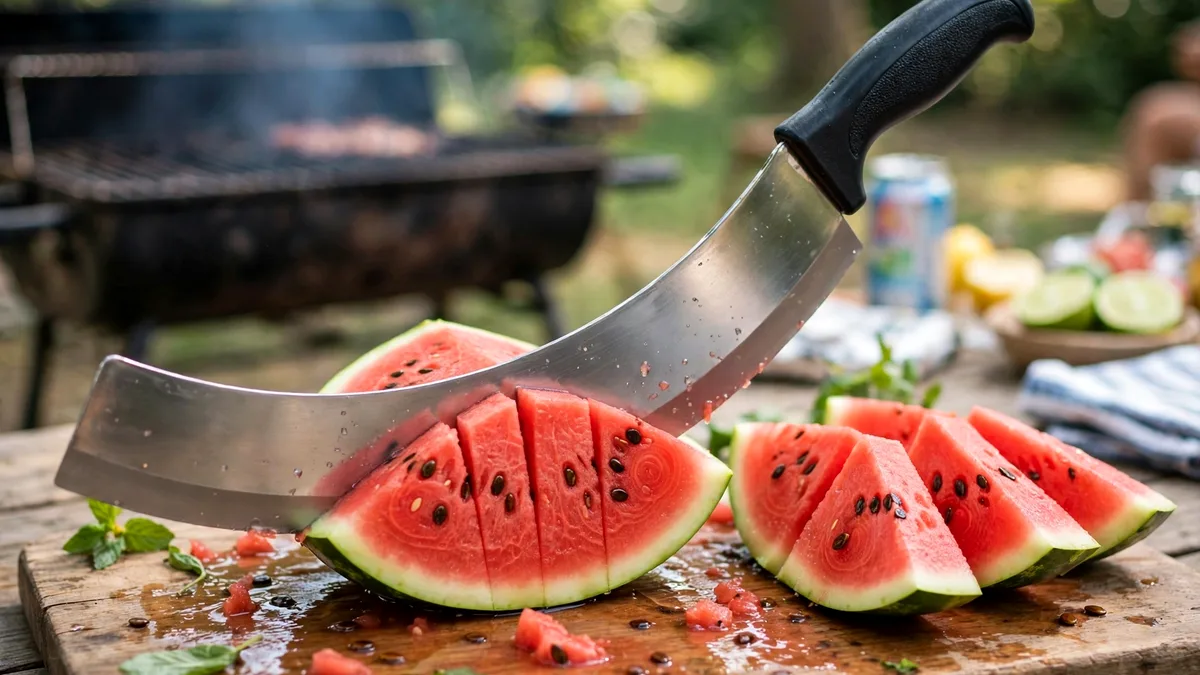
Most melon slicers fall into four designs. The long curved-blade slicer is the most common: a wide, sweeping stainless steel blade shaped to follow the curve of a watermelon. You rock it through the melon in a few strokes for clean wedges with little effort. It is fast and versatile, but needs a steady hand and a stable board.
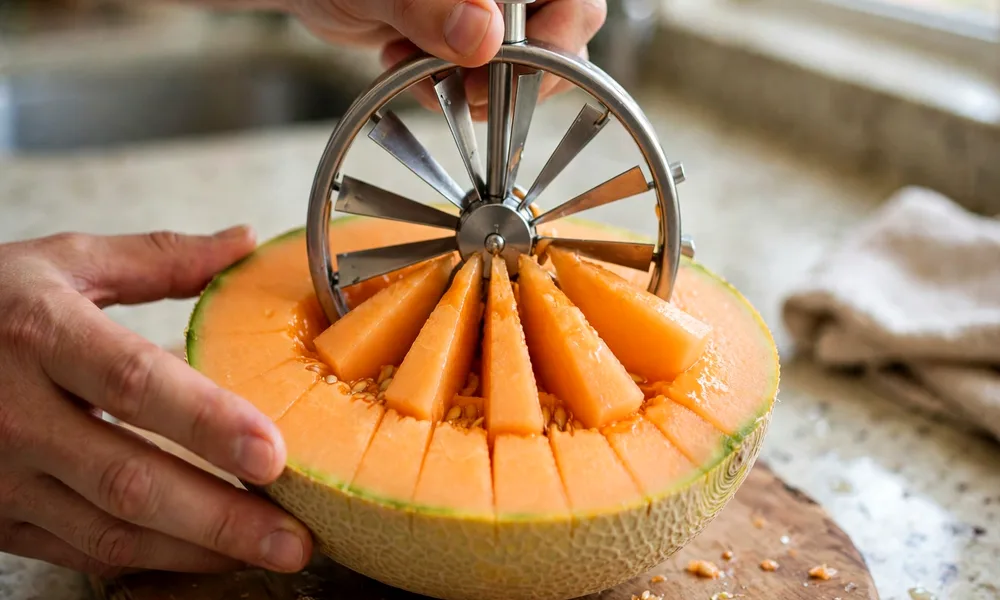
The wheel or windmill slicer is a ring of blades arranged like spokes, pressed down onto a halved melon. One push cuts the half into eight or twelve even wedges at once, the fastest tool for a crowd. It suits cantaloupes and honeydews best, since a full watermelon is usually too wide for the ring.
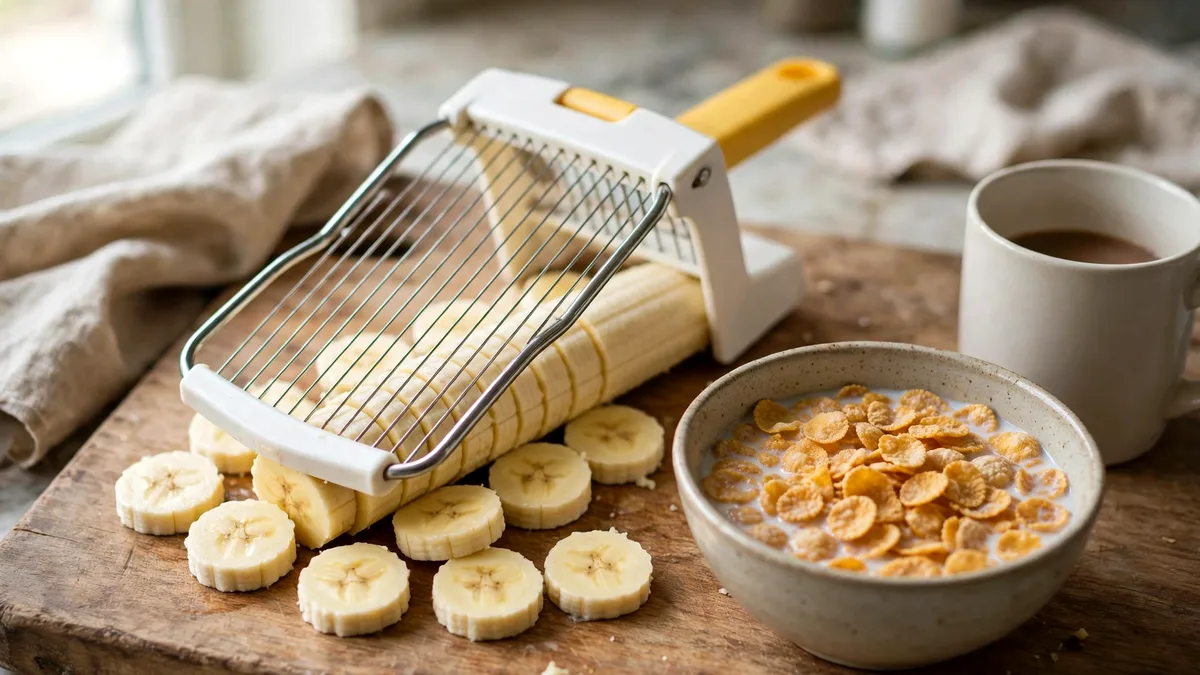
The frame slicer is a rectangular frame of parallel blades that presses through a melon half into even spears or sticks. It suits watermelon sticks for children and lunchboxes, easy to hold and eat without a plate, but it is the wrong choice for classic wedges, since the frame only cuts in straight lines.
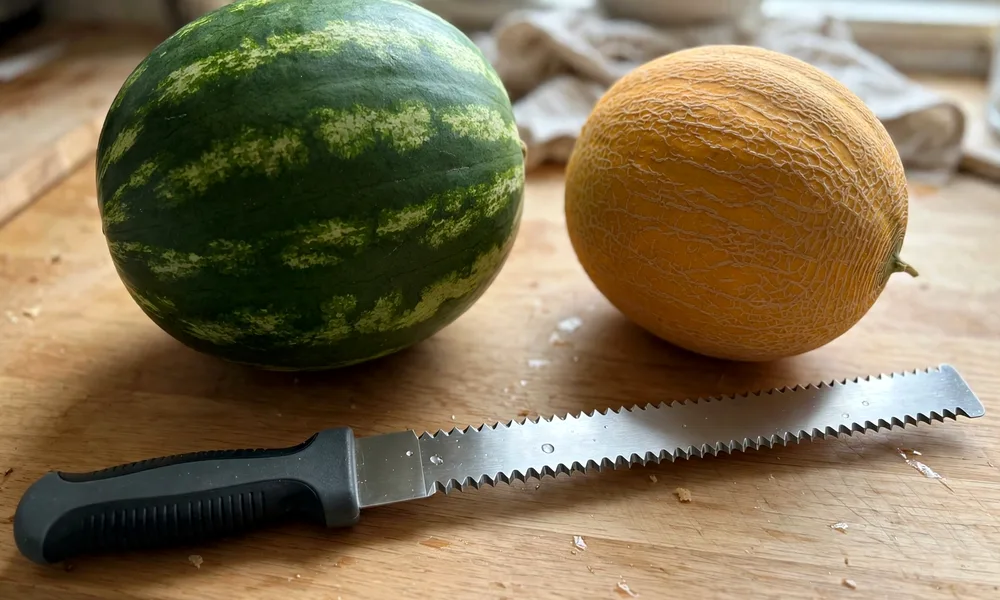
The long serrated slicer is a straight blade with a saw-like edge, built to bite into tough rind without slipping. It suits anyone who finds a smooth blade skates across a watermelon rind. The trade-off is that a serrated edge tears the flesh slightly more, so the cut faces are less clean.
| Melon Slicer Type | Best For | Cut Shape | Why It Stands Out |
|---|---|---|---|
| Long curved-blade slicer | Watermelon wedges | Even wedges, few strokes | Fastest for big melons |
| Wheel slicer | Cantaloupe and honeydew | Wedges in one push | Fastest for a crowd |
| Frame slicer | Watermelon sticks | Even spears and sticks | Best for lunchboxes |
| Long serrated slicer | Tough rinds | Clean wedges, sawing cut | Never slips on rind |
How to Choose a Melon Slicer
Start with the blade, because it decides whether the tool cuts or crushes. Stainless steel blades cut cleanly through wet flesh without tearing, and stay sharp through a summer of use if you rinse them after each melon. A smooth blade gives the cleanest cut faces; a serrated blade grips the rind better. Look for a blade long enough for your melons: a watermelon needs at least thirty centimetres, a cantaloupe far less. A blade that is too short leaves the cut unfinished, and you end up sawing, which crushes the flesh and spills the juice.
Next, look at the handle. A melon slicer is used with wet hands over a wet board, so grip matters more here than on almost any other tool. Look for a handle that is comfortable, slightly textured, and long enough to keep your knuckles clear of the blade. One that is too thin twists when you press, and one that is too smooth slips at the worst moment. Wheel and frame slicers should have a handle that lets you press straight down with both hands, because an uneven push gives thick wedges on one side.
Size and weight come third. It must be heavy enough to do the work, but light enough to control. A long curved blade with weight behind it cuts through rind with its own momentum, while a very light blade needs more force from you. Check the tool against the melons you actually buy: a wheel slicer built for a cantaloupe will not fit a watermelon, and a frame slicer built for a watermelon half is too big for a honeydew. The same sizing logic applies to our guide to the best mango slicers, where the frame must match the fruit, but a melon is far heavier.
Material is fourth, and it is mostly about the blade and the frame. A solid stainless steel blade is the usual choice: it stays sharp, it does not rust or stain, and it washes clean. Cheaper blades can bend, lose their edge, or develop rough spots that drag through the flesh. The frame on a wheel or frame slicer should be rigid, with blades firmly fixed: a flexing blade cuts unevenly, and a loose blade will fail. Cleaning is fifth: a melon slicer should rinse clean under a tap in seconds, with no joints where pulp and seeds can hide. Check wheel slicers most carefully, because the hub where the blades meet can trap seeds and juice.
Cutting a Melon Cleanly, Step by Step
Wash the melon and dry it, so the rind is not slippery in your hand. Cut it in half first, and work on the flat cut face, because a whole round melon rolls and a flat half sits still. Put a damp cloth under the board so it cannot slide, and keep a large bowl nearby for the cut pieces, since a watermelon produces a surprising amount of juice.
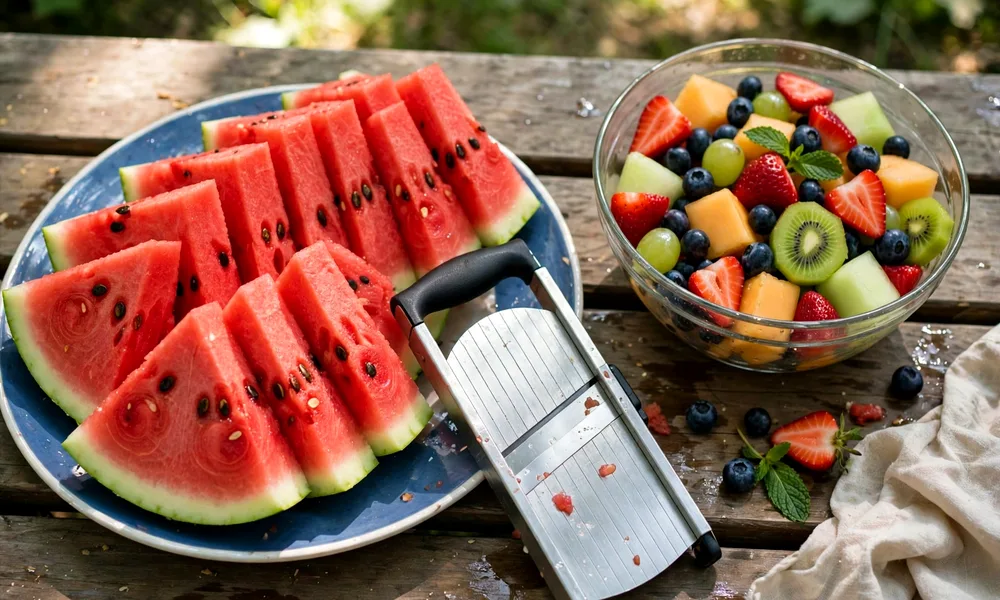
For wedges, stand the half cut-side down, cut it into thick slices from top to bottom, then cut each slice into wedges. For spears, cut the half into slices, then cut each slice lengthwise into sticks. For a wheel slicer, centre the ring over the half and press straight down in one smooth motion, without rocking, because rocking bends the blades. Lift the slicer straight up, and tip the wedges out gently rather than pulling them through the blades, which tears the edges.
Deal with seeds as you go. A seedless watermelon still has small white seeds, and a seeded one has large black seeds to remove from the cut faces. A quick flick with the tip of a knife clears them while the wedges are still on the board. For cantaloupe and honeydew, scoop the seeds out with a spoon before slicing, and trim away any soft or bruised flesh. Serve the melon straight away: cut melon softens and weeps juice within an hour, so cut it after the table is set, not before. For a picnic, cut the melon into sticks rather than wedges, since sticks pack tighter and drip less.
Before You Buy: The Checklist
- The blade is stainless steel, sharp, long enough for your melons, and firmly fixed into a rigid frame.
- The handle is comfortable and textured, with a grip that keeps your knuckles clear.
- The size matches the melons you buy: a watermelon needs a long blade, a cantaloupe a wheel.
- The tool rinses clean in seconds, with no hub or joint where seeds and pulp can hide.
- You serve melon a few times each summer, so the tool earns its drawer space.
- The price matches the build: a solid blade and a firm grip beat a fancy handle every time.
Frequently Asked Questions
Do melon slicers work on all melons?
Most handle watermelon, cantaloupe, and honeydew, but the size must match. A wheel built for a cantaloupe will not fit a watermelon, so check the diameter before you buy.
Can a melon slicer cut other fruit?
It can cut other large fruit, such as a pineapple or a large papaya, but it is sized for melons and the wedges come out best on a melon. Small fruit needs a different tool.
Is a melon slicer worth buying if I own a large knife?
Yes, if you serve melon to a group through the summer. A knife does the job slowly and unevenly, while a slicer gives even portions in a few motions.
How do I stop a watermelon from rolling while I cut it?
Cut it in half first and work on the flat face, with a damp cloth under the board. A whole round melon is the main cause of slips.
Are wheel slicers better than curved-blade slicers?
Wheel slicers cut the most even wedges in one push, but only fit melons up to their ring size. Curved-blade slicers handle any size of melon, but need a steadier hand to keep the wedges even.
How do I clean a melon slicer?
Rinse it straight after use under a running tap, and brush the blades gently if pulp sticks. Dry it before storing so the blade does not spot.
The Bottom Line
A melon slicer is a simple tool that earns its place by turning the heaviest, messiest fruit in the kitchen into neat portions. Buy a long curved-blade slicer with a sharp stainless steel edge and a firm, textured grip for watermelon, or a wheel slicer for cantaloupe and honeydew, and always cut the melon in half first on a stable board. A melon baller does a different job on the same fruit, so if you serve both wedges and fruit salad, the two tools sit side by side.