Honey Pots vs Honey Dippers: Which Serves Honey Better in 2026?
Honey pots are the quiet classic of the breakfast table: a small lidded pot that keeps honey close at hand, looks good sitting out, and comes with its own dipper resting inside. Honey dippers are the tool alone, a grooved stick that drizzles honey in a thin, controlled ribbon. Both serve the same honey, but they solve different problems, and buying the wrong one is how you end up with sticky fingers, a pot you never use, or a dipper that drips all over the tablecloth.
The short answer is that most households are better off with the pot, because the pot is the whole system: storage, serving, and a place for the dipper to live between uses. The dipper alone wins when you already have a jar you like, when you serve honey straight from the jar it came in, or when you want the cheapest possible way to drizzle.
Key Takeaways
- A honey pot is a lidded serving vessel, usually ceramic or glass, with a dipper that rests inside; a honey dipper is the grooved tool alone.
- Pots win on the table: they keep honey covered, look good left out, and give the dipper a home so it never drips on the cloth.
- Dippers win on control and price: a good dipper drizzles a thinner, steadier ribbon than pouring from any pot, and costs far less.
- The lid matters more than the shape: a pot with a loose lid lets honey absorb moisture and smells, just like a bad jar.
- Buy the pot and dipper as a matched pair when you can, because a dipper that does not fit the pot is the most common regret.
What a Honey Pot Actually Is
A honey pot is a small pot, usually holding between 250 and 500 grams of honey, with a lid and a dipper. The classic shape is a squat ceramic pot with a knobbed lid, sometimes decorated with a honeycomb pattern, and the dipper rests in a notch in the lid or leans inside the pot. Glass honey pots exist too, and they have one clear advantage: you can see how much honey is left without lifting the lid.
What a Honey Dipper Actually Does
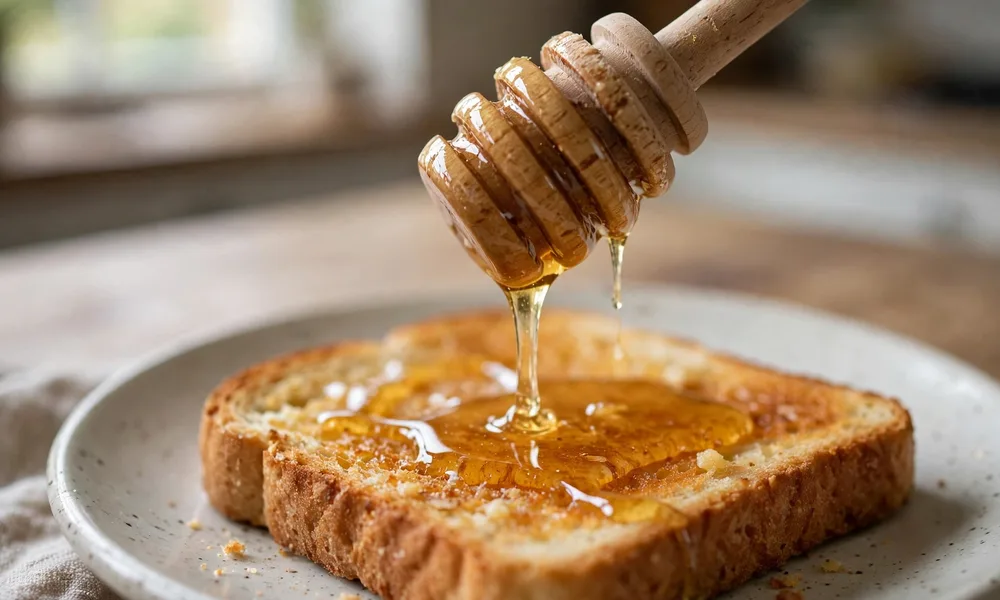
A honey dipper is a handle with a grooved head. Dip it in honey, twist it, and the honey coats the grooves and stays there, held by its own thickness. Hold it over your food, turn it slowly, and the honey unwinds in a thin stream. Stop turning, and the flow stops. Our guide to honey dippers covers the tool in full, including which materials suit different kinds of honey.
The dipper is the precision instrument of the pair. Groove depth decides drizzle control: deep, evenly spaced grooves hold more honey and release it slowly, while shallow grooves drip fast and run out quickly. Wooden dippers are the classic choice, because unfinished wood grips honey well, but they need proper drying after washing. Stainless steel dippers are the easiest to clean and the best for runny honey, though they release it faster than wood.
Honey Pots vs Honey Dippers: The Head-to-Head
Put side by side, the pot and the dipper are not really rivals; they are two halves of one job. The pot stores and presents, the dipper serves. But since most people buy one or the other first, here is the honest comparison.
| Honey Pot | Honey Dipper | |
|---|---|---|
| What it is | Lidded serving vessel, usually with a dipper included | Grooved serving tool, used with any jar or pot |
| Best for | Daily table use, breakfasts, households that eat honey often | Precise drizzling, occasional use, serving from the original jar |
| Drizzle control | Good, if the included dipper is well made | Excellent, with a well-chosen dipper |
| Mess | Very little: the dipper rests inside the pot | More: the dipper needs a rest or a saucer between uses |
| Storage | Keeps a working amount fresh for a week or two | None: the honey stays in its jar |
| Price | More, because you pay for the vessel too | Very little, often the cheapest option of all |
| Looks on the table | Charming, and the reason most people buy one | Invisible: it lives inside a jar |
The table points to the real trade-off. The pot buys you tidiness and table presence; the dipper buys you control and value. If you eat honey every morning, the pot earns its place within a week, because the dipper always has somewhere clean to rest.
The Main Types of Honey Pot
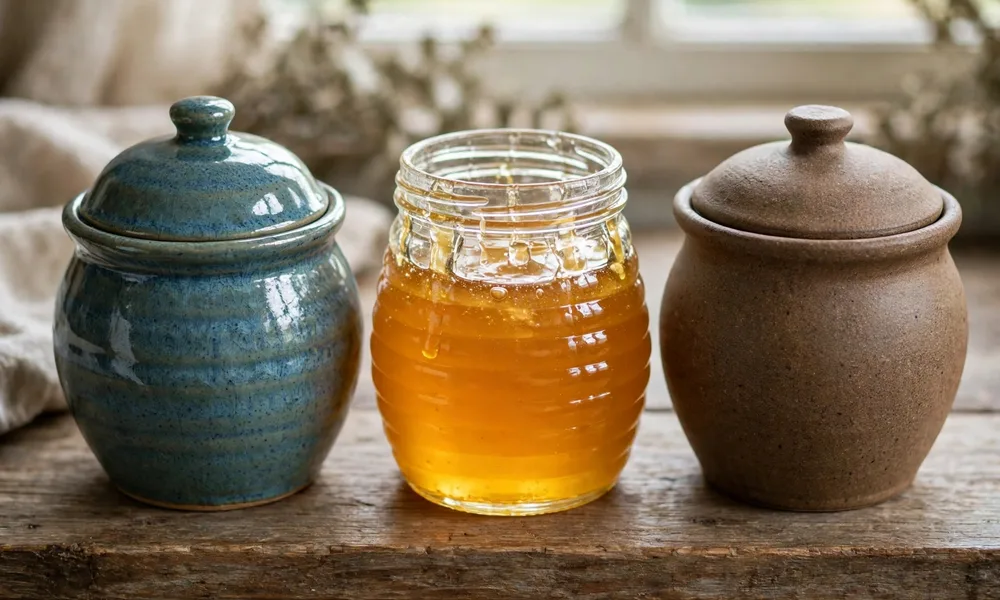
Honey pots come in a few clear types, and the material decides most of the experience. Ceramic pots are the classic choice and the one most people picture: glazed ceramic keeps honey cool and dark, wipes clean, and looks at home on a farmhouse table. Glass pots are the practical choice: you can see the level at a glance, glass holds no smells, and a glass pot warms safely in hot water when honey crystallises.
Stoneware pots are the sturdy choice, thicker and heavier than ordinary ceramic, with a matte glaze that hides fingerprints and drips. Wooden honey pots look beautiful but need the most care: wood absorbs moisture, so a wooden pot must be kept dry and oiled occasionally, and it is the hardest type to clean. For most households, glazed ceramic or glass is the right starting point. Most pots are sold with a dipper, and that is usually the better buy, because the included dipper is sized to the pot: its head fits through the mouth, and the handle reaches the bottom.
How to Choose a Good Honey Pot
Start with the lid. Lift it, set it back down, and check that it sits snugly with no wobble and no gap you can see light through. A lid that rocks on its rim lets in air and moisture, and honey in a badly sealed pot thins out, crystallises faster, and picks up smells from the kitchen. A screw lid seals best; a simple lift-off lid is fine for a pot used daily, but not for one that sits for weeks.
Next, look at the mouth and the size. A wide mouth beats a narrow neck every time, because a spoon or dipper must reach the bottom, and the last third of the honey in a narrow pot is honey you will never eat. Buy the size you actually use: 250 to 500 grams suits most tables. A large pot looks generous but holds honey so long that it crystallises before you finish it. Then check the dipper fit: it should reach the bottom without your fingers touching the honey.
Honey Pot or Honey Jar: Do Not Confuse Them
A honey pot is not a honey jar, and the difference matters. A jar stores honey; a pot serves it. Jars are the quiet storage half of the pair, the cupboard container that keeps a kilogram of honey good for a year, and our guide to honey jars covers those in full. A pot is the table half: the smaller vessel you fill from the jar and dip into at breakfast.
When the Dipper Alone Wins
There are three situations where the dipper alone is the better buy. The first is when you already have a jar you like and serve honey straight from it: a good dipper turns any jar into a serving vessel, and a pot adds nothing but washing up. The second is when you use honey mainly in cooking rather than at the table: a dipper drizzles a thin line into tea or over yoghurt, and a pot never leaves the shelf. A honey dispenser is a third option worth knowing about, and our guide to honey dispensers covers the squeeze bottles and pumps that suit busy kitchens.
Caring for Your Honey Pot
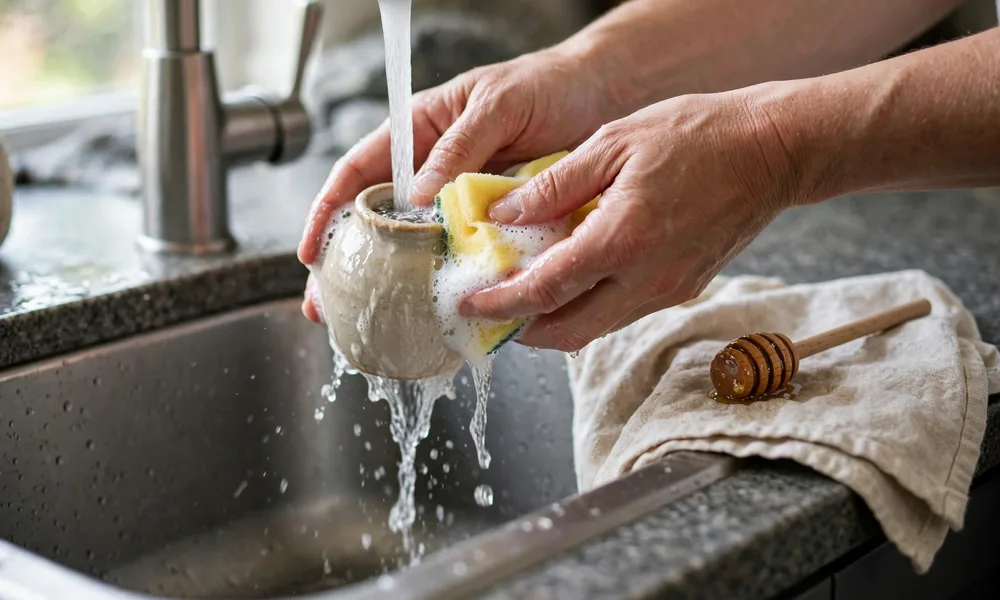
A honey pot is easy to care for if you build two habits. First, wash the dipper after every use, or at least rinse it in warm water and dry it properly before it goes back in the pot. Second, wash the pot whenever you refill it, because old honey at the bottom crystallises and seeds the fresh honey you pour on top.
Checklist: Before You Buy a Honey Pot
- The lid sits snugly with no wobble or visible gap, so air and moisture stay out.
- The mouth is wide enough for a spoon or dipper to reach the bottom of the pot.
- The included dipper fits through the mouth and reaches the bottom without your fingers touching the honey.
- The size matches your use: 250 to 500 grams for most tables, not a litre you will never finish.
- The pot is easy to wash, with no deep crevices that trap honey where a cloth cannot reach.
- The material suits your kitchen: glazed ceramic or glass for most people, stoneware for busy kitchens, wood only if you will maintain it.
Frequently Asked Questions
Is a honey pot better than a honey dipper?
Neither is better in every case. A honey pot is better for daily table use, because it keeps honey covered and gives the dipper a clean place to rest. A honey dipper is better for precise drizzling and for serving straight from a jar, and it costs far less.
Do honey pots keep honey fresh?
Yes, for a week or two of table use, provided the lid fits well. Honey absorbs moisture and smells from the air, so a pot with a loose lid will let honey thin out and pick up kitchen smells. For long storage, keep the bulk of your honey in a sealed jar and refill the pot from it.
What is the best material for a honey pot?
Glazed ceramic is the best all-round choice: it keeps honey cool and dark, wipes clean, and looks good on the table. Glass is the best choice if you want to see how much honey is left, though it should be kept out of direct sunlight.
Can I put a honey pot in the dishwasher?
Most glazed ceramic and glass pots are dishwasher safe, but hand washing is kinder to the glaze and to any wooden dipper that comes with the pot. Wooden dippers should never go in the dishwasher: wash them by hand and dry them properly, or they will crack.
Why has the honey in my pot gone cloudy and solid?
That is crystallisation, and it is natural, especially in a cool kitchen. The honey is not spoiled. Stand the pot in a bowl of warm water and stir gently until it turns liquid again. Using the pot regularly slows crystallisation down.
Should I buy a honey pot with a dipper included?
Yes, in most cases, because the included dipper is sized to fit the pot. A dipper bought separately may have a head too wide for the mouth or a handle too short to reach the bottom. If you already own a dipper you love, measure it against the pot before you buy.
Bottom Line
Honey pots and honey dippers are two halves of one job, and the right choice depends on how you eat honey. If honey is a daily habit and you want a tidy table with no sticky saucers, buy a honey pot with a well-fitting lid, a wide mouth, and a dipper sized to match it. If you serve honey from the jar or use it mainly in cooking, a good dipper alone will do everything you need.