How to Choose Fragrance Decanters That Keep Scent True in 2026
A fragrance decanter is a small glass vessel that holds perfume after it has been poured out of its original bottle. The best fragrance decanters keep scent true for weeks, pour without spilling a drop, and look beautiful on a dressing table. The worst ones look like cut crystal and quietly ruin the perfume inside: they let air and light in, and scent bright and clear on the first day turns flat and sharp by the second week. This guide is about the decanter itself, the home vessel for decanting and storing fragrance, not the small spray bottle you carry in a bag. An atomizer is a travel tool: a few millilitres, a pump, a fine mist, built to be used and refilled on the move. A decanter is a home tool: it sits on the vanity, holds a larger amount, and is filled slowly, with a funnel, from a bottle that stays safe in its box. Confusing the two is the most common mistake in buying either. Our guide to the best atomizers for travel perfume covers the travel side; this guide stays at home, on the dressing table, where scent is stored and enjoyed.
Key Takeaways
- A decanter is for home storage and display, not travel: it holds fragrance decanted from a larger bottle on a vanity, while an atomizer carries a few millilitres in a bag.
- The stopper decides whether scent survives: a ground-glass stopper that seals tightly keeps air out, while a loose cap lets perfume evaporate and turn flat.
- Dark or amber glass protects scent from light far better than clear glass, and a decanter kept out of sun lasts noticeably longer.
- Decant only what you will use in a few weeks: perfume in a half-empty decanter oxidises faster than in a full, sealed bottle.
- Never decant over a sink: one knocked funnel wastes more perfume than a year of careful pouring saves.
What a Fragrance Decanter Actually Is
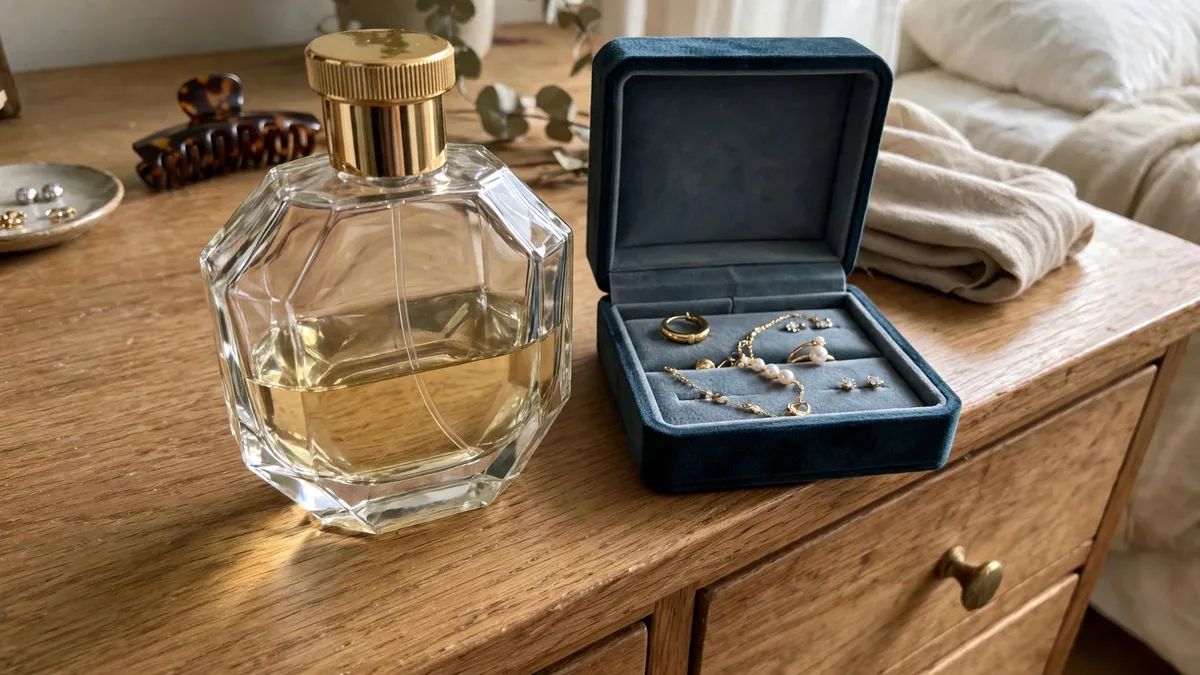
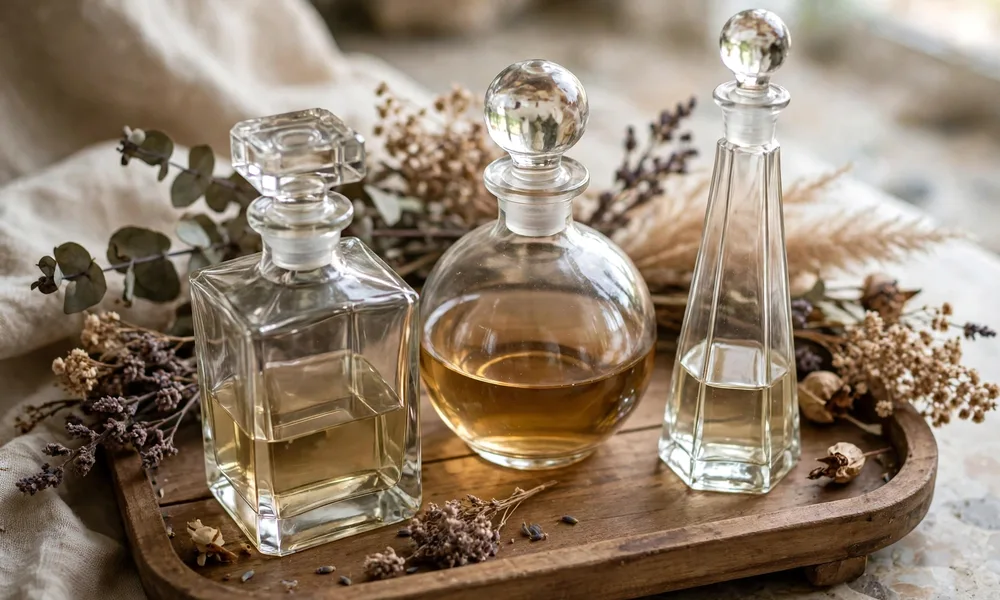
A fragrance decanter is a refillable glass bottle, usually between 30 and 100 millilitres, with a stopper rather than a spray pump. You fill it by pouring perfume from a larger bottle, often through a tiny funnel, then either dab the scent on with the stopper, or pour a little into your palm. That sounds old-fashioned, and it is, but it is also how perfume was kept for most of its history, before spray pumps became standard. The decanter exists for three reasons: display, since a beautiful glass vessel turns a dressing table into something worth looking at; practicality, since a large bottle is heavy and fragile, and decanting a working amount keeps the expensive bottle safe; and sharing, since it lets you divide a large bottle between two people.
The shape tells you most of what you need to know. A good decanter has a neck narrow enough to pour from without a rush, a base wide enough to sit steady, and a stopper that fits so snugly you feel faint resistance when you lift it. A decanter is not a spray bottle, and it is not a miniature: a miniature is sealed and single-use, while a decanter is filled, used, washed, and filled again. Our guide to the best spray bottles for cleaning and cooking covers bottles built for water, cleaner, and oil; a fragrance decanter is a different tool entirely, built for a few drops of something precious.
The Main Types of Fragrance Decanter
Almost every fragrance decanter falls into one of four shapes. The choice is less about looks than about how the decanter seals, pours, and survives daily use.
Classic Stoppered Decanters
The classic decanter is a glass bottle with a ground-glass stopper, the kind that fits with a faint hiss of air when you press it home. This is the best seal a decanter can have: glass on glass, with no rubber or plastic to perish and no gap for air. A good ground stopper keeps scent true for weeks. The trade-off is care: a stopper can stick if perfume dries in the joint, so wipe the neck clean after every fill and never force a stuck one.
Crystal and Cut-Glass Decanters
Cut glass and crystal decanters are bought for the dressing table as much as for the scent. The facets catch the light and the weight feels substantial. The best have the same ground-glass stopper as the classic type and seal just as well. The weakness is the same as their strength: they are heavy, expensive, and a drop on a hard floor is final. They also tend to be clear glass, so keep crystal away from the window and out of direct sun.
Amber and Coloured Glass Decanters
Amber, cobalt, and deep green glass are the practical choice, and for scent they are the best one. Light is perfume’s quiet enemy: ultraviolet light breaks down the delicate top notes first, so a scent bright with citrus on the first day smells flat a fortnight later. Dark glass blocks most of that light, and an amber decanter in a drawer protects scent better than any clear one on a sunny sill. The trade-off is that you cannot see how much is left, so mark the fill date on the base.
Small Travel-Style Decanters for the Vanity
The smallest decanters, 30 millilitres and under, suit a single scent used daily, or one you are trying before committing to a full bottle. They are light and quick to empty, which is a virtue: perfume in a small decanter is used before it has time to oxidise. The weakness is the stopper, often a loose plastic cap rather than ground glass on cheap small decanters, and a loose cap is no seal at all.
The Stopper: Where Good Decanters Earn Their Keep
The stopper is the whole point of a fragrance decanter, and it is where most pretty decanters fail. A good stopper seals so tightly that you can tip the decanter on its side without a bead escaping, and it lifts with faint resistance that tells you air is not getting in either. A bad stopper looks like a jewel and behaves like a hole: it sits loosely, lets perfume evaporate a little every day, and lets air in to oxidise what is left. That slow evaporation is the most common way a decanted scent goes wrong.
Test a stopper before you buy if you can. Press it home and lift the decanter by the stopper alone: a good ground-glass stopper lifts the whole decanter, while a loose one slips out at once. Then turn it upside down over a cloth; any bead at the joint means the seal is wrong. A stopper that doubles as a dabber is a bonus: it lets you apply scent without pouring.
How Much to Decant, and How Long It Keeps
Decant only what you will use in a few weeks. Perfume in a full, sealed bottle keeps for years; perfume in a half-empty decanter oxidises in weeks. Fill to the neck, leave as little air as possible, and use it steadily. A 50 millilitre decanter filled to the top and used daily stays true far longer than a 100 millilitre one filled halfway and used once a week. For a rare scent, choose the smallest decanter that holds it and keep the rest sealed in the original bottle.
Heat and light matter as much as air. Keep a decanter away from radiators, sunny windowsills, and shelves above a hot bath: warmth speeds up every change that turns scent flat. A drawer or closed cabinet is better than a bright vanity. Never decant perfume already turning: if the original smells sharp or vinegary, decanting will not save it.
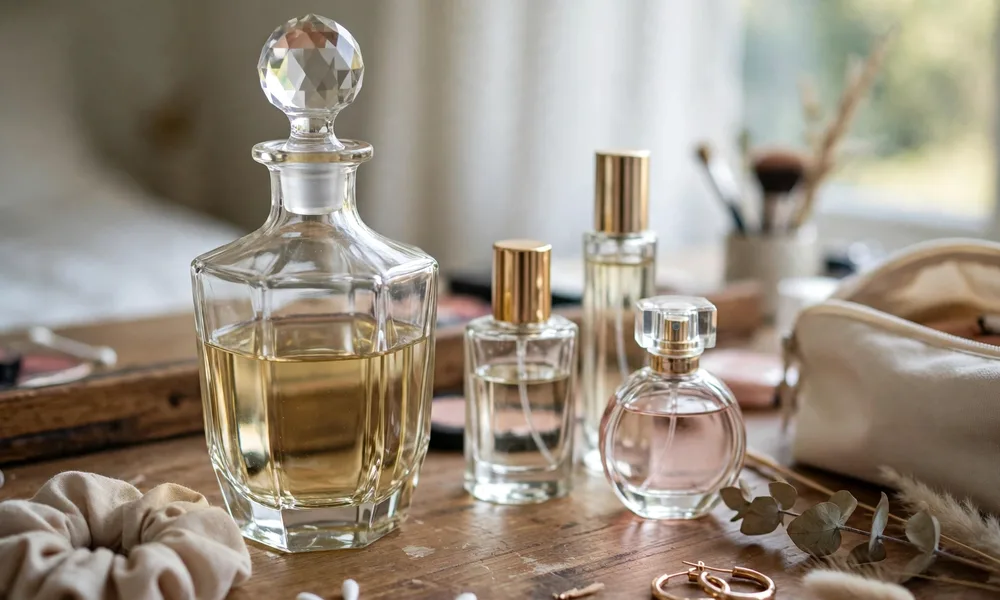
Fragrance Decanters Compared
| Type | Best for | Size | Standout strength |
|---|---|---|---|
| Classic stoppered | Keeping scent true | 50–100 ml | Ground-glass seal, no air gets in |
| Crystal and cut glass | Display on the vanity | 50–100 ml | Beautiful, heavy, a decoration itself |
| Amber and coloured glass | Protecting scent from light | 30–100 ml | Blocks light, scent lasts longest |
| Small vanity decanters | Daily scents, trying a scent | 15–30 ml | Used up before it can oxidise |
Filling a Decanter Without Wasting a Drop
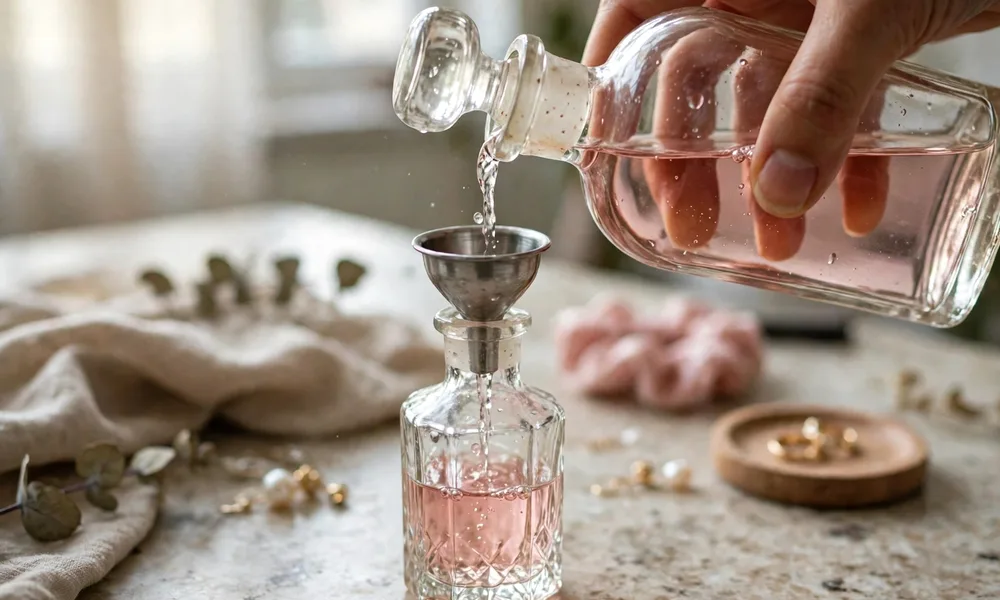
Filling is where perfume is lost, and it is worth doing slowly. Work on a tray, over a cloth, with the funnel already in the neck before you pick up the bottle. Pour in a thin, steady stream and stop a finger’s width below the neck: perfume expands as it warms, and an overfilled decanter spills the moment the stopper goes in. If the original is a spray, pump slowly into a small funnel; if it is a splash bottle, pour with the lip touching the funnel. Wipe the neck clean before pressing the stopper home.
Cleaning matters as much as filling. Wash with warm water and a drop of mild soap before the first fill, and rinse thoroughly: soap residue changes a scent faster than air will. Between scents, rinse with a little plain alcohol, which dissolves perfume oils without leaving a smell, and let it dry upside down. Never use scented cleaner or heat to dry it.
How to Choose Checklist
- Test the stopper: it should lift the decanter by itself, and no bead should appear when the decanter is turned upside down.
- Choose dark glass for scent you keep: amber glass blocks the light that flattens top notes.
- Match the size to your use: 30 ml for a daily scent, 50 ml for a regular one, 100 ml only to share.
- Check the base: wide and flat, so the decanter sits steady on the vanity.
- Look for a dabber stopper: a glass rod lets you apply scent without pouring.
- Decant to the neck: fill it full, leave as little air as possible, and use it within a few weeks.
Frequently Asked Questions
What is the difference between a fragrance decanter and an atomizer?
An atomizer is a small spray bottle for travel: a few millilitres, a pump, a fine mist, built for a bag. A decanter is a larger glass vessel for the home, filled with a funnel, sealed with a stopper, and kept on a vanity. The atomizer sprays; the decanter stores and displays.
How long does perfume last in a decanter?
A full decanter with a tight ground-glass stopper, kept cool and dark, keeps scent true for several weeks. A half-empty decanter in sunlight can turn in a fortnight.
Can I decant any perfume?
Almost any liquid perfume can be decanted, from a spray or a splash bottle. The exception is perfume already turning: if the original smells sharp or vinegary, decanting will not save it.
Why does my decanted perfume smell different?
Usually air or light. A loose stopper lets perfume evaporate and oxidise, flattening the bright top notes first. Clear glass in sunlight does the same. A tight stopper, dark glass, and a cool dark shelf keep scent closest to the original.
How do I clean a fragrance decanter between scents?
Rinse with warm water and mild soap, then with a little plain alcohol, which dissolves perfume oils without leaving a smell. Let it dry upside down. Never use scented cleaner or heat.
Is a crystal decanter better than a glass one?
For looks, yes; for scent, not necessarily. A crystal decanter with a ground-glass stopper seals as well as any glass decanter, but most crystal is clear, so light reaches the perfume. Keep crystal out of sun, or choose amber glass for the scent you wear every day.
Bottom Line
The best fragrance decanter has a stopper that seals, glass that protects the scent, and a size you will actually use up in a few weeks. Choose the seal before the sparkle, decant to the neck, and keep it cool and dark. A good decanter costs little and lasts for years. A jewellery stand that displays pieces beautifully sits beside it naturally.