Sugar Tongs That Pick Up a Cube Without Dropping It in 2026
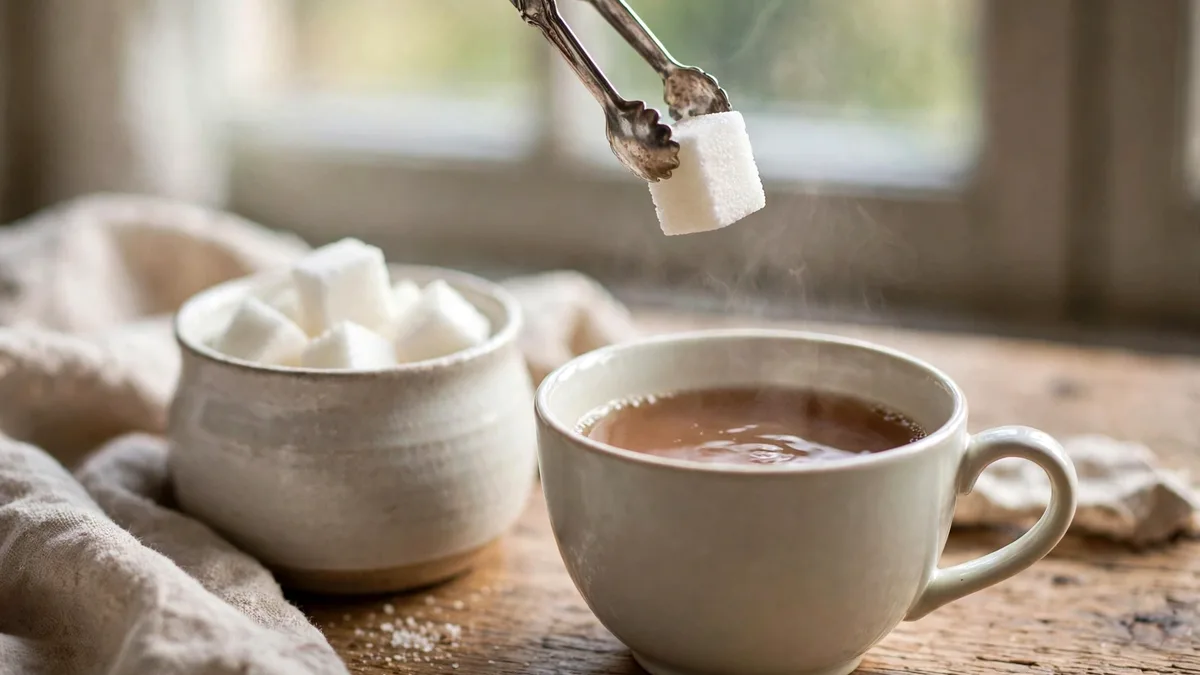
Sugar tongs are the smallest tool on the tea table, and the easiest to get wrong. A good pair picks up a single cube cleanly, holds it steady over the cup, and lets it go when you want it to. A bad pair drops the cube into the saucer, and you end up fishing it out with your fingers. The best sugar tongs of 2026 are judged on that one job, and this guide covers the sizes, shapes and materials that decide whether a pair earns its place.
Buying sugar tongs is not like buying kitchen tongs. There is no heat or heavy food to compare. What matters is the grip on a dry cube, the spring tension, the arm length and the metal finish: too stiff tires your fingers, too loose drops the cube. A sugar bowl is the natural partner for a pair of tongs, and our guide to sugar bowls covers the bowls that keep the table tidy.
Key Takeaways
- Buy tongs about 10 to 13 centimetres long: long enough to hold, short enough to sit beside a sugar bowl.
- Claw or scalloped tips grip a cube far better than flat tips, which let dry cubes slide.
- Stainless steel is the practical choice for daily use, silver suits formal tea sets, and gold-toned steel splits the difference.
- Test the spring before you buy if you can: the arms should close with a light, even pressure and spring back without snapping.
- Keep silver-plated tongs out of the dishwasher: moisture and harsh detergent dull the finish fastest.
How Sugar Tongs Actually Work
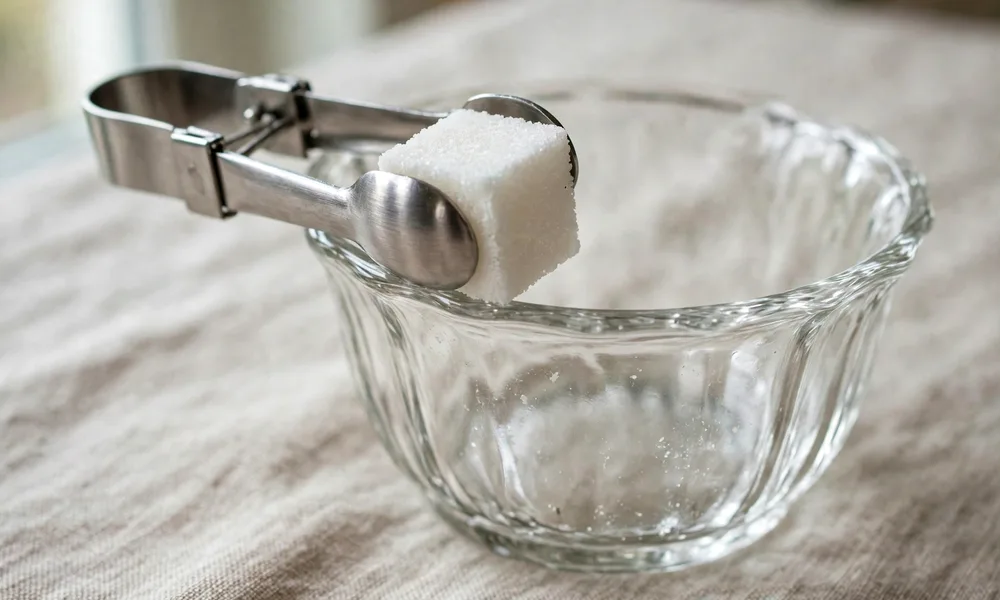
Sugar tongs are a small pair of pincers, usually made from a single folded strip of metal or two arms joined at one end. You squeeze the arms together, the tips close on the cube, and the spring in the metal opens them again when you let go. It weighs almost nothing, and should feel like an extension of your fingers.
The cube is the hard part. A sugar cube is dry, light, hard and slightly crumbly at the edges, so it has no weight to hold it and no softness for the tips to bite into, which is why tip shape matters most. A claw tip cups the cube from two sides; a flat tip lets it twist free the moment it tilts. Unlike kitchen tongs, which grip heavy, wet food with a strong spring, sugar tongs work with a feather-light touch.
The Best Sugar Tongs of 2026 at a Glance
| Pick | Length | Tips | Best For | Typical Price |
|---|---|---|---|---|
| Best overall | 11 cm | Claw | Most tea tables | $12–$20 |
| Best for formal sets | 12 cm | Scalloped | Silver tea services | $25–$45 |
| Best for daily use | 10 cm | Claw | Everyday tea and coffee | $8–$15 |
| Best gold-toned | 11 cm | Claw | Modern table settings | $15–$28 |
| Best for small hands | 9 cm | Scalloped | Children and small bowls | $8–$14 |
| Best value set | 11 cm | Claw | First-time buyers | $10–$18 for two |
Best Overall Sugar Tongs for Most Tea Tables
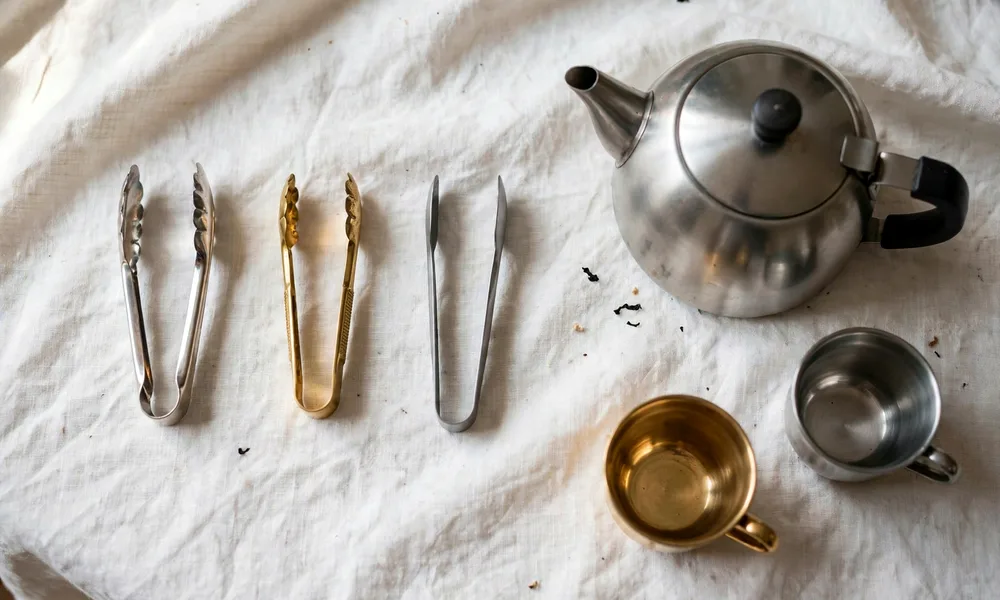
The best overall sugar tongs are an 11-centimetre stainless steel pair with claw tips and a gentle spring. Eleven centimetres suits most people: long enough to hold without cramping, short enough to rest beside a sugar bowl. Claw tips grip a cube from three sides, and stainless steel needs no polishing and survives the dishwasher. Expect to pay $12 to $20 for a well-made pair.
Best Sugar Tongs for Formal Tea Sets
If your tea set is silver, the tongs should be silver too, or at least silver-plated. A 12-centimetre silver-plated pair with scalloped tips suits a formal service: the extra centimetre looks right beside a larger bowl, scalloped tips look gentler than claws, and the plating gives the tongs a settled feel. Silver plate needs more care: wash it by hand, dry it straight away, and keep it away from rubber bands, which tarnish silver fast. Expect to pay $25 to $45.
Best Sugar Tongs for Daily Use
For everyday tea and coffee, buy a short 10-centimetre stainless steel pair with claw tips and forget about it. A daily pair lives beside the kettle, gets used several times a day, and is washed without ceremony. Stainless steel takes that without complaint: it does not tarnish, it survives the dishwasher, and a dropped pair bounces rather than bends. The shorter length suits smaller bowls, and claw tips hold brown cubes and larger lumps as well as white ones. Expect to pay $8 to $15.
Best Gold-Toned Sugar Tongs for Modern Tables
Gold-toned sugar tongs suit a modern table where the cutlery already has a warm finish. An 11-centimetre gold-toned stainless steel pair with claw tips matches brass and copper accents without the cost of real gold plate, and warms up a white tea set in a way plain steel does not. Check the coating is even at the tips, where rubbing wears a thin coating through first. Wash gold-toned tongs by hand to keep the colour true. Expect to pay $15 to $28.
Best Sugar Tongs for Small Hands
A 9-centimetre pair with scalloped tips suits children, small hands and small sugar bowls. Short tongs need less finger strength, which matters for children and older hands. Scalloped tips are safer at this size: they cup the cube softly and are less likely to crush it than sharp claws. Buy steel rather than silver for a first pair, so a drop onto a hard floor is a shrug rather than a disaster. Expect to pay $8 to $14.
Best Value Sugar Tongs for First-Time Buyers
The best value buy is a pair of 11-centimetre stainless steel claw tongs, often sold as a set of two for $10 to $18. Two pairs means one for the tea tray and one for the coffee corner. Value does not mean flimsy: check the arms are evenly thick, the spring opens evenly, and the tips meet squarely. A cheap pair fails at the fold, where thin metal cracks, so flex the tongs before you buy if the shop allows it.
Claw Tips vs Scalloped Tips vs Flat Tips
The tip shape decides whether the cube stays put. Claw tips have small teeth that bite into the cube, and hold best on hard white cubes and brown lumps. Scalloped tips have a wavy edge that cradles the cube without biting, suiting softer cubes and formal tables. Flat tips are the weakest choice: the cube twists at the slightest tilt, and the tongs are really ice tongs pressed into the wrong job. Serving tongs use wide spoon-like tips for salad and buffet food, which is a different job entirely, and their size alone rules them out beside a sugar bowl.
Size: Match the Tongs to the Bowl
Size is the most common buying mistake. Tongs too long for the bowl look clumsy and catch on the lid; too short, and your fingers end up in the sugar. Measure the bowl first: the tongs should be about twice the width of the bowl opening. A small lidded bowl suits 9 or 10 centimetres, a standard bowl suits 11, and a large family bowl suits 12 or 13. If torn between two sizes, choose the shorter one.
Materials Compared: Steel, Silver and Gold Tone
Stainless steel is the practical choice: strong, rust-proof, dishwasher-safe and cheap to replace. Silver and silver plate are the traditional choice: heavier, warmer in the hand, and the right match for a silver tea service, but they tarnish, need hand washing, and cost two or three times as much. Gold-toned steel sits between the two: a warm finish with the toughness of steel, though the coating wears at the tips over time. Avoid plastic tongs, which flex, stain with tea, and feel cheap beside any real tea set.
Spring Tension: The Detail That Decides Everything
The spring is the part you never see and always feel. A good spring holds the arms open, closes with a light squeeze, and opens smoothly when you let go. Too stiff, and serving sugar feels like work; too weak, and the arms flop so the tips do not meet squarely and the cube slips. The fold is where the spring lives on a one-piece pair, and it is also where cheap tongs fail, so look for a smooth, even fold with no cracks or sharp edges.
How to Use Sugar Tongs Without Dropping the Cube
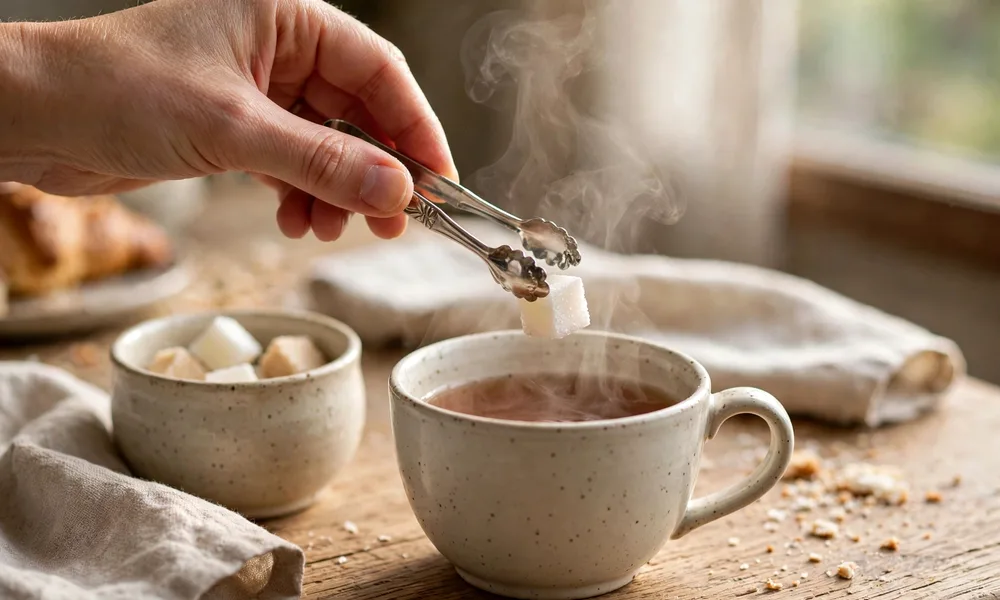
Hold the tongs near the middle of the arms, so your fingers control the tips rather than fighting the spring. Close them gently, lift straight up, and open them only over the cup, so a slip lands in the tea rather than on the tablecloth. Drop the cube from just above the surface, not from a height, or it will splash. One cube at a time: two side by side will twist and fall.
Caring for Sugar Tongs
Wash stainless steel tongs in the dishwasher or by hand, and dry them before they go back in the drawer. Silver-plated tongs need hand washing, drying straight away, and storing away from rubber and sulphur, which tarnish silver. Polish silver only with a soft silver cloth, never a dip, which strips the plating a little more every time. Wash gold-toned tongs by hand with mild soap, never with anything abrasive.
Sugar Tongs Buying Checklist
- Length matches the bowl: about 10 to 13 centimetres, roughly twice the bowl opening.
- Tips are claw or scalloped, never flat, and they meet squarely when closed.
- Spring closes with a light, even pressure and opens smoothly without snapping.
- Metal suits the table: stainless steel for daily use, silver for formal sets, gold tone for modern settings.
- Arms are the same thickness along their length, with a smooth fold and no cracks.
- Finish is even at the tips, where rubbing wears a thin coating through first.
Frequently Asked Questions
What are sugar tongs used for?
Sugar tongs pick up sugar cubes from a sugar bowl and drop them into tea or coffee, so nobody touches the sugar with their fingers. They are a table tool, sized for cubes rather than food.
What size sugar tongs should I buy?
Buy tongs about 10 to 13 centimetres long, roughly twice the width of your sugar bowl opening. Eleven centimetres suits most bowls. Shorter pairs suit small bowls and small hands, and longer pairs suit large family bowls.
Are claw tips or scalloped tips better for sugar tongs?
Claw tips grip hardest and suit everyday use and brown lumps; scalloped tips cradle the cube gently and suit formal tables. Both beat flat tips, which let dry cubes twist and slip.
Can sugar tongs go in the dishwasher?
Stainless steel sugar tongs can go in the dishwasher. Silver-plated and gold-toned tongs should be washed by hand and dried straight away, because dishwasher detergent and heat dull the finish and wear the plating.
What is the difference between sugar tongs and serving tongs?
Sugar tongs are small, about 10 to 13 centimetres, made to carry one sugar cube at the tea table. Serving tongs are much larger, with wide spoon-like tips for salad and pasta. The two tools do different jobs.
How do I stop sugar tongs dropping the cube?
Hold the tongs near the middle of the arms, close them gently, lift straight up, and open them only when they are over the cup. Pick up one cube at a time, and wipe the tips clean if a cube crumbles, because crumbs stop the tips meeting squarely.
Bottom Line
The best sugar tongs for most people in 2026 are an 11-centimetre stainless steel pair with claw tips and a gentle spring: they grip firmly, match almost any tea set, and survive daily use without special care. If your tea service is silver, buy silver-plated tongs with scalloped tips and wash them by hand. Match the length to your bowl, check the tips meet squarely, and a pair costing less than a box of tea will serve every cup for years.